Sacred basil, better known as tulsi or holy basil, is one of the best-known herbs in Ayurvedic practice. Although it belongs to the basil family, it is not simply a culinary basil with a spiritual reputation. It has a distinct phytochemical profile, a long history of medicinal use, and a growing body of modern research focused on stress, mood, sleep, inflammation, and metabolic health. People most often reach for it as a calming daily tea, a standardized extract for stress support, or a broader wellness herb used during periods of mental overload, poor recovery, or seasonal immune strain.
What makes sacred basil especially interesting is its dual role. It is gentle enough to be used as a daily ritual in tea form, yet complex enough to show measurable biological activity in human and laboratory studies. Its leaves contain aromatic compounds, polyphenols, and triterpenes that help explain its traditional reputation. The key is to match the form, dose, and timing to the reason you want to use it.
Key Insights
- Sacred basil may help lower perceived stress and support a steadier mood.
- It may modestly improve sleep quality in people whose sleep is disrupted by stress.
- A common supplemental range is 250 to 600 mg of standardized extract daily, or 2 to 3 cups of tea.
- Medicinal-dose use is best avoided during pregnancy and while trying to conceive unless a clinician advises it.
Table of Contents
- What Is Sacred Basil and Why Is It Used
- Key Ingredients and Medicinal Properties
- Sacred Basil Health Benefits and What the Evidence Says
- Common Uses in Tea, Extracts, and Daily Routines
- Sacred Basil Dosage, Timing, and How Long to Take It
- Safety, Side Effects, Interactions, and Who Should Avoid It
What Is Sacred Basil and Why Is It Used
Sacred basil is an aromatic medicinal plant native to the Indian subcontinent and widely used across South Asian traditional medicine. Its accepted botanical name is Ocimum tenuiflorum, although older texts and many supplement labels still use Ocimum sanctum. In everyday practice, the names tulsi, holy basil, and sacred basil are often used interchangeably.
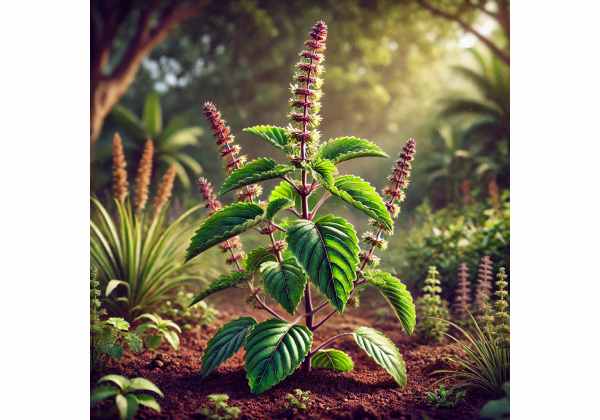
It differs from sweet basil, the common kitchen herb used in pesto and salads, in both flavor and traditional purpose. Sacred basil has a sharper, clove-like, slightly peppery taste and is valued more for wellness support than for culinary bulk. The leaves are used fresh, dried, or extracted. Depending on the cultivar, the plant may have green or purple leaves, and different cultivars can vary somewhat in aroma and active compound balance.
Traditionally, sacred basil has been used for a broad range of concerns, including respiratory discomfort, digestive sluggishness, mental strain, and low resilience during times of stress. In Ayurveda, it is often described as a rejuvenating herb that supports balance rather than forcing a single narrow effect. That reputation helps explain why modern users often describe it as an “everyday adaptogen,” even though the scientific definition of adaptogen is still debated.
In practical terms, people usually choose sacred basil for one of four reasons:
- to feel calmer without heavy sedation
- to support stress resilience during busy or mentally draining periods
- to use as a warming herbal tea during seasonal illness or throat irritation
- to add a broadly antioxidant, anti-inflammatory herb to a daily wellness routine
The herb’s appeal also comes from its flexibility. Tea can suit people who want a light daily ritual. Standardized capsules may be better for those seeking a more consistent dose. Tinctures offer another middle path, especially for people who prefer smaller liquid servings.
Sacred basil is best understood as a supportive herb, not a rescue remedy. It is less like a strong sedative and more like a steadying plant that may help some people feel less reactive, more settled, and slightly better recovered over time. That slower, steadier profile is why many people use it for weeks rather than days. Its benefits are usually subtle at first and often become more noticeable when taken consistently alongside good sleep, regular meals, and lower stimulant overload.
Key Ingredients and Medicinal Properties
Sacred basil contains a wide mix of compounds, which is one reason it is difficult to reduce to a single “active ingredient.” Different preparations emphasize different parts of the plant chemistry. Teas highlight water-soluble compounds, while alcohol extracts and concentrated capsules may deliver a broader or more standardized profile.
Among the best-known compounds are eugenol, rosmarinic acid, ursolic acid, oleanolic acid, luteolin, apigenin, and beta-caryophyllene. These names matter because they help explain why sacred basil is discussed for stress regulation, inflammation, oxidation, and immune response rather than for only one isolated use.
A simple way to think about the major groups is this:
- Volatile aromatic compounds: These include eugenol and related molecules that contribute to the herb’s clove-like aroma. They are often linked with antimicrobial and soothing properties.
- Polyphenols and phenolic acids: Rosmarinic acid is a standout here. These compounds are associated with antioxidant activity and may help moderate inflammatory signaling.
- Flavonoids: Luteolin and apigenin are examples. Flavonoids are widely studied for cellular protection, neuroprotective potential, and effects on inflammatory pathways.
- Triterpenes: Ursolic acid and oleanolic acid fall into this group and are often discussed in relation to anti-inflammatory, metabolic, and tissue-protective effects.
This layered chemistry is why sacred basil is often described as multifunctional. Rather than acting through one dominant mechanism, it appears to work through several overlapping pathways. Research suggests potential effects on oxidative stress, stress signaling, inflammatory mediators, and metabolic balance. That does not mean every product delivers every benefit equally. It means the plant has a plausible biochemical basis for its traditional uses.
Another important point is that whole-herb preparations may act differently from isolated compounds. A cup of tea is not the same as a capsule standardized for specific marker compounds. A full-spectrum extract may offer more consistent dosing than a loose herb, while a tea may be gentler and better suited to routine use. Product quality, cultivation conditions, harvest timing, and extraction method can all shift the final phytochemical mix.
People comparing sacred basil to other aromatic herbs may notice overlap in compounds seen in rosemary for antioxidant and memory support, but the balance and traditional use pattern are different. Sacred basil is typically chosen less for culinary function and more for its blend of calming, immune-supportive, and adaptogenic potential.
In plain language, the medicinal properties most often associated with sacred basil are antioxidant, anti-inflammatory, mildly antimicrobial, stress-modulating, and metabolically supportive. These terms sound broad because they are broad. The value of sacred basil is not that it functions like a drug for one symptom, but that it may gently support several interconnected systems at once.
Sacred Basil Health Benefits and What the Evidence Says
The most convincing modern use for sacred basil is stress support. Human studies, while still limited, suggest that standardized extracts may reduce perceived stress and improve related measures such as mood strain and sleep quality in stressed adults. That does not make it a replacement for therapy, sleep treatment, or prescription care, but it does place sacred basil in the more evidence-backed part of the herbal wellness category.
The clearest pattern is that sacred basil may help people feel less overwhelmed when taken consistently for several weeks. In this context, “help” usually means modest improvement, not a dramatic transformation. It may be especially relevant for people whose stress shows up as mental fatigue, tension, poor sleep, or feeling wired but tired.
Other possible benefits are promising but less settled.
Stress and mood support
This is the lead reason most people take sacred basil. Research suggests it may help buffer the body’s stress response, possibly through effects on cortisol-related signaling and related pathways. Some users notice a calmer mood without feeling dull or sedated, which is part of why it is often discussed alongside ashwagandha for stress and sleep support. The difference is that sacred basil often feels lighter and more daytime-friendly.
Sleep quality
Sacred basil is not a classic sleep herb like valerian. It may still help sleep indirectly when stress is the main problem. In that setting, people sometimes report easier sleep onset, fewer stress-driven awakenings, or better next-morning steadiness.
Blood sugar and metabolic support
Older human studies and traditional use suggest possible benefits for glucose handling, lipid balance, and broader metabolic markers. This area is interesting, but the clinical evidence remains smaller and less standardized than many supplement labels imply. Anyone with diabetes or on glucose-lowering medication should treat this as a reason for monitoring, not a reason for casual use.
Inflammation and oxidative stress
The herb’s polyphenols and triterpenes give it a strong rationale for antioxidant and anti-inflammatory effects. This may matter for overall resilience, recovery, and tissue protection, but much of the stronger evidence still comes from preclinical research rather than large human trials.
Immune and seasonal support
Traditional use strongly supports sacred basil as a tea for colds, sore throat, and general seasonal resilience. Modern lab work suggests antimicrobial and immunomodulatory activity, but people should think of this as supportive care rather than a stand-alone treatment for infection.
A balanced takeaway is important here. Sacred basil appears useful, but it is not equally proven for every claim made online. The evidence is best for stress-related outcomes, plausible but less definitive for metabolic and sleep support, and still emerging for many other areas. It works best when expectations are realistic. Think “helpful support over time,” not “quick fix by tonight.”
Common Uses in Tea, Extracts, and Daily Routines
Sacred basil can fit into daily life in several ways, and the best form depends on why you are taking it. The most traditional use is as a tea, but modern supplements now include tinctures, powders, and standardized extracts.
Tea
Tea is the gentlest entry point. It is often used for everyday stress, throat comfort, light digestive unease, or a general sense of reset during the afternoon or evening. A typical cup is made with about 1 to 2 teaspoons of dried leaf steeped for 5 to 10 minutes. The taste is aromatic, peppery, and slightly clove-like. People who find it intense often combine it with lemon, cinnamon, or ginger for digestive and warming support.
Capsules and tablets
These are usually chosen for consistency. A standardized extract makes it easier to repeat the same dose each day and is often the better option for people specifically targeting stress support. Capsules also avoid the stronger flavor of the tea.
Tinctures
Liquid extracts are useful for flexible dosing. They are practical for people who want to start low, adjust slowly, or add sacred basil to water or tea. The trade-off is that taste varies widely, and alcohol-based tinctures are not for everyone.
Powders and fresh leaf
Powdered leaf may be blended into smoothies or mixed into warm water, though the flavor can dominate. Fresh leaf is common in traditional settings but less precise for dosing.
Daily routines usually work best when they match the intended effect:
- Morning use: good for people who want a calm, focused start without drowsiness
- Midday use: often helpful during high-pressure work periods or mental fatigue
- Evening tea: better when tension and overstimulation are the main barriers to winding down
A few practical use cases are especially common:
- Stress-heavy work weeks
One or two servings daily for several weeks may feel more useful than occasional rescue dosing. - Seasonal wellness support
Tea is often used when the throat feels scratchy or when people want a warming herbal drink instead of another caffeinated beverage. - Caffeine reduction routines
Some people replace part of their afternoon coffee habit with sacred basil tea to reduce stimulation without giving up ritual. - Post-illness or high-burnout recovery
Its appeal here is not intensity but steadiness. It can be part of a broader routine that includes rest, hydration, regular food, and lower stimulant load.
Sacred basil is often easiest to appreciate when it becomes a habit rather than a test. The herb tends to reward consistency, whether that is one daily tea or a standardized supplement taken at the same time each day.
Sacred Basil Dosage, Timing, and How Long to Take It
Dose depends heavily on the form. This is one reason sacred basil can feel confusing. A loose-leaf tea, a full-spectrum capsule, and a standardized extract are not interchangeable milligram for milligram.
For most adults, these are practical starting ranges:
- Dried leaf tea: 1 to 2 teaspoons per cup, 1 to 3 times daily
- Liquid extract or tincture: follow the product label, since concentration varies widely
- Standardized extract capsules: often 250 to 600 mg daily, sometimes divided into two doses
- Higher-dose protocols used in some studies: around 1,000 to 1,200 mg daily, usually under structured conditions rather than casual self-use
Timing should match the goal.
- For daytime stress, take it in the morning or early afternoon.
- For stress-related sleep problems, take a dose later in the day or use tea in the evening.
- For general wellness support, consistency matters more than the exact hour.
How long should you take it? Sacred basil is usually used for at least 2 to 8 weeks before judging the result, especially when the goal is stress resilience. Tea may feel soothing immediately as a ritual, but measurable supplement benefits tend to build gradually.
A few common mistakes make the herb seem less effective than it really is:
- taking it only on the worst days instead of consistently
- expecting a sedative effect instead of a steadier, calmer baseline
- using a low-quality, unstandardized product for a very specific outcome
- combining it with excessive caffeine and then blaming the herb for “not working”
It also helps to match the form to the task. Tea is excellent for habit and comfort. Capsules are better for reproducible dosing. Someone comparing nootropic-style daytime herbs may also look at bacopa for memory and attention, but sacred basil is often the better choice when stress reactivity is the core issue.
A simple approach is to start low, stay steady, and reassess after two weeks. If the product is well tolerated and the reason for use is clear, many adults can continue for longer periods, though it is wise to review ongoing use if you take medications, have a chronic medical condition, or plan to use concentrated extracts continuously for months.
Safety, Side Effects, Interactions, and Who Should Avoid It
Sacred basil is generally considered well tolerated in healthy adults when used in reasonable amounts, especially as tea. Even so, “natural” does not mean risk-free. Safety depends on the form, the dose, the duration, and the person taking it.
Most reported side effects are mild and may include:
- stomach upset
- nausea
- lightheadedness
- changes in appetite
- an unpleasant taste or reflux with some preparations
Tea is usually the lowest-risk way to try the herb. Concentrated extracts deserve more caution because they deliver more active compounds in a smaller dose.
The main groups that should be more careful are these:
People who are pregnant or trying to conceive
Medicinal-dose use is best avoided unless a qualified clinician specifically recommends it. Human pregnancy data are limited, and caution is more appropriate than experimentation.
People taking diabetes medication
Sacred basil may have glucose-lowering potential. Used together with diabetes drugs, it could make blood sugar more likely to run low or become less predictable.
People taking blood thinners or antiplatelet drugs
Some clinicians advise caution because herbs with phenolic and aromatic constituents can sometimes affect bleeding risk or interact indirectly with medication plans. This is not a reason for panic, but it is a reason to ask before combining.
People scheduled for surgery
A common precaution is to stop nonessential herbal supplements about 1 to 2 weeks before surgery unless the surgical team says otherwise.
People using multiple calming, sedating, or blood-pressure-lowering products
Sacred basil is not strongly sedating for most people, but combinations matter more than single ingredients. Layering several supplements can create effects you would not expect from one alone.
It is also worth paying attention to product quality. Choose brands that identify the botanical name, plant part, extraction type, and preferably some level of standardization or third-party testing. “Tulsi blend” is not the same as a clearly labeled Ocimum tenuiflorum extract.
A few sensible safety rules go a long way:
- Start with the lowest practical dose.
- Use one new herb at a time.
- Monitor blood sugar or blood pressure if you already track them.
- Stop and reassess if you develop persistent digestive issues, dizziness, or unusual symptoms.
- Ask a clinician before combining it with chronic medication.
For most adults, sacred basil is a reasonable herbal option when used thoughtfully. The safest attitude is to see it as a real bioactive plant with meaningful potential, not as a harmless wellness flavoring. Respecting that difference is what keeps herbal use both useful and safe.
References
- A Comprehensive Review of the Phytochemical Constituents and Bioactivities of Ocimum tenuiflorum 2024 (Review). ([PubMed][1])
- Ocimum tenuiflorum extract (HOLIXERTM): Possible effects on hypothalamic-pituitary-adrenal (HPA) axis in modulating stress 2023 (Mechanistic Study). ([PubMed][2])
- A randomized, double-blind, placebo-controlled trial investigating the effects of an Ocimum tenuiflorum (Holy Basil) extract (HolixerTM) on stress, mood, and sleep in adults experiencing stress 2022 (RCT). ([PubMed][3])
- The Clinical Efficacy and Safety of Tulsi in Humans: A Systematic Review of the Literature 2017 (Systematic Review). ([PMC][4])
- Risk assessment of holy basil (Ocimum tenuiflorum L. and Ocimum sanctum L.) and some of the component substances used in herbal teas and food supplements 2023 (Risk Assessment).
Disclaimer
This article is for educational purposes only and is not medical advice, diagnosis, or treatment. Sacred basil may interact with medications and may not be appropriate during pregnancy, before surgery, or for people managing blood sugar or blood pressure with prescription drugs. For persistent symptoms, chronic conditions, or supplement use alongside medication, consult a qualified healthcare professional before starting or changing your routine.
If this article helped you, please share it on Facebook, X, or your preferred platform so others can find it too.