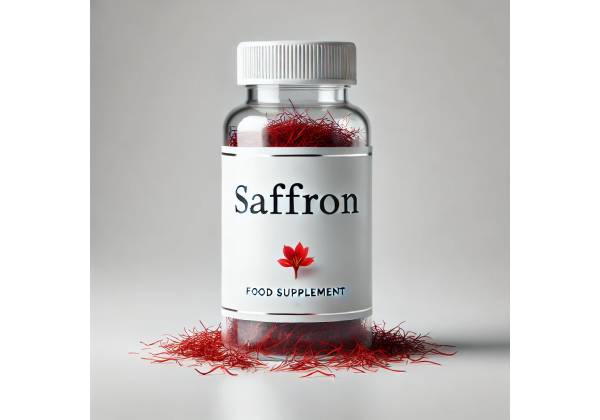
Saffron extract has moved far beyond its reputation as a culinary luxury. In mental wellness and brain-health research, it stands out because it is one of the few plant extracts with repeated human trials showing potential benefits for mood. That does not make it a miracle supplement, and it does not place it on the same footing as established psychiatric care. Still, it deserves more attention than many “natural mood support” products because its clinical evidence is broader than its elegant image suggests.
Most modern studies use standardized saffron extract rather than kitchen saffron, often in doses around 28 to 30 milligrams a day over six to twelve weeks. The most promising results relate to mild to moderate depressive symptoms, anxiety, stress-related mood changes, and possibly sleep and attention in selected groups. This guide explains what saffron extract is, how it may work in the brain, where the evidence is strongest, how it is commonly used, and what safety limits matter most.
Table of Contents
- What Saffron Extract Is
- Where the Best Evidence Sits
- How Saffron May Affect the Brain
- Other Uses Beyond Mood
- Dosage, Forms, and What to Buy
- Safety, Side Effects, and Precautions
What Saffron Extract Is
Saffron extract comes from the stigmas of Crocus sativus, the same flower that produces the spice saffron. But the supplement used in clinical studies is usually not the same thing as a pinch from a kitchen jar. Research products are typically standardized extracts designed to deliver more predictable amounts of compounds such as crocin, crocetin, safranal, and picrocrocin. Those names matter because they help explain why saffron is discussed not only as a flavoring, but also as a brain and mood supplement.
Its reputation in mental wellness has grown because saffron appears to have a broader profile than many simple calming herbs. It has been studied for depressive symptoms, anxiety, stress-related mood changes, sleep quality, attention, and aspects of cognition. That range makes it tempting to call saffron a natural antidepressant, a nootropic, and an anti-stress supplement all at once. The more accurate answer is narrower: it may have real value, especially for mood, but the strength of the evidence varies depending on the goal.
That distinction is important because many people approach saffron with vague hopes. They may want to feel brighter, calmer, sharper, and more emotionally resilient at the same time. Sometimes those goals overlap, especially when low mood, poor sleep, and mental fatigue arrive together. But they are not the same problem, and saffron does not solve all of them equally well.
In practice, saffron extract is most commonly considered for:
- mild to moderate depressive symptoms
- anxiety symptoms or tension linked to stress
- emotional irritability or low mood during periods of strain
- sleep quality as a secondary target
- attention support in specific settings, including emerging ADHD research
What it is not:
- a replacement for urgent psychiatric care
- a proven stand-alone treatment for major depression
- a fast stimulant for productivity
- a guaranteed memory enhancer for healthy adults
The supplement also sits in a useful middle ground. It has a stronger human trial base than many wellness products, yet it is still not as standardized or tightly regulated as prescription treatment. That means expectations need to stay realistic.
A practical way to think about saffron extract is this: it is one of the more credible plant-based options for mood-related support, but it works best when used for a defined reason. Someone exploring mood support may compare it with other supplement approaches such as SAMe for mood and cognition, but saffron has a somewhat different profile, with a gentler reputation and a distinct research base.
The key from the beginning is to separate saffron’s beauty from its biology. It is not useful because it is rare or expensive. It is useful because its active compounds appear to do something measurable in some people, under some conditions, and at surprisingly modest doses.
Where the Best Evidence Sits
The strongest clinical case for saffron extract is in mood, especially mild to moderate depressive symptoms. Across multiple trials and meta-analyses, saffron has shown benefits compared with placebo and, in some studies, results that look broadly comparable to standard antidepressants for symptom reduction over short treatment periods. That does not mean saffron is interchangeable with prescription treatment. It means it has more serious clinical support than many supplements marketed for emotional well-being.
This is where precision matters. The best evidence is not for severe depression, psychosis, bipolar disorder, or crisis-level symptoms. It is mostly for people with milder or moderate symptom burden, often in outpatient settings, and usually over six to twelve weeks. The effect sizes in some trials are encouraging, but the studies are often small, many come from a limited number of research groups, and long-term data are thinner than many readers assume.
The most defensible summary is:
- saffron appears promising for mild to moderate depressive symptoms
- it may help anxiety symptoms in some users
- it should not replace first-line care when symptoms are severe, complex, or worsening
- it may be best viewed as an adjunct or carefully chosen alternative in selected cases
There is also growing interest in whether saffron helps more specific mood-related experiences such as anhedonia, irritability, stress sensitivity, and emotional fatigue. That is clinically relevant because not everyone with low mood feels the same. Some feel sad. Others feel flat, tense, or unable to enjoy anything. Saffron may be especially interesting where motivation and reward processing are involved, though that area still needs more direct evidence.
Another important point is tolerability. One reason saffron gets attention is that some trials suggest fewer adverse effects than selective serotonin reuptake inhibitors. That does not prove it is always safer or more appropriate. It does help explain why some people are interested in it when they are wary of medication side effects or are looking for a clinician-guided supplement option.
At the same time, the article should not promise too much. Saffron is not a treatment shortcut for someone with persistent low mood, functional decline, suicidal thoughts, mixed mood states, or symptoms that suggest bipolar disorder. A supplement can sometimes support treatment, but it should not delay care for depression symptoms that need proper evaluation.
For readers looking specifically at brain health, the mood evidence matters because mood and cognition are closely tied. When depressive symptoms ease, concentration, motivation, and memory often improve as well. But that does not necessarily mean saffron directly enhances cognition in healthy adults. It may improve brain performance partly by reducing the emotional burden that disrupts it.
That is why saffron’s strongest evidence sits in mental wellness first, and only secondarily in broader brain-function claims. In a supplement market filled with vague “supports mood and focus” language, that is a meaningful distinction.
How Saffron May Affect the Brain
Saffron extract is often described as multitargeted, and that may be one reason it keeps showing up in mental-health research. Instead of acting through a single simple pathway, saffron and its major compounds appear to influence several systems that matter for mood, stress regulation, and brain resilience.
One of the best-known proposed mechanisms involves neurotransmitters. Saffron may affect serotonin, dopamine, and norepinephrine signaling, which helps explain why it is studied in depression and anxiety rather than only in general wellness. These effects are not fully mapped out in humans, but they give a plausible biological foundation for the mood changes reported in trials.
Researchers also focus on inflammation and oxidative stress. Chronic low-grade inflammation, mitochondrial strain, and oxidative burden are all linked to poorer mood, slower cognitive performance, and less resilient stress responses. Saffron’s compounds appear to have antioxidant and anti-inflammatory effects, which may help explain why the extract is also being studied for neuroprotection and cognitive aging.
Other proposed actions include:
- support for neuroplasticity and brain-derived signaling pathways
- modulation of the stress response
- effects on reward processing and hedonic tone
- support for vascular and cellular resilience
- influence on sleep-related biology in some settings
This broader profile is why saffron can seem to “cross categories.” It may help mood, sleep, stress tolerance, and attention not because it is a different supplement every time, but because those experiences share overlapping brain pathways.
Still, it is important not to confuse mechanism with proof. A supplement can look excellent on paper and still fail to produce large real-world effects. Saffron’s biology is promising, but the strength of its clinical case still depends on the condition being treated, the dose used, and the quality of the extract.
A better way to frame the mechanism story is this: saffron has enough plausible brain-active biology to justify the human trials that have been done, and those trials show the most consistent benefits in mood-related outcomes. That is more meaningful than vague marketing language about “balancing neurotransmitters,” but it still stops short of a universal brain-health claim.
This is also why saffron should not be treated like a simple stimulant or a generic focus supplement. It may help some people think more clearly, but often because mood, sleep, or emotional load has improved. That is not the same as directly increasing working memory, speed, or attention in healthy users.
From a practical standpoint, the mechanism story matters because it helps explain where saffron is most believable. It is more believable as a mood-support and stress-resilience supplement than as a raw productivity enhancer. It is more believable as a supportive adjunct than as a replacement for comprehensive care. And it is more believable when used consistently over time than when judged after one or two doses.
In short, saffron affects the brain through several credible pathways, but its real-world usefulness still depends on matching those pathways to the right problem.
Other Uses Beyond Mood
Although mood is saffron’s clearest area of promise, it is not the only reason people consider it. Research has also explored sleep, attention, and cognition. These secondary uses are worth discussing, but they need a more careful tone because the evidence is thinner and more uneven.
Sleep is one of the more plausible non-mood uses. Some clinical trials and reviews suggest saffron may improve sleep quality and duration, particularly in people with mild sleep complaints rather than severe insomnia. That makes sense because mood and sleep often influence each other in both directions. A supplement that modestly reduces emotional tension or improves evening calm may also help sleep feel easier. Still, saffron is not a first-line treatment for persistent insomnia, and it should not replace good sleep timing habits or evaluation for sleep disorders.
Attention is another emerging area. There is growing interest in saffron for ADHD symptoms, particularly in children and adolescents, with some early studies suggesting possible benefit and acceptable tolerability. That is encouraging, but the evidence base remains small. It would be a mistake to present saffron as an established ADHD treatment. It is better described as a promising area of research that may matter more in supervised care than in casual self-treatment.
Cognition is the most easily overstated area. Saffron has been studied in mild cognitive impairment and Alzheimer disease, and some trials suggest it may help aspects of cognitive function or perform comparably to standard medication in certain measures. That does not mean it has been proven as a broad memory supplement for healthy adults. The strongest cognitive findings are still concentrated in clinical populations rather than in young or middle-aged adults looking for a sharper edge at work.
A realistic ranking of the evidence looks like this:
- mood support
- anxiety-related symptom reduction
- possible sleep-quality support
- emerging attention-related use
- selected cognitive support in mild impairment or dementia
That order matters because supplement marketing often flips it. Products aimed at productivity or memory may borrow saffron’s mood evidence and present it as focus evidence. Readers should be careful not to merge those categories automatically.
This also helps explain why saffron may feel more useful to some people than others. Someone whose concentration is slipping because of low mood, poor sleep, and stress may genuinely feel sharper on saffron. Someone who sleeps well, feels emotionally steady, and simply wants more mental horsepower may notice much less.
There is also a practical overlap with daily mental strain. People dealing with poor recovery, tension, and uneven sleep sometimes find more benefit from restoring the basics than from stacking multiple supplements. That is why saffron often fits better beside sleep and mental-health support habits than inside a high-stimulation nootropic routine.
So yes, saffron has uses beyond mood. But the farther it moves from mood and stress-related symptoms, the more cautious the claims should become. That is not a weakness. It is simply what honest evidence-based writing looks like.
Dosage, Forms, and What to Buy
One of saffron extract’s practical strengths is that the doses used in research are usually modest. Many clinical trials cluster around 28 to 30 milligrams per day, often divided into 15 milligrams twice daily or taken once daily depending on the formulation. Trial lengths commonly run 6 to 12 weeks, which means saffron is better judged as a steady-use supplement than as a same-day intervention.
That dose pattern is important because it separates evidence-based use from guesswork. A product with a very small amount of saffron mixed into a proprietary blend may have little connection to the doses used in actual trials. By contrast, a standardized extract clearly labeled at around the clinical range is easier to assess.
Common forms include:
- capsules with standardized saffron extract
- tablets containing saffron stigma extract
- blends that combine saffron with other mood or sleep ingredients
- less commonly, crocin- or safranal-standardized products
For most people, a simple single-ingredient product is the easiest place to start. Combination formulas can be useful, but they also make it harder to know what is helping, what is causing side effects, and whether the saffron dose is meaningful.
When choosing a product, look for:
- a clearly stated saffron extract amount per serving
- standardized active compounds when provided
- third-party testing or reputable quality certification
- transparent ingredient lists without hidden blends
- realistic dosing that resembles human research
Timing depends partly on the goal. For general mood support, morning and evening split dosing is common. For sleep-adjacent use, some people prefer taking it later in the day. There is no single rule, but consistency matters more than perfection.
A reasonable trial approach looks like this:
- Choose a reputable standardized product.
- Stay within the evidence-based range rather than chasing a high dose.
- Use it consistently for several weeks.
- Track mood, tension, sleep, and side effects rather than relying on vague impressions.
This last point is useful because saffron is often subtle. Some people notice a gradual lifting of mental heaviness, less reactivity, or better evening calm before they notice anything that feels like “better focus.”
It is also worth remembering that saffron is not a stimulant. Someone looking for fast alertness may do better with a very different approach, such as L-theanine for calm focus or a review of sleep and caffeine habits. Saffron is more about mood terrain than immediate activation.
In the end, good saffron use is surprisingly unglamorous. The best strategy is not exotic. It is a standardized extract, a realistic daily dose, enough time to judge the response, and enough restraint not to mix five other new supplements into the same experiment.
Safety, Side Effects, and Precautions
Saffron extract is generally described as well tolerated at the doses used in human trials, which is one reason it has gained attention in mood research. Even so, “well tolerated” does not mean risk-free. It means that within the dose ranges usually studied, side effects are often mild and discontinuation rates are not especially high.
The most commonly reported side effects are relatively nonspecific and may include:
- nausea or stomach discomfort
- headache
- dizziness
- dry mouth
- appetite changes
- mild sedation or feeling unusually relaxed
These effects are usually more manageable than the side effects people worry about with prescription antidepressants, but that should not be turned into a blanket claim that saffron is safer in every context. Supplements are still biologically active, and the right comparison depends on the person, the condition, and the other treatments involved.
There are several situations where extra caution makes sense. Pregnancy is one of the clearest. Saffron has a long traditional history that includes emmenagogue effects, and concentrated supplemental use is generally avoided during pregnancy unless specifically advised by a clinician. People with bipolar disorder should also be cautious, because any supplement with antidepressant-like activity can complicate mood stability. The same goes for people taking psychiatric medication, blood pressure medication, anticoagulants, or multiple supplements aimed at mood.
Potential concerns to think about include:
- interactions with antidepressants or other psychoactive drugs
- additive effects with blood-pressure-lowering agents
- caution with anticoagulants or bleeding risk
- uncertainty in pregnancy and breastfeeding
- allergy or sensitivity to saffron or related plants
Another practical issue is product quality. With saffron, quality matters because adulteration and weak formulations are real concerns. An unusually cheap product may not contain what the label implies. Since the effective doses in trials are not large, a mislabeled product can drift far from the intended range.
It is also important not to self-treat the wrong problem. Saffron may be a reasonable supportive option for low mood or anxious tension, but it is not the right tool for suicidal thoughts, severe functional decline, mania, psychosis, rapidly worsening depression, or major cognitive change. In those cases, the priority is professional care, not supplement optimization.
A useful safety checklist is simple:
- Stay near research-based doses.
- Avoid stacking it with several new mood supplements at once.
- Review medications before starting.
- Stop if you feel clearly worse, unusually activated, or physically unwell.
- Seek evaluation if symptoms are severe, persistent, or changing quickly.
This cautious approach does not make saffron less appealing. It makes it more usable. A supplement is most helpful when it is placed in the right role. With saffron extract, that role is often as a thoughtful, moderate-intensity support tool rather than a cure-all.
References
- Exploring the Potential of Saffron as a Therapeutic Agent in Depression Treatment: A Comparative Review 2024 (Review)
- Effect of Saffron Versus Selective Serotonin Reuptake Inhibitors (SSRIs) in Treatment of Depression and Anxiety: A Meta-analysis of Randomized Controlled Trials 2025 (Meta-Analysis)
- Saffron and Sleep Quality: A Systematic Review of Randomized Controlled Trials 2023 (Systematic Review)
- Saffron for mild cognitive impairment and dementia: a systematic review and meta-analysis of randomised clinical trials 2020 (Systematic Review)
- From Mood to Memory: Unlocking Saffron’s Potential in Brain Health 2025 (Review)
Disclaimer
This article is for educational purposes only and is not medical advice, diagnosis, or treatment. Saffron extract may interact with medications and may not be appropriate for everyone, especially people who are pregnant, breastfeeding, taking psychiatric or blood-thinning medicines, or managing bipolar disorder or significant mood symptoms. If depression, anxiety, sleep change, or cognitive symptoms are persistent, worsening, or affecting daily function, speak with a qualified clinician before using saffron extract.
If this guide was helpful, please consider sharing it on Facebook, X, or your preferred platform so others can make more informed decisions about saffron extract and mental wellness.