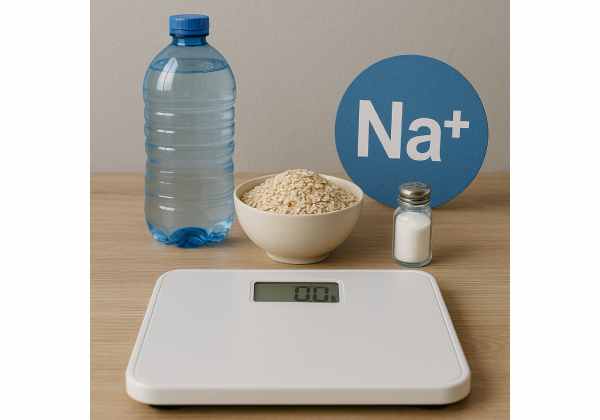
A flat scale does not always mean fat loss has stopped. In many cases, the problem is not body fat at all. It is water. A few days of higher sodium, harder training, lower-carb dieting followed by a carb-heavy meal, or even a more regular eating pattern can temporarily mask real progress. That is why people often feel stuck even when their calorie deficit is still doing its job.
Understanding water, glycogen, and sodium makes the scale much less mysterious. This article explains why body weight can hold steady or jump overnight, how these shifts differ from actual fat gain, how long they usually last, and how to tell whether you are looking at a normal fluctuation or a true plateau.
Table of Contents
- Why fat loss and scale weight do not match
- How water weight hides progress
- What glycogen does to the scale
- How sodium can shift weight fast
- How to tell a normal fluctuation from a real stall
- What to do when the scale stalls
Why fat loss and scale weight do not match
One of the hardest parts of losing weight is that body fat and scale weight do not move in a neat, synchronized line. Fat loss is slow and gradual. Scale weight is noisy.
Your body weight on any given morning reflects far more than fat mass. It includes body water, glycogen stored in muscle and liver, food still moving through your digestive tract, stool, inflammation from training, hormone-related fluid shifts, and the simple fact that yesterday’s meals may still be physically inside you. That means you can be losing fat while the scale looks flat for days or even a couple of weeks.
This is where people often make a costly mistake. They assume “scale not moving” means “deficit no longer working,” so they cut calories harder, add more cardio, or swing into a cycle of tight weekdays and frustrated weekends. In reality, the fat-loss process may still be happening underneath a temporary layer of water and stored fuel.
A helpful way to think about it is this:
- Fat loss changes slowly.
- Water and glycogen change quickly.
- The scale shows both at the same time.
That is why a person can do everything right for six days, have a salty restaurant meal, a hard leg workout, or a high-carb weekend, and weigh more on Monday morning than they did on Friday. The scale is not broken. It is simply reporting total body weight, not body fat alone.
This becomes even more confusing once dieting has been going for a while. The closer people watch the scale, the easier it is to misread normal volatility as failure. That is one reason many apparent stalls are actually phantom plateaus driven by water retention rather than a true stop in fat loss.
A few practical examples make the mismatch clearer:
- You lose enough fat over a week to reduce body weight by about half a pound, but you retain one pound of extra water from a higher-sodium meal. The scale goes up instead of down.
- You maintain your calorie deficit, but you increase training intensity and soreness. Temporary water retention from recovery can flatten the weekly average.
- You have a lower-carb week, then a higher-carb day. Glycogen and its associated water rise, and the scale jumps even if body fat does not.
This is why the scale is useful but incomplete. It needs interpretation. A flat or rising number only becomes meaningful when you place it in context: recent sodium intake, carb intake, training soreness, bowel regularity, sleep, stress, menstrual cycle status, and how long the trend has lasted.
The goal is not to stop using the scale. The goal is to stop expecting it to behave like a body-fat scanner. It is a crude but helpful tool. When you understand what it is actually measuring, you stop reacting to every blip and start looking for patterns that matter.
How water weight hides progress
Water weight is the biggest reason people think they have stopped losing fat when they have not.
The body is constantly regulating water balance. It shifts fluid in response to salt intake, carbohydrate intake, exercise, hormones, heat, dehydration, stress, and inflammation. Those changes can happen quickly, which is why body weight can move by one to several pounds in a short time without reflecting real fat gain or fat loss.
The most common water-related reasons for a stalled scale are:
- A recent high-sodium meal or weekend of eating out
- Hard training, especially new or high-volume sessions
- Soreness and inflammation
- Dehydration followed by rehydration
- Hormonal shifts, including around the menstrual cycle
- Increased food volume, which often comes with increased water held in the gut and tissues
This last point surprises people. Sometimes eating more consistently can make the scale go up before it settles down. If you have been dieting hard, under-eating during the day, or alternating restriction with overeating, then a few days of more regular food intake can temporarily increase body weight through greater gut content and water retention even while it improves adherence.
Water fluctuations also tend to cluster. A tough lower-body workout, poor sleep, and a restaurant dinner can all happen in the same 48 hours. When that happens, the scale may not just stall. It may jump sharply. That does not mean you gained several pounds of fat overnight. It means several fluid-related factors landed at once.
This is where daily weighing can either help or hurt. It hurts when you stare at single numbers and react emotionally. It helps when you use a method like a daily weigh-in protocol and pay attention to averages. A single high weigh-in is usually just data. A high average that persists for two or three weeks tells you more.
It is also useful to know what water retention tends to feel like:
- Rings feel tighter
- Socks leave deeper marks
- Muscles feel full but puffy
- The abdomen feels bloated
- The scale rises faster than fat gain realistically could
Fat gain usually behaves differently. It accumulates more gradually and is tied to a sustained calorie surplus, not one dinner or one weekend. Water retention can appear abruptly and leave abruptly. Fat gain rarely does either.
Another reason water weight hides progress is that dieting itself can make fluid balance more variable. When calories are lower, people often become more reactive to meals, salt, workouts, and stress. The body has fewer buffers. That makes the scale more volatile, not less.
A useful mindset shift is to stop asking, “Why am I heavier today?” and start asking, “What changed recently that would affect water?” That single question prevents a lot of unnecessary panic and a lot of bad decisions.
What glycogen does to the scale
Glycogen is stored carbohydrate, mainly in muscle and liver. It is one of the most misunderstood reasons the scale moves.
When you eat carbohydrates, part of that carbohydrate is stored as glycogen. Glycogen is not stored dry. It is stored with water. That means as glycogen rises, water weight rises with it. As glycogen falls, water weight tends to fall too. This is one reason low-carb diets often create a fast early drop on the scale that looks dramatic but is not all body fat.
The reverse also happens. If you have been dieting, eating fewer carbs, training hard, or simply keeping food intake lower for a while, then one higher-carb day or weekend can refill glycogen stores and pull water back in. The result is a rapid increase in scale weight that often feels discouraging but is usually normal.
This is especially common after:
- A diet break
- A refeed
- A vacation with more carbs than usual
- A “treat meal” that includes bread, pasta, rice, dessert, or alcohol plus salty foods
- A return to normal eating after a very low-carb phase
The scale response can be surprisingly large relative to the amount of fat actually gained. That is why people often think they “undid” a week or two of progress after one weekend, when much of what they are seeing is stored glycogen and water, not new fat tissue.
You can think of glycogen as a fuel tank with weight attached to it. When the tank is fuller, you often feel stronger, fuller, and better in the gym, but you also weigh more. When the tank is emptier, you may weigh less, but workouts can feel flatter and muscles may look less full. Neither state automatically tells you much about body fat.
This is also why a higher-carb day can create confusion during a plateau. Someone may still be in a deficit overall, but after one or two higher-carb meals the scale rises and they assume the deficit has stopped working. In reality, glycogen can temporarily cover up the trend. That pattern is exactly why a temporary carb reintroduction weight spike is so common after dieting or low-carb phases.
A few clues suggest glycogen-related scale change rather than fat gain:
- The increase happens quickly, often within 24 to 72 hours
- Muscles look fuller rather than softer
- Training feels better
- The change followed more carbs rather than many days of clear overeating
- Weight usually starts settling after several consistent days
Glycogen shifts are not bad news. In some cases they are a sign that training fuel and food intake improved. The problem is not glycogen itself. The problem is misreading a stored-fuel change as proof that fat loss has failed.
This is one reason the scale can make progress look random when it really is not. If you only look at body weight, glycogen can blur the picture. If you understand the mechanism, the same fluctuation becomes much easier to interpret and much less emotionally loaded.
How sodium can shift weight fast
Sodium changes scale weight faster than many people expect.
Sodium helps regulate fluid balance in the body. When intake rises sharply, especially alongside a higher-carb meal or more processed food, body water can rise too. That does not mean sodium is “making you fat.” It means it is affecting where and how much water your body is holding in the short term.
This is why people often weigh more after:
- Takeout or restaurant meals
- Pizza, burgers, fries, sushi with soy sauce, deli foods, or packaged snacks
- Travel days with convenience foods
- Holiday meals
- Social weekends that combine alcohol, salty food, and more carbs
The scale effect can be dramatic because these meals often stack three things at once:
- More sodium
- More carbohydrates
- More total food volume
That combination is almost designed to create a temporary spike in body weight. The mistake is assuming the increase reflects fat gain one-for-one.
Sodium-driven changes are also individual. Some people see only a small bump. Others can hold noticeably more fluid after a single salty meal. This tends to be more obvious when baseline eating is relatively unprocessed and lower in sodium, because the contrast is larger.
An important nuance is that sodium does not act alone. It works inside a larger water-regulation system. If you are dehydrated, stressed, sore from training, sleeping poorly, or eating more carbs at the same time, the body-water effect can be stronger. That is why one meal may do very little one week and create a big scale jump the next.
People sometimes respond by slashing sodium immediately. That is usually the wrong lesson. The better lesson is consistency. The body handles a relatively stable intake better than large swings. If one day is very low in sodium and the next is extremely high, the scale will often be more erratic than if intake stays reasonably steady.
A few practical points help:
- A salty meal usually affects the next one to three weigh-ins more than the next three weeks.
- Drinking normally, returning to routine meals, and resuming normal activity often helps the scale normalize.
- Trying to “flush out” the weight with extreme water loading or starvation usually backfires.
- The issue is usually variability, not the existence of sodium itself.
It is also worth noticing what sodium spikes tend to come with behaviorally. Restaurant meals and travel meals are not only saltier. They are also often higher in calories and easier to overeat. So sodium may explain part of the sudden scale increase, while the overall eating pattern still deserves attention. That is why a sodium-related jump can coexist with the same habits behind weekend overeating that erases a deficit.
The most accurate interpretation is usually this: sodium explains the speed of the change more than the full story of long-term progress. If the scale jumped overnight, sodium and water are likely involved. If the average is still trending up over several weeks, then you need to look beyond sodium alone.
How to tell a normal fluctuation from a real stall
The difference between a normal fluctuation and a real stall is time, context, and trend.
A normal fluctuation is usually short-lived and tied to something identifiable: a salty dinner, a carb-heavy weekend, a hard training block, travel, constipation, poor sleep, or menstrual-cycle water retention. A real stall is more persistent. The average stops moving for long enough that the explanation is less likely to be temporary water alone.
A useful rule of thumb is that a few flat or high weigh-ins mean very little. A weekly average that stays flat for two to four weeks under consistent conditions is much more meaningful. That is why checking for a true plateau over two to four weeks is far more informative than reacting to any single day.
Here is a practical checklist.
A stall is more likely to be water and glycogen if:
- The jump was fast
- You recently had more carbs or sodium
- You are sore from training
- Your waist measurement is unchanged
- You feel bloated or puffy
- Weight has been volatile rather than steadily rising
- The trend was moving before this week
A stall is more likely to be a real fat-loss slowdown if:
- The 14- to 28-day average is flat
- Weekends are consistently looser than weekdays
- Portions have crept up
- Steps or movement are lower than earlier in the diet
- Hunger and grazing have increased
- The deficit is more theoretical than real
- Waist and other measurements are no longer improving
This is why scale interpretation works best when it includes more than body weight. Useful companion metrics include:
- Waist circumference
- Progress photos
- Clothes fit
- Step count
- Workout performance
- Bowel regularity
- Notes about restaurant meals, travel, and menstrual timing
The more consistent your routine, the easier it is to tell what is happening. If sodium, carbs, meal timing, alcohol, and weigh-in conditions are all swinging wildly, the signal gets buried in noise.
One underrated strategy is to make the weigh-in boring. Same time, same conditions, same scale, same minimal clothing, and no emotional speech attached to the result. Boring data is clean data. Clean data leads to better decisions.
Also remember that a real plateau does not always mean you need to cut calories. Sometimes it means you need to wait, because the scale is temporarily masking what is already happening. Other times it means you need a wider audit of routine, not a harsher diet. That is why the best next step is often a structured review like a plateau checklist before cutting more calories.
The key is patience with evidence. If the scale has been weird for three days, do not diagnose the month. If the scale has been flat for three weeks and your routine has drifted, do not blame water forever either.
What to do when the scale stalls
When the scale is not moving, the smartest response is usually not to panic and cut calories immediately. It is to reduce noise, collect better data, and fix the most likely causes first.
A practical response plan looks like this:
- Hold steady for several more days if the likely cause is temporary.
If you know you had more sodium, more carbs, harder workouts, or travel, give your body time to normalize. - Return to your usual routine.
Go back to your normal meal pattern, protein intake, hydration, step count, and training schedule. Do not compensate with starvation or punishment cardio. - Weigh daily, but judge weekly averages.
One weigh-in reflects yesterday. A 7-day average reflects the actual trend. - Keep sodium and carbs more consistent.
You do not need ultra-low sodium or ultra-low carbs. You need fewer huge swings. - Use simple meals for a few days.
Home-cooked, repeatable meals often reduce both sodium variability and calorie guesswork. - Check for the obvious “hidden surplus” patterns.
Restaurant meals, alcohol, grazing while cooking, weekend extras, and larger portions can coexist with water retention and make the stall look even more confusing.
This is also a good time to tighten the basics that lower scale noise:
- Drink fluids consistently rather than oscillating between very low and very high intake
- Keep bedtime more consistent
- Avoid turning one high weigh-in into an “I blew it anyway” weekend
- Track meals honestly if your intake has become loose
- Monitor steps if activity has dropped
If the scale remains flat after two to four weeks of real consistency, then it may be time to adjust the plan. But even then, the first question should be whether the issue is calories, routine drift, or reduced movement. Many people blame metabolism when the more practical issue is that adherence softened while scale noise kept them distracted. In those cases, you may eventually need to reconsider calories during a stall or change the structure of the diet, but that decision should come after a clean assessment, not after one salty weekend.
The most useful long-term lesson is that body weight is a trend, not a verdict. Sodium, glycogen, and water can easily hide a week or two of genuine progress. If you understand that, you stop using the scale like a daily truth serum and start using it as one piece of a bigger picture.
That shift matters. It helps you keep good habits long enough for real fat loss to show through the noise. And in weight management, that ability to stay calm through temporary fluctuations is often what separates people who quit early from people who actually get where they are trying to go.
References
- Muscle Glycogen Assessment and Relationship with Body Hydration Status: A Narrative Review 2022 (Review)
- Reference Values for Hydration Biomarkers: Optimizing Athletic Performance and Recovery 2025 (Review)
- Sodium – a systematic review for Nordic Nutrition Recommendations 2023 2024 (Systematic Review)
- The biology of water homeostasis 2025 (Review)
- Obesity Management in Adults: A Review 2023 (Review)
Disclaimer
This article is for general educational purposes only. Scale changes can reflect normal shifts in water, glycogen, sodium, hormones, medications, or medical conditions, so it is not a substitute for personalized medical or nutrition advice, diagnosis, or treatment.
If this article helped, share it on Facebook, X (formerly Twitter), or your preferred platform so more people can stop mistaking normal fluctuations for failure.