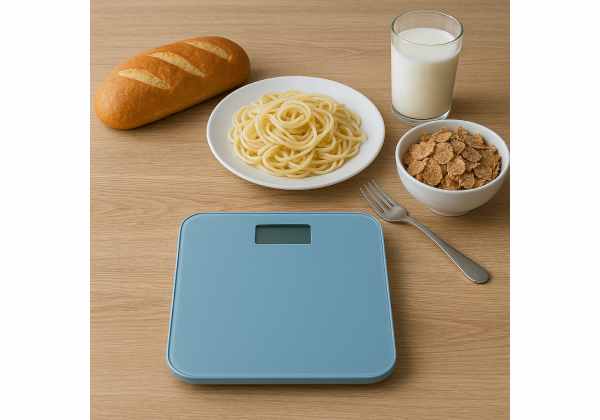
Seeing the scale jump after you add carbs back can feel like instant fat regain, especially if you were losing steadily on lower carbs or a stricter cut. In most cases, that fast increase is not body fat. It is a mix of glycogen refilling, extra water stored with it, a possible bump in sodium, and simply having more food volume moving through your system.
The important question is not whether the scale moved, but what kind of weight moved. A temporary carb reintroduction weight spike usually happens fast, levels off, and then settles. True fat gain is slower, more persistent, and tied to a sustained calorie surplus. Here is how to tell the difference, what range is usually normal, and how to reintroduce carbs without losing your nerve.
Table of Contents
- Why carbs raise scale weight
- How much gain is normal
- What amplifies the temporary spike
- When it may be fat gain
- How to reintroduce carbs calmly
- Better ways to track progress
Why carbs raise scale weight
When you have been eating lower carbs, dieting hard, or training in a way that runs down glycogen, your muscles and liver are carrying less stored carbohydrate. Once carbs come back in, those stores refill. That is usually a good thing. You may notice better training, fuller muscles, less flatness, and a stronger pump. But glycogen does not come back alone. It is stored with water, which is why your body weight can rise quickly even when your body fat has not.
This is the core reason a carb reintroduction weight spike is so common. You are not suddenly “converting all carbs to fat” overnight. You are refueling. The scale is picking up that refueling process.
A few other things happen at the same time:
- Water rises with glycogen. This is the main driver of the sudden bump.
- Food volume goes up. Higher-carb eating often means more total food mass in the gut, even if calories stay controlled.
- Sodium often rises too. Carb reintroduction sometimes comes with bread, cereal, sauces, takeout, or snacks, which can temporarily increase fluid retention.
- Stress can drop a little. After a long deficit, eating more carbs may shift appetite, performance, and recovery, but your body may also hold fluid differently for a few days.
This is why a fast scale jump after adding carbs back often belongs in the same category as water, glycogen, and sodium, not instant fat regain.
There is also a visual mismatch that makes the situation more confusing. You may look fuller, especially in the shoulders, arms, legs, or glutes, while the scale is up. Fuller muscles can be encouraging in the gym, but alarming if you only focus on body weight. That combination can trick people into thinking they ruined their diet when they may actually be moving into a more sustainable intake.
If you are coming from keto, very low carb, aggressive dieting, or a few high-output training days, the contrast can be even sharper. The lower your glycogen stores were before reintroduction, the more dramatic the rebound may look on the scale. That does not mean the process is bad. It usually means the process is working exactly as expected.
A useful mindset is this: fast changes in scale weight are often fluid and stored fuel; slower changes over time are more likely to reflect body fat. That distinction matters, because it keeps you from reacting to a temporary spike by slashing calories again and turning a sensible transition into another hard cut.
How much gain is normal
There is no single “correct” number, but a temporary increase of about 1 to 4 pounds over several days is common when carbs come back in after a low-carb phase or a hard deficit. Some people see less. Some see more, especially if they were very depleted, leaner, highly active, or also increased sodium and total food volume at the same time.
The more useful way to judge normal is by pattern rather than panic:
- It happens quickly. Usually within 24 to 72 hours of the carb increase.
- It tends to level off. The scale may bounce for a few days, then stop climbing.
- It usually settles within about a week. Sometimes it takes a bit longer if sodium, stress, travel, constipation, or menstrual-cycle changes are also involved.
- Performance and fullness often improve. Workouts feel better, and you may look less flat.
That pattern is very different from the slow creep of consistent overeating.
For example, imagine two people each add 150 to 250 grams of carbs per day after several weeks of lower-carb dieting:
- Person A keeps calories around maintenance, trains consistently, and sees the scale rise 2.5 pounds by day three. By day seven, weight stabilizes and gym performance improves.
- Person B also raises carbs, but does it through repeated high-calorie restaurant meals, alcohol, and untracked weekend eating. Their weekly average keeps drifting upward for two to three weeks.
The first pattern is usually temporary glycogen and water. The second may include real fat gain.
This is why a single weigh-in is a weak decision tool. Morning body weight can move because of hydration, late meals, bathroom timing, sodium, soreness, and cycle-related fluid changes. A better read comes from several consistent weigh-ins using a daily weigh-in protocol rather than reacting to one surprising number.
It also helps to remember your baseline. If you are already prone to cycle-related water retention, or you just had a few restaurant meals, the “carb spike” may be partly carbs and partly everything else layered on top. That does not make the scale wrong. It just means the scale is measuring more than fat.
A good rule of thumb is to give the transition at least 7 to 14 days before you decide it was a mistake. During that window, look for whether weight is still rising, or whether it simply rose and then held. A rise-and-hold pattern is far less concerning than a steady upward weekly average.
If you expect a scale increase before it happens, you are much less likely to sabotage yourself with a knee-jerk reaction. That expectation alone is one of the most useful tools in maintenance and post-diet transitions.
What amplifies the temporary spike
Carbs are the headline, but they are rarely the whole story. Several factors can make a normal, temporary bump look larger or last longer than you expected.
The first is how depleted you were before reintroduction. Someone coming off keto, very low carb, prolonged dieting, or a tough training block usually has more room to refill glycogen. More room to refill means more associated water can return.
The second is how fast and how hard you reintroduce carbs. A gradual move from 75 grams to 125 grams per day will often look milder than jumping from 50 grams to 300 grams in a weekend. The scale often cares as much about the speed of the change as the fact of the change.
The third is sodium. People do not usually reintroduce carbs with plain potatoes and oats alone. They often add pizza, sushi, sandwiches, cereal, sauces, desserts, sports drinks, and takeout. That can drive up fluid retention, making the carb effect look bigger than it really is.
The fourth is fiber and digestive bulk. If carb reintroduction includes beans, fruit, whole grains, higher-fiber wraps, or larger portions of starches, you may simply have more material in your digestive tract. That is not a problem. It is just mass. People shifting to more higher-fiber food swaps often notice this before their system adjusts.
The fifth is training stress and soreness. Hard lifting, long endurance sessions, or a return to training after time off can increase short-term fluid retention. Reintroducing carbs during that same period can make it seem as if carbs caused the whole jump, when training inflammation is adding to the picture.
The sixth is hydration habits. Ironically, poor hydration can make fluid balance look noisier. Consistent intake helps you interpret the scale more clearly, which is one reason simple hydration strategies matter during maintenance transitions.
A few practical signs that your spike is being amplified rather than transformed into fat gain:
- Your rings, waistband, or face feel slightly puffier for a few days.
- You had more restaurant meals or convenience foods than usual.
- You are more constipated than usual.
- You increased training volume or restarted hard workouts.
- You feel fuller and stronger rather than progressively softer and more sluggish.
This is also why comparing your weight on low carb to your weight after normal carb intake can be misleading. Those are not always apples-to-apples body states. A lower-carb body weight is often a more depleted body weight. A moderate-carb body weight may be a better-fueled, better-hydrated body weight.
That distinction matters psychologically. If you treat your lowest depleted weigh-in as your “real” weight, every normal rebound will feel like failure. A better reference point is your stable, well-fed trend over time, not your flattest morning after a low-carb stretch.
When it may be fat gain
Temporary water and glycogen gain is common. But not every increase is harmless noise. Sometimes carb reintroduction is really calorie reintroduction, and that can turn into actual fat gain if it continues long enough.
The key question is not “Did I eat more carbs?” It is “Did I move into a consistent calorie surplus?” Carbs can absolutely be part of fat gain, but only when total energy intake stays above what your body is using over time.
Here is a simple way to separate the two:
| Pattern | More likely explanation | What to do |
|---|---|---|
| Weight jumps in 1 to 3 days, then stabilizes | Glycogen, water, sodium, and food volume | Hold steady and watch the 7 to 14 day trend |
| Weight is up after a few high-sodium meals, travel, or soreness | Temporary fluid retention | Return to your normal routine before judging |
| Weekly average rises for 2 to 3 weeks | Possible calorie surplus and some fat gain | Review intake, portions, and activity |
| Hunger is controlled but portions drifted higher than planned | Maintenance overshoot | Use structure rather than another crash cut |
Signs that real fat gain may be part of the picture include:
- Your weekly average keeps rising after the first week.
- You are not just eating more carbs. You are eating more total calories than planned.
- Meals out, snacks, drinks, and “cheat weekend” thinking have replaced structured eating.
- Your step count and general movement dropped while intake rose.
- Clothes keep fitting tighter beyond the first puffy few days.
This is where being honest about intake matters. Some people say they are “just adding carbs,” but what they really did was stop measuring portions, loosen meal timing, and underestimate liquid calories, restaurant portions, or weekend overeating. In that case, the problem is not carbs. The problem is that the transition out of dieting lost all structure.
The fix is usually not to fear carbs again. It is to tighten the framework. Use a realistic plan to estimate maintenance calories, keep meal structure, and hold that setup long enough to read the trend clearly. If weight rose quickly and then stopped, you were probably looking at a temporary spike. If it kept climbing, your intake likely landed above maintenance.
That difference is empowering. It means you do not have to avoid carbs forever. You just need to separate normal post-diet physiology from sloppy maintenance habits.
How to reintroduce carbs calmly
The smoothest carb reintroduction is usually boring on purpose. You do not need a free-for-all, and you do not need a microscopic drip-feed either. What works best for most people is a moderate, planned increase with repeatable food choices.
A practical approach looks like this:
- Raise carbs in a defined amount. Many people do well adding 25 to 50 grams per day for several days, then reassessing.
- Keep protein steady. This helps appetite control and protects lean mass. A good place to start is to keep protein high enough while carbs rise.
- Do not let fats rise sharply too. Carbs plus a big jump in fats makes calories climb fast.
- Use mostly predictable carb sources. Rice, potatoes, oats, fruit, beans, yogurt, wraps, pasta, and cereal are easier to track than constant restaurant meals.
- Keep sodium relatively consistent. You do not need low sodium. You need fewer wild swings.
- Stay with the plan for at least a week. Do not change course after one heavy weigh-in.
If you want more structure, set a rough target rather than guessing. It helps to set a daily carb target before the transition begins. That way “adding carbs” means something concrete, not a vague permission slip to eat everything you missed.
A calm reintroduction also means keeping other variables steady:
- Weigh at the same time each morning.
- Keep step count in the same range.
- Avoid turning one refeed meal into a whole refeed weekend.
- Keep alcohol moderate, since it often comes with extra sodium and extra calories.
- Do not slash calories the next day to “make up for it.”
One of the biggest mistakes is responding to the first scale jump by cutting carbs back out immediately. That traps you in a loop where you never let your body normalize at a more sustainable intake. Another common mistake is the opposite: using reintroduction as a psychological break from all structure. Both extremes make the data harder to interpret.
The middle path works better. Add carbs with intention, keep meals consistent, and wait long enough to see the real pattern. In many cases, you will discover that your body can hold a normal amount of carbohydrate without runaway fat gain, especially when protein, portions, and activity stay anchored.
And if you do overshoot? That is still fixable. A small maintenance overshoot is a planning problem, not a moral failure. Clean up the structure, not your identity.
Better ways to track progress
The scale matters, but it is not enough on its own during carb reintroduction. If you want a fair read on what is happening, track more than one signal.
The best combination is usually:
- Daily scale weight
- A 7-day rolling average
- Waist measurement once or twice per week
- Gym performance
- How clothes fit
- A short food log for structure, not punishment
This broader view protects you from misreading temporary fluctuations. For example, if the scale is up 2 pounds but your waist is unchanged, your workouts are better, and your average weight stops rising after a few days, that looks much more like normal replenishment than fat gain.
It is also why many people benefit from using non-scale progress markers during a transition phase. Full muscles, better training output, steadier energy, and less food obsession all matter. A maintenance phase that supports those outcomes may be more successful long term even if it sits a bit above your lowest depleted weigh-in.
You should also judge the trend over enough time. Three days is noise. Ten to fourteen days is information. If your average is still drifting up after that, review intake and movement. If it rose and then settled, you likely just lived through a normal temporary spike.
A few checkpoints can help you stay objective:
- After 3 days: Expect noise.
- After 7 days: Look for leveling off.
- After 14 days: Decide whether your calories, carbs, and activity are working.
- After 2 to 4 weeks: If you still think progress is off, use a more formal check to confirm a true plateau before making big changes.
One more mindset shift helps here: the goal after a diet is not always to keep the lowest number you ever saw. The goal is to hold a body weight and routine you can actually maintain. That often means accepting a small rebound from a depleted low, especially when carbs come back in and training quality improves.
If your fear of regaining has you checking the scale five times a day, cutting carbs at every bump, or swinging between restriction and overeating, the issue is no longer just nutrition. It is your relationship with the data. In that case, the most productive move is to narrow your focus to consistent habits and weekly trends, not daily emotion.
Carb reintroduction weight spikes are easiest to manage when you expect them, define them, and track them properly. Once you do, they stop feeling like a disaster and start looking like what they usually are: a temporary adjustment period.
References
- Muscle Glycogen Assessment and Relationship with Body Hydration Status: A Narrative Review 2022 (Narrative Review)
- Hydration, Hyperthermia, Glycogen, and Recovery: Crucial Factors in Exercise Performance-A Systematic Review and Meta-Analysis 2023 (Systematic Review and Meta-Analysis)
- The Effect of Carbohydrate Intake on Strength and Resistance Training Performance: A Systematic Review 2022 (Systematic Review)
- Effect of planned pauses versus continuous energy restriction on weight loss and attrition: a systematic review 2024 (Systematic Review)
- Obesity Management in Adults: A Review 2023 (Review)
Disclaimer
This article is for general educational purposes only and is not a substitute for medical advice, diagnosis, or treatment. If you have diabetes, kidney disease, heart failure, significant swelling, rapid unexplained weight changes, or a history of disordered eating, speak with a qualified clinician before making major diet changes.
If this article helped, share it on Facebook, X, or any platform you use to help someone else make sense of a temporary scale spike.