Fiber helps with weight loss for one simple reason: it makes meals and snacks work harder. When your food has more fiber, it usually takes longer to eat, creates more fullness, and does a better job of keeping hunger under control between meals. That does not make fiber a magic fat-loss nutrient, but it does make a calorie deficit easier to stick with.
The challenge is that many people know fiber matters but still are not sure how much they need or how to get more without overhauling their entire diet. This guide breaks down realistic daily fiber targets, the best foods to use, easy swaps that raise fiber quickly, and how to increase intake without making your stomach miserable.
Table of Contents
- Why fiber helps with weight loss
- Daily fiber targets that make sense
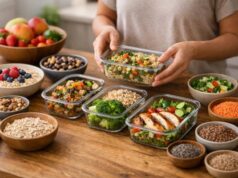
- Best high-fiber foods to eat more often
- Easy food swaps that raise fiber fast
- How to eat more fiber without stomach problems
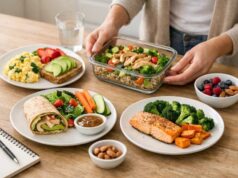
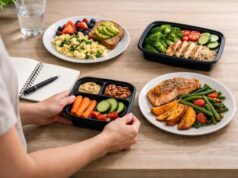
- A simple high-fiber day of eating
- Mistakes that make fiber less effective
Why fiber helps with weight loss
Fiber supports weight loss because it improves satiety without adding many digestible calories. In practical terms, that means a meal with more fiber often keeps you full longer than a lower-fiber meal with the same calories. That matters because most people do not struggle with weight loss due to lack of nutrition knowledge alone. They struggle because hunger, cravings, and low-satiety meals make consistency harder than it looks on paper.
High-fiber foods usually help in several ways at once. They tend to have more volume, more chewing, slower digestion, and a gentler effect on appetite than heavily refined foods. Think of the difference between a bowl of oats with berries and chia seeds versus a pastry, or a baked potato with beans and salsa versus a small serving of chips. The higher-fiber option usually gives you more food, more staying power, and less chance of prowling for snacks an hour later.
Fiber-rich eating also tends to improve overall food quality. When you intentionally raise fiber, you usually end up eating more beans, lentils, fruit, vegetables, oats, potatoes, and whole grains. That alone shifts your diet toward foods that are often lower in calorie density and more filling. This is one reason fiber works so well alongside other foods that fit a calorie deficit rather than as a stand-alone trick.
It also helps that fiber often travels with foods that are harder to overeat quickly. A whole apple slows you down more than apple juice. Beans and lentils take longer to eat than crackers. Roasted potatoes and vegetables generally keep people fuller than refined snack foods at the same calorie level. This does not mean every high-fiber food is automatically low calorie, but it does mean fiber often improves the fullness-per-calorie ratio of a meal.
Fiber is not the whole story, though. Protein still matters, calories still matter, and fiber supplements do not erase a diet built around sugary drinks and ultra-processed snack foods. The real value of fiber is that it makes a good eating pattern more satisfying. And when weight loss gets hard, satisfaction is often what separates a plan you can stick to from one you abandon after a week.
Daily fiber targets that make sense
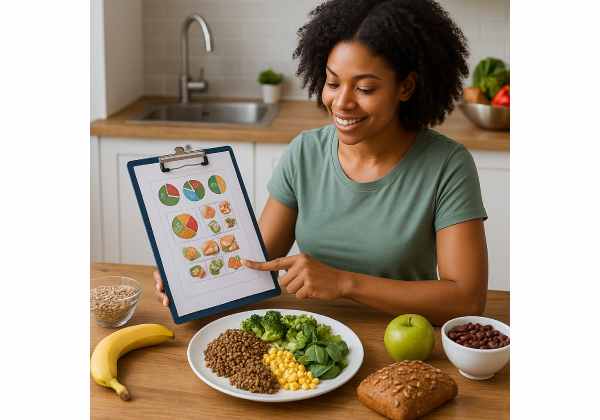
The most practical way to think about fiber is to use both a general daily range and a personalized calorie-based target. A useful public-health benchmark is about 14 grams of fiber per 1,000 calories. For many adults, that works out to roughly 25 grams per day on the lower end and 30 to 38 grams per day on the higher end, depending on body size, sex, and calorie intake.
That sounds simple, but most people are farther from that target than they realize. A typical day built around toast, cereal, sandwiches on white bread, refined snacks, and low-produce meals can stay surprisingly low in fiber even when it looks “healthy” at first glance.
A realistic target does not need to be perfect on day one. The better approach is to think in tiers:
- Minimum improvement target: add 5 grams a day above your current intake
- Solid everyday target: aim for roughly 25 to 30 grams a day
- Higher target for many active or larger adults: aim for roughly 30 to 38 grams a day if tolerated well
| Estimated daily calories | Useful fiber target | What that looks like |
|---|---|---|
| 1,200–1,400 | 17–20 grams minimum, 20–25 grams better | Fruit, vegetables, oats, and one bean or high-fiber grain serving daily |
| 1,500–1,800 | 21–25 grams minimum, 25–30 grams better | Fiber at most meals plus one or two high-fiber snacks |
| 1,900–2,200 | 27–31 grams minimum, 30–35 grams better | Beans, whole grains, produce, and regular high-fiber meals |
| 2,300–2,700 | 32–38 grams minimum, 35 grams or more often fits well | Higher-volume meals with consistent fiber across the day |
Meal-level targets can help too. Instead of trying to cram fiber in at dinner, many people do better by aiming for a moderate amount at each meal. A more detailed breakdown is covered in how much fiber to aim for per meal, but a useful rhythm is something like 6 to 10 grams at meals and 3 to 5 grams in a snack when needed.
The biggest mistake is chasing a high number too fast. Going from 10 grams to 35 grams overnight often leads to bloating, gas, and the false conclusion that “fiber does not work for me.” The better move is to climb gradually, stay hydrated, and let your intake become more consistent week by week.
Best high-fiber foods to eat more often
The best fiber foods for weight loss are not just technically high in fiber. They are foods that are easy to use regularly, satisfying enough to help with hunger, and flexible enough to fit normal meals. In practice, that means foods that can raise fiber without making the rest of your diet harder.
Beans, lentils, and peas
These are some of the most efficient fiber foods you can eat. They also add protein, which makes them especially useful for satiety. Black beans, chickpeas, lentils, split peas, and white beans work in soups, bowls, salads, wraps, and pasta dishes.
Fruit
Whole fruit is one of the easiest ways to raise fiber without making meals more complicated. Apples, pears, berries, oranges, and kiwi work especially well. Whole fruit also usually does a better job with fullness than fruit juice. If you want more options, these fruit choices that fit weight loss well are a good place to start.
Vegetables
Vegetables matter not only for fiber but also for food volume. Broccoli, Brussels sprouts, carrots, cauliflower, cabbage, green beans, peas, leafy greens, and sweet potatoes all help. The best ones are the ones you will actually buy, prepare, and eat. For many people, frozen vegetables are more useful than ambitious produce purchases that spoil in the drawer.
Whole grains and higher-fiber starches
Oats, barley, quinoa, brown rice, high-fiber cereal, whole-grain bread, and high-fiber wraps can all help. Potatoes deserve attention too. They do not always get framed as a fiber food, but a potato with the skin is often more filling than refined breads or crackers.
Seeds and nuts
Chia seeds, flaxseed, pumpkin seeds, and nuts contribute fiber, but they are more calorie-dense than fruits, vegetables, or legumes. They fit best as measured additions rather than the foundation of your fiber strategy.
A smart way to think about fiber foods is by “effort-to-benefit ratio.” Beans, berries, oats, potatoes, apples, and vegetables usually give a strong return because they improve fullness and meal size without making calorie control harder. That is also why high-fiber eating overlaps so well with high-volume, low-calorie foods. Many of the foods that add fiber also make your plate feel larger and more satisfying.
Easy food swaps that raise fiber fast
You do not need a brand-new diet to eat more fiber. Most people can increase intake meaningfully just by upgrading the version of foods they already eat. Swaps work well because they raise fiber with very little mental friction. You are still eating breakfast, lunch, dinner, and snacks. You are just making the fiber content of those choices better.
| Instead of | Try | Why it helps |
|---|---|---|
| White toast | Whole-grain or seeded toast | More fiber with almost no extra effort |
| Sugary cereal | Oats or a higher-fiber cereal | Better fullness and steadier energy |
| Fruit juice | Whole fruit | More fiber and more chewing |
| White rice only | Rice mixed with beans or lentils | Raises fiber and improves satiety |
| Low-fiber crackers | Apple, pear, or high-fiber crackers | More volume or more fiber for similar calories |
| Plain yogurt with granola-heavy topping | Greek yogurt with berries and chia | Better protein-and-fiber balance |
| Chips as a side | Vegetables, fruit, or roasted chickpeas | More fiber and better fullness |
| Regular pasta portion | Smaller pasta portion plus vegetables and beans | Lowers calorie density and raises fiber |
Some of the easiest daily upgrades are:
- add berries or sliced pear to breakfast
- use oats instead of low-fiber cereal more often
- switch one refined snack to fruit plus protein
- add beans to tacos, bowls, soups, or salads
- choose a potato, beans, or whole grains more often than refined side dishes
- include an actual vegetable side at lunch instead of only at dinner
This is where food pairings matter. Fiber often works best when it sits next to protein. An apple alone may help a little. An apple with Greek yogurt or cottage cheese usually helps more. Oatmeal is solid on its own, but oatmeal with berries and chia is much more effective. That is the same logic behind building meals around protein and fiber together rather than chasing one nutrient at a time.
The strongest swaps are the ones you barely notice after two weeks. That is usually what makes them sustainable.
How to eat more fiber without stomach problems
One reason people abandon higher-fiber eating is that they increase it too aggressively. Fiber works best when your digestive system gets time to adjust. If your current intake is low, a sudden jump can lead to bloating, gas, cramping, or bathroom changes that make you feel like something went wrong.
Usually, nothing is wrong. You just moved too fast.
A better strategy looks like this:
- Add fiber gradually.
Increase intake by roughly 3 to 5 grams at a time and stay there for several days before adding more. - Drink enough fluid.
Fiber and fluids work together. If fiber goes up while hydration stays low, you may feel worse instead of better. - Spread fiber across the day.
A little at breakfast, lunch, dinner, and one snack is often easier to tolerate than trying to cram everything into one giant salad or one bean-heavy dinner. - Use whole foods first when possible.
Whole foods often come with volume, water, and a more balanced eating pattern. Fiber supplements can help in some cases, but they are usually not the first or easiest place to start. - Notice which foods bother you.
Not all high-fiber foods feel the same. Some people tolerate oats, berries, potatoes, and cooked vegetables very well but get more bloating from large bean portions, bran-heavy cereals, or sugar alcohols in “fiber bars.”
This matters because fiber is not one single thing. Soluble, insoluble, viscous, and fermentable fibers can affect digestion and satiety differently. For most people, though, the practical answer is not to obsess over chemistry. It is to use a variety of fiber foods and pay attention to tolerance.
Some people also do better with cooked produce before raw produce, or with smaller bean portions at first. If you have IBS, chronic bloating, inflammatory bowel disease, or other digestive conditions, your approach may need more customization. In that case, this article is not a substitute for medical advice.
The good news is that once intake becomes more consistent, many people find higher-fiber eating gets easier. Their digestion settles, meals feel more filling, and cravings become less intense because the overall diet is doing a better job of holding them.
A simple high-fiber day of eating
It is easier to understand fiber targets when you see how they look in a normal day. The point is not to create a perfect meal plan. It is to show that getting enough fiber usually comes from stacking ordinary choices, not from a single miracle food.
Here is one simple example:
Breakfast
Oatmeal cooked with milk or soy milk, topped with berries, chia seeds, and a side of Greek yogurt.
This works because oats, berries, and chia raise fiber while yogurt adds protein. The combination is much more filling than a low-fiber cereal breakfast and fits well with other breakfasts that support weight loss.
Lunch
Chicken and black bean salad bowl with romaine, tomatoes, peppers, corn, salsa, and avocado.
The beans carry much of the fiber, but the vegetables and avocado add more volume and texture. This kind of meal also shows why fiber and protein complement each other so well.
Snack
An apple with cottage cheese or a cheese stick.
The apple gives you a straightforward fiber boost, and the protein helps the snack last.
Dinner
Salmon with roasted potatoes, broccoli, and a side of lentils or chickpeas.
Dinner often becomes much more effective when the starch is a potato instead of a refined side and when a legume shows up somewhere on the plate. That same principle works in many high-protein, high-fiber dinner ideas.
Optional evening snack
Berries with skyr or plain Greek yogurt.
A day like this can land in a very solid fiber range without requiring unusual foods or giant portions of bran. It also shows a useful principle: meals do not need to be “fiber meals.” They just need enough smart ingredients layered together that fiber adds up naturally.
If your current intake is much lower, you do not need to copy a full day like this immediately. Start by upgrading breakfast and one snack first. Then improve lunch. Then dinner. Most lasting diet changes happen faster than they feel once they stop depending on motivation and start depending on better defaults.
Mistakes that make fiber less effective
Fiber helps most when it is part of a better eating pattern. Several common mistakes reduce its impact.
Mistake 1: Adding fiber without improving meal structure
Sprinkling a little flax on an otherwise low-protein, low-volume day will not do much. Fiber works better when it supports balanced meals.
Mistake 2: Relying only on packaged “high-fiber” foods
Some bars, wraps, cereals, and snacks can be useful, but plenty are built from isolated fibers, sweeteners, and refined ingredients that do not satisfy as well as whole foods.
Mistake 3: Ignoring calories in dense fiber foods
Nuts, granola, seed-heavy snacks, and dried fruit all contain fiber, but they are not unlimited foods. They can fit, but they do not replace produce, legumes, and whole grains as the foundation.
Mistake 4: Increasing fiber too fast
This is the classic way people talk themselves out of higher-fiber eating. Start slower.
Mistake 5: Treating fiber like a substitute for protein
Fiber helps with fullness, but protein still matters. For many people, the best results come from combining both rather than choosing one. That is why high-fiber eating often works better when it sits alongside adequate protein at meals.
Mistake 6: Expecting instant fat loss from one nutrient
Fiber helps by improving adherence, appetite control, and food quality. It is supportive, not magical.
Mistake 7: Forgetting about consistency
A very high-fiber Monday does not cancel out a low-fiber rest of the week. Repetition matters more than one impressive salad.
The real goal is not to hit a perfect number every day forever. It is to make your meals and snacks filling enough that the rest of your plan becomes easier to follow. Fiber is valuable because it helps with that quietly, meal after meal.
References
- Dietary Guidelines for Americans, 2020-2025 – Executive Summary in English 2020 (Guideline)
- The role of dietary fibers in regulating appetite, an overview of mechanisms and weight consequences 2024 (Review)
- Effects of dietary fibre on metabolic health and obesity 2024 (Review)
- Dietary fiber influence on overall health, with an emphasis on CVD, diabetes, obesity, colon cancer, and inflammation 2024 (Review)
- Protein, fiber, and exercise: a narrative review of their roles in weight management and cardiometabolic health 2025 (Review)
Disclaimer
This article is for general educational purposes only and is not a substitute for medical advice, diagnosis, or treatment. If you have IBS, inflammatory bowel disease, chronic constipation, bowel obstruction risk, kidney disease, or take medications affected by major diet changes, talk with a qualified clinician or dietitian before sharply increasing fiber intake.
If this article helped, share it on Facebook, X (formerly Twitter), or any platform you prefer so others can use it too.