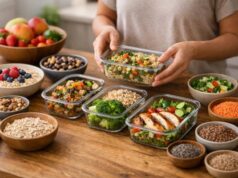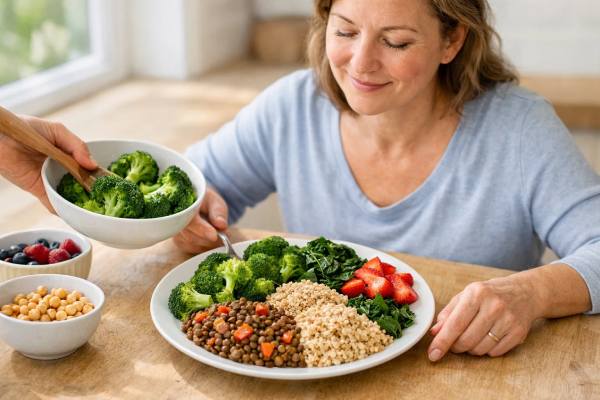
If you are trying to lose weight, fiber matters because it helps meals feel more filling without adding many calories. The daily total is important, but the way you spread fiber across the day can also affect hunger, energy, and how easy it feels to stay in a calorie deficit. Many people do better when they stop treating fiber as an afterthought and start building it into each meal on purpose.
A practical target for most adults is about 8 to 12 grams of fiber per meal, with some meals landing a little lower and others a little higher. That range is usually enough to improve fullness without making meals awkward or causing digestive discomfort for most people. This article explains why that target works, how to reach it with normal foods, how to spread fiber across breakfast, lunch, dinner, and snacks, and when to increase intake more gradually.
Table of Contents
- Best fiber target per meal
- Why fiber helps with fullness
- How to spread fiber across the day
- Best foods to hit your fiber goal
- Sample meal fiber breakdowns
- Mistakes and side effects to avoid
Best fiber target per meal
The best fiber target per meal for weight loss is usually not a rigid rule. It is a useful range that helps you feel satisfied while keeping your eating plan realistic. For most adults, 8 to 12 grams of fiber per meal is a strong practical target. If you eat three meals a day, that puts you in a range that supports a solid daily intake. If you include one snack, that snack can contribute another 3 to 6 grams without much trouble.
This target works well because it is high enough to noticeably improve fullness, but still realistic with everyday foods. A breakfast with oats, berries, and chia seeds can reach it. A lunch with beans, vegetables, and whole grains can reach it. A dinner built around protein, vegetables, and a higher-fiber carb source can also get there without feeling like a “fiber meal.”
For many people, a helpful way to think about it is:
- Light meal: 5 to 8 grams
- Standard meal: 8 to 12 grams
- Very filling meal: 10 to 15 grams
Going much beyond that at every meal is not automatically better. If you push fiber too high too quickly, you may end up with bloating, gas, cramping, or a meal plan that feels hard to maintain. Weight loss works better when your meals are comfortable and repeatable.
It also helps to remember that daily intake matters more than a perfect per-meal number. A day with 28 to 35 grams spread reasonably well is usually more useful than a day with one very high-fiber meal and two low-fiber meals that leave you hungry later. This is one reason many people do better with structured meals instead of saving all their produce, legumes, and whole grains for dinner.
Per-meal fiber also works best when it is paired with protein. Fiber slows digestion and adds bulk, while protein tends to improve meal satisfaction and appetite control. That combination is often more effective than chasing one nutrient alone. If you are already paying attention to protein per meal, building fiber into that same meal structure usually works well.
The simplest takeaway is this: do not obsess over a perfect number. Aim to make most meals land in the 8 to 12 gram range, use whole foods first, and build up gradually if your current intake is low.
Why fiber helps with fullness
Fiber helps with weight loss because it changes how a meal feels, not just what it contains. Foods with more fiber usually take up more room, require more chewing, and move through the digestive system more slowly. That combination can make meals feel more substantial and make it easier to stay in a calorie deficit without feeling constantly hungry.
One reason fiber is so useful is that it often comes packaged with foods that are naturally helpful for appetite control: vegetables, fruit, beans, lentils, oats, potatoes, and whole grains. These foods tend to provide more volume for fewer calories than pastries, chips, sweets, or highly refined snacks. In practice, that means you can eat a satisfying amount of food while still controlling calories.
Fiber also supports fullness in a few different ways:
- It adds bulk to meals.
- It can slow stomach emptying.
- It may reduce how quickly hunger returns after eating.
- It often improves the staying power of meals built around whole foods.
That does not mean every fiber source behaves exactly the same way. Some fibers are more viscous and tend to have stronger effects on satiety. Some foods are high in fiber but still easy to overeat because they are very calorie-dense. Nuts, granola, and dried fruit are examples of foods that can be useful, but not always in the large portions people assume.
This is why fiber works best when it is part of an overall meal structure rather than used like a quick fix. Adding a token sprinkle of flax to a low-protein, low-volume meal will not do much. Adding fiber to a meal that already includes lean protein, produce, and a smart carb source is much more effective. It is part of why diets built around high-volume, high-fiber foods that fit a calorie deficit tend to feel easier to sustain.
Another useful point: fullness and appetite control are not exactly the same. A meal can feel physically filling but still leave you wanting more if it is low in protein, low in flavor, or poorly balanced. Fiber helps, but it is one part of the bigger picture. Sleep, routine, stress, and meal timing still matter. If your evenings are driven by stress or habits, fiber will help less than people expect unless the rest of the structure improves too.
Still, when people increase fiber from very low levels to a more moderate, consistent level, they often notice a simple change: they stop feeling hungry again so soon after eating. That alone can make a weight loss plan easier to stick with.
How to spread fiber across the day
The best way to use fiber for weight loss is usually to spread it across the day instead of trying to “catch up” at dinner. When breakfast and lunch are low in fiber, hunger often builds through the afternoon and evening. Then dinner gets oversized, snacks look more tempting, and staying in a calorie deficit becomes harder than it needs to be.
A more effective pattern is to make each meal do some of the work.
A balanced day might look like this:
| Meal | Useful target | Example approach |
|---|---|---|
| Breakfast | 8 to 10 grams | Oats, berries, chia, or whole-grain toast with fruit |
| Lunch | 8 to 12 grams | Protein, vegetables, beans, or a whole-grain carb |
| Dinner | 8 to 12 grams | Lean protein, vegetables, potatoes, beans, or whole grains |
| Snack | 3 to 6 grams | Fruit, roasted chickpeas, high-fiber crackers, or vegetables |
This pattern is not about eating exactly the same amount each time. It is about avoiding long stretches of low-satiety eating. If breakfast is just coffee and something refined, and lunch is light on produce and legumes, you may technically still be able to hit your daily fiber goal later, but appetite control usually suffers.
Many people find that breakfast is the hardest meal to get right. It is often the most refined meal of the day. Cereal, pastries, flavored yogurt, and toast alone can all be relatively low in fiber unless you build them more intentionally. Lunch is usually the easiest place to improve, especially with grain bowls, salads, soups, wraps, and leftovers. Dinner becomes easier when you stop treating vegetables as garnish and start making them a major part of the plate.
This is also where meal planning helps. You do not need a complicated formula. You just need a reliable pattern, similar to how people use a high-fiber meal plan or combine foods from simple daily fiber swaps to make intake more automatic.
A good rule of thumb is to ask one question at each meal: Where is the main fiber source? If the answer is unclear, the meal probably needs adjustment. That single question often works better than trying to count grams from memory.
Best foods to hit your fiber goal
The best foods to help you reach a useful fiber target are foods that also support fullness, volume, and meal quality. In other words, you want foods that do more than just raise a number on a nutrition label.
The most useful fiber sources for weight loss usually fall into a few groups:
Vegetables
Non-starchy vegetables help because they add volume with relatively few calories. Broccoli, Brussels sprouts, carrots, cauliflower, green beans, spinach, kale, cabbage, and peppers are all useful choices. They rarely carry a huge fiber load on their own, but they are easy to stack into meals.
Fruit
Fruit is one of the easiest ways to raise fiber without making food prep harder. Berries, apples, pears, oranges, and kiwi are especially helpful. Whole fruit usually works better for fullness than juice because it gives you fiber plus chewing and volume. This is one reason articles on fruit choices for a calorie deficit often emphasize whole fruit over smoothies or juice-heavy options.
Beans and lentils
These are some of the strongest foods for fiber per serving, and they also add carbohydrates and some protein. Black beans, chickpeas, lentils, cannellini beans, and split peas can quickly raise the fiber content of soups, bowls, salads, tacos, and side dishes.
Whole grains and higher-fiber starches
Oats, barley, quinoa, farro, brown rice, whole-grain bread, and higher-fiber wraps can all help. Potatoes are also worth mentioning. They are not always thought of as a fiber food, but they can support fullness very well, especially when paired with protein and vegetables.
Seeds and fiber boosters
Chia seeds, ground flaxseed, and sometimes psyllium can raise fiber quickly. These can be useful tools, but they work best as support, not as a replacement for real food.
A practical way to build higher-fiber meals is to combine categories rather than rely on one “superfood.” For example:
- oats plus berries plus chia
- chicken plus roasted vegetables plus beans
- Greek yogurt plus fruit plus flax
- salmon plus potatoes plus broccoli
- lentil soup plus salad plus fruit
That kind of stacking works better than hoping one food will do all the work. It also tends to improve meal quality overall. If you need more ideas, pairing fiber-rich foods with high-protein staples is one of the easiest ways to create meals that are both filling and weight-loss-friendly.
Sample meal fiber breakdowns
Knowing the target is useful, but seeing what it looks like in actual meals is even more helpful. Many people assume they need specialty products or huge salads to hit 8 to 12 grams of fiber per meal. In reality, fairly normal meals can do it.
Breakfast examples
Oatmeal bowl
- Rolled oats
- Chia seeds
- Blueberries
- Sliced banana
This kind of breakfast can land in the target range fairly easily and usually feels more filling than low-fiber cereal or toast alone.
Greek yogurt bowl
- Plain Greek yogurt
- Berries
- Ground flaxseed
- High-fiber cereal topping
This works well when you want a quicker breakfast but still want real staying power.
Lunch examples
Chicken grain bowl
- Chicken breast
- Quinoa or farro
- Roasted vegetables
- Chickpeas
This is a strong example of a meal that combines protein, fiber, and volume without feeling like diet food.
Turkey wrap and fruit
- Whole-grain wrap
- Turkey
- Lettuce, tomato, peppers
- Apple or pear on the side
This is a practical lunch for busy days and can work even better if the wrap is actually higher in fiber instead of only marketed as healthy.
Dinner examples
Salmon plate
- Salmon
- Roasted potatoes
- Broccoli
- Side salad
This is not a “fiber meal” in the obvious sense, but the total can still be strong because the meal is built around whole foods.
Turkey chili
- Lean ground turkey
- Beans
- Tomatoes
- Onion and peppers
Meals like chili, lentil soup, and bean-based stews are often some of the easiest ways to get a satisfying amount of fiber without much effort.
Snack examples
Snacks do not need to carry the same fiber load as meals, but they can help fill the gaps:
- apple with a small amount of peanut butter
- carrots with hummus
- edamame
- roasted chickpeas
- berries with yogurt
This is especially useful if you are trying to avoid a pattern where you get very little fiber all day and then try to correct it at night with large portions or random snacking. A well-timed high-fiber snack can make a big difference in appetite control, particularly if you already use snacks designed to support fullness or want alternatives to lower-calorie snacks that do not satisfy well.
The main goal is not perfection. It is making sure most meals clearly contain at least one meaningful fiber source and ideally more than one.
Mistakes and side effects to avoid
Fiber can help a lot with weight loss, but it is easy to use it badly. One of the most common mistakes is increasing intake too quickly. Someone who currently eats 10 to 12 grams of fiber per day usually will not feel great if they suddenly jump to 35 grams overnight. Gas, bloating, cramping, and constipation can all show up if the increase is too aggressive or fluid intake stays low.
A better approach is to increase fiber gradually over several days or weeks. That gives your digestive system time to adjust and makes the habit more sustainable.
Another common mistake is relying too much on “fiber products” instead of food. Fiber bars, powders, and fortified snacks can help in specific situations, but they are usually less satisfying than meals built from vegetables, fruit, legumes, potatoes, oats, and whole grains. A label claim is not the same thing as a filling meal.
Other mistakes include:
- Ignoring fluids: Fiber generally works better when you are well hydrated. A higher-fiber intake with low fluid intake can make digestion feel worse, not better.
- Chasing numbers only: A meal can hit a fiber target and still be too low in protein, too low in calories, or not satisfying enough to prevent snacking later.
- Using only one fiber source: Depending entirely on one very high-fiber cereal or supplement is usually less helpful than spreading fiber across a wider variety of foods.
- Overdoing calorie-dense fiber foods: Granola, trail mix, dried fruit, and nut-heavy snacks can contribute fiber, but they are easy to overeat.
- Skipping meal balance: Fiber works best when the meal also includes protein and reasonable volume.
There are also times to be more cautious. If you have IBS, inflammatory bowel disease, gastroparesis, a history of bowel obstruction, or you are on certain medical diets, your best fiber level may differ from general advice. Some people tolerate cooked vegetables better than raw ones. Some do better with lower-FODMAP fiber sources. Others may need medical guidance before increasing fiber much at all.
For most people, though, the path is simple: raise fiber steadily, spread it across meals, pair it with protein, and avoid treating it as a magic fix. Used that way, fiber becomes one of the easiest tools for improving fullness and making weight loss feel more manageable.
References
- The role of dietary fibers in regulating appetite, an overview of mechanisms and weight consequences 2024 (Review)
- Effects of dietary fibre on metabolic health and obesity 2024 (Review)
- Cereal Fibers and Satiety: A Systematic Review 2025 (Systematic Review)
- Dietary Guidelines for Americans, 2020-2025 2020 (Guideline)
- Dietary Fiber 2023 (Government Health Resource)
Disclaimer
This article is for general educational purposes only and is not a substitute for medical advice, diagnosis, or treatment. Fiber needs and tolerance can vary based on digestive conditions, medications, and your overall diet, so speak with a doctor or registered dietitian if you have ongoing gastrointestinal symptoms or need a more individualized plan.
If this article helped you, please consider sharing it on Facebook, X, or your preferred platform so others can use it too.