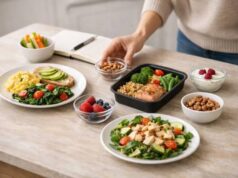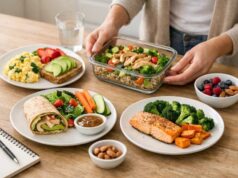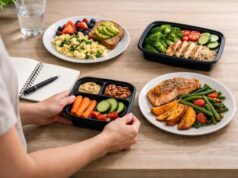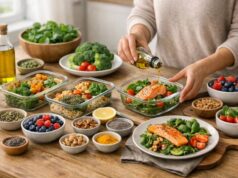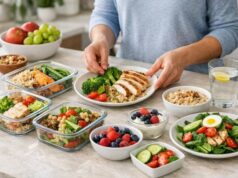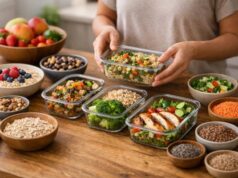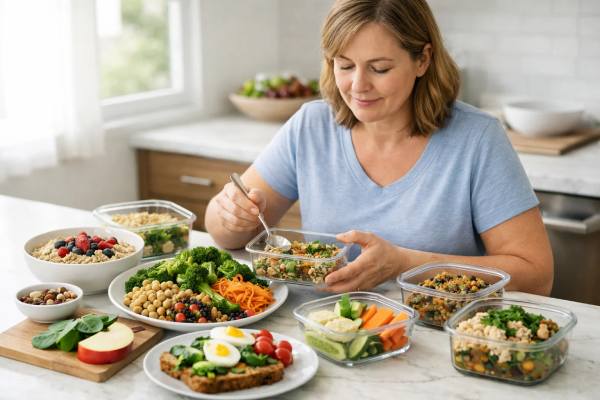
A high-fiber meal plan for weight loss works because it helps solve one of the biggest problems in a calorie deficit: staying satisfied long enough to keep going. When meals include more fiber from foods like beans, fruit, vegetables, oats, potatoes, and whole grains, they usually take longer to eat, add more bulk, and leave you feeling fuller than low-fiber meals with similar calories.
That does not mean fiber is magic or that every “high-fiber” packaged food deserves a place in your plan. The real goal is to build meals around whole foods that improve fullness, digestion, and consistency. This guide explains how fiber helps with weight loss, how much to aim for, which foods to prioritize, and how to put everything into a practical week of meals you can actually repeat.
Table of Contents
- Why fiber helps you stay full
- Best high-fiber foods for weight loss
- How much fiber to aim for
- 7-day high-fiber meal plan
- Grocery list and simple prep
- Mistakes that make high-fiber eating backfire
- Who should adjust this plan
Why fiber helps you stay full
Fiber helps with weight loss mostly by making meals more satisfying, not by somehow forcing fat loss on its own. A calorie deficit still matters. What fiber does is make that deficit easier to maintain.
The foods highest in fiber tend to share a few useful traits. They often contain more water, require more chewing, digest more slowly, and create more volume on the plate. That combination can help you feel full on fewer calories than you would get from refined snack foods, desserts, or highly processed meals.
For example, compare these two lunches:
- a turkey sandwich on white bread with chips and a cookie
- a grain bowl with chicken, black beans, roasted vegetables, salsa, and fruit
The second meal usually takes up more room, brings more fiber, and keeps people full longer, even when calories are in a similar range. That is the practical advantage of fiber-rich eating.
Fiber also tends to improve meal quality overall because the main sources are usually foods people benefit from eating more often anyway:
- vegetables
- fruit
- beans and lentils
- oats and whole grains
- potatoes with skin
- nuts and seeds in controlled portions
That is one reason a high-fiber approach often overlaps with the best foods to eat in a calorie deficit. You are not just adding fiber. You are upgrading the entire structure of the diet.
Another benefit is that fiber can help reduce the “constant snack hunting” feeling some people get while dieting. A breakfast with oats, berries, and Greek yogurt tends to behave differently than a sweet coffee and granola bar. A dinner with beans, vegetables, and potatoes tends to behave differently than a low-volume takeout meal. Over time, that changes how hard the diet feels.
That said, more fiber is not always better in every moment. If you increase it too fast, you can get bloating, gas, or discomfort. And if you use fiber as an excuse to ignore protein, calories, or portions, progress can still stall. The real win comes from combining fiber with smart meal design, not from chasing a number in isolation.
Best high-fiber foods for weight loss
The best high-fiber foods for weight loss are the ones that actually improve fullness without making calories hard to control. Not every fiber source works equally well in real life.
Beans, lentils, and peas
These are some of the strongest choices because they combine fiber with a moderate amount of protein. That makes them especially useful for lunches and dinners. Black beans, chickpeas, lentils, split peas, and kidney beans work well in soups, salads, grain bowls, chilis, and wraps.
Vegetables
Vegetables are not always the highest-fiber foods gram for gram, but they are still essential because they add so much volume for so few calories. Broccoli, carrots, Brussels sprouts, green beans, cauliflower, squash, leafy greens, peppers, and cabbage are especially helpful.
This is also why a lot of high-fiber eating ends up looking similar to plans built around vegetables that support weight loss. They do not just add nutrients. They make the plate feel bigger.
Fruit
Whole fruit is one of the easiest ways to raise fiber without making meals feel like diet food. Apples, pears, berries, oranges, kiwi, and prunes are especially useful. Fruit also helps with dessert cravings better than many people expect.
Oats and intact whole grains
Oats are one of the easiest breakfast staples for a high-fiber plan. Barley, quinoa, brown rice, bulgur, and farro also help, though portion control still matters. Whole grains are useful, but they work best as part of a meal instead of the whole meal.
Potatoes and sweet potatoes
People often overlook these because they think “starchy” means bad for fat loss. In practice, potatoes with skin can be very filling, especially when paired with protein and vegetables.
Nuts and seeds
Chia, flax, pumpkin seeds, almonds, and pistachios can contribute useful fiber, but they are more calorie-dense than vegetables, fruit, beans, or potatoes. Think of them as support foods rather than unlimited snack foods.
High-fiber convenience foods
Some packaged foods can help, including high-fiber wraps, bran cereals, frozen vegetables, and canned beans. But “high-fiber” on the front of a box does not automatically make a product ideal for fat loss. Some bars, cereals, and baked snacks are still easy to overeat.
A good rule is to build most meals from food that still looks like food. If the fiber mostly comes from vegetables, beans, fruit, oats, potatoes, and whole grains, you are usually on the right track. If the fiber mostly comes from engineered snack products, the plan gets shakier.
How much fiber to aim for
A practical high-fiber target for many adults is to work gradually toward the mid-20s to upper-30s grams per day, depending on sex, size, intake, and tolerance. The more important point is not chasing an exact perfect number on day one. It is moving steadily upward from wherever you are now.
For many people, a big jump is what causes problems. Someone eating 10 to 15 grams per day who suddenly tries to hit 35 to 40 grams overnight often ends up bloated and uncomfortable. Then they decide high-fiber eating is not for them, when the real issue was speed.
A better approach is to increase fiber step by step:
- Add one clear fiber source to breakfast.
- Add fruit or vegetables to lunch.
- Include beans, lentils, potatoes, or a whole grain at dinner.
- Use one high-fiber snack if needed.
- Drink enough fluids as intake rises.
That last point matters. Fiber works best when fluid intake is adequate. If you raise fiber but do not drink enough, constipation and discomfort become more likely.
Here is a simple way to spread fiber across the day without obsessing over numbers:
- Breakfast: oats, berries, chia, fruit, or whole-grain toast
- Lunch: beans, vegetables, whole grains, or fruit
- Dinner: vegetables plus legumes, potatoes, or whole grains
- Snack: fruit, high-fiber crackers with hummus, popcorn, or yogurt with berries
The meal-level approach is often more useful than staring at a daily total. That is why many people do better when they think about fiber targets per meal instead of only worrying about the day as a whole.
It is also worth remembering that fiber works best alongside protein. A high-fiber breakfast with almost no protein may still leave you hunting for snacks by mid-morning. A better pattern is meals that combine both. That is why high-fiber eating often becomes more effective when it starts to resemble a high-protein, high-fiber meal formula rather than a fiber-only strategy.
A realistic goal for the first week is not perfection. It is simply making most meals more filling than they were before.
7-day high-fiber meal plan
This 7-day high-fiber meal plan is built around ordinary foods, not specialty products. It is designed to improve fullness and support weight loss by combining fiber-rich foods with enough protein to make the meals hold up.
| Day | Breakfast | Lunch | Dinner | Snack |
|---|---|---|---|---|
| Day 1 | Oatmeal with berries, chia seeds, and Greek yogurt | Chicken and black bean bowl with brown rice, salsa, and vegetables | Salmon, roasted broccoli, and baked potato with skin | Apple and a small handful of almonds |
| Day 2 | Greek yogurt with pear, bran cereal, and flax | Lentil soup with side salad and whole-grain toast | Turkey chili with beans and roasted green beans | Carrots and hummus |
| Day 3 | Eggs with sautéed vegetables and whole-grain toast, plus berries | Chickpea salad with cucumbers, tomatoes, herbs, and tuna | Chicken stir-fry with vegetables and quinoa | Orange and cottage cheese |
| Day 4 | Overnight oats with chia, berries, and plain yogurt | Turkey wrap on a high-fiber tortilla with lettuce, beans, and salsa | Shrimp with barley and roasted Brussels sprouts | Popcorn and fruit |
| Day 5 | Cottage cheese bowl with kiwi, berries, and pumpkin seeds | Bean and vegetable soup with a side salad | Lean beef, sweet potato, and roasted carrots | Pear with peanut butter |
| Day 6 | Smoothie with berries, spinach, oats, chia, and Greek yogurt | Leftover chili over roasted vegetables | Baked fish, brown rice, and mixed vegetables | Edamame or roasted chickpeas |
| Day 7 | High-fiber cereal with milk or soy milk, fruit, and boiled eggs | Quinoa bowl with chickpeas, cucumbers, tomatoes, and feta | Chicken thigh, roasted cauliflower, and potato wedges with skin | Greek yogurt with berries |
This plan works best when you treat it as a flexible template, not a rigid script. You can repeat breakfasts, reuse leftovers, and swap proteins or vegetables freely. What matters is the structure:
- one meaningful fiber source at every meal
- enough protein to improve satiety
- meals built from foods that are hard to binge accidentally
- snacks used strategically, not constantly
A few easy substitutions keep the plan practical:
- Swap salmon for tofu, chicken, or beans.
- Swap quinoa or barley for brown rice or potatoes.
- Swap lentil soup for bean chili or split pea soup.
- Swap yogurt bowls for savory breakfasts if you prefer eggs.
If you want more day-by-day structure later, this kind of approach can also be turned into a 7-day high-fiber meal plan. But for many people, a flexible framework works better because it survives real life.
Grocery list and simple prep
A high-fiber week gets much easier when the right foods are already in the kitchen. The point is not to buy every “superfood.” It is to stock enough basics that high-fiber meals become the easy choice.
Protein staples
- eggs
- Greek yogurt or cottage cheese
- chicken breast or thighs
- turkey
- canned tuna or salmon
- shrimp
- tofu or tempeh
- edamame
Fiber-rich carbs and legumes
- oats
- brown rice or quinoa
- barley or farro
- potatoes and sweet potatoes
- black beans
- chickpeas
- lentils
- split peas
- high-fiber wraps or breads
Produce
- berries
- apples
- pears
- oranges
- kiwi
- leafy greens
- broccoli
- carrots
- Brussels sprouts
- green beans
- peppers
- tomatoes
- cucumbers
- cauliflower
- onions
Helpful extras
- chia seeds
- flaxseed
- hummus
- salsa
- olive oil
- nuts and seeds
- herbs and spices
- plain popcorn
If you are building from scratch, a general weight loss grocery list for beginners can help you avoid the usual trap of buying “healthy ingredients” without a clear plan for turning them into meals.
Now keep prep as simple as possible.
- Cook one pot of beans or lentils, or buy canned versions.
- Roast a tray of vegetables.
- Cook one grain or a batch of potatoes.
- Prep one or two proteins.
- Wash fruit and portion easy snacks.
That is enough to create most of the week. A bowl meal, soup, salad, or plate dinner comes together quickly when the components are already there.
This style of prep overlaps naturally with a one-hour weekend meal prep plan, because the goal is not perfection. It is reducing the number of decisions required on busy days.
One underrated tip: keep at least two “fast fiber” options ready at all times. Examples include fruit, canned beans, microwaveable frozen vegetables, oats, and popcorn. They are not glamorous, but they stop a rough day from turning into an all-snack day.
Mistakes that make high-fiber eating backfire
High-fiber eating is useful, but people still run into the same predictable problems. Most of them come from execution, not from fiber itself.
Increasing too fast
This is the biggest one. A sudden jump from a low-fiber diet to a very high-fiber diet often causes bloating, gas, or constipation. Build up gradually instead.
Ignoring fluids
Fiber without enough fluid can make digestion feel worse, not better. Many people who say fiber “does not work” are really underhydrated.
Relying on fiber bars and fortified snacks
Some convenience products can help in a pinch, but building the plan mostly around engineered fiber snacks is usually less satisfying than using real food. Whole-food meals also tend to provide better volume and meal satisfaction.
Adding fiber but forgetting protein
A breakfast that is technically high in fiber but very low in protein can still leave you hungry soon after. If fullness is the goal, combine both.
Thinking every high-fiber food is automatically low-calorie
Granola, nuts, nut butters, dried fruit, and fiber-fortified cereals can be healthy enough in context, but they are still easy to overeat. Fiber helps, but calories still count.
Expecting fiber to fix emotional or habitual eating
Fiber helps physical hunger more than it helps boredom eating, stress eating, or reward eating. If most overeating happens at night in front of a screen or after a difficult day, the issue may not be meal composition alone. In those cases, it can help to address patterns like night-time sugar cravings or late-night snacking habits alongside the meal plan.
A good high-fiber plan should make dieting feel steadier, not make digestion miserable. If the plan leaves you constantly uncomfortable, scale it back, simplify, and rebuild more gradually.
Who should adjust this plan
A high-fiber meal plan is useful for many adults, but it still needs modification in some situations.
You should use more caution or get personalized advice if:
- you have irritable bowel syndrome or frequent digestive symptoms
- you have inflammatory bowel disease, diverticulitis flare-ups, or a condition that sometimes requires lower-fiber eating
- you recently had gastrointestinal surgery
- you take medications that affect digestion or blood sugar
- you are pregnant and struggling with nausea or constipation
- you are on a GLP-1 medication and feel full very quickly
- you have a history of restrictive eating or binge eating
Some people also do better with cooked vegetables, peeled fruit, or lower-fiber starches at first, then build up slowly. Others tolerate beans poorly but do well with oats, berries, potatoes, and vegetables. A high-fiber plan does not need to be all-or-nothing to work.
Another useful reminder: fiber should support your plan, not dominate it. You still need adequate protein, reasonable calories, and a pattern you can follow consistently. In many cases, the best result comes from combining higher-fiber foods with the same simple structure that makes high-protein, low-calorie meals so effective.
The best version of this plan is the one that helps you stay full longer without feeling overwhelmed, restricted, or uncomfortable. That usually means gradual increases, ordinary foods, and enough flexibility that the plan survives weekends, workdays, and less-than-perfect weeks.
References
- Dietary Guidelines for Americans 2025 – 2030 2026 (Guideline)
- High-fiber foods 2024 (Medical Encyclopedia)
- Dietary Fiber 2023 (Health Topic)
- Effects of dietary fibre on metabolic health and obesity 2024 (Review)
Disclaimer
This article is for general educational purposes only and is not a substitute for personal medical or nutrition advice. If you have digestive disease, diabetes, kidney disease, food intolerances, or take prescription medications that affect appetite, digestion, or blood sugar, talk with a qualified clinician before making major changes to fiber intake.
If this article helped, share it on Facebook, X, or your preferred platform so someone else can build a more filling weight-loss week too.