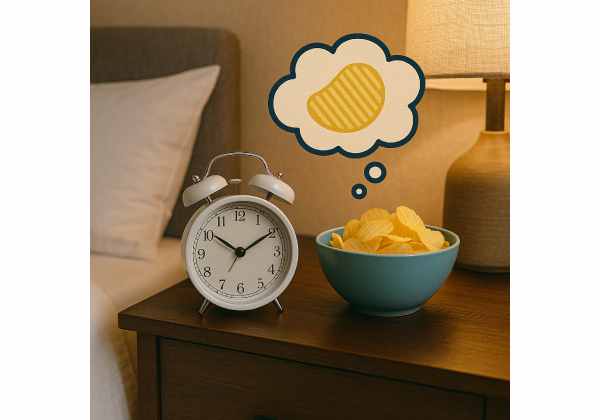
Late-night snacking can feel small in the moment and surprisingly frustrating the next morning. It often starts with a harmless idea: something crunchy while watching a show, something sweet after dinner, one more trip to the kitchen before bed. But when it happens most nights, it can quietly add hundreds of calories, make hunger feel less predictable, and leave you wondering why your daytime effort is not matching your results.
The good news is that late-night snacking is usually more fixable than it feels. In many cases, it is not a simple willpower problem. It is a pattern built from under-eating earlier in the day, stress, fatigue, easy access to snack foods, and habits that fire at the same hour night after night. Once you understand what is driving the urge, you can use practical strategies that reduce it instead of fighting the same battle every evening. This article explains why late-night snacking happens, how to tell hunger from habit, and what to change so evenings feel calmer and easier to manage.
Table of Contents
- Why late-night snacking keeps happening
- Figure out what is driving the urge
- Fix the daytime setup first
- Change the evening food environment
- Use an interruption routine that works
- When a planned evening snack makes sense
Why late-night snacking keeps happening
Late-night snacking usually feels like a food problem, but it is often a timing problem, a fatigue problem, or a habit problem first. By the end of the day, your mental energy is lower, your routine is looser, and the kitchen is usually nearby. If dinner was too light, protein was low, or lunch happened hours earlier, real hunger may be part of the story. If the urge appears right when you sit on the couch, open a streaming app, or finish putting the dishes away, habit is probably playing a major role too.
This is why late-night snacking can feel automatic. The brain loves predictable loops. A cue appears, the behavior follows, and the reward is immediate. In the evening, the cue might be boredom, stress, tiredness, or simply the expectation that relaxing includes eating. Over time, the pattern starts to feel like part of the night itself.
Several factors make the loop stronger:
- Long gaps between meals
- Dinners that are too small or not satisfying
- Easy access to highly snackable foods
- Stress and decision fatigue after work
- Alcohol lowering restraint and increasing appetite
- Staying up later than your body really wants to
- Watching TV, scrolling, or working with food nearby
Sleep matters more than many people realize. A later bedtime does not just create more time to snack. It often comes with more cravings, lower patience, and weaker follow-through. When sleep is short or irregular, appetite can feel louder and less stable. That is one reason improving sleep habits and total sleep time often reduces evening snacking pressure before you change anything else.
Stress adds another layer. For many people, late-night snacking is the first quiet moment when the day catches up with them. Food becomes a fast way to switch from tension to comfort. In that case, the problem is not only hunger. It is also the lack of another reliable downshift. That is why night eating often improves when people work on stress-related cravings and overeating instead of focusing only on calories.
Another reason this pattern sticks is that it often hides in small decisions. A handful of cereal, a few crackers while cleaning up, a spoonful of peanut butter, one more piece of chocolate. None of those moments looks dramatic by itself. Together, they can erase a meaningful part of your calorie deficit over a week.
The useful shift is to stop treating late-night snacking as a character flaw. In most cases, it is a repeatable pattern with clear triggers. Once you can see those triggers, you can interrupt them. That is where the real progress begins.
Figure out what is driving the urge
The fastest way to reduce late-night snacking is to stop treating every urge as the same thing. Some night cravings are real hunger. Some are boredom. Some are emotional decompression after a hard day. Some are sugar habits. Some are simply the result of staying awake long enough for the kitchen to start calling your name again.
Start with one question: Would a simple, balanced snack sound good right now, or am I looking for a very specific food? If yogurt and fruit, toast and eggs, or cottage cheese sounds genuinely appealing, you may be physically hungry. If only cookies, chips, cereal, or chocolate sound worth eating, the urge may be driven more by habit, reward, or emotion.
Then ask a few more useful questions:
- When did I last eat a real meal?
If dinner was four or five hours ago, hunger is not surprising. - What was dinner actually like?
If it was small, low in protein, or not very satisfying, your body may still be asking for completion. - Did the urge appear at the same time it always does?
Predictability is a strong clue that habit is involved. - What am I feeling besides hunger?
Restlessness, loneliness, frustration, and tiredness often masquerade as appetite. - What food do I want, and what does that food usually do for me?
Crunch may signal stimulation. Sweets may signal comfort or reward. Endless grazing often signals fatigue and low structure.
This kind of pause matters because different causes need different solutions. If the issue is a nightly sweet craving, it helps to understand the patterns behind night-time sugar cravings rather than assuming every evening urge is just poor discipline. If the issue is using food to regulate mood, the better fit may be work on emotional eating triggers and not just tighter pantry rules.
It can also help to watch for the “I deserve this” thought. That thought often shows up after long workdays, difficult parenting evenings, or mentally draining routines. It is not silly or irrational. It reflects a real need for relief. The problem is that food becomes the default form of relief because it is immediate, familiar, and easy to access. Once you notice that pattern, you can start building alternatives instead of arguing with yourself every night.
A final point is important: do not dismiss real hunger just because it is happening late. Some people are genuinely under-eating earlier in the day and then blaming themselves for “bad habits” at 10:00 p.m. If you are physiologically hungry, the right answer is not endless self-control. It is a better setup and sometimes a better snack. Clarity comes first. Strategy works better once you know what problem you are actually solving.
Fix the daytime setup first
Many late-night snacking problems are built earlier in the day. If evenings keep unraveling, look backward before you look harder at your willpower. Skipped meals, low-protein meals, light lunches, overly “clean” eating, and long gaps without food can all create a setup where night hunger feels overwhelming.
Breakfast is a common weak point. Some people do well without eating early, but many drift into poor appetite control when the first meal is too small or mostly refined carbs. A stronger breakfast does not need to be large. It needs to feel complete. Eggs, Greek yogurt, cottage cheese, tofu, or leftovers from dinner usually work better than coffee and something small. If mornings are unstable, improving your high-protein breakfast routine can reduce late-day cravings more than a stricter evening rule ever will.
Lunch matters just as much. A lunch that looks healthy is not always a lunch that holds you. Salads without enough protein, quick convenience meals, or lunches eaten too fast often leave people grazing by mid-afternoon. Then dinner arrives with more hunger than expected, and the night stays food-focused.
Dinner is the final setup point. When you are trying to stop late-night snacking, dinner should not feel like a punishment meal. It should include enough protein, enough volume, and enough satisfaction that the eating occasion feels finished. A satisfying dinner often includes:
- A clear protein source
- A generous portion of vegetables or other high-volume foods
- A reasonable serving of carbohydrates
- Some fat for flavor and staying power
- Enough total food that you are not scanning the kitchen an hour later
This is where simple repeat meals can help. Most people do not need more meal variety when evenings are chaotic. They need fewer weak links. A short list of high-protein, high-fiber dinners can make night eating easier to manage because you are no longer relying on random choices at the end of a long day.
Meal timing matters too. If lunch is at noon and dinner is after 7:30 p.m., a small planned afternoon snack may be smarter than arriving at dinner overly hungry. The same is true if you work out in the late afternoon and delay your meal afterward.
A useful rule is this: if you keep overeating late at night, assume the daytime plan may be too fragile. Many people try to solve late-night snacking by making evenings stricter while keeping a daytime pattern that leaves them underfed and mentally worn down. That usually fails because the evening is where the cost shows up.
The goal is not to eat perfectly all day. It is to avoid building an evening appetite problem that you then expect motivation to fix.
Change the evening food environment
Even when hunger is not the main driver, the environment can make late-night snacking feel almost inevitable. If snack foods are visible, open, and easy to grab, you will need much more decision-making energy to stop than if they are inconvenient, portioned, or out of sight. Most people do not overeat because they are weak. They overeat because their environment is doing half the deciding for them.
Start by identifying your most common late-night foods. Usually, it is a shortlist: cereal, chips, crackers, ice cream, chocolate, toast, cookies, peanut butter, or leftovers eaten standing up. Once you know the main repeat foods, you can change how available and automatic they are.
A more helpful evening setup often includes these moves:
- Keep trigger foods off the counter and out of direct sight
- Buy smaller packages when large ones invite grazing
- Put better options at eye level in the fridge
- Portion snacks before the urge hits
- Avoid eating straight from bags, boxes, or containers
- Decide where eating happens and where it does not
- Create a visible “kitchen closed” signal after dinner
That last point is stronger than it sounds. A closed-kitchen cue tells your brain the eating part of the evening is over. It might be brushing your teeth, making tea, dimming the kitchen light, wiping down counters, or putting tomorrow’s breakfast items in place. Repeating the same signal each night gives the evening a cleaner endpoint.
This is where a wider food environment reset can make a real difference. When healthier choices are easier to see and less helpful snacks require a little more effort, you reduce the number of moments that depend entirely on self-control.
It also helps to make the pattern visible. Late-night eating often hides because it comes in fragments: a few bites while cleaning up, a return trip to the pantry during ads, something sweet after tea, then one more thing because “the day is already off.” A short check-in can expose the loop before it becomes invisible again. You do not need an elaborate tracking system. A simple note such as “9:45 p.m., cereal, not hungry, watching TV” is often enough. For some people, a light structure around daily and weekly check-ins is what turns a vague bad habit into a manageable pattern.
One more environmental point matters: remove friction from the alternative. If your better option requires washing fruit, chopping vegetables, or preparing a plate from scratch while you are tired, it will often lose. Keep easy options easy. Washed fruit, yogurt, pre-portioned popcorn, cottage cheese, or tea should be ready to go without effort.
The goal is not to create a strict or joyless kitchen. It is to make mindless eating less automatic and intentional choices easier to follow through on.
Use an interruption routine that works
When the urge hits, you need something more useful than “do not snack.” Late-night snacking often happens fast, which means your strategy has to be fast too. A good interruption routine creates a pause long enough for the strongest part of the urge to pass or become easier to understand.
The most practical routines are short and repeatable. They do not try to solve your whole relationship with food in one night. They simply interrupt the old sequence.
A useful version looks like this:
- Name the urge.
Tell yourself what is happening: “I want to snack, but I do not need to decide in the next ten seconds.” - Step away from the kitchen.
Staying in front of the pantry keeps the negotiation going. - Change your physical state.
Drink water or tea, stand up, stretch, brush your teeth, or take a shower. - Set a ten-minute timer.
Promise yourself you can decide again after the timer ends. - Do one specific replacement activity.
Keep it simple and low effort. - Recheck the urge honestly.
Ask whether you are hungry, stressed, tired, or just used to eating at this time.
Movement is especially useful because it breaks the cue-response loop. A short walk after dinner or during the high-risk hour can change the whole feel of the evening. It does not need to be a workout. Even the kind of routine used in ten-minute walks after meals can be enough to cut the momentum of a craving.
Replacement habits matter too. If you remove food from the night without adding anything back, the evening can feel flat or deprived. Your brain was getting something from the old routine: comfort, stimulation, transition, reward, or closure. The replacement habit should serve one of those same functions. Good options include tea, reading, skin care, a short cleanup, knitting, stretching, journaling, or preparing tomorrow’s lunch.
This is where habit stacking becomes useful. Link the new evening action to a cue that already happens. After dinner, make tea. After you load the dishwasher, brush your teeth. After the last work email, go for a short walk. The more predictable the sequence becomes, the less the old snacking loop feels automatic.
You should also give yourself a “minimum version” for hard nights. Maybe the full routine is not realistic when you are exhausted. On those nights, success might simply mean delaying the snack, portioning it, or preventing a second round. That still matters. Progress is not only measured by perfect evenings.
The point of the interruption routine is not to rely on motivation. It is to reduce the speed of the old pattern. Once the evening no longer flows straight from urge to eating, you get enough space to make a better choice.
When a planned evening snack makes sense
Stopping late-night snacking does not always mean eliminating food after dinner. Sometimes the smartest strategy is a planned snack that prevents random grazing. This works best when there is genuine hunger, when dinner is early, when your schedule is unusual, or when one structured choice keeps the evening from turning into several unplanned ones.
The difference is intention. A planned snack is chosen ahead of time, portioned, and eaten on purpose. Mindless late-night snacking is reactive, repetitive, and usually less satisfying than it sounds.
A planned evening snack is more likely to help when it is:
- Moderate in size
- Built around protein, fiber, or both
- Decided before the urge peaks
- Eaten sitting down, not while wandering around
- Finished clearly, without turning into a series of extra bites
Examples that tend to work better than loose grazing include yogurt with berries, cottage cheese and fruit, popcorn with a protein side, a boiled egg and toast, or other options from a protein and fiber craving toolkit. These kinds of snacks solve a real problem without creating another one.
A few guidelines keep a planned snack from becoming an excuse for a bigger eating episode:
- Plate it or portion it first
- Do not pair it with browsing the pantry for “something else too”
- Keep the snack simple
- Avoid eating from multi-serve containers
- End the food part of the night once it is done
It is also worth knowing when late-night snacking may need more than a home strategy. If it happens most nights, feels compulsive, includes eating large amounts quickly, wakes you from sleep, or is tightly linked with anxiety, depression, binge eating, or medication changes, it deserves clinical attention. The same is true if you feel out of control around food or spend the day restricting only to overeat at night. At that point, the issue may be less about snacks and more about a larger eating pattern or health concern.
That does not mean something is wrong with you. It means the most effective answer may be support rather than stricter rules.
In practical terms, most people do best with one of three approaches:
- Fix the daytime setup so real hunger is lower at night
- Use interruption and environment strategies so habit-driven snacking happens less often
- Allow one structured snack when genuine hunger is still present
Late-night snacking usually improves when the evening stops feeling like an open-ended food period. A clear stopping point, a calmer routine, and a better answer to real hunger are what make the change last. The goal is not to “be good” every night. It is to create evenings where eating is no longer the default activity.
References
- Overweight and obesity management 2025 (Guideline)
- Comprehensive Behavioral Modification and Counseling Strategies for Obesity Management 2025 (Review)
- Self-Monitoring of Weight as a Weight Loss Strategy: A Systematic Review 2024 (Systematic Review)
- The role of insufficient sleep and circadian misalignment in obesity 2023 (Review)
- Mindful eating: what we know so far 2022 (Review)
Disclaimer
This article is for general educational purposes only and is not a substitute for medical advice, diagnosis, or treatment. If late-night eating feels compulsive, wakes you from sleep, happens alongside binge eating, or is linked to medication changes, low mood, diabetes, or another health condition, speak with a qualified clinician for personalized guidance.
If this article helped you, please share it on Facebook, X, or another platform where it may help someone create a calmer, more workable evening routine around food.