Fruit is one of the easiest foods to overcomplicate during weight loss. People worry that it has “too much sugar,” wonder whether bananas are off-limits, or assume dried fruit and juice count the same as whole fruit. In practice, the best fruits for weight loss are usually the ones that help you stay full, satisfy a sweet craving, and make it easier to stick to a calorie deficit without feeling restricted.
Whole fruit can fit extremely well into fat-loss eating because it combines water, fiber, volume, and natural sweetness in a way most snack foods do not. This guide breaks down which fruits tend to work best, how to compare them, when fruit helps the most, and how to use it without accidentally turning a smart choice into a calorie-dense one.
Table of Contents
- Why fruit helps with weight loss
- What makes a fruit better for a calorie deficit
- Best fruits for weight loss
- Whole fruit vs juice, dried fruit, and smoothies
- How to use fruit to stay full
- When fruit can slow progress
- Simple fruit combos that work
Why fruit helps with weight loss
Fruit works well for weight loss for a simple reason: it gives you sweetness, chewing, and food volume for relatively few calories compared with many other foods people reach for when they want something sweet. A medium apple, orange, peach, or cup of berries usually takes up meaningful space in your stomach and on your plate. A handful of cookies or candy can deliver similar or higher calories with far less fullness.
That does not mean fruit is magic. Weight loss still comes down to a calorie deficit. But certain foods make that deficit easier to maintain, and whole fruit often belongs in that category. Most whole fruits contain a mix of water, fiber, and carbohydrate that can help curb appetite, especially when fruit replaces more energy-dense snacks or desserts.
Fruit also solves a common adherence problem. Many people try to “eat clean,” cut out all sweet foods, then end up overeating later because the plan feels too strict. Fruit gives you a built-in sweet option that is easier to portion than many packaged treats. That matters more than people think. A diet you can repeat beats a perfect diet you resent.
Another advantage is flexibility. Fruit can fit into breakfast, snacks, lunch, dessert, and even some savory meals. It works in a calorie deficit whether you are using a simple plate method or a more structured approach based on calories and macros. If you want the bigger picture on choosing foods that make dieting easier, this guide to foods that work well in a calorie deficit pairs naturally with fruit planning.
One useful mindset shift is this: fruit is not just “healthy.” It is strategically useful. It can replace higher-calorie sweets, add fiber to lighter meals, improve meal satisfaction, and make your food environment easier to manage. That is why people often do better when fruit is visible, washed, and ready to eat, instead of being treated like an optional extra they “should” have.
What makes a fruit better for a calorie deficit
Not all fruits work exactly the same way in a calorie deficit, even though most whole fruits can fit. The best fruits for weight loss usually share a few traits: they are high in water, reasonably high in fiber for their calorie cost, easy to portion, and satisfying enough to replace other snacks.
In practical terms, four things matter most.
1. Volume per calorie
Fruits with a lot of water and airiness tend to feel bigger for the calories. Think strawberries, watermelon, oranges, grapefruit, peaches, and apples. A bowl of berries or a large orange usually gives you more visual volume than a small serving of dried fruit.
2. Fiber and chewing
Fiber helps, but so does the act of chewing. Whole apples, pears, and oranges often feel more filling than juice because they take longer to eat and keep their structure. Chewing slows you down and makes the snack feel more substantial.
3. Sweetness satisfaction
Some fruits do a better job replacing dessert cravings. Grapes, mango, cherries, pineapple, and very ripe berries can be especially useful here. The “best” fruit is sometimes the one that prevents a 500-calorie detour into sweets later.
4. Portion awareness
This is where context matters. Bananas, mango, grapes, and cherries are not bad for weight loss, but they are easier to eat quickly in larger amounts than something like grapefruit or a whole orange. That does not make them poor choices. It just means portion size matters more.
A helpful way to think about fruit is not “low sugar” versus “high sugar.” That framing often leads people to fear perfectly useful foods. A better question is: does this fruit help me stay satisfied for the calories it costs?
| Helpful trait | Why it matters | Examples |
|---|---|---|
| High water content | Creates more food volume for fewer calories | Watermelon, oranges, grapefruit, strawberries |
| More fiber and chewing | Can improve fullness and slow eating | Apples, pears, raspberries, blackberries |
| Strong sweetness payoff | May reduce desire for higher-calorie desserts | Grapes, mango, cherries, pineapple |
| Easy built-in portion | Makes the choice simpler and more repeatable | Apples, oranges, peaches, bananas |
This is also why fruit works so well in eating patterns built around high-volume foods. If you like the idea of more food for fewer calories, a high-volume food strategy and a Volumetrics-style approach both make room for fruit in a very practical way.
Best fruits for weight loss
There is no single perfect fruit, but some are especially useful because they combine fullness, sweetness, convenience, and calorie control well.
Apples
Apples are one of the most reliable weight-loss fruits because they are portable, filling, and satisfying to chew. They usually work better than fruit puree, applesauce, or juice because the structure slows eating. They also pair well with protein foods like Greek yogurt or cottage cheese when you need more staying power.
Berries
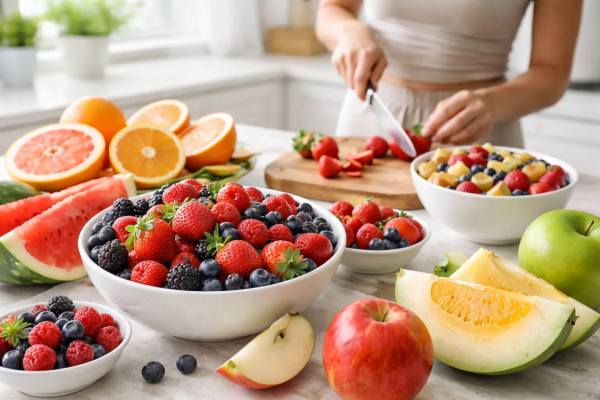
Strawberries, raspberries, blackberries, and blueberries are excellent choices because they give you a lot of volume for the calories. Raspberries and blackberries are especially useful when you want something sweet but also want a bit more fiber. Berries also work well in breakfast bowls, yogurt, oatmeal, and lighter desserts.
Oranges and mandarins
Citrus is underrated for weight loss. Oranges and mandarins tend to be juicy, refreshing, and individually portioned. They also take a little time to peel and eat, which helps make the snack feel more deliberate than mindlessly grabbing processed sweets.
Pears
Pears are often even more filling than people expect. Their texture and fiber make them a strong snack fruit, especially when eaten on their own rather than as part of a dessert. They are a good option for people who want a softer, sweeter alternative to apples.
Grapefruit
Grapefruit can be a solid choice because it is high in water and relatively low in calories for its size. Many people find it refreshing and filling. The main catch is that grapefruit can interact with some medications, so it is not ideal for everyone.
Watermelon
Watermelon is very helpful when volume is the priority. You can eat a large bowl for relatively modest calories. It is not the most fiber-rich fruit, but it can still be useful for warm weather, dessert replacement, or people who simply want more food volume.
Peaches, nectarines, and plums
These stone fruits tend to be satisfying, naturally sweet, and moderate in calories. They are especially good when you want fruit that feels dessert-like without becoming calorie-dense.
Bananas
Bananas get unfairly criticized. They are not the lowest-calorie fruit, but they are still a very good option for weight loss because they are portable, affordable, and genuinely filling. They work especially well before exercise, with yogurt, or as part of a breakfast that needs more staying power. If you want to understand how fruit fits into overall carb planning, this article on carbs for weight loss can help.
Grapes and cherries
These are best thought of as “easy to overeat but still useful.” They are sweet, satisfying, and can absolutely fit a calorie deficit, but they are also easy to eat by the handful without noticing quantity. Pre-portioning helps a lot here.
| Fruit | Main strength | Best use |
|---|---|---|
| Apple | Chewing and fullness | Snack or dessert replacement |
| Berries | High volume for calories | Breakfast bowls, snacks, lighter desserts |
| Orange | Juicy and portion-friendly | Afternoon snack or lunch add-on |
| Pear | Very satisfying texture | Standalone snack |
| Grapefruit | High water content | Breakfast or refreshing snack |
| Watermelon | Very high volume | Big snack or dessert swap |
| Banana | Convenience and staying power | Breakfast, pre-workout, or paired snack |
Whole fruit vs juice, dried fruit, and smoothies
This is where a lot of confusion starts. People say “fruit” as if all forms of fruit behave the same way for fullness and calorie control, but they do not.
Whole fruit is usually the most helpful
Whole fruit tends to be the best option for weight loss because it keeps the natural structure of the food intact. You get the fiber, the chewing, the slower pace of eating, and the larger volume. A whole orange and a glass of orange juice are not the same experience, even if they come from similar ingredients.
Juice is easier to overconsume
Even 100 percent fruit juice can deliver calories quickly without the same fullness as whole fruit. It is not “bad,” but it is generally less helpful for appetite control. For people actively trying to lose weight, juice is usually a weaker choice than eating the fruit itself.
Dried fruit is nutritious but compact
Raisins, dates, dried mango, and dried apricots can fit a calorie deficit, but they are much more compact. That means the calories add up fast. A small handful can be reasonable, but it rarely feels as filling as a bowl of fresh fruit. Dried fruit often works better as part of a trail mix or paired snack than as a mindless standalone food.
Smoothies can go either way
Smoothies are not automatically bad for weight loss, but they are easy to overload with nut butter, honey, juice, granola, and oversized fruit portions. They also tend to be consumed faster than whole fruit. A smoothie built around fruit, Greek yogurt, and some protein can work well. A large smoothie bowl loaded with toppings can quietly become dessert with a health halo.
Frozen fruit is often a great option
Frozen berries, cherries, mango, and peaches can be excellent because they are convenient, portionable, and often cheaper than fresh. They work especially well in yogurt bowls, oatmeal, and controlled smoothies. If you like keeping easy staples around, this list of better frozen foods for weight loss is useful.
The simplest rule is this: the more intact the fruit, the more helpful it usually is for fullness. The more processed, concentrated, or drinkable it becomes, the easier it is to consume more calories without noticing.
How to use fruit to stay full
Fruit works best for weight loss when you stop treating it like a random side item and start using it strategically. On its own, fruit can be great. Paired well, it can become much more effective.
Pair fruit with protein when needed
Fruit plus protein is often more filling than fruit alone. Good combinations include:
- apple with Greek yogurt
- berries with cottage cheese
- banana with a protein shake
- pear with plain yogurt
- orange with a small handful of nuts
That pairing helps especially if fruit by itself leaves you hungry within an hour. Protein improves staying power, and the fruit adds sweetness and volume. This is one reason fruit can fit so well into a broader high-protein, high-fiber approach.
Use fruit to replace a specific habit
Fruit becomes more useful when it replaces something real rather than being added on top of everything else. Examples:
- fruit instead of a pastry with breakfast
- berries instead of nightly ice cream
- an apple instead of vending-machine snacks
- orange slices instead of juice
- frozen grapes instead of candy
Put fruit where cravings actually happen
If the hardest moment is 3 p.m., fruit needs to be ready at 3 p.m., not buried in the fridge behind leftovers. Wash it, portion it, and keep it visible. Weight loss often improves when the best option becomes the easiest option.
Match the fruit to the situation
Different fruits solve different problems:
- Need a filling snack? Apple, pear, orange
- Need dessert volume? Strawberries, watermelon
- Need convenience? Banana, clementines
- Need sweetness payoff? Grapes, mango, cherries
- Need breakfast support? Berries, banana, kiwi
This is also where meal timing matters. Fruit can be a useful part of breakfast or a smart pre-workout carb, not just a snack. If you struggle with hunger swings later in the day, regular meal structure often matters as much as food choice. A guide on meal timing for appetite control can help connect those pieces.
When fruit can slow progress
Fruit is often blamed for weight-loss stalls when the real problem is not fruit itself. The issue is usually one of three things: portions, add-ons, or context.
Eating fruit on top of everything else
If fruit becomes an extra snack added to a day that is already full, it can still push calories up. That does not mean fruit is the problem. It means total intake still matters.
Turning fruit into a calorie-dense “healthy treat”
Fruit bowls covered in granola, nut butter, coconut, chocolate chips, and honey can become far more calorie-dense than people expect. Smoothie bowls are a classic example. They can look incredibly healthy while containing the energy of a full meal plus dessert.
Choosing the easiest fruits to overeat
Grapes, cherries, dates, dried mango, and banana chips can all fit a deficit, but they are easy to eat quickly. That is not a reason to ban them. It is a reason to portion them.
Using fruit to avoid building real meals
Some people end up with meals that are too light in protein and too low in staying power, then rely on repeated fruit snacks because they are “healthy.” Fruit should support a balanced diet, not patch over weak meal structure all day. If hunger is constant, the fix may be stronger meals, not fewer apples.
Misreading sweet as problematic
A sweet taste does not automatically mean a food is bad for fat loss. The bigger concern is whether the food leaves you satisfied. Whole fruit is usually much easier to work into a calorie deficit than candy, pastries, sugary cereal, or many packaged snack bars. If you tend to fear sweet foods altogether, this guide on lower-calorie sweet swaps can help put fruit in better perspective.
A useful check is this: if you think fruit is slowing progress, look first at juices, dried fruit, toppings, smoothies, grazing habits, and total calories before blaming a bowl of berries or a banana.
Simple fruit combos that work
The best fruit plan is not a list of “allowed” fruits. It is a repeatable set of combinations you can actually use on busy days, hungry afternoons, and craving-heavy evenings.
Here are some simple combinations that work well in a calorie deficit.
Breakfast combinations
- Greek yogurt, berries, and chia seeds
- Oatmeal with banana and cinnamon
- Cottage cheese with pineapple or peaches
- Eggs on toast with an orange on the side
These work because they combine fruit with protein or fiber, instead of relying on fruit alone. If breakfast is where you need more ideas, these high-protein breakfast ideas fit well with fruit.
Snack combinations
- apple and Greek yogurt
- pear and string cheese
- banana and a measured spoon of peanut butter
- strawberries with cottage cheese
- orange and a few almonds
Dessert combinations
- frozen berries with yogurt
- sliced peaches with cinnamon
- watermelon after dinner
- frozen grapes in a portioned bowl
- apple slices warmed with cinnamon
Meal add-ons
- berries with lunch when dessert cravings hit early
- orange slices packed with a work lunch
- pineapple with a savory rice bowl
- apple slices added to a chicken salad
- fruit on the side of a lighter dinner so you do not go looking for sweets later
The key is to make fruit easy enough to use that you stop debating it. Buy a few kinds you genuinely enjoy, store them where you can see them, and portion the easier-to-overeat options. Weight loss gets easier when the sweet choice that supports your goals is already waiting for you.
References
- Consumption of 100% Fruit Juice and Body Weight in Children and Adults: A Systematic Review and Meta-Analysis 2024 (Systematic Review)
- Vegetables, fruits, and berries – a scoping review for Nordic Nutrition Recommendations 2023 2024 (Review)
- Dietary Guidelines for Americans, 2020-2025 2020 (Guideline)
- Start Simple with My Plate 2022 (Official Guidance)
- Impact of Whole, Fresh Fruit Consumption on Energy Intake and Adiposity: A Systematic Review 2019 (Systematic Review)
Disclaimer
This article is for general educational purposes only and is not a substitute for medical advice, diagnosis, or treatment. If you have diabetes, digestive conditions, kidney disease, food intolerances, or take medications affected by specific fruits, get personalized advice from your clinician or a registered dietitian before making major dietary changes.
If this article helped, please share it on Facebook, X, or your preferred platform so others can use it to make smarter, more sustainable food choices.