Carbs are not the reason weight loss stalls for most people. Total calories, protein intake, food quality, portion size, and consistency usually matter more. Still, carbohydrate intake does affect hunger, energy, workout performance, meal satisfaction, and how easy a calorie deficit feels to maintain. That is why “how many carbs should I eat to lose weight?” is a practical question, not just a diet debate.
The right answer depends on your calorie target, activity level, food preferences, and how your appetite responds to different meals. This article breaks down realistic carb targets, when lower-carb eating can help, when it may not, and the best carb sources to keep in your diet if fat loss is the goal.
Table of Contents
- Do You Need to Go Low Carb?
- How Many Carbs Per Day for Weight Loss?
- How to Set Your Best Carb Target
- Best Carb Sources for Weight Loss
- Carb Sources to Limit More Often
- When Lower Carb Works Best
- How to Build Carb-Smart Meals
Do You Need to Go Low Carb?
No. You do not need to eat low carb to lose weight.
This is one of the most useful things to get clear from the start. Weight loss happens when you maintain a calorie deficit long enough to lose body fat. Carbs can be reduced to help create that deficit, but they are not inherently fattening, and cutting them is not required for progress. Many people lose weight on lower-carb diets. Many others lose weight on moderate-carb or relatively higher-carb diets. The best plan is usually the one you can follow consistently while keeping hunger, energy, and food enjoyment in a workable range.
That is why carb debates often miss the real issue. The main question is not whether carbs are good or bad. It is whether your current carb intake is helping or hurting adherence. For some people, lowering carbs makes meals easier to control because it reduces snack foods, sugary drinks, baked goods, and mindless eating. For others, cutting carbs too hard backfires by increasing cravings, lowering training energy, and making meals feel restrictive.
A practical way to think about carbs is this:
- Carbs are a tool for energy and meal satisfaction.
- Protein is usually the more important macro to protect during fat loss.
- Fat and carbs are the main levers you adjust based on preference and lifestyle.
- Food quality matters as much as, and sometimes more than, the raw carb number.
That last point matters. A diet based on oats, fruit, beans, potatoes, yogurt, vegetables, and whole grains is very different from one built around pastries, sweet drinks, chips, fries, and oversized dessert-style coffee drinks, even if the carb totals look similar. That is one reason readers comparing different approaches often benefit from understanding low-carb vs low-fat approaches rather than assuming one side is always right.
Another reason carbs get blamed too easily is that many high-carb foods also happen to be easy to overeat. Pizza, fries, cookies, cereal, chips, sweet drinks, and takeout noodles are not just carb-rich. They are also highly palatable and often paired with lots of fat, salt, or sugar. In that situation, carbs are not the whole problem. Energy density and food environment are doing plenty of the work too.
If your goal is fat loss, carbs should earn their place by helping you feel better, train better, or stick to your calorie target more reliably. That is the useful standard. Not whether a diet trend says you should fear them.
How Many Carbs Per Day for Weight Loss?
There is no single carb number that works for everyone. A good starting range depends on your calorie intake, body size, daily movement, and whether you do regular hard training. Still, most people do well by thinking in ranges rather than chasing one perfect number.
Because carbohydrates provide 4 calories per gram, you can estimate carb intake from your total calories. Here is a practical guide many people can use as a starting point.
| Approach | Approximate share of calories from carbs | At 1,500 calories | At 1,800 calories | Best fit |
|---|---|---|---|---|
| Lower carb | 20 to 30 percent | 75 to 113 grams | 90 to 135 grams | People who prefer savory meals, struggle with cravings, or feel better with fewer starches |
| Moderate carb | 30 to 45 percent | 113 to 169 grams | 135 to 203 grams | Most people trying to lose weight while eating balanced meals |
| Higher carb | 45 to 55 percent | 169 to 206 grams | 203 to 248 grams | Highly active people, endurance training, or those who perform and adhere better with more carbs |
In research and clinical discussions, lower-carb diets are often defined as less than 130 grams of carbohydrate per day, with very-low-carb or ketogenic approaches going much lower. That does not mean 129 grams is automatically better than 140. It simply gives you a sense of where the “lower-carb” label usually begins.
For many people dieting on typical calorie targets, a moderate range works well because it allows enough carbs for fruit, vegetables, beans, dairy, oats, potatoes, or rice while still leaving room for higher protein intake and some healthy fat. That is why a flexible setup often beats a rigid one. If your meals feel flat and your workouts suffer, carbs may be too low. If your hunger control is poor and your carbs mainly come from snack foods and sweet drinks, they may be too high for how you eat.
A helpful way to think about carb targets is to set protein first, set calories second, and let carbs and fat share what remains. That broader structure is easier to manage when you understand the basics of calculating protein, carbs, and fat for weight loss and when to choose ratios that fit your schedule.
One more useful point: carb needs are not static. You may want more on training days and less on rest days. You may tolerate higher carbs well when your meals are centered on whole foods and lower carbs better when stress or appetite control is the bigger problem. A good target should guide you, not trap you.
How to Set Your Best Carb Target
The best carb target is the one that supports fat loss without making your diet miserable. That means it should fit four things: your calorie budget, your protein goal, your training demands, and your appetite.
Start with your calorie target. A smaller person eating 1,400 to 1,600 calories may not have room for very high carbs and high fat at the same time, especially if protein is set appropriately. A larger or more active person eating 1,900 to 2,300 calories usually has more room to keep carbs moderate or even relatively high while still staying in a deficit.
Next, protect protein. During weight loss, protein usually deserves priority because it supports fullness and lean mass retention. If protein is too low, meals often become less satisfying regardless of the carb number. That is why it helps to know your likely daily protein needs during weight loss before trying to fine-tune carbs.
Then look at your activity. If you lift weights, play sports, run, cycle, or do higher-volume training, carbs often become more useful. They can improve workout quality, recovery, and general energy. If your activity is mostly walking and light movement, you may be able to run lower carbs comfortably without noticing much downside.
Finally, look at appetite and behavior, not just physiology. Ask yourself:
- Do I stay full longer with potatoes, oats, fruit, and rice in my meals, or do those foods trigger overeating?
- Do I get snacky when I cut carbs too low?
- Do I feel flat, irritable, or weak in training when carbs are low?
- Do I mainly want carbs from whole foods, or do they mostly show up as sweets, chips, and takeout?
- Does a more structured lower-carb plan reduce decisions and make me more consistent?
These questions matter because a carb target that looks good on paper can still fail in real life. One person feels calmer and more in control with eggs, yogurt, meat, vegetables, fruit, and modest starch portions. Another feels far better when meals include oats, rice, beans, potatoes, and fruit more generously. Both can lose fat.
A useful starting method looks like this:
- Set calories.
- Set protein.
- Choose a carb range based on activity and preference.
- Let fat fill the rest.
- Test it for two weeks before judging it.
That testing period matters. A single day of lower or higher carbs tells you very little. You want to see what happens to hunger, energy, cravings, meal enjoyment, and consistency across multiple normal days.
If a carb target leaves you constantly thinking about food, falling apart at night, or underperforming in training, it is probably not your best target, even if someone else swears by it.
Best Carb Sources for Weight Loss
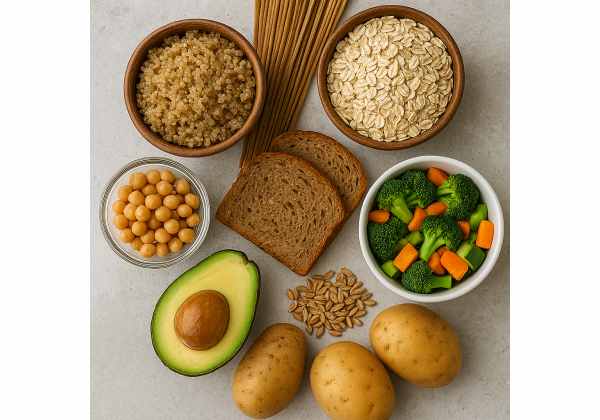
The best carb sources for weight loss are usually the ones that bring something else useful with them: fiber, water, chewing, nutrients, meal satisfaction, or workout fuel. In other words, they are not just “carbs.” They help your overall diet work better.
The strongest carb choices for most people include:
- potatoes and sweet potatoes
- oats and minimally sweetened oatmeal
- beans, lentils, and chickpeas
- fruit such as berries, apples, oranges, bananas, and kiwi
- yogurt and milk, depending on tolerance and preference
- whole grains like rice, quinoa, and whole-grain bread in sensible portions
- high-fiber wraps or breads
- starchy vegetables and squash
- popcorn when portioned well and not drenched in fat
These foods tend to outperform refined snack-style carbs because they are harder to overeat mindlessly and easier to fit into complete meals. A bowl of oats with Greek yogurt and berries behaves differently in your day than a pastry and sweet coffee. A potato with chicken and vegetables behaves differently than a basket of fries.
| Food | Why it works | Best use | Common mistake |
|---|---|---|---|
| Potatoes | High satiety for the calories | Lunch or dinner side with protein | Turning them into fries or loading them with fat |
| Oats | Filling and easy to pair with protein | Breakfast or pre-workout meal | Adding too much sugar, nut butter, or granola |
| Beans and lentils | Carbs plus fiber and some protein | Soups, bowls, chili, salads | Using tiny amounts that do not improve fullness much |
| Fruit | Portable, sweet, and relatively filling | Snacks, breakfast, dessert swaps | Calling fruit “too sugary” while eating more calorie-dense sweets instead |
| Rice | Easy to digest and useful around training | Bowls, stir-fries, post-workout meals | Oversized restaurant portions |
| Whole-grain bread or wraps | Convenient and flexible | Sandwiches and fast lunches | Choosing large bakery portions with little protein |
This is where carb quality matters. Higher-fiber, less refined carb foods usually improve fullness, diet quality, and meal structure. That is why people building a practical deficit often do best with the best carbs for a calorie deficit rather than just slashing total grams.
Fruit deserves special mention because it is often unfairly lumped together with junk food. Whole fruit is generally one of the most weight-loss-friendly sweet carb options you can eat. It is especially useful when you want dessert-like satisfaction without the energy density of pastries, candy, or ice cream. Readers who want more examples can look at the best fruits for weight loss and build them into meals or snacks instead of treating them as a cheat.
The best carb source is not always the one with the lowest number on paper. It is often the one that helps you eat like a sane person for the rest of the day.
Carb Sources to Limit More Often
You do not need to ban specific foods forever to lose weight, but some carb sources are simply easier to overeat and less useful for fullness. These are the carbs worth limiting more often, especially if hunger control and calorie creep are your main problems.
The usual troublemakers are:
- sugary drinks, juice, sweet tea, and large flavored coffee drinks
- pastries, donuts, muffins, and bakery snacks
- chips, crackers, pretzels, and snack mixes
- refined cereal that is easy to pour generously
- candy and dessert-style granola bars
- large restaurant bread baskets
- giant bagels and oversized wraps
- fries, tater tots, and breaded sides
- cereal-plus-dessert habits at night
- “healthy” smoothie bowls with large add-ins
These foods are not automatically fattening because of carbs alone. They are a problem because they are often low in protein, lower in fiber than they appear, easy to eat quickly, and not very effective at shutting down hunger. Many also pair refined carbs with fat, which makes them even easier to overconsume.
A practical example helps. A baked potato, bowl of oats, apple, or serving of beans is carbohydrate-rich, but each of those usually asks for chewing, takes up space in the stomach, and fits naturally into a meal. A muffin or handful of chips can deliver similar or higher calories with much less fullness. That is why “all carbs are the same” is not a useful way to eat.
This is also where people often get stuck in all-or-nothing thinking. They cut carbs hard, feel deprived, then rebound into the exact foods they were trying to avoid. A better strategy is usually to keep satisfying carbs in your diet while reducing the ones that behave more like easy extra calories. That approach overlaps a lot with identifying the foods that make a calorie deficit harder rather than treating every starch or fruit as suspect.
If sweet cravings are part of the issue, it also helps to separate whole-food carb sources from highly processed sugary foods. Those two categories behave very differently in a fat-loss diet, which is one reason people often benefit from understanding what the evidence says about sugar and artificial sweeteners instead of relying on diet folklore.
The goal is not carb paranoia. It is carb discrimination. Keep the foods that support fullness, energy, and adherence. Cut back on the ones that mostly open the door to more eating.
When Lower Carb Works Best
Lower-carb eating can work very well for some people, but it tends to work best under specific conditions.
It often helps when:
- you struggle with frequent cravings for sweets, baked goods, or snack foods
- you prefer protein-heavy, savory meals
- your current carb intake is mostly refined foods and liquid calories
- you have a hard time controlling portions once bread, cereal, chips, or desserts are in front of you
- you feel satisfied on meals built around meat, eggs, yogurt, vegetables, fruit, and modest starches
- you want a simpler rule set that reduces decision fatigue
In these cases, lowering carbs can indirectly reduce calories because it changes food choices and eating behavior. Some people stop grazing as much. Others feel more stable with fewer dramatic blood-sugar swings or less exposure to highly processed snack foods. That can make adherence easier, which is what actually drives progress.
Lower carb may be less ideal when:
- you do high-volume endurance training
- your workouts feel flat without carbs
- you naturally enjoy and control portions of potatoes, oats, rice, beans, and fruit
- you start to feel deprived, obsessed with forbidden foods, or overly rigid
- you end up replacing carbs mostly with extra cheese, oil, butter, and processed low-carb snacks
That last point is important. Lower carb does not automatically mean better food quality. A lower-carb pattern built around protein, vegetables, fruit, legumes, nuts, and minimally processed foods is very different from one built around bacon, butter coffee, cheese crisps, and “keto desserts.” Quality still matters.
This is why many people should think in terms of “lower than before” rather than “as low as possible.” Sometimes the right move is not ketogenic eating. It is cutting out liquid sugar, shrinking restaurant rice and bread portions, using fruit instead of dessert more often, and building meals around protein and vegetables first. That moderate adjustment can solve a lot without creating the downsides of an extreme plan.
If you are considering a much lower-carb approach, it helps to understand both the benefits and trade-offs of a ketogenic diet for weight loss. If you are more interested in managing carb quality and blood-sugar response without going very low, a low-glycemic approach may feel more livable.
The right carb level is not the one that sounds toughest. It is the one that makes good days easier to repeat.
How to Build Carb-Smart Meals
Most people do not need a perfect carb formula. They need meals that make sense.
A carb-smart meal usually does three things well:
- It starts with a meaningful protein source.
- It adds a carb source intentionally, not automatically.
- It uses volume foods like vegetables, fruit, beans, or broth-based foods to improve fullness.
That might look like:
- Greek yogurt, berries, and oats for breakfast
- chicken, rice, and vegetables for lunch
- salmon, potatoes, and salad for dinner
- apple and cottage cheese for a snack
- lentil soup with turkey wrap halves for an easy lunch
- egg scramble with potatoes and fruit instead of pastry on the side
This approach works because carbs are not floating around the diet on their own. They are built into real meals that include protein and structure. That is a big difference from getting most of your daily carbs from random bites of cereal, crackers, pastries, sweet drinks, and convenience foods.
A helpful meal template is:
- Protein: chicken, fish, eggs, Greek yogurt, tofu, cottage cheese, turkey, lean beef
- Carb: potatoes, oats, rice, beans, fruit, whole-grain bread, high-fiber wrap
- Volume: vegetables, salad, broth-based soup, fruit, legumes
- Fat: measured amounts of olive oil, avocado, nuts, seeds, cheese, or dressing
This is essentially a more specific version of a high-protein plate, with carbs placed on purpose instead of added by default. If you want a more structured daily pattern, it also fits naturally into a high-protein, high-fiber meal plan, which often makes carb intake easier to control without micromanaging every gram.
A few carb-smart habits go a long way:
- put carbs on the plate instead of snacking on them from packages
- pair carbs with protein whenever possible
- use restaurant-sized starch portions sparingly
- keep dessert-like carbs occasional instead of automatic
- increase carbs around workouts if performance matters
- reduce carbs slightly on lower-activity days if that feels natural
The most practical insight is that your carb target is not just a number. It is a pattern. Two people can both eat 160 grams of carbs, but one gets them mostly from meals built around oats, fruit, beans, rice, potatoes, and yogurt, while the other gets them from muffins, chips, cereal, sweetened coffee, and fries. Those two diets do not feel or function the same.
Carb-smart eating is not about fear. It is about putting carbs where they help and pulling them back where they mostly create noise.
References
- Dietary Guidelines for Americans, 2020-2025 2020 (Guideline)
- Obesity Management in Adults: A Review 2023 (Review)
- Low-Carbohydrate Diet Macronutrient Quality and Weight Change 2023 (Cohort Study)
- New metrics of dietary carbohydrate quality 2023 (Review)
- Expert consensus on nutrition and lower-carbohydrate diets: An evidence- and equity-based approach to dietary guidance 2024 (Consensus Statement)
Disclaimer
This article is for general educational purposes only. Carb needs, calorie targets, and food tolerances vary based on medical conditions, medications, activity level, and personal history, so this information is not a substitute for individualized advice from a qualified clinician or registered dietitian.
If this article helped, please share it on Facebook, X, or your preferred platform so more people can understand how to use carbs strategically for weight loss instead of fearing them.