A calorie deficit is simple on paper, but some foods make it much harder to maintain in real life. The problem is not that any single food “stops fat loss.” The real issue is that certain foods are easy to overeat, weak at controlling hunger, or sneaky enough to erase your deficit without making you feel satisfied.
This article explains which foods tend to work against a calorie deficit, why they are difficult to manage, and what to choose instead. You will also see how to spot high-risk foods in your own routine, how to build meals that keep you fuller, and how to avoid turning weight loss into an unnecessarily restrictive diet.
Table of Contents
- What makes a food bad for a deficit
- Top foods that make weight loss harder
- Foods that seem healthy but add up fast
- How to handle cravings and trigger foods
- What to eat instead
- How to know what you should limit
What makes a food bad for a deficit
A food does not become “bad” just because it contains sugar, fat, carbs, or calories. In a calorie deficit, the foods that tend to cause problems usually share one or more of the same traits: they are easy to eat quickly, easy to eat in large portions, and not especially filling for the calories they provide.
That is an important distinction. Weight loss is not about moral categories like clean, dirty, good, or bad. It is about whether the way a food behaves in your diet makes the deficit easier or harder to sustain.
The foods that cause the most trouble often have these features:
- High calorie density: A small portion carries a lot of calories.
- Low satiety: You can eat them without feeling genuinely full.
- Weak protein and fiber content: They do little to steady appetite.
- Easy overconsumption: They are engineered or prepared in ways that make “just a little” unlikely.
- Liquid or soft texture: They go down fast and often do not register like a full meal.
- Combo effect: They pair fat, refined carbs, salt, and strong flavor in a way that encourages continued eating.
This is why the same number of calories can feel completely different. A pastry and a protein-heavy breakfast may contain a similar calorie count, but one may keep you full for hours while the other leaves you prowling for snacks before lunch. A coffee drink, restaurant appetizer, or handful of trail mix may look harmless, yet those choices can quietly consume the calories that would have been better spent on meals with more staying power.
Another key point is that foods do not exist in isolation. A single dessert or burger does not ruin fat loss. What matters is the pattern. If certain foods repeatedly lead to overshooting your target, make you hungrier later, or turn into “I’ll just start again tomorrow,” they deserve attention.
That is also why a successful deficit is rarely built around maximum restraint. It is built around better trade-offs. The most effective approach usually combines portion awareness with foods that offer more protein, fiber, and volume, much like the foods emphasized in a smart calorie-deficit eating pattern and high-volume meal strategies.
The goal is not to remove every enjoyable food. It is to recognize which foods cost too much in calories for what they give back in fullness, control, and consistency.
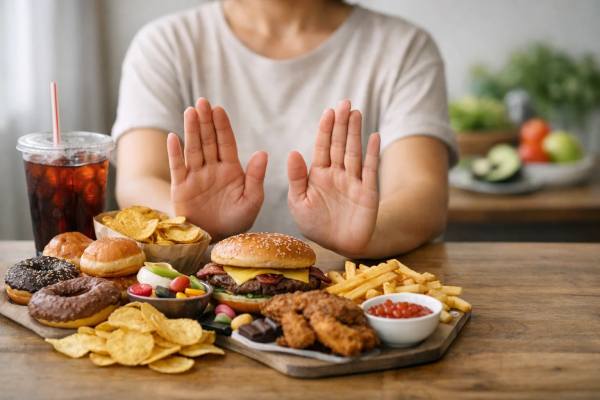
Top foods that make weight loss harder
Some foods show up again and again in stalled fat loss, not because they are uniquely fattening, but because they make it easier to break the deficit without noticing.
Here are the most common troublemakers.
Sugary drinks
Regular soda, sweet tea, fruit drinks, energy drinks, fancy coffee beverages, and many smoothies are among the easiest ways to overconsume calories. Liquid calories do not usually create the same fullness as solid food, so they can pile onto your regular intake instead of replacing it.
Coffee-shop drinks and blended beverages
A coffee that starts as a modest drink can turn into a dessert in a cup once syrups, cream, flavored cold foam, whipped toppings, and sweet add-ins enter the picture. The same goes for many bottled smoothies and juice-bar drinks.
Pastries, donuts, muffins, and bakery snacks
These foods are usually dense in refined carbs and fat, low in protein, and easy to finish quickly. They rarely keep people full for long, which makes them a poor trade in a calorie deficit.
Chips, crackers, and snack mixes
Crunchy, salty foods are classic overeating foods. They are portion-distorting by nature. A serving often looks tiny, and eating from the bag makes it easy to double or triple calories without realizing it.
Fast food combo meals
The burger may not be the biggest issue. Often it is the full combination of fries, sauce, cheese, sugary drink, and oversized portions. Meals built this way can wipe out a large part of the day’s calorie budget in one sitting.
Pizza
Pizza combines refined carbs, fat, salt, and high palatability. It is easy to keep eating even after physical hunger has faded. It also tends to be paired with wings, soda, garlic dips, or desserts.
Restaurant pasta dishes
Creamy pasta, oily noodles, seafood pasta, and “healthy” grain bowls from restaurants often contain much more oil, butter, cheese, and starch than people expect.
Candy, chocolate bars, and sweet snack foods
These are not forbidden foods, but they are easy to eat quickly and often invite a second or third serving. A planned portion can fit. Mindless eating usually does not.
Alcohol-heavy nights
Alcohol lowers restraint, adds calories, and often pulls salty, greasy food into the picture. Even when drinks themselves are moderate, what happens after them can erase the deficit.
Large dessert portions
Ice cream pints, giant cookies, brownies, cheesecake slices, and takeout desserts often deliver a lot of calories in a very small volume.
These foods are especially tricky because they fit real-life weak spots: commutes, social events, stress, convenience, boredom, and weekend routines. That is why progress often improves not from perfection but from removing the few foods that repeatedly create outsized damage. If restaurant meals are a major issue, more deliberate choices around takeout meals and lower-calorie restaurant orders can make a surprisingly large difference.
Foods that seem healthy but add up fast
Some of the hardest foods to manage in a calorie deficit are not obvious junk foods. They are foods with a health halo. People choose them with good intentions, then wonder why their intake remains higher than expected.
These foods are not inherently bad. The issue is that they are easy to underestimate.
| Food | Why it adds up fast | Better way to use it |
|---|---|---|
| Granola | Small servings are calorie-dense and easy to overpour | Use as a topping, not a cereal base |
| Nuts and nut butter | Very healthy but dense and easy to eyeball poorly | Measure portions instead of scooping freely |
| Avocado | Filling, but calories climb fast when portions grow | Use a smaller portion with lean protein |
| Olive oil | Easy to pour 2 to 3 times more than intended | Measure teaspoons or use a spray |
| Smoothies | Can contain fruit, juice, nut butter, yogurt, oats, and honey at once | Build them around protein and keep extras limited |
| Trail mix | Combines nuts, dried fruit, chocolate, and easy snacking | Pre-portion small servings |
| Protein bars | Some are closer to candy bars than balanced snacks | Use only when they solve a real convenience problem |
Granola is a classic example. It sounds wholesome, but a few casual pours can easily turn a yogurt bowl into a calorie-heavy meal without much extra fullness. Nut butters do the same thing. One tablespoon is manageable. Two large spoonfuls plus bread, oats, fruit, or a smoothie base can shift a meal from efficient to excessive very quickly.
Smoothies deserve special attention. They can help when built around protein, berries, and measured ingredients, but many homemade and store-bought versions become calorie bombs because they stack liquid calories and multiple dense add-ins into something that takes only a few minutes to drink. If smoothies are part of your routine, it helps to compare your habits against more structured weight loss smoothie ideas.
Even healthy fats can cause trouble when the rest of the meal is already calorie-rich. Avocado, cheese, nuts, seeds, and olive oil are all nutritious, but a deficit still requires trade-offs. The best use of these foods is usually deliberate and measured, not scattered generously across every meal. That same principle matters when learning how much dietary fat actually supports satiety without overwhelming calories, which is the balance behind smart fat intake for weight loss.
The lesson here is not “avoid healthy foods.” It is that healthy and low-calorie are not the same thing. In a deficit, even nutrient-dense foods still need portion awareness.
How to handle cravings and trigger foods
Knowing which foods make a calorie deficit harder is useful. Knowing how to deal with them in real life matters even more.
Most people do not overeat because they forgot cookies contain calories. They overeat because certain foods intersect with fatigue, stress, habit, emotion, convenience, and reward. That is why the practical question is not “What foods are bad?” It is “What foods reliably make me lose control, and what situation keeps triggering that pattern?”
A few patterns are especially common:
- eating calorie-dense snacks while distracted
- grazing after dinner because meals earlier were too small
- rewarding yourself with takeout or sweets after a stressful day
- weekend overeating after restrictive weekdays
- keeping highly tempting foods visible and easy to grab
The best response is usually not total restriction. Total restriction can work for some people with a narrow set of trigger foods, but for many others it creates rebound eating. A better first step is to reduce exposure, increase friction, and make the planned alternative easier.
Here are practical ways to do that:
- Identify your highest-risk foods. Not every indulgent food is a problem. Focus on the ones that consistently lead to overeating.
- Stop pretending a trigger food is a staple. If you cannot moderate it well right now, do not keep it in a central, visible place at home.
- Pre-portion before eating. Put one serving in a bowl or plate. Never negotiate with the open package.
- Fix meal structure first. Many cravings get worse when breakfast and lunch are low in protein and fiber.
- Use a planned treat instead of random snacking. Intention usually beats improvisation.
- Match the craving, but improve the trade-off. Craving something crunchy, cold, salty, sweet, or creamy is different from craving a specific brand name food.
For example, someone who wants dessert every night may do better with a measured portion from a list of lighter dessert options rather than trying to white-knuckle the craving. Someone who gets hungry late may need one of several better late-night snack choices instead of another round of willpower.
This is also where routines matter. Trigger foods become more powerful when eating is unplanned, inconsistent, or emotionally reactive. Better planning, better meal timing, and a less tempting home setup usually solve more than food rules alone.
What to eat instead
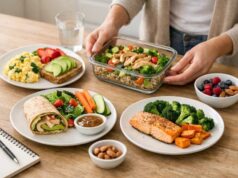
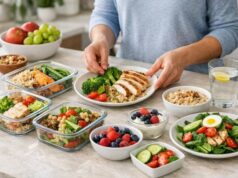
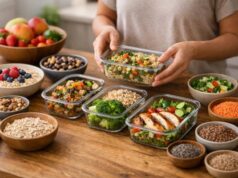
The most effective way to avoid foods that derail a calorie deficit is to replace them with foods that do a better job of controlling hunger. That usually means meals built around protein, fiber, and volume rather than hyper-palatable snack foods that vanish in a few minutes.
A strong replacement strategy starts with foods that give more fullness per calorie:
- lean protein such as chicken breast, turkey, tuna, Greek yogurt, cottage cheese, shrimp, tofu, or eggs
- vegetables with high volume and low calorie density
- fruit that adds sweetness with more fiber and bulk than candy or baked goods
- potatoes, oats, beans, and whole grains in measured portions
- broth-based soups, big salads, and high-protein bowls that make the plate look generous
The key is not to make your diet joyless. It is to make meals more useful.
Instead of:
- a pastry breakfast, try eggs and fruit or Greek yogurt with berries
- chips, try popcorn or a protein-and-produce snack
- a giant takeout lunch, try a protein-heavy bowl or packable lunch with better portion control
- random sweets all afternoon, try a planned snack with protein and fiber first
- an oil-heavy dinner, try a more structured plate with lean protein, vegetables, and one starch
The best substitutions often preserve the experience you actually want:
- Sweet: fruit, yogurt bowls, lighter desserts, or a controlled portion of chocolate
- Crunchy: popcorn, crisp vegetables, roasted chickpeas, measured crackers with protein
- Creamy: Greek yogurt-based dips, cottage cheese blends, protein puddings
- Savory: lean protein meals, soups, egg-based meals, lower-calorie dinners that still feel complete
If you are unsure where to start, building around high-protein, low-calorie meals and filling low-calorie meal ideas is one of the simplest ways to improve satiety without obsessing over every food.
This is also why many successful deficits look repetitive in a good way. They rely on a short list of meals that work. When you know your breakfast keeps you steady, your lunch does not lead to snacking, and your dinner feels satisfying, the foods that once sabotaged progress lose much of their power.
How to know what you should limit
The list of foods to avoid in a calorie deficit is not the same for everyone. Two people can eat the same diet soda, cereal, ice cream, or peanut butter and have completely different results depending on portion control, hunger patterns, and trigger behavior.
That is why the best list is personal.
A food probably deserves to be limited for you if it does one or more of the following:
- you almost always eat more than planned
- it leaves you hungrier later instead of more satisfied
- it regularly turns into a binge, splurge, or “cheat” spiral
- it makes portion tracking almost impossible
- it pushes out more useful foods like protein, produce, or balanced meals
- it shows up repeatedly on days when you exceed your target
You do not need to track forever to notice patterns. Even one to two weeks of honest observation can show a lot. Pay attention to what happens before and after a problem food. Were you stressed, rushed, underfed, bored, or eating socially? Did the food solve hunger, or only intensify appetite?
A simple review checklist helps:
- Which meals leave me satisfied for the longest?
- Which foods turn one serving into several?
- Which drinks are taking calories without helping fullness?
- Which “healthy” foods am I underestimating?
- Which environments cause the most unplanned eating?
Sometimes the answer is not cutting a food, but changing the context. You may do fine with dessert after a protein-rich dinner, but not with sweets in the pantry at 3 p.m. You may do well with restaurant meals when you choose in advance, but not when you order while ravenous. Those distinctions matter.
This is where progress becomes more strategic and less emotional. A calorie deficit works best when you stop asking, “What foods am I allowed to eat?” and start asking, “Which foods help me stay consistent, and which ones quietly work against me?”
Once you know that answer, your diet becomes much easier to manage, and weight loss starts to feel less like a daily test of restraint and more like a system you can actually maintain.
References
- Obesity Management in Adults: A Review 2023 (Review)
- Enhanced protein intake on maintaining muscle mass, strength, and physical function in adults with overweight or obesity: A systematic review and meta-analysis 2024 (Systematic Review and Meta-Analysis)
- The role of dietary fibers in regulating appetite, an overview of mechanisms and weight consequences 2024 (Review)
- Sugar-sweetened beverage consumption and weight gain among children and adults: a systematic review and meta-analysis 2023 (Systematic Review and Meta-Analysis)
- Ultraprocessed Foods and Obesity Risk: A Critical Review of Reported Mechanisms and Effect Sizes 2023 (Review)
Disclaimer
This article is for general educational purposes only and is not a substitute for personal medical or nutrition advice. If you have a history of disordered eating, diabetes, digestive problems, or repeated difficulty losing weight despite a calorie deficit, talk with a doctor or registered dietitian before making major diet changes.
If this article helped you, please share it on Facebook, X, or any platform where it may help someone else.