Smoothies can help with weight loss, but only when they are built to be filling rather than just fruity, sweet, or convenient. A good weight loss smoothie should do the job of a real meal or snack: control hunger, support protein intake, and fit a calorie deficit without disappearing in ten minutes.
The problem is that many smoothies fail on exactly those points. They are often too low in protein, too easy to drink quickly, or overloaded with calorie-dense extras. This guide breaks down what makes a smoothie weight-loss friendly, which ingredients matter most, how to avoid common mistakes, and several practical smoothie combinations that are satisfying enough to earn a place in your routine.
Table of Contents
- What makes a smoothie good for weight loss
- Common smoothie mistakes that raise calories
- Best smoothie formulas for a calorie deficit
- 7 filling smoothie ideas
- How to use smoothies without getting hungrier
- Meal prep, storage, and smart swaps
What makes a smoothie good for weight loss
The best smoothies for weight loss are not the prettiest ones on social media or the ones with the longest list of “superfoods.” They are the ones that keep calories controlled while still helping you stay full. That means a smoothie needs structure, not just healthy ingredients.
A weight loss smoothie usually works best when it includes four parts:
- A strong protein source
- A fiber source
- Controlled carbohydrates
- Enough volume and texture to slow you down
Protein matters most. Without enough protein, a smoothie can feel more like flavored liquid than a real meal. Greek yogurt, cottage cheese, milk, soy milk, kefir, or a well-tolerated protein powder usually make the biggest difference. If your smoothie only has fruit and liquid, it may taste good but often leaves you hungry too soon.
Fiber is the second major piece. Frozen berries, chia seeds, flax, oats, and even a handful of spinach can improve fullness without turning the drink into a calorie bomb. Fruit alone helps, but fruit plus protein plus some fiber is usually much more effective than fruit by itself.
Carbohydrates are not the enemy here. The goal is not to make every smoothie ultra low-carb. The goal is to keep carbs useful rather than excessive. A banana, berries, oats, or yogurt can all fit well. Problems usually start when several carb-heavy ingredients pile up in one blender: banana, mango, juice, honey, granola, dates, and flavored yogurt all at once.
Volume also matters more than many people realize. A smoothie that feels physically substantial tends to be easier to use in a calorie deficit than a tiny but calorie-dense blend. Ice, frozen fruit, high-water ingredients, and measured portions help create that “larger for the calories” effect. This is the same principle behind high-volume eating and lower-energy-density meals.
The best test is simple: after drinking the smoothie, do you feel like you had a meal, or do you immediately want something crunchy and more satisfying? If it is the second one, the smoothie probably needs more protein, more fiber, or fewer calorie-dense extras.
Common smoothie mistakes that raise calories
Smoothies get a health halo very easily. Because they are made from fruit, yogurt, milk, seeds, or greens, people often assume they are automatically good for fat loss. But many smoothies end up working against a calorie deficit, not because smoothies are bad, but because the ingredient combinations are poorly balanced.
The most common mistake is building a smoothie like a dessert. It starts with fruit, then adds juice, nut butter, granola, honey, sweetened yogurt, coconut, and maybe even protein powder on top. Every ingredient sounds healthy on its own, but together they can create a meal-sized or even dessert-sized calorie load that goes down very fast.
Another mistake is using too little protein. A smoothie with spinach, berries, and almond milk may look impressive, but if it only has a few grams of protein, it often behaves more like a light snack than a real meal. That can be fine if you planned a snack. It is a poor choice if you expected it to replace breakfast or lunch.
A third problem is overusing liquid calories. Juice, sweetened non-dairy milks, coffee creamers, syrupy bottled smoothies, and sugary add-ins can increase calories without improving fullness much. Water, ice, unsweetened milk, or a measured dairy base usually work better.
Portion distortion is another issue. Many people use large blender cups that quietly encourage oversized servings. What was supposed to be one smoothie becomes 20 to 30 ounces, which makes it easy to turn a simple breakfast into a calorie-heavy meal.
These ingredients tend to cause the most trouble:
- fruit juice
- multiple servings of nut butter
- sweetened yogurt
- large amounts of granola
- coconut milk from a can
- multiple dates
- honey or maple syrup used casually
- full portions of avocado plus nut butter plus seeds in the same drink
None of these foods are “bad.” The problem is stacking too many dense ingredients into something that does not chew like solid food. Smoothies can already be easier to consume quickly than full meals, so calorie concentration matters more than people expect.
If you want smoothies to support fat loss, treat them the same way you would treat any other meal: build them around purpose, not vibes. A smoothie should fit your broader plan for what to eat in a calorie deficit and match the same principles that make high-protein, low-calorie meals more effective than random healthy snacks.
Best smoothie formulas for a calorie deficit
The easiest way to make a smoothie that fits weight loss is to stop thinking in recipes first and start thinking in formulas. Once you understand the structure, you can change flavors without losing control of calories or fullness.
A reliable smoothie formula looks like this:
| Part | Best options | Why it helps |
|---|---|---|
| Protein | Greek yogurt, cottage cheese, whey, casein, soy protein, kefir | Improves fullness and helps the smoothie behave more like a meal |
| Fruit or carbs | Berries, banana, mango, oats, cooked pumpkin | Adds flavor, texture, and useful energy |
| Fiber booster | Chia, flax, oats, berries, spinach | Slows digestion and increases staying power |
| Liquid | Water, ice, unsweetened milk, soy milk | Adds volume without unnecessary calories |
| Optional flavor | Cocoa, cinnamon, vanilla, coffee, ginger | Keeps smoothies interesting without many calories |
Here are several calorie-deficit-friendly directions you can use:
1. High-protein breakfast smoothie
Best when you want a fast breakfast that still holds you until lunch. Use one main protein source, berries or banana, and a small fiber addition such as oats or chia.
2. Light meal-replacement smoothie
Useful on busy days when chewing a full meal is unrealistic. It should include more protein and more bulk than a snack smoothie, often around the same calories as a modest meal.
3. Snack smoothie under tighter calories
Works best when you are hungry between meals but do not need a full meal replacement. These should stay simpler and lean more on protein than on multiple mix-ins.
4. Dessert-style smoothie
Chocolate, vanilla, coffee, cinnamon, frozen cherries, and a creamy dairy base can create a satisfying treat-like smoothie without drifting into milkshake territory. This can be especially helpful when you want to replace a nightly dessert habit with something more filling.
If your main goal is appetite control, the winning combination is usually protein plus fiber plus enough volume to feel substantial. That overlaps closely with principles used in practical protein targets per meal and daily fiber strategies for weight loss.
In other words, the best smoothie is not the one with the most ingredients. It is the one that performs the job you need: breakfast, snack, post-workout support, or craving control. Smoothies become useful when they are intentional.
7 filling smoothie ideas
The smoothie ideas below are designed to be practical rather than trendy. Exact calories vary by brand and serving size, but each one is built to support fullness while still fitting a calorie deficit.
1. Berry Greek yogurt smoothie
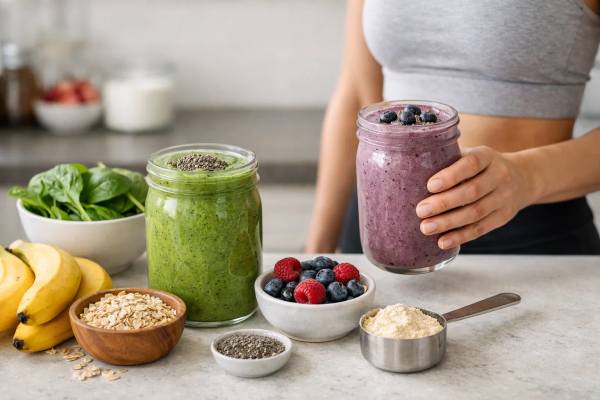
Blend nonfat Greek yogurt, frozen mixed berries, a small amount of oats, chia seeds, ice, and water or unsweetened milk. This is one of the easiest all-around options because it is high in protein, high in volume, and naturally sweet without needing juice.
2. Chocolate peanut butter protein smoothie
Use chocolate protein powder, unsweetened cocoa, frozen banana, powdered peanut butter or a measured small amount of regular peanut butter, ice, and milk. This works well when you want something dessert-like but more structured than a treat.
3. Coffee breakfast smoothie
Blend chilled coffee, vanilla protein powder, Greek yogurt, ice, cinnamon, and half a banana. It tastes more indulgent than it is and can replace calorie-heavy coffee shop drinks plus a weak breakfast.
4. Green smoothie that is actually filling
Use Greek yogurt or protein powder, frozen pineapple or mango in a modest portion, spinach, chia seeds, ice, and unsweetened soy milk. The key is not the greens. The key is making sure it contains enough protein to function like a real meal.
5. Cottage cheese berry smoothie
Cottage cheese blends surprisingly well and makes a smoothie creamy and high in protein. Pair it with frozen berries, vanilla, flax, and ice. This is a good option for people who want a thick texture without relying only on protein powder.
6. Pumpkin pie smoothie
Use canned pumpkin, vanilla protein powder, Greek yogurt, cinnamon, pumpkin pie spice, ice, and milk. Pumpkin adds bulk and flavor for relatively few calories, which makes this a strong seasonal option.
7. Post-workout cherry smoothie
Blend frozen cherries, Greek yogurt or protein powder, a small amount of oats, cocoa or vanilla, and milk. This can work especially well after training because it combines protein with a moderate amount of carbs.
These smoothies are most useful when paired with the right role in your day. Some are better as breakfasts, some as snacks, and some as a controlled sweet option after dinner. If you want more structure around that, smoothie use pairs well with ideas from high-protein breakfasts and post-workout meal planning.
The main point is to keep the smoothie doing one job well. Once a single blend tries to be breakfast, dessert, treat, supplement stack, and fruit bowl all at once, calories usually rise faster than fullness.
How to use smoothies without getting hungrier
One reason some people say smoothies do not work for weight loss is that they finish one and still want to eat. That can happen, but it is usually not because smoothies are inherently useless. It is usually because the smoothie was built or used in a way that did not match the situation.
The first rule is simple: do not expect a light snack smoothie to replace a full meal. If your smoothie has very little protein and only a few hundred calories, it may work as a bridge between meals but not as breakfast or lunch.
The second rule is: slow the experience down. Smoothies are easy to drink too quickly. A full meal often creates more satisfaction partly because it takes longer to eat. You can improve this by making the smoothie thicker, serving it in a bowl, drinking it more slowly, or pairing it with something chewable like fruit, eggs, or a high-protein side.
The third rule is: match the smoothie to your toughest hunger window. If mornings are rushed but afternoons are where overeating starts, a stronger breakfast smoothie may help more than a low-calorie lunch smoothie. If nighttime cravings are your biggest problem, using a protein-rich smoothie earlier in the day may reduce that rebound appetite later.
A few practical strategies help a lot:
- Use smoothies most often for breakfast or controlled snacks rather than every meal.
- Keep protein high enough that the smoothie feels substantial.
- Avoid drinking your calories on top of your usual meals.
- If a smoothie leaves you hungry fast, add protein or fiber before adding more fruit.
- Treat smoothies as one tool, not the whole plan.
This also matters because liquid meals can behave differently from solid food. For some people, they work well in structured situations. For others, they are best used occasionally rather than daily. If you are naturally hungrier after drinking calories, you may simply do better with mostly solid meals and only occasional smoothies.
A good smoothie should reduce decision fatigue, not create more hunger and compensatory snacking later. If it repeatedly leaves you raiding the pantry, it may be smarter to switch toward solid low-calorie breakfasts or more high-protein snacks instead.
Meal prep, storage, and smart swaps
Smoothies are most helpful when they are easy enough to repeat. If every smoothie requires five fresh ingredients, detailed measuring, and a full kitchen cleanup, convenience disappears fast. A little prep solves most of that.
The easiest smoothie-prep system is to make freezer packs. Portion fruit, spinach, oats, and seeds into freezer bags or containers ahead of time. Then when you are ready, all you need to add is protein and liquid. This keeps the process fast and reduces the chances of improvising with high-calorie extras.
A second useful tactic is to keep a short list of interchangeable ingredients.
Good protein swaps
- Greek yogurt for cottage cheese
- whey for soy or pea protein
- kefir for yogurt plus liquid
- soy milk for dairy milk or almond milk when you want more protein
Good carb and fruit swaps
- berries instead of juice
- half a banana instead of multiple sweeteners
- oats instead of granola
- pumpkin or cauliflower rice for extra bulk in some blends
Good flavor swaps
- cocoa and cinnamon instead of syrups
- vanilla extract instead of sugary flavor shots
- coffee instead of bottled sweet coffee drinks
- frozen cherries instead of chocolate add-ins
Storage matters too. Smoothies are usually best fresh, but you can refrigerate them for later the same day if needed. Some separation is normal, so a quick shake or stir usually fixes that. If you prefer prepping fully blended smoothies in advance, jars with tight lids work better than leaving them in an open blender cup.
One smart long-term strategy is to keep two or three “default smoothies” instead of constantly creating new ones. For example, one breakfast smoothie, one post-workout smoothie, and one dessert-style smoothie may cover most situations. That kind of repetition often helps more than novelty when the goal is consistency.
If you are building out a broader routine, it also helps to keep your kitchen stocked with basics from a simple weight loss grocery list and to use smoothies as part of an overall plan rather than as a standalone fix. Smoothies can help, but they work best when the rest of the day also supports the deficit.
References
- Obesity Management in Adults: A Review 2023 (Review)
- The role of dietary fibers in regulating appetite, an overview of mechanisms and weight consequences 2024 (Review)
- Efficacy of Meal Replacement Products on Weight and Body Composition in Overweight or Obese Subjects: A Systematic Review and Meta-Analysis 2024 (Systematic Review and Meta-Analysis)
- The latest evidence and clinical guidelines for use of meal replacements in managing overweight and obesity in adults 2024 (Review)
- A Comparison of the Satiety Effects of a Fruit Smoothie, Its Fresh Fruit Equivalent and Other Drinks 2018 (RCT)
Disclaimer
This article is for general educational purposes only and is not a substitute for medical or nutrition advice. Smoothies can fit a weight loss plan, but your calorie needs, protein targets, food tolerance, medications, and health conditions may change what works best for you. If you have diabetes, digestive issues, or a history of disordered eating, talk with a doctor or registered dietitian before making major diet changes.
If this article helped you, please share it on Facebook, X, or any platform where it might help someone else.