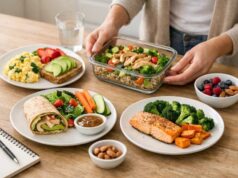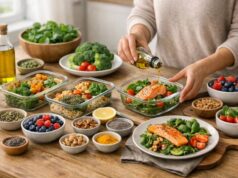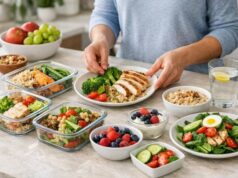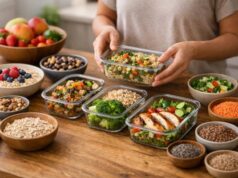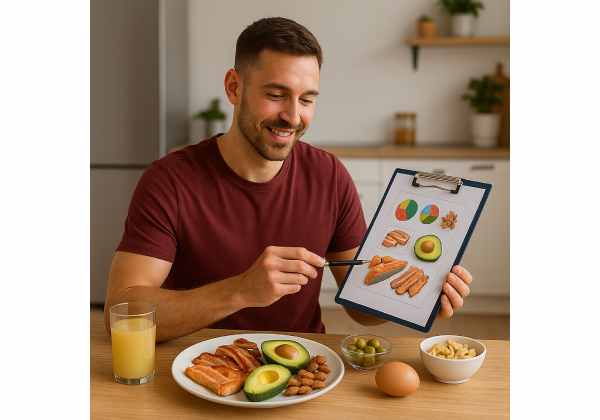
Fat is not the enemy of weight loss, but it is one of the easiest macros to overshoot without noticing. It adds flavor, slows meals down, and helps many people feel more satisfied. At the same time, it is calorie-dense, so a little extra oil, cheese, nut butter, or dressing can quietly erase a calorie deficit.
The real question is not whether you should eat fat while trying to lose weight. You should. The better question is how much fat supports fullness, health, and adherence without crowding out protein or pushing calories too high. Below, you will find practical fat targets, how to tell whether your intake is too low or too high, which fat sources usually work best, and how to fit fat into meals that are satisfying instead of slippery.
Table of Contents
- Why fat still matters in a deficit
- How much fat you actually need
- Fat and satiety: what actually happens
- Best fat sources for weight loss
- How to balance fat, protein, and carbs
- Signs your fat intake needs adjusting
- Practical fat targets for real meals
Why fat still matters in a deficit
Fat often gets blamed for slow weight loss because it is calorie-dense and easy to overeat. That part is true. Fat provides more calories per gram than protein or carbohydrate, which is why a drizzle can become a few hundred calories faster than most people expect. But that does not mean a low-fat approach is automatically better.
A well-built fat intake does several useful jobs during weight loss. It makes meals taste like real food instead of punishment. It helps support absorption of fat-soluble vitamins. It contributes essential fatty acids that your body cannot make on its own. It also makes eating patterns easier to sustain, which matters far more than internet arguments about whether low-fat or low-carb is “best.”
The problem is usually not fat itself. The problem is uncontrolled fat. Foods rich in fat are often highly palatable, easy to eat quickly, and rarely look as calorie-dense as they really are. Restaurant meals, takeout sauces, nut butters, cheese-heavy snacks, handfuls of nuts, flavored coffee drinks, bakery items, and “healthy” energy bites can all push intake higher than expected.
At the same time, trying to slash fat too aggressively can backfire. Meals may start to feel dry, unsatisfying, or strangely incomplete. People often compensate by chasing more carbs, snacking more often, or adding back calorie-dense foods later in the day because they never felt settled after meals.
This is why fat for weight loss is a balancing act. You want enough to support health, meal satisfaction, and consistency, but not so much that every salad becomes a 700-calorie salad. In practice, fat works best when it is chosen deliberately rather than added casually.
A helpful way to think about it is this:
- Protein is usually the main satiety anchor.
- Fiber and food volume help meals feel larger.
- Fat adds staying power, flavor, and realism.
That is also why people usually do best when fat sits inside a broader plan instead of being adjusted in isolation. If you have never looked at your overall intake structure, it helps to first understand what to eat in a calorie deficit and how the rest of your macros fit together. Fat is important, but it works best when it supports the bigger picture rather than quietly taking it over.
How much fat you actually need
Most adults do not need a single magic number for fat. A range works better. For weight loss, a practical starting point is usually to keep fat within the general adult range of about 20 percent to 35 percent of total calories, then adjust based on hunger, food preferences, training, and how much room you need for protein and carbs.
That range is broad because different people do well with different setups. Someone who loves higher-carb meals and trains hard may feel great closer to the lower end. Someone who prefers eggs, salmon, olive oil, full-fat yogurt, nuts, and avocado may feel much more satisfied closer to the middle or upper end. The best target is usually the one you can repeat without constant cravings or portion creep.
Here is what that looks like in real numbers.
| Daily calories | 20% of calories from fat | 25% of calories from fat | 30% of calories from fat | 35% of calories from fat |
|---|---|---|---|---|
| 1,200 | 27 g | 33 g | 40 g | 47 g |
| 1,400 | 31 g | 39 g | 47 g | 54 g |
| 1,600 | 36 g | 44 g | 53 g | 62 g |
| 1,800 | 40 g | 50 g | 60 g | 70 g |
| 2,000 | 44 g | 56 g | 67 g | 78 g |
For many people trying to lose weight, the most workable zone ends up somewhere around 25 percent to 30 percent of calories from fat. That range is often high enough to make meals enjoyable, but not so high that fat crowds out protein or quietly inflates calories.
A few practical rules help:
- If meals feel dry, joyless, or strangely unsatisfying, fat may be too low.
- If calories keep running high even though portions do not seem huge, fat may be too high.
- If you struggle to hit protein targets, lowering fat slightly may create more room.
- If you are constantly hungry after lean, low-fat meals, raising fat modestly may help.
This is where macro planning becomes useful. Not because you must count forever, but because it shows tradeoffs. If fat rises, either calories rise or carbs and protein must fall. If fat drops too low, meals may get harder to enjoy. A guide to calculating protein, carbs, and fat can help if you want a more structured approach, while macro ratios for weight loss can help you compare different setups without getting lost in details.
Fat and satiety: what actually happens
Fat can help with satiety, but not always in the way people imagine. It is often described as the macro that “keeps you full,” and that is partly true, yet the full story is more nuanced. Fat makes food more pleasurable, can slow gastric emptying, and often helps meals feel more complete. But when people compare macros, protein usually has the strongest effect on fullness, and fiber-rich foods add a lot of helpful volume.
That is why a meal with some fat is often more satisfying than the same meal with almost no fat, but a very high-fat meal is not automatically more filling in proportion to its calories. In real life, once fat climbs high enough, energy density becomes the bigger story. The meal becomes easier to overeat before fullness catches up.
Think about these examples:
- chicken breast, potatoes, and vegetables with a measured olive oil drizzle
- chicken breast, potatoes, and vegetables swimming in oil or cheese sauce
Both meals contain fat. One usually feels balanced and satisfying. The other may taste great but can add hundreds of calories without increasing fullness much.
The same pattern shows up in snacks:
- apple slices with a measured spoon of peanut butter
- several casual spoonfuls of peanut butter straight from the jar
The first can be a good satiety tool. The second is often just easy overconsumption.
This does not mean fat is weak or useless. It means fat works best when paired with the other parts of a satisfying meal:
- protein to anchor fullness
- produce or high-fiber carbs to add bulk
- fat to improve staying power and enjoyment
A simple example is Greek yogurt with berries and nuts. The yogurt provides protein, the berries add volume and fiber, and the nuts add texture and richness. Remove all the fat and the bowl may feel less satisfying. Double the nuts and it may stop fitting your calorie target.
This is why people who rely on fat alone for fullness often struggle. High-fat snacks without much protein or volume can be delicious, but they are not always efficient for appetite control. Meanwhile, meals that combine protein, fiber, and a moderate amount of fat tend to be much steadier. That same logic is behind articles on building a high-protein plate and high-protein, high-fiber meal planning.
The most useful takeaway is simple: fat can improve satiety, but more is not always better. A moderate amount inside a balanced meal usually beats both extremes.
Best fat sources for weight loss
When people ask about fat for weight loss, the better question is often not just how much, but what kind. Fat quality matters for health, and food source matters for how easy that fat is to control in a calorie deficit.
The most useful fat sources for weight loss are usually the ones that bring something else helpful with them, such as protein, fiber, micronutrients, or strong meal satisfaction.
Fat sources that usually work well
- olive oil
- avocado
- nuts and seeds
- nut butters in measured portions
- olives
- salmon, sardines, trout, and other fatty fish
- eggs
- plain yogurt and dairy foods that fit your calories
- tofu and soy foods
- hummus and tahini in moderate amounts
These foods tend to fit well because they can be built into real meals instead of acting like invisible extras. A salad with salmon and a measured olive oil dressing is very different from a salad with fried chicken, sugary dressing, cheese, croutons, and extra sauce.
Fat sources that are easier to overdo
- restaurant dressings and creamy sauces
- fried foods
- pastries and desserts
- chips and crackers made rich with oil
- coffee drinks with cream and syrups
- cheese-heavy snack foods
- trail mix eaten by the handful
- peanut butter straight from the jar
- buttery breads and restaurant sides
These are not “forbidden,” but they are often poor value for satiety relative to calories. They are usually hyper-palatable, easy to eat quickly, and hard to portion honestly.
Another important point is that foods are not just their fat content. For example, nuts can be a smart food in some contexts because they are satisfying and portable, but they are still easy to overshoot. Avocado can improve meal satisfaction, but half an avocado fits very differently from a full one plus oil plus cheese. Olive oil is a useful cooking fat, but it is still pure fat, so casual pouring matters.
In practice, the best healthy fats are the ones you can portion clearly and use in meals that also include lean protein, vegetables, fruit, legumes, or whole grains. That is part of why patterns such as a Mediterranean-style diet often work well for many people. If you want a food-by-food breakdown, this guide to healthy fats for weight loss goes deeper into which options are most useful and easiest to fit into a deficit.
How to balance fat, protein, and carbs
Most fat-related problems during weight loss are really balance problems. Some people chase very low fat and end up with dry, unsatisfying meals. Others add healthy fats so freely that protein drops and calories drift upward. A better approach is to set protein first, then let fat and carbs move around that anchor based on preference and performance.
Protein usually deserves first priority because it helps preserve lean mass during weight loss and is generally the most reliable macro for fullness. After protein is set, fat and carbs can be adjusted to fit your eating style. Some people genuinely feel better with a little more fat and fewer carbs. Others prefer the opposite. Either can work if calories and protein are handled well.
A practical meal formula looks like this:
- Start with a clear protein source.
- Add produce or a fiber-rich carb.
- Add a moderate fat source on purpose.
- Stop adding “extras” just because the food seems healthy.
Here are a few examples:
- chicken, rice, broccoli, and a measured olive oil drizzle
- eggs, toast, berries, and a little avocado
- Greek yogurt, oats, berries, and a small spoon of nut butter
- salmon, potatoes, and green beans
- tofu stir-fry with vegetables, rice, and a modest amount of sesame or olive oil
What usually works poorly is stacking many fat sources in the same meal without noticing. For example:
- salmon plus avocado plus oil-based dressing plus nuts
- eggs plus cheese plus buttered toast plus sausage
- yogurt plus granola plus nut butter plus seeds plus dark chocolate
Each ingredient may be reasonable on its own, but together they can turn a light meal into a dense one fast.
This is where meal structure matters more than nutrition theory. A helpful question is: Did this meal use fat as a tool, or did fat quietly take over the plate?
If you like a more flexible style, fat can simply be one “thumb-sized” addition per meal, then adjusted based on hunger and calories. If you like more precise planning, you may prefer a full macro meal plan or a more relaxed system like portion-based eating. Either way, fat should support the meal rather than dominate it.
Signs your fat intake needs adjusting
There is no perfect fat number that fits everyone, so feedback from your own meals matters. The right intake usually becomes clearer when you look at your hunger, energy, food satisfaction, and rate of progress together rather than staring at grams alone.
Signs your fat intake may be too low
- meals feel bland or never quite satisfying
- you finish eating but still want “something else”
- you keep chasing snacks after otherwise decent meals
- you feel drawn to rich foods later in the day
- your diet feels hard to stick with even when calories are technically on target
This often happens when people strip away every source of richness in an effort to save calories. The result may look clean on paper but feel miserable to live with.
Signs your fat intake may be too high
- calories run high even though portions do not look huge
- restaurant meals or takeout stall progress quickly
- snacks are small in size but not very filling
- you struggle to fit enough protein into the day
- your “healthy foods” list is dominated by oils, nuts, cheese, chocolate, and nut butter
This pattern is especially common in people who know which foods are nutritious but underestimate how energy-dense they are.
Signs your fat intake may be about right
- meals taste good and feel satisfying
- you can go a normal amount of time between meals
- you hit protein targets without feeling squeezed
- you are not constantly preoccupied with food
- your calorie deficit feels sustainable rather than fragile
One of the biggest misconceptions is that if progress slows, fat must always be the problem. Sometimes it is. Sometimes it is not. The issue may be underestimating portions, eating out too often, or letting “healthy fats” behave like free foods. If you are stuck, it can help to compare your current pattern with foods that commonly make a deficit harder and with more specific troubleshooting around hidden calories that stall fat loss.
The goal is not to fear fat. It is to notice when your current level is making adherence easier or harder.
Practical fat targets for real meals
It is easier to manage fat when you think in terms of meals instead of only daily totals. Most people do well with a moderate amount of fat at each meal rather than a very low-fat breakfast followed by a huge, rich dinner.
A useful starting point for many adults is something like this:
- breakfast: light to moderate fat
- lunch: moderate fat
- dinner: moderate fat
- snacks: low to moderate fat, depending on whether protein is also present
That usually means fat is present, but not piled on. In practical terms, many balanced meals land somewhere around a modest portion of added fat rather than multiple rich ingredients all at once.
Examples of balanced meal setups
- oatmeal made with milk, berries, and a small spoon of nut butter
- eggs with toast, fruit, and a little avocado
- chicken salad with lots of vegetables and a measured dressing
- Greek yogurt bowl with fruit and a small amount of nuts
- salmon with potatoes and vegetables
- tofu bowl with rice, vegetables, and a light sesame dressing
These meals do not avoid fat. They just make it visible and controlled.
A few small habits make a big difference:
- measure oils instead of free-pouring
- plate nuts instead of eating from the bag
- choose one main fat source per meal when calories are tight
- use higher-fat foods where they matter most for satisfaction
- do not waste calories on fats you barely notice
That last point is especially helpful. If you truly love avocado on toast, keep it. If oil in a random pan sauce does nothing for you, that may be an easier place to cut back. Weight loss gets easier when calories are spent where they add real satisfaction instead of disappearing into background extras.
Another smart move is to let meal type guide fat level. For example, lower-fat meals may be useful before workouts if you prefer easier digestion, while slightly richer dinners may help satisfaction later in the day. There is no rule that every meal must contain exactly the same fat amount.
The main objective is simple: keep fat deliberate enough to support satiety and health, but structured enough that it does not quietly own your calorie budget.
References
- Description of the Acceptable Macronutrient Distribution Range 2024 (Report Chapter)
- The effect of low-fat diets on appetite: a systematic review of randomized clinical trials 2025 (Systematic Review)
- Perspective on the health effects of unsaturated fatty acids and commonly consumed plant oils high in unsaturated fat 2024 (Review)
- Dietary fats and cardiometabolic health-from public health to personalised nutrition: ‘One for all’ and ‘all for one’ 2025 (Review)
- Dietary Guidelines for Americans, 2025-2030 2026 (Guideline)
Disclaimer
This article is for general educational purposes only and is not a substitute for medical or nutrition advice. If you have gallbladder disease, pancreatitis, digestive issues, diabetes, or a medical condition that affects how you tolerate or metabolize dietary fat, get personalized guidance from your clinician or a registered dietitian.
If you found this article helpful, please share it on Facebook, X, or your preferred platform so more people can build meals that are satisfying, realistic, and easier to sustain during weight loss.