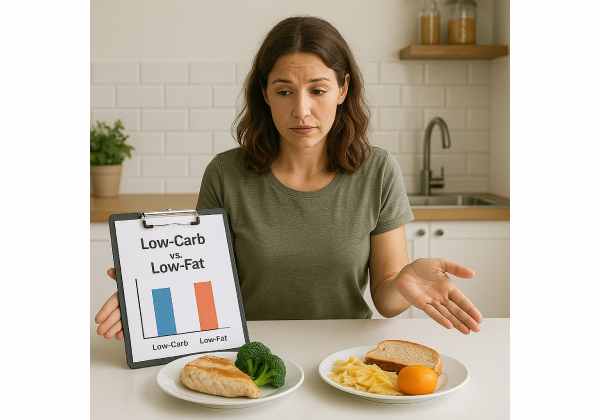
Low-carb and low-fat diets can both work for weight loss, but neither is automatically better for everyone. The version that tends to work best is the one you can follow consistently, that helps you stay in a calorie deficit, and that keeps hunger, energy, and health markers in a reasonable place.
That answer can feel unsatisfying if you want a clear winner, but it is the most useful one. Some people feel better and lose weight more easily on a lower-carb plan. Others do better eating more carbs and keeping fat lower because the meals feel less restrictive and easier to maintain. The real comparison is not just low-carb versus low-fat. It is sustainable low-carb versus sustainable low-fat, with enough protein, decent food quality, and realistic expectations. Below, you will see how the two approaches differ, what the research actually suggests, and how to decide which one fits your body, preferences, and lifestyle.
Table of Contents
- What low-carb and low-fat actually mean
- Which one causes more weight loss
- How hunger, fullness and food quality change the result
- When a low-carb approach may fit better
- When a low-fat approach may fit better
- How to compare health markers and macros
- How to start the right plan for you
What low-carb and low-fat actually mean
A lot of confusion around low-carb versus low-fat starts with the labels themselves. People use them as if they describe one exact diet, but they actually cover a wide range of eating patterns.
A low-carb diet can mean anything from a mild reduction in bread, pasta, sugary foods, and snack carbs to a very restrictive ketogenic-style plan. Some low-carb diets are high in protein. Others are mostly high in fat. Some are built around eggs, yogurt, fish, vegetables, nuts, and berries. Others are built around bacon, butter coffee, cheese, and packaged keto snacks. Those are very different diets, even though they all get called low carb.
The same is true for low-fat diets. One version might look like beans, potatoes, fruit, oats, vegetables, lean protein, and moderate portions of healthy fats. Another might be mostly cereal, crackers, snack bars, fat-free desserts, and highly processed “light” foods. Both may be lower in fat, but one is far more supportive of fat loss and overall nutrition than the other.
That is why the most helpful comparison is usually not:
- low-carb versus low-fat
It is:
- healthy low-carb versus healthy low-fat
A healthier low-carb plan usually emphasizes lean protein, vegetables, legumes if tolerated, fruit in controlled amounts, higher-fiber carbohydrate sources, and fats that come from foods like nuts, seeds, avocado, olive-based foods, eggs, and fish. A healthier low-fat plan usually emphasizes fruit, potatoes, beans, lentils, whole grains, vegetables, lean protein, and smaller portions of oils, cheese, fatty meats, and fried foods.
Another thing to keep in mind is that both approaches can reduce calories in very different ways. Low-carb diets often work by removing large categories of easy-to-overeat foods, especially refined starches and sugary foods. Low-fat diets often work by lowering the calorie density of meals, especially when they are built around potatoes, fruit, vegetables, legumes, and lean protein.
So when someone says, “Low-carb worked for me,” that may mean they finally stopped snacking on bread, sweets, and chips. When someone says, “Low-fat worked for me,” that may mean they started eating bigger, lower-calorie meals with more produce and fewer calorie-dense extras.
The label matters less than the structure underneath it. If you want a useful comparison, always ask what foods the diet is built from, how much protein it includes, how filling it is, and whether it is realistic enough to keep doing when life gets busy.
Which one causes more weight loss
If the question is which diet wins on average over the long term, the honest answer is that the difference is usually smaller than people expect.
Low-carb diets often produce a faster drop on the scale in the first days or weeks. That can be motivating, but some of it is usually water weight, not just body fat. When carb intake falls, glycogen stores drop, and the body tends to hold less water. This makes early progress look dramatic. That does not mean the diet is failing later when weight loss slows. It just means the first phase can exaggerate the difference.
Over longer periods, the average gap between healthy low-carb and healthy low-fat diets is usually modest. That is one reason the “which is better?” debate never fully ends. In controlled trials, both approaches can work, both can produce meaningful weight loss, and individual results vary widely inside each group. One person may lose a lot on low carb and struggle on low fat, while another person has the exact opposite experience.
That variability matters more than many headlines do. People often want the diet with the best average result, but in practice the better question is: which plan helps you keep your calories lower without feeling trapped, deprived, or constantly preoccupied with food?
A useful way to think about the evidence is this:
- Low-carb may have a slight short-term edge for some people, especially early on.
- Long-term differences in weight loss are usually not huge when both diets are well designed.
- The quality of the diet and how well a person sticks to it usually matter more than whether carbs or fat are lower.
That last point is the part many people miss. A well-built low-carb plan is not just “eat more fat.” A well-built low-fat plan is not just “eat less fat.” Both need enough protein, reasonable portions, and decent food quality. Once those are in place, the diet that feels easier to maintain often becomes the better one.
There is also a behavioral side to this. Some people do well with more rules because it reduces decision fatigue. They find low carb simpler because entire categories of snack foods are easier to avoid. Others do poorly with rigid restrictions and end up feeling obsessed with the foods they “cannot” have. For them, a lower-fat plan with more fruit, potatoes, beans, and grains may be much easier to sustain.
So the practical takeaway is not that low-carb and low-fat are identical. They are not. They often feel very different. But for weight loss, the long-term winner is usually the one you can follow with decent consistency while keeping calories controlled, protein adequate, and hunger manageable. That is why broad claims like “everyone should go low carb” or “fat is the problem” usually fall apart once real life enters the picture.
How hunger, fullness and food quality change the result
The real reason one diet “works better” than another is often not the macro label. It is how the diet changes your hunger, fullness, cravings, and day-to-day food choices.
For some people, low-carb eating helps almost immediately because it cuts out foods that tend to trigger overeating. Bread baskets, pastries, chips, sugary drinks, late-night cereal, and snacky processed foods become easier to avoid. If those foods were a major part of the problem, low carb can feel surprisingly calming. Blood sugar swings may feel smaller, cravings may ease up, and meals may become more protein-centered.
For other people, low-fat eating works better because it allows bigger portions and more food volume. If meals are built around beans, potatoes, fruit, vegetables, oats, soups, and lean proteins, the plate can look generous without getting calorie-heavy. That can be psychologically easier than a diet built around smaller portions of fattier foods. A person who loves potatoes, rice bowls, fruit, lentil soup, and hearty salads may feel much less restricted on a lower-fat plan.
This is where food quality changes everything. A low-carb diet based mostly on processed meats, butter, cheese, and low-carb packaged treats may not control hunger as well as expected, and it can quietly drive calories up. A low-fat diet based mostly on sugary cereal, crackers, and fat-free desserts can do the same. Neither one works well just because the macro label sounds strategic.
Protein also has a huge influence here. Many people compare low-carb and low-fat diets without noticing that protein intake shifted too. A lower-carb plan often ends up higher in protein, which can improve fullness on its own. Meanwhile, some low-fat diets accidentally become too low in protein because meals are built mostly around starch and fruit. That is why it helps to aim for a meaningful amount of protein per meal, no matter which camp you choose.
Volume is the other big factor. Lower-fat plans often get an advantage here because they naturally fit more high-volume, low-calorie foods on the plate. But low-carb diets can also be quite filling if they include large servings of vegetables, broth-based soups, lean proteins, berries, and structured meals rather than just fatty snack foods.
A good rule is this:
- If the diet makes you less snacky, less hungry, and more in control, it is probably moving in the right direction.
- If the diet leaves you white-knuckling cravings, thinking about food all day, or rebounding into overeating, it is probably not the right version for you.
The macro split matters, but the appetite experience matters more than most people realize. The best fat-loss diet is often the one that makes eating less feel less like a fight.
When a low-carb approach may fit better
A low-carb approach often works well for people who feel like refined carbs and sugary foods are their main problem. If your day tends to get derailed by pastries, bread, crackers, cereal, late-night sweets, or constant snack cravings, reducing carbs may create a useful structure very quickly.
It may also fit better if you naturally prefer foods like eggs, yogurt, chicken, fish, meat, tofu, salads, roasted vegetables, nuts, and savory meals over grain-heavy meals or sweet breakfasts. In that case, low carb may not feel restrictive at all. It may simply feel cleaner and easier.
A lower-carb approach can also be appealing for people who:
- Notice big swings in appetite after high-carb meals
- Do better with clear food rules
- Prefer protein-forward meals
- Want to reduce sugary foods and ultra-processed snacks
- Like simple meals such as omelets, bowls, salads, grilled proteins, and vegetables
There are also cases where carb quality matters even more than carb quantity. Some people do not need a very low-carb diet. They simply do better on a lower-glycemic pattern built around vegetables, beans, Greek yogurt, berries, intact grains, and fewer refined starches. In that sense, a low-glycemic diet for weight loss can act like a more flexible cousin of strict low carb.
That said, low carb is not automatically better just because it is stricter. It can backfire if:
- You miss fruit, oats, rice, beans, or potatoes so much that adherence falls apart
- You replace carbs mostly with calorie-dense fats and “keto” snack foods
- Your fiber intake drops sharply
- Your training performance suffers because carb intake is too low for your activity level
- The plan becomes socially difficult enough that you quit entirely
Some people also see an unfavorable change in LDL cholesterol on very low-carb or high-saturated-fat versions of the diet. That does not happen to everyone, but it is one reason food quality still matters. A lower-carb plan built around fish, olive-based foods, nuts, seeds, tofu, yogurt, eggs, vegetables, and moderate saturated fat is usually a different experience than one built around butter, bacon, and cheese-heavy plates.
If you are curious but do not want to go extreme, a structured high-protein, low-carb meal plan is often a better starting point than jumping straight into a ketogenic diet. It keeps the main benefits many people want, such as appetite control and simpler choices, without forcing the most rigid version right away.
Low carb tends to fit best when it feels like relief rather than punishment. If it simplifies your eating and quiets the foods that usually cause problems, it may be a strong option for you.
When a low-fat approach may fit better
A low-fat approach is often a better fit for people who like higher-volume meals, enjoy carbohydrate-rich whole foods, and do not want to feel like entire food categories are off limits.
If you love fruit, oats, potatoes, beans, lentils, rice, soups, wraps, pasta portions, and big salad bowls, low fat may feel much easier to live with. The meals can be larger, the food often feels more flexible, and social eating may be simpler because the diet usually does not require as much ingredient policing.
A lower-fat plan may also fit better if you:
- Feel better with more carbs around workouts or busy days
- Like plant-based or Mediterranean-style eating
- Tend to overdo calorie-dense fats such as cheese, nuts, nut butters, oils, or creamy sauces
- Want a pattern that may align more easily with family meals
- Prefer a less restrictive mindset around fruit, legumes, and whole grains
This is one reason many people do well on a more plant-forward diet that is not extremely low in carbs. A whole-food plant-based diet for weight loss often ends up lower in fat by default when it emphasizes beans, lentils, fruit, vegetables, and intact grains instead of lots of oil and processed vegan foods. Likewise, some people find a high-protein Mediterranean-style approach easier than both strict low carb and strict low fat because it stays balanced while still controlling calories.
Low fat is especially useful when it is not done in the old-fashioned “everything fat-free” way. The better version is usually moderate in fat, not ultra-low. It still includes some nuts, seeds, avocado, olive-based foods, and fatty fish if you eat them. It simply does not let calorie-dense fats dominate the plate.
The weak version of low fat is easy to recognize:
- Meals are high in refined carbs and low in protein
- “Fat-free” products replace real food
- Hunger rises quickly after meals
- Snack foods quietly fill the gaps
That version makes people think low fat does not work, when the real problem is often low satiety and poor food quality. A strong lower-fat plan still includes enough protein and enough fiber to hold you over between meals.
Low fat tends to fit best when you want flexibility, more food volume, and a style of eating that feels easier to continue for months rather than days. If lowering fat helps you naturally reduce calorie density without making you feel boxed in, it can be a very effective long-term strategy.
How to compare health markers and macros
Choosing between low carb and low fat should not come down to the scale alone. Weight trend matters, but so do hunger, energy, digestion, workout performance, and health markers like triglycerides, HDL, LDL, and glucose control.
That is where a side-by-side comparison becomes useful.
| Question | Low-carb often fits better | Low-fat often fits better |
|---|---|---|
| What foods do you naturally enjoy? | Protein-forward, savory, lower-sugar meals | Fruit, grains, potatoes, beans, and higher-volume meals |
| What usually derails your diet? | Bread, sweets, sugary snacks, refined carbs | Cheese, oils, nut butters, fried foods, rich restaurant meals |
| What feels easier to sustain? | Clear restrictions and fewer trigger foods | More flexibility and larger meal portions |
| What lab pattern may matter? | Higher triglycerides or poor glycemic control may improve | Elevated LDL may deserve extra attention to fat quality and total fat load |
| How do you train? | May fit lower-intensity or preference-based routines | May feel easier for higher-volume training or people who like more carbs around exercise |
This is also where macros can be useful, even if you do not want to track them forever. You do not need perfect numbers, but you do need a rough idea of what your plan is actually doing. Some people believe they are low carb when they are really just moderate carb and high fat. Others think they are low fat when they are actually eating plenty of fat from sauces, oils, cheese, nuts, and restaurant meals.
Learning how to count macros for weight loss for even a short period can make the comparison more honest. It helps you see whether the diet is really delivering what you think it is, whether protein is high enough, and whether calories are getting lost in “healthy” extras.
A few checkpoints can tell you whether your chosen approach is working:
- Is your weekly weight trend moving down?
- Are you able to go from meal to meal without feeling desperate for snacks?
- Are your workouts and energy acceptable?
- Are labs improving or at least not moving in the wrong direction?
- Can you picture yourself eating this way a month from now?
If the answer is yes, the plan may be a good fit even if it is not trendy. If the answer is no, it does not matter how persuasive the diet’s online fan base sounds.
The better diet is not the one with the strongest tribe behind it. It is the one that improves the most important outcomes for you while staying livable.
How to start the right plan for you
The easiest way to choose between low carb and low fat is not to argue about nutrition philosophy. It is to run a practical trial and judge the results honestly.
Pick one approach and follow it consistently for two to four weeks. Do not make it extreme. Make it clear.
If you try low carb, focus on:
- Protein at every meal
- Vegetables in generous portions
- Fewer refined carbs and sugary foods
- Measured portions of calorie-dense fats
- Simple meals you can repeat
If you try low fat, focus on:
- Protein and fiber at every meal
- Bigger meals built around fruit, vegetables, legumes, potatoes, and grains
- Moderate, not invisible, fat intake
- Fewer fried foods, rich sauces, and calorie-dense extras
- Foods that feel filling rather than just “light”
A few rules make the test more useful:
- Do not start with a crash-diet mindset. A moderate plan tells you more than a punishing one. If you need help keeping the process sane, start without a crash diet.
- Keep protein high enough on either approach.
- Track body weight as a trend, not as one emotional daily verdict.
- Notice appetite, cravings, and energy, not just calories.
- Give the plan enough structure that it is actually testable.
It also helps to keep some flexibility. Many people do not end up thriving on the purest version of either diet. They do better with a moderate hybrid, such as lower carb at breakfast and lunch but more carbs around dinner or workouts, or lower fat overall while still keeping room for nuts, avocado, and olive oil. That is one reason a flexible dieting meal plan often works well once you know your weak spots and preferences.
The most useful final answer is usually this:
- Choose low carb if it quiets your appetite, reduces your trigger foods, and feels easy to stick with.
- Choose low fat if it lets you eat satisfying portions, keeps food enjoyable, and feels easier to maintain.
- Change course if the plan makes you miserable, overly hungry, or inconsistent.
Low-carb versus low-fat is not really a contest to find the single best diet for all people. It is a process of finding which tradeoffs you tolerate best, which foods make your eating steadier, and which structure lets you lose weight without feeling like your whole life is organized around restriction.
That is the diet worth keeping.
References
- Overweight and obesity management 2025 (Guideline)
- Effects of low-carbohydrate diets versus low-fat diets on metabolic risk factors in overweight and obese adults: A meta-analysis of randomized controlled trials 2022 (Meta-Analysis)
- Effect of Low-Fat vs Low-Carbohydrate Diet on 12-Month Weight Loss in Overweight Adults and the Association With Genotype Pattern or Insulin Secretion: The DIETFITS Randomized Clinical Trial 2018 (RCT)
- Increased low-density lipoprotein cholesterol on a low-carbohydrate diet in adults with normal but not high body weight: A meta-analysis 2024 (Meta-Analysis)
- Efficacy of Low-Carbohydrate Diets Versus Low-Fat Diets in Glycemic Control Among Patients With Type 2 Diabetes: A Systematic Review 2025 (Systematic Review)
Disclaimer
This article is for general educational purposes only and is not a substitute for medical advice, diagnosis, or treatment. If you have diabetes, high cholesterol, kidney disease, a history of disordered eating, or take medications that affect weight or blood sugar, get individualized guidance from a qualified clinician or registered dietitian before making major diet changes.
If this article helped you compare your options more clearly, please share it on Facebook, X, or any platform where it could help someone else make a smarter weight-loss decision.