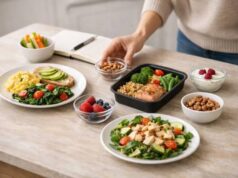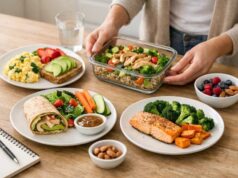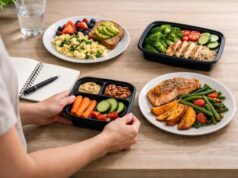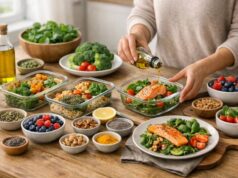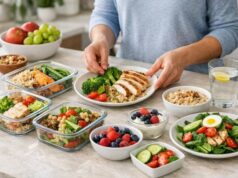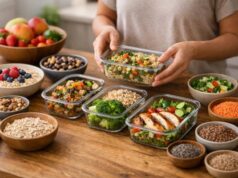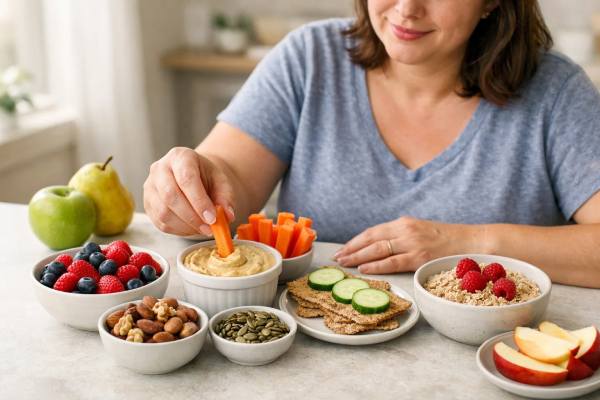
High-fiber snacks can make weight loss easier because they help you stay full longer, slow the urge to keep grazing, and make it easier to get through the gap between meals without feeling deprived. The best options are not just low in calories. They also offer enough fiber, enough volume, and often a little protein or healthy fat to feel satisfying instead of snacky in the worst sense.
This article breaks down what makes a snack truly filling, how much fiber to aim for, and which high-fiber snack ideas work best when you want better appetite control. You will also find practical combinations, store-bought options, and common mistakes that make “healthy snacks” less helpful than they seem.
Table of Contents
- Why fiber helps with weight loss
- What makes a snack filling
- How much fiber to look for in snacks
- Best high-fiber snack ideas
- Easy store-bought high-fiber snacks
- How to build better snack combos
- When high-fiber snacks help most
- Mistakes to avoid with fiber snacking
Why fiber helps with weight loss
Fiber helps with weight loss mostly by improving fullness. Foods rich in fiber usually take longer to eat, add more chewing, hold more water, and create more volume in the stomach than low-fiber processed snacks. In practical terms, that means a snack with fruit, vegetables, beans, oats, or seeds often feels more satisfying than something made mostly of refined flour, sugar, or fat.
That difference matters because hunger is one of the biggest reasons calorie deficits fall apart. A plan can look fine on paper and still fail if it leaves you thinking about food all afternoon. High-fiber snacks can reduce that problem by helping you feel more stable between meals rather than swinging from “fine” to “ravenous.”
Fiber also tends to work best when it comes from real foods or simple food combinations. An apple, roasted chickpeas, berries with chia, or vegetables with hummus usually do more for fullness than a tiny “diet snack” that happens to have a healthy label. The reason is simple: fullness comes from the whole eating experience, not one nutrient in isolation.
There is also a quality-of-diet effect. When your snacks include more fiber, you often end up eating more fruit, vegetables, legumes, and whole grains over the course of the day. That improves overall food quality while making calorie control feel less restrictive. This is one reason high-fiber eating often pairs well with a broader approach like choosing better foods in a calorie deficit rather than relying only on willpower.
Another important point is that fiber is not a magic switch. It will not cancel out constant overeating or make ultra-processed foods harmless. But it is one of the most reliable tools for making hunger easier to manage. For people who struggle with afternoon cravings, nighttime snacking, or constantly feeling unsatisfied, raising fiber intake can make the whole weight-loss process feel more doable.
What makes a snack filling
A filling snack usually does more than just contain fiber. The best high-fiber snacks for weight loss often combine three things: fiber, volume, and enough substance to actually bridge the gap to the next meal.
That is why some snacks work better than others even when their calories are similar. For example, a small sugary granola bar may technically be portion-controlled, but it often disappears in a few bites and does not slow hunger for long. By contrast, apple slices with peanut butter, Greek yogurt with berries and chia, or carrots with hummus usually take longer to eat and feel more substantial.
In general, the most satisfying snacks have one or more of these features:
- High fiber: from fruit, vegetables, legumes, whole grains, seeds, or high-fiber crackers
- High volume: more physical food for the calories
- Protein: helps many people stay fuller longer
- Some texture: crunch, chew, or thickness often makes a snack more satisfying
- Reasonable portion size: large enough to help, not so large that it becomes an unplanned meal
This is why many of the best snack combinations include fiber plus protein. Fiber slows things down, while protein adds staying power. A pear on its own can be a good snack, but a pear with cottage cheese or Greek yogurt may work even better if you know you have several hours until dinner. The same idea applies to high-fiber cereal with yogurt, or berries mixed into a protein-rich base.
Volume matters too. A snack that looks generous on the plate often feels more satisfying than a tiny item from a package. That is one reason produce-based snacks do so well for appetite control. A bowl of berries, sliced vegetables, or air-popped popcorn can feel abundant in a way a small cookie or handful of chips does not. This overlaps with the idea behind high-volume, low-calorie foods and why they are so helpful during fat loss.
In other words, the best high-fiber snacks are not just “healthy.” They are strategically satisfying. They help you feel fed, not teased.
How much fiber to look for in snacks
There is no single perfect fiber number for every snack, but a useful target is to look for snacks that provide roughly 3 to 10 grams of fiber, depending on the portion and the role the snack is playing in your day. A lighter snack might land near the lower end of that range, while a more filling snack between meals could reasonably provide more.
As a general rule:
- 3 to 5 grams is a solid minimum for a snack that is meant to help curb hunger.
- 5 to 8 grams is often a strong target for a more filling snack.
- 8 grams or more can be very helpful, but it is best to build up gradually if your current fiber intake is low.
The “gradually” part matters. Jumping from a low-fiber diet to large amounts of beans, bran cereal, high-fiber bars, and seeds all at once can leave you bloated and uncomfortable. That is not a reason to avoid fiber. It just means your body usually handles the change better when you increase intake steadily and drink enough water.
It also helps to look at your daily pattern, not just one snack. If your meals already include oats, vegetables, fruit, beans, or whole grains, your snack does not need to carry the entire job. But if most of your meals are low in produce and whole-food carbs, snacks can become an important place to close the gap. A guide on daily fiber targets and practical swaps can help if your intake is currently far below where it should be.
Another smart way to think about fiber is by snack type:
| Snack situation | Helpful fiber range | Example |
|---|---|---|
| Small bridge snack | 3 to 5 g | Apple or a high-fiber crispbread with topping |
| Moderate afternoon snack | 5 to 8 g | Berries with chia and yogurt, or veggies with hummus |
| Very filling snack | 8 to 10 g | Roasted chickpeas plus fruit, or oatmeal-based combo |
If you want a more detailed way to spread fiber across the day, it helps to review how much fiber per meal supports fullness. Snacks work best when they are part of that bigger rhythm.
Best high-fiber snack ideas
The best high-fiber snacks for weight loss are simple enough to repeat, filling enough to matter, and tasty enough that you will actually keep them around. Many of the strongest options combine fruit, vegetables, legumes, seeds, or whole grains with a little protein or healthy fat.
Here are some of the most useful choices:
- Apple slices with peanut butter or powdered peanut butter
- Pear with cottage cheese
- Greek yogurt with raspberries, blackberries, and chia seeds
- Carrots, cucumbers, and bell pepper strips with hummus
- Roasted chickpeas
- Edamame with sea salt
- Air-popped popcorn
- High-fiber crackers with tuna or cottage cheese
- Oatmeal made small, then topped with berries
- Chia pudding with fruit
- A small smoothie built around berries, flax, and yogurt
- Orange with a handful of almonds
- Frozen berries thawed into yogurt
- Whole-grain toast with mashed avocado and tomato
- Celery with nut butter and chia or hemp seeds
A few stand out especially well for appetite control.
Fruit and protein pairings
Fruit on its own can be a smart snack, but it often works even better when paired with protein. Apples, pears, oranges, and berries are especially helpful because they bring fiber and volume without being too calorie-dense. Pairing them with Greek yogurt, cottage cheese, or a boiled egg can make them much more filling.
Vegetable and dip combinations
Raw vegetables are underrated as snack food because they create a lot of crunch and volume for few calories. On their own they may feel incomplete, but with hummus, bean dip, or Greek-yogurt-based dip they become much more satisfying. This is one of the easiest ways to raise snack fiber without relying on packaged bars.
Legume-based snacks
Chickpeas, lentil-based crisps, roasted broad beans, and edamame are some of the best snack choices for people who want real staying power. They often give you fiber and protein at the same time, which is one of the strongest appetite-control combinations. These snacks line up well with the broader benefits of combining protein and fiber for weight loss.
Whole-grain and seed-based options
Popcorn, oats, crispbreads, bran cereal, chia pudding, and flax-enhanced snacks can work very well when portions are sensible. They are especially useful for people who prefer snack foods with a grain base rather than produce-heavy snacks.
If you want the simplest rule, choose snacks that look like food, not just products.
Easy store-bought high-fiber snacks
Store-bought snacks can absolutely fit a weight-loss plan, but they work best when you read beyond the front label. “High fiber” on the package does not always mean the snack is especially filling, low in calories, or useful for appetite control.
The best packaged choices tend to be the ones that either keep ingredients simple or offer a strong fiber-to-calorie balance without loading in sugar. Good options often include:
- roasted chickpeas or fava beans
- plain or lightly seasoned popcorn
- high-fiber crispbreads
- fruit cups packed in juice or water, not syrup
- unsweetened applesauce with added fiber only if the ingredient list is reasonable
- high-fiber cereal used in an intentional portion
- whole-grain crackers with decent fiber per serving
- frozen edamame
- berries and other fruit you can keep on hand easily
- some higher-fiber snack bars, when they are not just candy in disguise
When checking labels, look for:
- at least 3 to 5 grams of fiber per serving
- moderate calories for the portion
- not too much added sugar
- enough actual food volume to be worth eating
- ingredients you would realistically buy again
A good packaged snack should help you, not make you hungrier. Some bars technically have fiber but are so small and sweet that they act more like dessert than appetite control. Others use a lot of added isolated fiber and sugar alcohols, which can cause digestive issues for some people. That does not make them automatically bad, but they are often less reliable than whole-food-based options.
Freezer and pantry staples can make this much easier. Keeping berries, edamame, popcorn kernels, high-fiber cereal, and canned chickpeas around can reduce the urge to grab random low-fiber snacks when hunger hits. This pairs well with a broader weight loss grocery list and smart pantry planning. If convenience matters most, even some frozen foods that support weight loss can help you keep snack choices more structured.
The best store-bought snack is usually the one you can keep repeating without turning it into an overeating trigger.
How to build better snack combos
If you know how to build a good snack, you do not need a giant list of recipes. You can create better high-fiber snacks from whatever you already have.
A simple formula is:
- Pick one fiber-rich base.
- Add protein if you need more staying power.
- Use healthy fat in a measured way if it improves satisfaction.
- Keep the portion appropriate for a snack, not a meal.
Here are some easy ways to apply that:
- Fruit + protein: berries and yogurt, apple and cottage cheese, pear and skyr
- Vegetables + protein-rich dip: carrots and hummus, cucumbers and Greek-yogurt dip
- Whole grain + topping: crispbread with avocado, toast with mashed beans
- Legume snack + produce: roasted chickpeas and fruit, edamame and sliced peppers
- Fiber plus crunch: popcorn with fruit, high-fiber crackers with tuna
This approach works because it lets you match the snack to the situation. If you only need a small bridge to dinner, fruit might be enough. If you have three or four hours before your next meal, it usually makes sense to include protein too. A good snack should feel proportionate to the gap it is supposed to cover.
It also helps to think ahead about your weak points. If your hardest time is late afternoon, prepare a more substantial snack. If your problem is nighttime sugar cravings, a fiber-plus-protein combo can be much better than trying to tough it out and then raiding the pantry. In that situation, a guide to better late-night snack options or fixing nighttime sugar cravings may also help.
The point is not to make snacking perfect. It is to make it purposeful. A planned snack can support weight loss. Random snacking usually does not.
When high-fiber snacks help most
High-fiber snacks are most useful when they solve a real problem. Some people do better eating three meals and few snacks. Others get too hungry with long gaps and benefit from a structured snack that keeps them steady. The key is to use snacks strategically, not automatically.
These snacks tend to help most when:
- you regularly go more than four to five hours between meals
- your afternoons are a hunger danger zone
- you tend to overeat at dinner because lunch was too light
- you are increasing activity and need better appetite control
- you struggle with nighttime snacking after an underfed day
- you want a bridge snack that prevents grabbing ultra-processed foods later
They are often especially useful in the afternoon. That is when energy dips, work stress builds, and decision fatigue starts pushing people toward whatever is quick and hyper-palatable. A planned high-fiber snack can prevent the classic pattern of arriving at dinner starving and eating far more than intended.
They can also help with meal timing consistency. People who wait too long to eat often mistake extreme hunger for “lack of discipline,” when the real issue is simply that they needed something more substantial earlier. That ties into the benefits of better meal timing for appetite control and more regular eating times.
That said, snacks are not mandatory. If you are satisfied between meals and do not need them, there is no reason to force extra eating just because a snack is healthy. A high-fiber snack is useful when it improves control, not when it adds unnecessary calories to a day that was already going well.
Mistakes to avoid with fiber snacking
The biggest mistake with high-fiber snacks is assuming all fiber-rich foods are equally helpful for fat loss. They are not. Some are filling and practical. Others are calorie-dense, easy to overeat, or too small to satisfy.
A few common mistakes stand out.
Choosing fiber without enough substance
Some people pick a tiny “healthy” snack that technically contains fiber but does not really satisfy them. That often leads to a second snack, then a third. In many cases, a slightly larger snack with fiber and protein would have worked better.
Overdoing calorie-dense healthy foods
Nuts, seeds, nut butters, dried fruit, granola, trail mix, and avocado are all nutritious, but they can become easy calorie overloads when portions drift. They are best used as part of a structured snack, not as something you mindlessly pick at.
Ignoring fluids
Higher fiber intake works better when hydration is reasonable. If you raise fiber quickly without drinking enough, you are more likely to feel bloated or uncomfortable. A simple reminder to improve hydration habits can make high-fiber eating feel better and more sustainable.
Relying only on snack bars
Bars can be convenient, but many are less filling than they look. If most of your snacks come from wrappers, you may miss out on the fullness that comes from chewing, volume, and whole-food texture.
Using snacks as constant grazing
A well-planned snack is useful. Constant nibbling is different. When snacking loses structure, it becomes harder to notice true hunger and easier to eat past what you need. This is where people may benefit from more mindful eating and less reactive eating.
The best high-fiber snacks for weight loss are the ones that reduce hunger, simplify decisions, and help you eat more calmly through the day. If a snack leaves you wanting more immediately, it may not be the right one for the job.
References
- The role of dietary fibers in regulating appetite, an overview 2024 (Review)
- Protein, fiber, and exercise: a narrative review of their roles in weight management and cardiometabolic health 2025 (Review)
- Dietary fiber – a scoping review for Nordic Nutrition Recommendations 2023 2023 (Scoping Review)
- Healthy diet 2026 (Fact Sheet)
Disclaimer
This article is for general educational purposes only and is not a substitute for medical or nutrition advice. If you have digestive disease, diabetes, a history of disordered eating, or symptoms that worsen when you increase fiber, talk with your doctor or a registered dietitian before making major diet changes.
If this article helped, share it on Facebook, X, or your preferred platform so someone else can find better snack ideas that actually support weight loss.