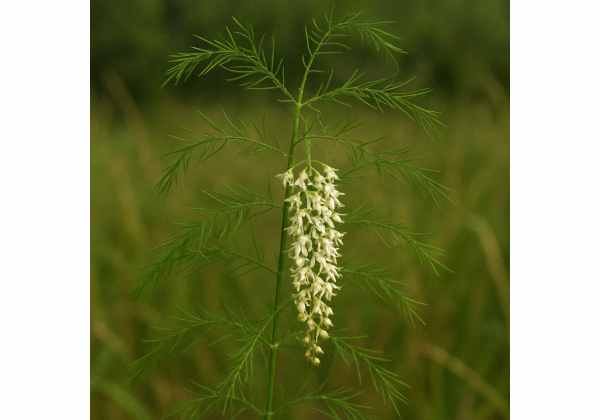
Shatavari, or Asparagus racemosus, is a traditional Ayurvedic herb best known for its long association with women’s health, digestive comfort, and recovery during physically demanding seasons of life. The medicinal part is usually the root, which contains steroidal saponins, plant polyphenols, and soothing compounds that may help explain its traditional use as a tonic, demulcent, and reproductive support herb. In modern supplement use, shatavari is often marketed for hormone balance, lactation support, menopause symptoms, stress resilience, libido, and gut soothing.
That broad reputation deserves a careful reading. Some uses have promising human research, especially postpartum lactation and perimenopausal or menopausal symptom relief. Other claims remain more preliminary and should be viewed as emerging rather than settled. The most helpful way to think about shatavari is not as a cure-all, but as a root-based botanical with a few well-known traditional roles and a growing, though still uneven, clinical evidence base. Understanding what it may do, how to use it, and who should avoid it is the key to using it safely and realistically.
Quick Facts
- May support milk production in some postpartum settings when used alongside good breastfeeding support.
- May help reduce hot flashes, night sweats, and menstrual discomfort in some perimenopausal or menopausal women.
- Standardized extract doses studied in humans commonly range from 100 to 600 mg daily, depending on the product and use case.
- Avoid during pregnancy, and use added caution with hormone-sensitive conditions or prescription hormone therapy.
- Best viewed as a targeted herb with stronger evidence for women’s health than for broad “adaptogen” claims.
Table of Contents
- Shatavari overview and key ingredients
- Medicinal properties and how shatavari may work
- Shatavari health benefits and where evidence is strongest
- Common uses and best forms
- Dosage, timing, and how long to take it
- Shatavari safety, side effects, and interactions
- How to choose shatavari and set realistic expectations
Shatavari overview and key ingredients
Shatavari is a climbing plant in the asparagus family, but it is not the same thing as the green asparagus commonly eaten as a vegetable. In herbal practice, the root is the part most often dried, powdered, extracted, and used in capsules, tablets, or traditional preparations. Its long history in Ayurveda has given it a reputation as a restorative herb for the reproductive system, digestion, and general vitality.
The key ingredients in shatavari are mostly concentrated in the root. The best-known compounds are steroidal saponins, often described as shatavarins. These are the signature constituents most often discussed when people talk about the herb’s hormonal or adaptogenic effects. Shatavari also contains flavonoids, polyphenols, alkaloids, mucilage-like compounds, and other plant chemicals that may contribute to antioxidant, soothing, or immune-modulating activity.
A practical way to understand these ingredients is to group them by the kinds of effects they may support:
- Steroidal saponins: often linked to shatavari’s traditional role in reproductive and endocrine support
- Polyphenols and flavonoids: associated with antioxidant and cell-protective activity
- Mucilage and soothing compounds: may help explain the herb’s traditional use for the stomach and gut lining
- Minor alkaloids and related compounds: may shape the herb’s overall tonic and regulatory effects
Because different products extract different compounds, one shatavari supplement may not behave exactly like another. A plain root powder, a water extract, and a standardized capsule can all feel like “shatavari” while delivering quite different amounts of active constituents. That is why label details matter more than many people realize.
This chemical complexity also explains why shatavari is used for several different goals. It may act less like a single-target drug and more like a multi-component botanical. That can be useful, but it also makes broad claims harder to prove. When you see the herb promoted as a universal hormone balancer, libido enhancer, gut healer, and anti-stress agent all at once, it helps to step back and remember that a traditional reputation and a modern clinical claim are not the same thing.
For readers who are comparing Ayurvedic herbs more broadly, shatavari is often discussed beside ashwagandha for stress and sleep support, but the two herbs are not interchangeable. Ashwagandha tends to be positioned more for stress, sleep, and recovery, while shatavari is more often chosen for reproductive, mucosal, and hormone-related support.
Medicinal properties and how shatavari may work
Shatavari is often described as a demulcent, tonic, adaptogenic-style herb, and possible phytoestrogenic botanical. Each of those labels captures part of its traditional identity, but none tells the whole story on its own.
Its demulcent reputation matters because it suggests a soothing effect on irritated tissues, especially in the digestive tract. Traditionally, shatavari has been used for heartburn, stomach irritation, dryness, and digestive weakness. Herbs in this category are valued less for quick symptom suppression and more for creating a calmer internal environment over time.
Its tonic role reflects the way it has been used during recovery, depletion, and life stages that place extra demands on the body. In modern supplement language, that is often translated as support for energy, resilience, and hormonal steadiness. This does not mean shatavari works like a stimulant. It is better understood as a gradual support herb rather than a fast-acting “energy booster.”
The term phytoestrogenic is more nuanced. Shatavari contains plant compounds that may interact with hormone-related pathways, but that does not mean it acts like prescription estrogen. In practice, that distinction matters. Some people may benefit from this gentle endocrine-style influence, while others, especially those with hormone-sensitive conditions, should be more cautious.
Several medicinal properties are commonly proposed:
- Hormone-modulating potential: especially in perimenopause, menstrual symptoms, and reproductive health
- Antioxidant activity: which may help reduce oxidative stress in tissues
- Anti-inflammatory effects: mostly supported by laboratory and animal work rather than strong everyday clinical proof
- Mucosal support: potentially helpful for the stomach and other tissues that benefit from soothing herbs
- Possible metabolic support: early work suggests some effects on insulin sensitivity and related markers in selected groups
It is also sometimes called an “adaptogen,” though that word is used loosely in supplement marketing. What many people really mean is that the herb may help the body cope with stress-related imbalance without being strongly sedating or strongly stimulating. That may be true in some settings, but the evidence is still more convincing for women’s health outcomes than for general stress performance.
An important practical point is that shatavari’s medicinal properties are likely dose-, extract-, and context-dependent. A standardized clinical extract used for 84 or 120 days is not the same thing as an occasional spoonful of root powder in warm milk. That is why it makes sense to match the form of the herb to the goal rather than treating every shatavari product as equivalent.
People seeking a gentler digestive herb may find shatavari appealing, while those focused mainly on cycle symptoms may end up comparing it with herbs such as chaste tree for hormone and cycle support. The main difference is that shatavari tends to span digestive, restorative, and reproductive roles at the same time.
Shatavari health benefits and where evidence is strongest
Shatavari has many claimed benefits, but the quality of evidence varies a lot. The strongest approach is to separate areas with meaningful human data from areas that are still mostly traditional, preclinical, or early-stage.
Benefits with the best current support
1. Postpartum lactation support
This is one of the herb’s most established traditional uses and one of the clearer modern research areas. Recent human trials suggest that standardized shatavari extracts may improve early milk volume and shorten the time to breast fullness in some postpartum women. That does not make it a substitute for latch assessment, feeding frequency, hydration, or lactation support, but it does make this one of the most evidence-backed reasons people use the herb.
2. Perimenopausal and menopausal symptom support
Recent randomized trials suggest that standardized shatavari extracts may reduce hot flashes, night sweats, menopausal symptom scores, and some menstrual discomfort in perimenopausal or menopausal women. These findings are encouraging because they move beyond general tradition and into measured symptom outcomes.
Benefits with emerging but still limited support
3. Menstrual regularity and PCOS-related markers
Newer clinical research suggests that certain shatavari extracts may improve ovarian morphology, some menstrual pattern measures, and selected metabolic or androgen-related markers in women with PCOS. This is promising, but it is still too early to frame shatavari as a standard PCOS treatment.
4. Sexual wellness and vitality
This is a common marketing claim, and there is some early evidence in women’s wellness research. Still, the data are not yet strong enough to present shatavari as a reliable libido supplement for most people.
5. Digestive comfort
Traditional use strongly supports this, especially for dryness, irritation, and “heat” in the stomach. Human clinical proof is much thinner here than the herb’s reputation suggests, but the traditional logic is coherent and still relevant in practice.
Benefits that should be treated cautiously
- General anti-stress claims
- Athletic performance support
- Broad immune support
- Anti-aging claims
- Skin and hair benefits as primary reasons to take it
That does not mean these effects are impossible. It means they are not yet the best-supported reasons to choose this herb.
A useful rule is to let the evidence guide the promise. If someone wants help with cycle symptoms, perimenopausal discomfort, or lactation support, shatavari may be worth considering. If someone wants a catch-all supplement for stress, sleep, digestion, libido, and beauty at once, expectations should be much more modest.
Readers comparing herbal options often look at shatavari beside fenugreek for lactation and metabolic support. That comparison makes sense, especially in postpartum use, but the herbs have different side-effect profiles, traditions, and evidence patterns.
Common uses and best forms
The best form of shatavari depends on why you are taking it. This is one of the most important practical questions because the herb is sold as powder, extract, liquid tincture, and blended formulas, and those forms are not interchangeable.
Common ways people use shatavari
For postpartum support:
Standardized extracts in capsules are the most practical option because they are easier to dose consistently and are closer to the form used in recent studies.
For perimenopause or menopause symptoms:
Again, capsules or tablets using a defined extract tend to make the most sense. If the goal is to track changes in hot flashes, sleep disruption, or symptom scores, consistency matters.
For digestive soothing or general tonic use:
Root powder is still popular in traditional routines. It may be mixed into warm milk, water, or other beverages. This form may appeal to people who want a broader traditional preparation rather than a highly concentrated extract.
For blended reproductive or recovery formulas:
Shatavari is often paired with other herbs in women’s health products. This can be useful, but it also makes it harder to judge what is helping and what is causing side effects.
Choosing the form by goal
- Extract capsules: best for targeted, measurable goals
- Root powder: better for traditional daily tonic use
- Liquid extracts: useful for people who do not like capsules, though quality varies more
- Multi-herb blends: best reserved for people who already know they tolerate the ingredients
A few practical points help here:
- Use standardized extracts when you want the most research-aligned approach.
- Use single-ingredient products first if you are testing tolerance.
- Treat powders and teas as traditional support forms, not direct equivalents of clinical extracts.
- Avoid stacking several hormone-focused herbs at once when you are starting.
The “best” form is not always the strongest one. For some people, a lower-intensity root powder feels gentler and more sustainable. For others, it is too variable to be useful. If you want measurable symptom tracking, a capsule with a clear milligram amount is easier to work with.
For readers whose main goal is energy, libido, or general vitality rather than lactation or menopausal symptoms, it may be worth comparing shatavari with maca for hormonal and vitality support. The overlap in marketing can be large, but the evidence and traditional logic are not identical.
Dosage, timing, and how long to take it
Shatavari dosage is not one-size-fits-all. The most honest range comes from human studies using standardized extracts, and those studies show that the effective amount can vary considerably depending on the product and the goal.
A practical evidence-based summary is this:
- 100 mg daily: used in some PCOS-focused standardized extract research
- 200 mg daily: used in some perimenopausal symptom studies
- 300 mg twice daily: used in a postpartum lactation study for a short 72-hour period
- Traditional powders: often taken in gram-level amounts, but products vary too much to treat them as direct equivalents of extracts
That is why a broad range of 100 to 600 mg daily for standardized extracts is a reasonable way to summarize the current human evidence. It is not a universal dose. It is a study-informed range across different formulations.
Timing
Timing is usually simple:
- Take it with food if you are prone to nausea or stomach upset.
- Split the dose morning and evening if the total daily amount is higher.
- Use the same time each day for symptom tracking.
Shatavari is not typically used like a rescue supplement. You do not usually take it only when symptoms flare. Most people who use it successfully take it daily for a defined period and then reassess.
How long to use it
A sensible trial length depends on the goal:
- Postpartum lactation: follow the studied product instructions and clinical context closely, since this is usually a short, time-sensitive use case
- Perimenopause or cycle support: 8 to 12 weeks is a reasonable review window
- General tonic use: consider a structured trial rather than open-ended daily use
A useful self-check is to define success before you start. Ask what you actually want to improve:
- fewer hot flashes
- more regular cycles
- less digestive irritation
- easier early lactation
- better daily comfort
If you cannot define the outcome, it becomes too easy to keep taking the herb without knowing whether it is helping.
One caution is especially important: do not convert capsule doses into spoonfuls of powder without a clear reason. A standardized extract and a raw powder are not the same. If you are using powder, follow the product label or a clinician’s guidance instead of assuming that more is better.
Shatavari safety, side effects, and interactions
Shatavari is often described as gentle, and in short-term human studies it has generally been well tolerated. Still, “well tolerated” does not mean risk-free. Safety depends on the person, the product, the dose, and the reason for use.
Possible side effects
When side effects do happen, they are more likely to be mild than dramatic. The most plausible issues include:
- stomach upset
- bloating
- loose stools
- nausea
- feeling that the product is too “heavy” or soothing for the stomach
Some people may also react to fillers, mixed formulas, or poor-quality products rather than to shatavari itself.
Who should avoid it or be more cautious
Pregnant women should generally avoid shatavari unless a qualified clinician specifically recommends it. Human pregnancy safety is not well established, and older animal data raise caution rather than reassurance.
People with hormone-sensitive conditions should use extra care. That includes anyone with a history of estrogen-sensitive cancer, unexplained abnormal bleeding, or active hormone treatment where even mild phytoestrogenic activity could matter.
People on fertility treatment or prescription hormone therapy should not assume that “natural” means neutral. A herb that may influence hormone-related pathways can still complicate a carefully managed medical plan.
People with metabolic conditions should be cautious as well, especially if they are taking medicines that affect blood sugar, because early research hints that some extracts may influence metabolic markers.
People with asparagus allergy or strong plant allergies should be especially careful when starting.
Interaction concerns
Hard interaction data are limited, but caution is sensible with:
- hormone therapies
- fertility medications
- diabetes medicines
- multiple herbs marketed for lactation or hormone balance used at the same time
A common mistake is stacking shatavari with several other “female balance” herbs and then having no clear sense of what is causing benefit or side effects. This is especially relevant with combination formulas that also contain herbs such as licorice root with its own dosing and safety concerns.
A final safety note: quality matters. Heavy contamination, adulteration, or inaccurate labeling can turn a theoretically gentle herb into a poor supplement choice. That is one more reason to choose products from companies that provide meaningful testing and clear ingredient details.
How to choose shatavari and set realistic expectations
The best shatavari supplement is not the one with the strongest marketing. It is the one that matches your goal, uses a sensible form, and gives you enough detail to use it carefully.
Start by asking one question: Why this herb, specifically?
That question filters out a lot of poor supplement decisions.
Shatavari makes the most sense when your goal aligns with the areas where it has either meaningful traditional logic or emerging human evidence:
- postpartum lactation support
- perimenopausal or menopausal symptom relief
- gentle reproductive-system support
- digestive soothing in a more traditional framework
It makes less sense when you are looking for a universal solution to fatigue, anxiety, libido, weight, gut health, and beauty all at once. That is usually a sign that the product promise is broader than the evidence.
What to look for on a label
Choose a product that clearly states:
- the plant name: Asparagus racemosus
- the part used: ideally root
- the form: powder, extract, or standardized extract
- the daily amount in mg or g
- whether the extract is standardized to shatavarins or related saponins
- third-party testing or at least basic quality controls
A practical way to test it
- Pick one clear goal.
- Choose one product, preferably single-ingredient.
- Use it for a defined period.
- Track a small number of outcomes.
- Stop and review whether it actually helped.
This simple structure prevents two common problems: taking a herb indefinitely without evidence that it helps, and quitting too early without giving a suitable product enough time.
Realistic expectations are especially important with shatavari. It may support comfort and regulation, but it is not a replacement for lactation care, gynecologic evaluation, hormone testing when clinically needed, or treatment of underlying disease. Its value is often in being a supportive botanical, not in being the center of the treatment plan.
Used thoughtfully, shatavari can be a worthwhile option for the right person and the right goal. Used vaguely, it is easy to overestimate.
References
- Shatavari (Asparagus racemosus Willd) root extract for postpartum lactation: A randomised, double-blind, placebo-controlled study – PubMed 2025 (RCT)
- A Standardized Asparagus Racemosus Root Extract Improves Hormonal Balance and Menstrual Health and Reduces Vasomotor Symptoms in Perimenopausal Women: A Randomized, Double-Blind, Placebo-Controlled Study – PubMed 2025 (RCT)
- Efficacy and Safety of Shatavari Root Extract for the Management of Menopausal Symptoms: A Double-Blind, Multicenter, Randomized Controlled Trial – PubMed 2024 (RCT)
- CL22209, a standardized Asparagus racemosus root extract, demonstrates improved ovarian morphology, menstrual regularity, and metabolic parameters in women with polycystic ovary syndrome in a randomized, controlled trial – PubMed 2025 (RCT)
- Wild Asparagus – Drugs and Lactation Database (LactMed®) – NCBI Bookshelf 2025 (Database Review)
Disclaimer
This article is for educational purposes only and is not medical advice, diagnosis, or treatment. Shatavari may affect hormone-related symptoms, digestion, and the way some people respond to supplements or medicines. Speak with a qualified healthcare professional before using it if you are pregnant, breastfeeding, trying to conceive, managing a hormone-sensitive condition, taking prescription medicines, or treating a chronic health problem. Seek urgent medical care if you develop signs of an allergic reaction or any severe or unexpected symptoms after use.
If you found this article useful, please consider sharing it on Facebook, X, or your preferred platform to help more readers find balanced, evidence-aware herbal guidance.