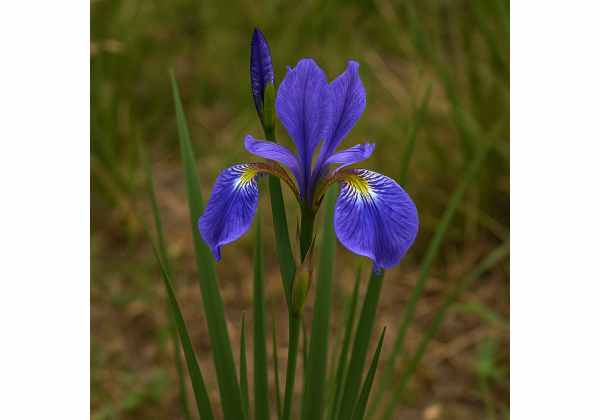
Siberian iris, or Iris sibirica, is best known as an elegant garden perennial with narrow leaves and blue to violet flowers, yet it also attracts curiosity as part of the wider Iris genus, a group long examined for biologically active plant compounds. That interest is understandable. Researchers have identified flavonoids, isoflavonoids, xanthones, phenolic acids, and other constituents in Siberian iris tissues, especially in the rhizome and leaves. These compounds are linked in laboratory work to antioxidant, anti-inflammatory, and antimicrobial activity.
Still, this is a plant that calls for careful distinction between promise and proof. Siberian iris is not a well-established medicinal herb in the modern clinical sense, and it should not be treated like a routine home remedy. Most of the meaningful evidence comes from chemical analysis, cell studies, and broader iris-genus reviews rather than human trials. That makes the practical questions especially important: what benefits are plausible, which parts contain the key compounds, how is it used, and why is safety more important here than supplement enthusiasm. A balanced answer starts with respect for both the plant’s potential and its limits.
Essential Insights
- Siberian iris contains phenolic compounds with antioxidant potential in laboratory studies.
- Extracts and isolated compounds from the wider iris genus show anti-inflammatory and antimicrobial activity in preclinical research.
- No validated oral dosage range in mg or g has been established for human self-use.
- Avoid self-medicating with fresh rhizomes or homemade extracts, especially during pregnancy, in children, or in anyone prone to plant-related skin or stomach reactions.
Table of Contents
- What Siberian iris is and why people ask about it
- Key ingredients and bioactive compounds
- Medicinal properties and what the research actually suggests
- Traditional context and modern nonmedical uses
- Siberian iris dosage and why a safe range is not established
- Safety, side effects, and who should avoid it
- When this plant belongs in the garden, not the supplement cabinet
What Siberian iris is and why people ask about it
Siberian iris is a rhizomatous perennial from the iris family, native to parts of Europe and western Asia and widely grown as an ornamental plant. Gardeners prize it for graceful, grass-like foliage, strong vertical form, and flowers that often appear in blue, violet, purple, or white shades. In horticulture, it is valued for beauty, moisture tolerance, and dependable structure in borders, rain gardens, and waterside plantings.
So why does an ornamental plant end up in discussions about health benefits and medicinal properties? The answer lies in the wider Iris genus. Across history, several iris species have been used in regional traditional medicine, perfumery, and botanical preparations. That long record has encouraged modern scientists to look more closely at iris rhizomes, leaves, and flowers for active compounds. As a result, Siberian iris appears in phytochemical studies and bioactivity screens, even though it is not a mainstream medicinal herb in the way people think of ginger, chamomile, or turmeric.
This distinction matters. A plant can be chemically interesting without being clinically established. It can contain potentially useful molecules and still be a poor choice for casual self-treatment. Siberian iris sits exactly in that space. It is scientifically intriguing, but it does not have a strong body of human evidence showing that taking it by mouth is effective or reliably safe.
Another reason people ask about it is confusion within the iris family itself. Many readers encounter broad claims about “iris root” or “orris” and assume they apply equally to Iris sibirica. In practice, that is not how botanical use works. Traditional medicinal and aromatic use within the iris family has often centered on other species, especially those cultivated for orris. Siberian iris may share some chemical families with those relatives, but shared ancestry does not automatically create shared dosage, safety, or usefulness.
The most practical way to understand Siberian iris is this:
- It is first an ornamental species.
- It is second a research plant with measurable bioactive compounds.
- It is not currently a well-validated self-care herb for routine home use.
That may sound cautious, but it is the most useful starting point. It helps prevent two common mistakes: assuming that a beautiful plant is automatically gentle, and assuming that any plant with antioxidants belongs in a supplement cabinet. With Siberian iris, the better question is not “Can it do something in a lab?” It probably can. The better question is “What can a person safely and realistically do with that information?” That is where the rest of the article matters.
Key ingredients and bioactive compounds
The medicinal interest in Siberian iris comes mostly from its secondary metabolites, especially those concentrated in the rhizome and, to a lesser extent, in the leaves. These compounds are not “ingredients” in the culinary sense. They are naturally occurring plant chemicals that may influence oxidation, inflammation, microbial growth, or cellular signaling in experimental settings.
The broad chemical groups identified in Siberian iris and related iris species include:
- flavonoids
- isoflavonoids and their glycosides
- xanthones
- hydroxycinnamic and other phenolic acids
- tannins
- coumarin-like phenolics
- fatty acids and minor lipid components
Within those families, several named compounds recur in the scientific literature. Studies involving Iris sibirica and closely compared iris species have identified compounds such as gallic acid, caffeic acid, chlorogenic acid, mangiferin, tectoridin, irigenin, iristectorigenin B, irisolidone, and nigricin. A 2022 profiling study on Iris sibirica raw material also reported dozens of polyphenolic constituents, with isoflavones and their glycosides forming a major share of the detected compounds.
This matters because different compound families suggest different kinds of biological potential. Phenolic acids and flavonoids are often linked to antioxidant action. Isoflavonoids can influence inflammatory pathways and enzyme activity. Xanthones and related phenolics are often studied for cell-protective, antimicrobial, or signaling effects. That does not prove clinical benefit, but it does explain why the plant keeps appearing in pharmacognosy and natural-products research.
A practical way to read these findings is to separate three levels of meaning:
- Chemical presence
A compound can be identified and quantified in the plant. - Biological plausibility
That compound may show activity in cell systems, enzyme assays, or animal models. - Human usefulness
The compound, or a whole-plant extract, still needs evidence on absorption, dose, safety, and real-world effect.
Siberian iris is well past the first step and partly into the second. It is not firmly into the third.
Another point worth understanding is that the part of the plant matters greatly. Rhizomes are often richer in the very compounds that drive medicinal interest. They are also the part most associated with irritation concerns. That overlap is common in herbal medicine: the same tissues that concentrate active chemistry can also concentrate compounds that the body does not tolerate well.
This is why claims about “key ingredients” should never be read as an invitation to improvise with the plant. Knowing that a rhizome contains mangiferin, tectoridin, or other interesting constituents does not tell you that a homemade tea, tincture, powder, or capsule will be effective, standardized, or safe. It only tells you that the plant deserves careful study. In the case of Siberian iris, that is an important difference.
Taken together, the chemistry of Iris sibirica is rich enough to justify scientific attention. It is not rich enough, by itself, to justify casual medicinal use.
Medicinal properties and what the research actually suggests
When people search for Siberian iris health benefits, they are usually looking for a simple list: anti-inflammatory, antimicrobial, antioxidant, anticancer, or perhaps digestive support. The research, however, calls for more careful wording. The most accurate phrase is potential medicinal properties, because the evidence is still mostly preclinical.
Across the broader iris genus, reviews describe a wide range of bioactivities linked to extracts and isolated compounds. These include antioxidant effects, anti-inflammatory actions, antimicrobial and antibiofilm activity, cytotoxic or antiproliferative effects in cell lines, and other pharmacological signals. Siberian iris shares several of the chemical classes that make those findings plausible, especially isoflavonoids, phenolic acids, and xanthones.
The most defensible potential benefits for Siberian iris are these:
- Antioxidant potential
Extracts and marker compounds from iris rhizomes can reduce oxidative activity in laboratory models. This is one of the most consistent themes in the literature. - Anti-inflammatory potential
Some iris compounds appear to influence inflammatory enzymes, lipid peroxidation, or cellular stress pathways. That supports cautious interest, though it does not amount to proven anti-inflammatory therapy in humans. - Antimicrobial and antibiofilm activity
Work on iris extracts suggests possible activity against selected bacteria and oral biofilms. This may be relevant to future topical or formulated products, but it is far from a recommendation to self-treat infections with the plant. - Cell-level anticancer interest
Some iris-derived constituents show cytotoxic activity in laboratory studies. That kind of data is useful for drug discovery, but it should never be confused with evidence that the plant treats cancer in people.
This last point matters a great deal. Many plant articles overstate laboratory findings and turn them into medical promises. A compound that slows a cancer cell line in a dish may fail completely in animals, fail again in humans, prove too toxic, or never reach useful tissue levels at all. That is one reason botanical enthusiasm needs boundaries.
For Siberian iris specifically, there is currently no meaningful body of human clinical research supporting routine use for pain, digestion, immunity, hormone balance, mood, blood sugar, or any other common supplement goal. That is not a criticism of the plant. It is simply the present state of evidence.
A balanced way to state the research is:
- the chemistry is real
- the bioactivity signals are real
- the human benefit remains uncertain
This is especially important because the genus-level literature can sound impressive. Reviews often summarize dozens of iris species at once. When that happens, the strongest findings may come from species other than Iris sibirica. A reader can easily come away thinking that every iris has the same medicinal profile. That is not how good herbal evaluation works.
So, does Siberian iris “work”? In a laboratory sense, it clearly contains compounds worth studying. In a consumer-health sense, the answer is still incomplete. At the moment, the research supports curiosity more than self-prescription. That may change in the future, but it has not changed yet.
Traditional context and modern nonmedical uses
Siberian iris becomes easier to understand when it is placed in context. Historically, parts of the iris family were used in European and regional traditional medicine for purposes such as expectorant support, laxative action, external preparations, powders, and ritual or household uses. Yet those records often refer to iris rhizomes more broadly or to particular species, not always to Iris sibirica in a direct and traceable way.
That distinction is especially important because modern readers often blend three different ideas into one:
- historical iris use
- orris in perfumery
- Siberian iris as an ornamental plant
These are related, but they are not interchangeable. The famous perfumery raw material called orris is generally associated with other iris species rather than Siberian iris. When people read about iris root in fragrance or old botanical texts, they may assume Siberian iris is the same thing in a modern supplement context. That is usually an overreach.
Today, Siberian iris has several modern uses that are more clearly established than its medicinal use.
1. Ornamental landscaping
This remains its primary role. It is valued for structure, flowers, moisture tolerance, and suitability for perennial borders and rain gardens.
2. Ecological planting and wetland design
Because it tolerates damp ground well, it is often planted where soil stays moist or periodically wet.
3. Phytoremediation research
This is one of the most distinctive modern uses. Siberian iris has been studied for its capacity to help remove or tolerate pollutants in constructed wetlands and related systems. That role is impressive from an environmental standpoint, but it also carries an important warning: a plant used in remediation should never be treated as a casual medicinal harvest.
That last point is more practical than it may first appear. A garden plant grown near roadsides, drainage areas, treated landscapes, or remediation settings may accumulate substances you do not want anywhere near a homemade herbal preparation. Even without that issue, the presence of interesting phytochemicals does not justify harvesting a decorative rhizome for self-treatment.
Modern nonmedical use also shows why the plant remains relevant to science. It is not only studied as a possible source of bioactive compounds. It is also studied as a resilient, functional species with horticultural and environmental value. In some ways, that broader usefulness is more established than its role in herbal medicine.
For readers, the practical lesson is simple. Siberian iris is not unimportant because it lacks clinical herbal status. It simply matters in a different way. It is a plant of botanical, ecological, chemical, and ornamental interest. Its medicinal future, if it has one, is still being sorted out. Its nonmedical value is already clear.
Siberian iris dosage and why a safe range is not established
This is the section many readers expect to be straightforward, but with Siberian iris the honest answer is unusually clear: there is no validated oral dosage range for human self-use.
That means there is no reliable daily range in mg or g that can be recommended as an evidence-based consumer dose. No well-established human trials define a therapeutic intake. No standard self-care monograph supports routine oral use. No common over-the-counter benchmark makes Siberian iris comparable to better-studied herbs.
Why is the dosage question so unsettled?
First, the research is mostly preclinical.
Chemical profiling and cell-based activity can tell us that the plant contains active compounds. They do not tell us what a person should swallow, how long they should take it, or whether a useful dose overlaps with an irritating one.
Second, the plant is chemically variable.
Rhizomes, leaves, cultivation conditions, extraction method, and drying conditions can all change the final chemical profile. A fresh rhizome from a garden and a laboratory-prepared extract are not equivalent.
Third, the part of the plant matters.
The rhizome is often the center of medicinal curiosity, but it is also the part most often flagged for irritation and poisoning concern.
Fourth, laboratory concentrations do not convert neatly into home doses.
If a study reports activity at a certain concentration in a dish or test system, that does not create a practical gram-per-day recommendation for a person.
Because of that, the most responsible dosing advice is based on restraint rather than improvisation.
A sensible consumer guide looks like this:
- Do not make homemade teas, decoctions, powders, or tinctures from Siberian iris rhizomes.
- Do not infer a dose from other iris species.
- Do not assume that dried plant material is safer than fresh material.
- Do not treat concentration of active compounds as proof of a usable oral supplement.
What about commercial products? In some cases, a product may mention iris-derived compounds or botanical extracts. If the species is clearly Iris sibirica, that still does not solve the underlying problem. Unless the product has meaningful safety data, standardized formulation, and a qualified clinician’s rationale, it remains a weak candidate for self-prescribing.
The only “dose” that is easy to justify for most readers is non-ingestive exposure in ordinary gardening: planting it, dividing it, handling it with care, and washing your hands afterward. That may sound modest, but it fits the actual evidence.
So if you need a one-line answer for dosage, it is this: no safe and effective oral dosage range has been established for routine human use, and self-medicating with Siberian iris is not recommended.
Safety, side effects, and who should avoid it
Safety is the most important practical issue with Siberian iris. While the plant is attractive and often easy to grow, that should not be mistaken for edible or medicinal gentleness. Official horticultural and poison-information sources describe iris plants as irritant or poisonous, with the rhizome and rootstock drawing particular concern.
The likely problems are mostly irritant rather than subtle. If swallowed, especially in larger amounts or from concentrated underground parts, iris material may cause:
- mouth or throat irritation
- stomach upset
- nausea
- vomiting
- abdominal pain
- diarrhea
Skin contact can also be an issue for some people. Sap, rhizome handling, or prolonged contact with broken plant tissue may lead to irritation or dermatitis in sensitive individuals. That means routine gardening is usually manageable, but gloves are a sensible choice when dividing clumps or handling roots and rhizomes.
The people who should avoid medicinal self-use most clearly include:
- pregnant people
- breastfeeding people
- children
- people with a history of plant-contact dermatitis
- people with sensitive stomachs, inflammatory bowel conditions, or frequent nausea
- anyone taking a casual “natural remedy” approach without clear identification of the plant part and preparation
Pets and livestock also deserve attention. Iris species are widely listed as toxic to companion animals and grazing animals, which is another reason to avoid leaving dug rhizomes where animals can chew them.
A useful safety principle here is that lack of human side-effect trials should not be mistaken for proof of safety. Sometimes it simply means the plant has not been studied properly in people. With Siberian iris, that is exactly the problem. There is enough reason for caution, but not enough modern clinical data to define a reassuring use pattern.
If accidental ingestion happens, practical steps are simple:
- Remove any remaining plant material from the mouth.
- Rinse the mouth with water.
- Watch for burning, vomiting, abdominal pain, or diarrhea.
- Contact a local poison center or urgent medical service if symptoms are significant, the amount was meaningful, or the person is a child, pet, or medically vulnerable adult.
For skin exposure, wash the area with soap and water and watch for rash or persistent irritation.
The deeper lesson is that “natural” is not a safety category. Siberian iris is a good example of why botanical evaluation must include both pharmacology and toxicology. A plant can have interesting compounds and still be the wrong choice for home internal use. In this case, that is the safer assumption.
When this plant belongs in the garden, not the supplement cabinet
The most balanced conclusion about Siberian iris is not dismissive and not promotional. It is a plant with genuine phytochemical interest, modest traditional context through the wider iris family, and clear modern value in horticulture and environmental planting. Yet none of that automatically turns it into a practical wellness herb.
For most readers, Siberian iris belongs in the garden, not the supplement cabinet.
That conclusion becomes easier to accept when you look at the decision in practical terms.
If your goal is to find a plant with:
- a well-established oral dose
- repeated human safety data
- reliable everyday therapeutic use
- easy home preparation guidance
then Siberian iris is not a strong candidate.
If your goal is to understand:
- why scientists study the plant
- which compounds it contains
- what kinds of medicinal effects are plausible
- why safety concerns limit self-use
then Siberian iris is genuinely worth learning about.
This distinction is valuable because it protects people from a common mistake in plant medicine: confusing scientific interest with consumer readiness. Some botanicals are ready for careful everyday use because they have tradition, chemistry, dosing guidance, and tolerability data that line up reasonably well. Others are still better treated as research subjects, specialist materials, or plants with nonmedical value. Siberian iris remains much closer to that second group.
There is also something refreshing about that conclusion. Not every plant needs to become a capsule. Siberian iris already contributes as a landscape species, pollinator-supporting ornamental, wet-soil performer, and research model for plant chemistry and environmental applications. Its value does not depend on becoming a tea or tincture.
So what should a reader take away?
- The plant has promising compounds.
- The likely benefits are still mostly preclinical.
- No standard medicinal dose has been established.
- The rhizome is the part most interesting chemically and most concerning practically.
- Safety should outweigh curiosity in home use.
That is not a dead end. It is a mature way to read the evidence. If future research produces standardized extracts, human trials, and clearer toxicology, Siberian iris may earn a more defined place in herbal medicine. Until then, the wisest use of this plant is appreciation, informed caution, and respect for what is known and what is not.
References
- The State of Knowledge of the Primary and Secondary Metabolites of the Iris Genus 2026 (Review)
- Exploring the Use of Iris Species: Antioxidant Properties, Phytochemistry, Medicinal and Industrial Applications 2022 (Review)
- Development of approach for flavonoid profiling of biotechnological raw materials Iris sibirica L. by HPLC with high-resolution tandem mass spectrometry 2022 (Analytical Study)
- Qualitative and Quantitative Analysis of Ukrainian Iris Species: A Fresh Look on Their Antioxidant Content and Biological Activities 2020 (Phytochemical Study)
- Rain Garden Plants: Iris sibirica | Home & Garden Information Center 2015 (Extension Safety Note)
Disclaimer
This article is for educational purposes only and is not medical advice, diagnosis, or treatment. Siberian iris is not a validated self-care herb, and parts of the plant may cause irritation or poisoning if used improperly. Do not ingest home-prepared rhizomes, roots, or extracts. Speak with a qualified healthcare professional before using any unfamiliar botanical product, and contact a poison center or medical service promptly if accidental ingestion or a significant reaction occurs.
If this article helped you, please share it on Facebook, X, or another platform you prefer so more readers can find careful, evidence-aware plant guidance.