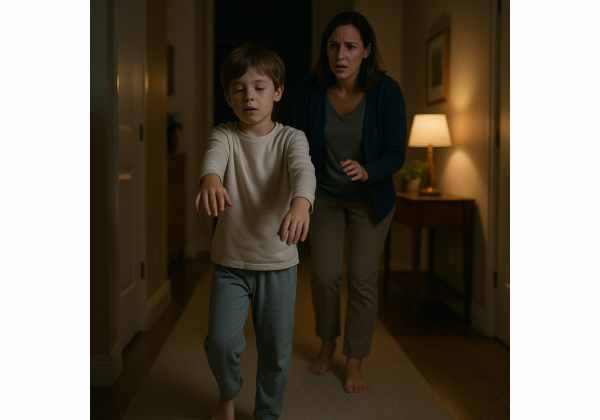
Sleepwalking disorder is a sleep-wake condition in which a person partly awakens from deep non-REM sleep and moves, walks, talks, or carries out other behaviors while not fully conscious. The person may look awake, but awareness, judgment, memory, and responsiveness are usually impaired.
Occasional sleepwalking is common in childhood and often fades with age. Repeated, risky, distressing, or adult-onset episodes need closer attention because sleepwalking can overlap with other sleep disorders, medical conditions, medication effects, neurological events, or mental health concerns. Understanding the pattern of episodes is important because the most serious risks are often practical: injuries, dangerous nighttime behavior, disrupted sleep, and confusion about what is happening.
Table of Contents
- What Sleepwalking Disorder Means
- Sleepwalking Symptoms and Signs
- What Happens in the Brain During Sleepwalking
- Common Causes and Triggers
- Risk Factors for Sleepwalking Disorder
- Children vs Adults
- Diagnostic Context and Lookalike Conditions
- Complications and Urgent Warning Signs
What Sleepwalking Disorder Means
Sleepwalking disorder, also called somnambulism, is a non-rapid eye movement sleep arousal disorder. It happens when parts of the brain show features of wakefulness while other parts remain in deep sleep, producing a mixed state rather than normal waking.
Sleepwalking is not simply “acting out a dream.” Most episodes arise from deep non-REM sleep, especially slow-wave sleep, which is concentrated in the first third of the night. That timing helps distinguish sleepwalking from several other nighttime events. A typical episode may occur one to three hours after falling asleep, although patterns vary.
During an episode, the person may sit up, walk, open doors, move objects, talk in short or unclear phrases, eat, dress, or perform repetitive actions. The behavior can look purposeful, but the person is not fully aware in the ordinary sense. They may have a blank expression, respond poorly to questions, resist guidance, or appear confused if awakened. In the morning, they often remember little or nothing.
In clinical language, sleepwalking is grouped with related disorders of arousal, including confusional arousals and sleep terrors. These conditions can overlap. One person may sometimes sit up confused, sometimes appear terrified, and sometimes walk. The shared feature is incomplete awakening from non-REM sleep.
Sleepwalking becomes more clinically significant when it is frequent, injurious, highly distressing, disruptive to others, associated with daytime impairment, or new in adulthood. A single childhood episode after fever or sleep loss may not mean the child has an ongoing disorder. By contrast, repeated adult episodes, dangerous behaviors, or episodes that resemble seizures require more careful evaluation.
It is also important not to assume that every unusual nighttime behavior is sleepwalking. Some events that look like sleepwalking may instead reflect REM sleep behavior disorder, nocturnal seizures, panic episodes, substance effects, medication reactions, obstructive sleep apnea, or other sleep-wake disorders. Sleepwalking is best understood by its pattern: partial arousal from deep sleep, impaired awareness, reduced responsiveness, complex behavior, and limited recall.
Sleepwalking Symptoms and Signs
The main sign of sleepwalking disorder is complex behavior during sleep with reduced awareness and poor memory afterward. Walking is common, but the condition can involve many behaviors beyond walking.
A person who is sleepwalking may look awake enough to move through a room, but not awake enough to understand context, make safe decisions, or interact normally. Their eyes may be open. Their face may look blank, glassy, or expressionless. Speech, if present, may be brief, confused, repetitive, or unrelated to what others are saying.
Common symptoms and signs include:
- Sitting up in bed while appearing confused or unaware
- Getting out of bed and walking around
- Staring with open eyes but little recognition
- Not responding normally to questions or instructions
- Mumbling, speaking oddly, or giving short answers
- Moving objects, opening drawers, dressing, or undressing
- Eating or preparing food without full awareness
- Trying to leave the room or the home
- Brief confusion after being awakened
- Little or no memory of the episode the next day
- Daytime tiredness when episodes repeatedly disturb sleep
Some episodes are quiet and brief. Others are more dramatic, especially when sleepwalking overlaps with sleep terrors. In those cases, the person may appear frightened, breathe rapidly, sweat, shout, or move suddenly. This can be alarming to witness, but the person may still have little recall later.
A key feature is impaired judgment. Someone may walk near stairs, handle objects unsafely, urinate in an inappropriate place, leave the house, or, rarely, attempt to drive. These behaviors are not signs of intentional misconduct while awake; they occur in a state of partial arousal with limited awareness. Even so, the physical risks can be real.
Sleepwalking episodes usually last a few minutes, but they can be shorter or longer. Some people return to bed without waking. Others wake in a different room and feel confused, embarrassed, or frightened by what they are told happened. Witness reports are often more useful than the person’s own memory because amnesia is common.
Not every nighttime movement is sleepwalking. Rolling over, brief sleep talking, restless movement, or waking up disoriented once in a while can occur without a sleepwalking disorder. The pattern matters most: repeated complex behavior from sleep, impaired awareness during the event, and limited recall afterward.
What Happens in the Brain During Sleepwalking
Sleepwalking appears to reflect a state dissociation: the brain is not fully asleep and not fully awake. Motor systems may become active enough for movement, while networks involved in awareness, judgment, memory, and self-monitoring remain partly in deep sleep.
Normal sleep is organized into stages. Non-REM sleep includes lighter sleep and deeper slow-wave sleep. Sleepwalking most often emerges from deep non-REM sleep, a stage in which the brain produces large slow waves and the body is generally less responsive to the outside world. If an arousal occurs incompletely, the person may move without fully regaining conscious awareness.
This explains several features that otherwise seem contradictory. A sleepwalker may navigate a familiar space but fail to recognize danger. They may open a door yet not answer simple questions coherently. They may seem determined but not remember the event. Their behavior can look organized at a basic motor level while higher-level decision-making is impaired.
Sleepwalking is also linked to sleep instability. Anything that increases deep sleep pressure or fragments sleep can make partial arousals more likely in someone who is vulnerable. Sleep deprivation is a common example. When the brain is under pressure to recover deep sleep, arousals from that sleep may be more unstable. Fragmentation from breathing problems, leg movements, illness, noise, stress, or substances can also create repeated opportunities for incomplete awakening.
The old belief that sleepwalkers are completely unaware and never have mental content is too simple. Some people report vague images, threat feelings, or fragments of experience. Adults may be more likely than children to recall some mental content. Still, the usual clinical pattern is reduced awareness during the event and poor recall afterward.
Because sleepwalking involves altered arousal rather than ordinary wakeful choice, it can raise sensitive questions after embarrassing, sexual, aggressive, or risky behavior. The presence of sleepwalking does not automatically explain every nighttime act, and complex cases may require specialist evaluation. The central point is that sleepwalking is a sleep-state disorder, not a personality trait, moral failing, or deliberate behavior pattern.
Common Causes and Triggers
Sleepwalking usually has no single cause. It is better understood as a condition that appears when a vulnerable sleep system is pushed by triggers that deepen, disrupt, or fragment sleep.
The most common triggers are practical and physiological. Sleep loss is one of the most important. A person who is already prone to sleepwalking may have more episodes after insufficient sleep, irregular sleep timing, travel, shift changes, illness, or repeated awakenings. For broader context on how inadequate sleep affects alertness, mood, and thinking, see sleep deprivation symptoms.
Common triggers and contributing factors include:
- Not getting enough sleep
- Irregular sleep schedules
- Fever or acute illness
- Psychological stress
- Alcohol use
- Some sedatives, sleep medicines, and psychiatric medications
- Sleep interruption from noise, touch, or environmental disruption
- Obstructive sleep apnea or other breathing-related sleep problems
- Restless legs syndrome or periodic limb movements
- Gastroesophageal reflux or discomfort that fragments sleep
Sleep-disordered breathing matters because repeated breathing pauses or arousals can disturb deep sleep. In some people, nighttime behaviors that look like parasomnia occur alongside snoring, gasping, unrefreshing sleep, or daytime sleepiness. A related discussion of breathing-related sleep problems appears in sleep apnea symptoms.
Restless legs syndrome and periodic limb movements can also fragment sleep and increase arousal instability. These conditions do not “cause” every sleepwalking episode, but they can be part of the larger sleep picture, especially when there is leg discomfort, an urge to move, or repeated nighttime kicking. For a related overview, see restless legs syndrome at night.
Medications and substances deserve careful attention in adult-onset sleepwalking. Reports have linked sleepwalking or complex sleep-related behaviors with certain hypnotics, sedatives, antidepressants, antipsychotics, lithium, beta-blockers, and other drugs, though individual risk depends on the person, dose, timing, and coexisting conditions. Alcohol can also increase risk by disrupting sleep architecture and impairing arousal.
Stress is another common contributor, but it should be described carefully. Stress does not mean sleepwalking is “all psychological.” Rather, stress can alter sleep depth, increase awakenings, worsen insomnia, and interact with genetic or biological vulnerability. In some people, anxiety, trauma-related symptoms, depression, or neurodevelopmental conditions may coexist with NREM parasomnias. That association does not mean one condition always causes the other, but it can shape the overall clinical picture.
Risk Factors for Sleepwalking Disorder
The strongest risk factors for sleepwalking are childhood age, family history, deep-sleep instability, sleep disruption, and certain medical or medication-related factors. Risk is usually cumulative rather than based on one factor alone.
Age is a major factor. Sleepwalking is much more common in children than in adults. Children have more deep slow-wave sleep, and their sleep-wake systems are still maturing. Many children who sleepwalk eventually outgrow it, especially when episodes are occasional and not dangerous.
Family history is also important. Sleepwalking tends to run in families, and the risk is higher when one or both parents have a history of sleepwalking or related arousal disorders. This does not mean a child will definitely sleepwalk, but it suggests an inherited vulnerability in sleep arousal regulation.
Other risk factors include:
- Frequent sleep loss or irregular sleep timing
- Conditions that repeatedly interrupt sleep
- Fever, especially in children
- Stressful periods that worsen sleep quality
- Alcohol or substance use
- Use of certain sleep, psychiatric, or neurological medications
- Personal history of sleep terrors or confusional arousals
- Coexisting sleep disorders, such as sleep apnea or periodic limb movements
- Neurological conditions in selected adult cases
- Mental health or neurodevelopmental conditions that disrupt sleep or arousal
Sex differences are not always consistent across studies, and sleepwalking can occur in any sex or gender. The pattern, age of onset, severity, and associated conditions are usually more clinically meaningful than sex alone.
Adult-onset sleepwalking is a special risk marker because new episodes in adulthood are less typical than childhood onset. When sleepwalking first appears in an adult, clinicians often consider whether another factor is present, such as medication exposure, alcohol, sleep apnea, neurological disease, nocturnal seizures, severe sleep deprivation, or significant psychiatric stress.
Risk does not always equal disorder. A child with a family history who sleepwalks once during a fever may not have a persistent clinical problem. A young adult who repeatedly leaves the house while asleep, injures themselves, or has episodes after a new medication deserves closer evaluation. Frequency, danger, distress, and context determine how concerning the pattern is.
Children vs Adults
Sleepwalking in children is often developmental and self-limited, while sleepwalking in adults is more likely to need careful diagnostic attention. The same basic sleep mechanism may be involved, but the meaning of the symptom can differ by age.
In children, sleepwalking often appears during the school-age years. Episodes may happen during the first part of the night, especially after overtiredness, illness, fever, disrupted routines, or stress. Many children have no memory of the event and seem well during the day. When episodes are infrequent, brief, and not dangerous, they may reflect a common childhood parasomnia pattern rather than a sign of serious mental illness.
Children may also have related NREM arousal events. A child may sit up confused on some nights, walk on others, or have sleep terrors with crying, screaming, and intense fear. Sleep terrors can look frightening, but they are different from nightmares. Nightmares usually occur later in the night during REM sleep and are more likely to be remembered. For broader context on frightening dreams and stress, see nightmares, stress, and anxiety.
Adolescence is a turning point. Many children improve by the teen years as sleep architecture changes and the proportion of deep slow-wave sleep decreases. However, sleepwalking can persist into adolescence or adulthood, especially when there is a strong family history, ongoing sleep disruption, or coexisting sleep disorders.
In adults, sleepwalking deserves more caution for several reasons. Adults are physically larger, may have access to cars, stairs, tools, balconies, kitchens, or outside spaces, and are more likely to experience serious consequences if complex behavior occurs. Adult sleepwalking can also be mistaken for other conditions, including REM sleep behavior disorder, sleep-related epilepsy, substance-related episodes, dissociative episodes, or nocturnal panic.
Another difference is recall. Adults may sometimes report more dreamlike mental content or emotional themes than children, although amnesia remains common. Adults may also experience shame or worry after learning what they did while asleep, especially if the episode involved eating, sexual behavior, aggression, or leaving the home.
The most important distinction is not simply age but pattern. Childhood episodes that are rare and low-risk are usually different from adult-onset, frequent, injurious, or highly unusual episodes. Adult onset, major behavioral complexity, or events that occur many times per night should raise the threshold for professional evaluation.
Diagnostic Context and Lookalike Conditions
Sleepwalking is usually identified from a detailed sleep history, witness description, timing of episodes, behavior during the event, and memory afterward. Testing is not always needed, but it becomes more relevant when the pattern is unclear, dangerous, atypical, or new in adulthood.
A clinician will usually ask what happens before, during, and after an episode. Useful details include the time of night, how long the event lasts, whether the eyes are open, whether the person responds, whether they seem frightened, whether they remember anything, whether there is snoring or gasping, whether there are repetitive movements, and whether injury or leaving the home has occurred.
A witness account can be more reliable than the sleepwalker’s own memory. Home video, when available and appropriate, may help show the pattern of behavior. In more complex cases, clinicians may consider overnight sleep testing. Polysomnography can record sleep stages, breathing, oxygen levels, limb movements, heart rhythm, and brain activity during sleep. It is especially useful when sleep apnea, periodic limb movements, REM sleep behavior disorder, or seizure-like activity is part of the concern.
Conditions that can resemble sleepwalking include:
- Confusional arousals, where the person is confused but may not leave the bed
- Sleep terrors, which include intense fear and autonomic arousal
- REM sleep behavior disorder, where a person acts out dreams during REM sleep
- Nocturnal seizures, especially sleep-related hypermotor epilepsy
- Nocturnal panic attacks, which involve abrupt fear and awakening
- Substance- or medication-related complex sleep behaviors
- Dissociative episodes that occur near sleep or during nighttime awakenings
- Delirium, intoxication, or medical confusion in vulnerable people
Timing is one clue. Sleepwalking usually occurs early in the night from deep non-REM sleep. REM sleep behavior disorder more often occurs later in the night, when REM sleep is more frequent, and the person may recall vivid dream content. Nocturnal panic attacks often involve sudden awakening with intense fear and bodily symptoms; a related comparison is discussed in nocturnal panic attacks.
Seizures can be harder to distinguish, especially if events are brief, stereotyped, frequent, or involve unusual posturing, jerking, vocalization, or repeated episodes in one night. In such cases, an EEG test or video EEG monitoring may be considered as part of a neurological evaluation.
Mental health context also matters. Sleepwalking can coexist with anxiety, trauma-related symptoms, depression, obsessive-compulsive symptoms, or neurodevelopmental conditions, partly because these conditions can affect sleep continuity and arousal. However, sleepwalking should not be automatically labeled as a psychiatric symptom. It is a sleep-wake disorder with neurological, developmental, genetic, medical, and environmental contributors.
Complications and Urgent Warning Signs
The main complications of sleepwalking are injury, risky behavior, sleep disruption, distress, and effects on family or household safety. Most episodes are not dangerous, but the risk can rise quickly when walking becomes complex or occurs in unsafe settings.
Physical injury is the most obvious concern. A person may trip, fall down stairs, bump into furniture, cut themselves, leave the home, climb, handle kitchen items, or enter unsafe areas. Rarely, sleepwalking has been associated with driving, aggression, sexual behavior, or serious harm to the person or others. These events are uncommon, but they are medically important because the person’s awareness and judgment are impaired during the episode.
Sleep disruption can also matter. Recurrent episodes may fragment sleep for the person who sleepwalks and for others nearby. Over time, this can contribute to daytime sleepiness, poor concentration, irritability, school or work problems, and household stress. Children may be embarrassed if siblings know about the episodes. Adults may feel shame, fear, or confusion, especially when they cannot remember what happened.
Sleepwalking can create relationship strain. A partner, roommate, or parent may lose sleep, feel responsible for monitoring episodes, or worry about injury. In adults, unusual nighttime behavior may be misunderstood as intoxication, intentional behavior, or a mental health crisis unless the sleep pattern is recognized.
Professional evaluation is especially important when sleepwalking:
- Starts for the first time in adulthood
- Happens often, such as weekly or several times in one night
- Causes injury or near-injury
- Involves leaving the home, using appliances, driving, or other dangerous behavior
- Includes aggression or sexual behavior during sleep
- Is associated with loud snoring, gasping, choking, or marked daytime sleepiness
- Looks highly repetitive, seizure-like, or unusually brief and frequent
- Occurs with confusion that continues after the person is fully awake
- Appears after a new medication, substance use change, or neurological symptom
- Causes major distress or functional impairment
Urgent medical attention is warranted after significant injury, suspected seizure, dangerous confusion, possible intoxication or overdose, new neurological symptoms, or any event involving immediate risk to the person or others. This does not mean every episode is an emergency. It means that dangerous, atypical, adult-onset, or medically complex episodes should not be dismissed as harmless sleepwalking.
The practical takeaway is balanced: sleepwalking is often benign in children and can be occasional in otherwise healthy people, but the diagnosis deserves respect. It involves a real alteration of sleep-wake regulation, and its consequences depend on frequency, context, behavior complexity, and the presence of other sleep, medical, neurological, or psychiatric factors.
References
- Diagnosis and Management of NREM Sleep Parasomnias in Children and Adults 2023 (Review)
- Psychopathology and NREM sleep parasomnias: A systematic review 2025 (Systematic Review)
- Parasomnias 2024 (Professional Reference)
- Sleepwalking 2024 (Medical Reference)
- Parasomnias in Adults 2023 (Clinical Review)
- Abnormal timing of slow wave synchronization processes in non-rapid eye movement sleep parasomnias 2022 (Research Article)
Disclaimer
This article is for general educational purposes only and is not a substitute for professional medical advice, diagnosis, or treatment. Sleepwalking that is dangerous, new in adulthood, injurious, seizure-like, or linked with major daytime impairment should be evaluated by a qualified healthcare professional.
Thank you for taking the time to read this resource; sharing it may help others better understand sleepwalking and when it deserves medical attention.