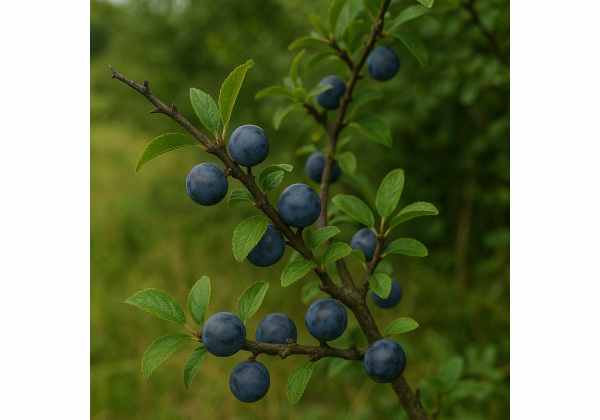
Sloe, the deep blue-black fruit of Prunus spinosa, is one of those traditional plants that sits between food and medicine. Better known in many regions as blackthorn fruit, it has long been gathered for preserves, syrups, tinctures, wines, and herbal teas. Raw sloes are famously sharp and puckering, but that astringency is part of what made them useful in traditional practice. The fruit has been valued for digestive support, mild antimicrobial activity, oral and throat soothing, and broad antioxidant intake, while the flowers and other parts of the plant have their own separate medicinal history.
Modern interest in sloe comes mostly from its rich polyphenol profile. The fruits contain anthocyanins, phenolic acids, flavonoids, tannins, vitamins, and organic acids, all of which help explain their antioxidant and anti-inflammatory reputation. That said, sloe is not a high-certainty clinical herb with standardized modern dosing across all forms. It is better understood as a traditional astringent fruit with promising laboratory evidence, selective functional-food potential, and a few practical uses that still make sense when handled with care, realistic expectations, and attention to preparation.
Essential Insights
- Sloe is traditionally used as an astringent fruit for mild digestive complaints and throat or mouth irritation.
- Its anthocyanins, tannins, and phenolic acids help explain its antioxidant and anti-inflammatory profile.
- A cautious traditional tea-style range is about 2 to 4 g of dried fruit per cup, taken up to 3 times daily.
- Avoid medicinal use if you are pregnant, breastfeeding, or likely to chew and swallow the pits or crushed seeds.
Table of Contents
- What sloe is and which part is used
- Key ingredients and medicinal properties
- Potential health benefits and what the evidence really shows
- Sloe for digestion, oral care, and everyday traditional use
- Common uses and the best forms to choose
- Dosage, timing, and how long to use it
- Safety, side effects, interactions, and who should avoid it
What sloe is and which part is used
Sloe is the fruit of Prunus spinosa, a thorny shrub or small tree native to much of Europe, western Asia, and parts of North Africa. It is commonly called blackthorn because of its dark bark and dense, spiny branches. The fruit itself is a small drupe, usually 10 to 15 mm across, with blue-black skin, a waxy bloom, firm tart flesh, and a central stone. In everyday language, “sloe” usually means the fruit, while “blackthorn” may refer to the plant as a whole.
That distinction matters in herbal practice. The fruit, flowers, leaves, and young shoots all appear in older folk medicine, but they are not used in quite the same way. The fruit is the part most people mean when they search for sloe benefits, and it is the part most relevant to food use, antioxidant content, and traditional digestive astringency. The flowers have a separate medicinal tradition that leans more toward mild diuretic, cleansing, or spring tonic uses. Mixing those traditions together creates confusion, especially in dosage advice. A useful article should therefore stay clear: when discussing sloe as commonly used today, the fruit is the main focus.
The fruit is also unusually dependent on preparation. Fresh raw sloes are intensely astringent and sour, which is why they are often harvested after cold weather, frozen, dried, cooked, macerated, or sweetened before use. Processing changes more than the flavor. It can also change texture, polyphenol availability, and the balance between tartness and medicinal astringency. A fresh fruit, a dried fruit tea, and a sugar-rich syrup are all “sloe,” but they do not behave the same way in real life.
From a practical standpoint, sloe is best thought of as a traditional medicinal food rather than a modern standardized supplement. It is not in the same category as a capsule with a tightly controlled percentage of one active marker compound. That is one reason the evidence looks different from better-standardized herbs. Most of the modern research focuses on extracts, phenolic fractions, and antioxidant effects in experimental models, while everyday use still centers on preserved fruit, teas, juices, and culinary-herbal preparations.
For readers, the key starting point is simple: sloe is a polyphenol-rich, very astringent wild plum used historically for digestive, oral, and general restorative purposes. The fruit is the relevant part for most current use, and preparation determines much of both its usefulness and its tolerability.
Key ingredients and medicinal properties
Sloe’s medicinal identity comes largely from its polyphenols. The fruits contain anthocyanins, flavonoids, phenolic acids, proanthocyanidins, tannins, vitamins, minerals, organic acids, and smaller amounts of other plant metabolites. This mix helps explain why sloe has been discussed for antioxidant support, mild antimicrobial effects, digestive astringency, and inflammation-related uses.
Anthocyanins are among the most visually obvious compounds because they give the fruit its deep purple-blue color. These pigments are strongly associated with antioxidant activity and are one reason sloe is often compared with other dark berries. In functional terms, anthocyanins may help support oxidative balance and vascular health, though human outcome data remain limited. If you want a useful comparison point for the kind of polyphenol-rich berry profile that makes people interested in sloe, bilberry and its anthocyanin-rich fruit offer a familiar reference.
Phenolic acids are another major part of the picture. Compounds such as chlorogenic and caffeoylquinic acid derivatives are repeatedly identified in sloe fruit extracts. These substances are often linked with antioxidant and anti-inflammatory activity, and they may contribute to the plant’s broader functional-food reputation. Flavonoids, including quercetin and rutin derivatives, add another layer of activity that may help explain the fruit’s traditional use in irritation, inflammation, and general resilience.
Tannins deserve special attention because they help explain the fruit’s taste and one of its most practical traditional actions. Tannins are a large part of why raw sloes feel puckering and drying in the mouth. That same astringency is one reason the fruit has long been used for mild diarrhea, loose stools, and irritated mucous membranes of the mouth and throat. In plain terms, the chemistry fits the traditional use surprisingly well: a very tannic fruit is exactly the kind of plant people historically turn to for local tightening and drying effects.
Sloe also contains organic acids and modest amounts of vitamins and minerals, which make it interesting from both a culinary and nutritional standpoint. That does not turn it into a nutrient powerhouse on the level of a daily multivitamin, but it does support its reputation as a valuable wild food. Some preparations also concentrate specific fractions of the fruit, making the polyphenol load more pronounced than what a person would get from a casual spoonful of jam.
One subtle but important point is that processing changes chemistry. Drying, maceration, heating, and extraction can shift the balance of anthocyanins, phenolic acids, and Maillard-derived compounds. This means “sloe” is not one fixed chemical object. It is a family of preparations. That helps explain why a food-style preserve, a dried fruit tea, and an ethanolic extract can produce different effects even when they all come from the same plant.
Potential health benefits and what the evidence really shows
Sloe has a respectable traditional profile, but the modern evidence is much stronger in the laboratory than in the clinic. That is the most important reality to keep in view. The fruits are rich in bioactive compounds, and extracts have shown antioxidant, anti-inflammatory, antimicrobial, and enzyme-related effects in experimental work. What remains limited is solid human trial evidence showing that routine sloe use produces clear clinical outcomes at standardized doses.
The strongest plausible benefit is antioxidant support. Multiple reviews and extract studies show that sloe fruits are rich in anthocyanins, phenolic acids, and tannins that can neutralize reactive species and influence inflammatory signaling. This is important scientifically, but it should not be overtranslated. High antioxidant activity in a test system does not automatically mean dramatic disease prevention in people. Still, it supports the idea that sloe can function as a valuable polyphenol-rich food and a thoughtful part of a broader anti-inflammatory diet.
A second likely benefit is mild support for inflammatory digestive conditions. Traditional use repeatedly places sloes in the setting of diarrhea, mild gastrointestinal irritation, and other astringent needs. Modern ex vivo studies on fresh and dried fruit extracts add biological plausibility by showing modulation of inflammatory mediators and oxidative processes in immune-cell models. That does not prove sloe tea is a clinical treatment for inflammatory bowel disease or chronic digestive pathology, but it does strengthen the old observation that the fruit may be helpful for short-term, mild digestive upset.
A third possible benefit is local support for the mouth and throat. Folk use describes sloe fruit preparations for oral and pharyngeal irritation, and its tannin content makes that use understandable. In practical terms, a tart, astringent fruit infusion or gargle is exactly the kind of preparation that has historically been used for temporary mucosal discomfort. Astringent fruits such as quince in preserved or soothing preparations show how often culinary plants and mild throat remedies overlap.
A fourth area is broader metabolic and vascular interest. Reviews discuss sloe in relation to diabetes, cardiovascular disease, and even neuroprotection, largely because its phenolics interact with oxidative stress and inflammation-related pathways. But here the evidence becomes especially preliminary. The fruit is promising as a functional ingredient, not established as a treatment.
The most honest summary is this:
- Credible traditional use: mild digestive astringency, throat and mouth support, general restorative food use.
- Promising mechanistic support: antioxidant and anti-inflammatory activity.
- Less certain clinical value: cardiometabolic, neuroprotective, and disease-specific applications.
- Important limitation: very little high-quality human intervention data.
That balance is what makes sloe interesting. It is not empty folklore, but it is also not a fully proven modern therapeutic. It works best when treated as a traditional medicinal fruit with real phytochemical depth and modest, realistic expectations.
Sloe for digestion, oral care, and everyday traditional use
In practice, sloe’s most useful traditional role is digestive. The fruit’s astringent profile makes it a logical option for loose stools, mild transient diarrhea, and that unsettled feeling in the gut where a soothing yet drying fruit preparation may help restore balance. This is not the same as treating infection, dehydration, inflammatory bowel disease, or severe ongoing symptoms. It is the kind of traditional use that fits mild, short-term complaints, especially when the preparation is based on dried fruit rather than sugary liqueur or jam.
The mouth-and-throat use is similarly practical. Because sloe fruit is both tart and tannic, it has long been used in preparations meant to soothe irritated oral tissues. Gargles, diluted juices, or light infusions can make sense in this context. The value is not that sloe is a miracle antiseptic. It is that an astringent, polyphenol-rich fruit may help calm the local environment temporarily. This is similar in spirit to how people think about cranberry and other tart astringent berries: not as universal cures, but as targeted traditional supports.
There is also a nutritional-herbal middle ground where sloe shines. It can be used not just for a complaint, but as a seasonal functional fruit. Dried sloes, low-sugar preserves, teas, or carefully prepared extracts can fit into a diet aimed at increasing exposure to colorful polyphenol-rich plant foods. That framing matters because much of the modern excitement around sloe comes from the overlap between traditional medicine and functional-food science. It is often more realistic to use sloe as a recurring supportive food than to treat it like a precision drug.
Still, preparation quality changes everything. A heavily sweetened syrup may be pleasant, but it will not act like a simple fruit infusion. An alcohol maceration may extract some valuable compounds, but it also introduces alcohol and often sugar. A dried fruit tea may best preserve the traditional digestive identity of the plant. When choosing how to use sloe, the better question is not “What form is strongest?” but “What form fits the purpose?”
A smart everyday approach looks like this:
- Use food-style forms for general polyphenol intake and culinary value.
- Use dried fruit infusions for mild, short-term digestive or throat support.
- Treat strong extracts as more concentrated preparations that deserve more care.
- Reassess quickly if symptoms are more than mild.
This is where sloe feels most grounded and useful. It is not trying to do everything. It is a tart, astringent fruit with a long history of being used where that very character is the point.
Common uses and the best forms to choose
Sloe is one of those plants whose form determines its function. The fruit can become jam, jelly, syrup, cordial, tea, dried fruit, vinegar, tincture, wine, or liqueur. These are not equivalent, and the best choice depends on why you want to use it.
For digestive and throat-oriented traditional use, dried fruit or a simple infusion is usually the most appropriate. This form keeps the fruit close to its medicinal-food roots and avoids some of the drawbacks of very sweet or strongly alcoholic preparations. A dried-fruit tea can preserve a useful amount of astringency, which is part of why people choose sloe in the first place.
For general antioxidant intake, food forms may be better. Unsweetened or lightly sweetened preserves, fruit purees, or carefully prepared juices can provide polyphenols in a more accessible daily format. These options make the most sense when sloe is being used as part of a broad pattern of colorful plant intake rather than for a targeted short-term complaint. Readers interested in this functional-food angle often compare sloe with aronia as another polyphenol-dense dark fruit, though the flavor profile and traditional uses are different.
Alcohol-based preparations deserve special mention because they are culturally important. Sloe gin and similar liqueurs are famous, but they should not be confused with therapeutic preparations. They may extract plant compounds, but they also bring sugar and alcohol, both of which can work against the goals of someone seeking digestive calm, glycemic stability, or regular everyday herbal use. In other words, a traditional drink can still be enjoyable without being the best medicinal format.
Extracts are more modern and more complicated. A hydroalcoholic or polyphenol-enriched extract may be useful in research or concentrated products, but it also increases the distance from ordinary traditional use. Someone choosing an extract should look for clear labeling, fruit source, solvent information, and sensible serving instructions. Many products on the market rely on the romance of wild berries more than on transparent formulation.
A practical selection guide looks like this:
- Choose dried fruit or tea for mild digestive or throat-oriented use.
- Choose simple food preparations for seasonal antioxidant support.
- Choose extracts only when labels are clear and the goal is specific.
- Treat liqueurs as culinary products, not primary health products.
That distinction helps prevent a common mistake: assuming the most famous form is the most therapeutic one. With sloe, the opposite is often true. The quieter, simpler forms are usually the ones that best preserve its traditional usefulness.
Dosage, timing, and how long to use it
Sloe does not have a single universally accepted medicinal dose supported by strong clinical trials. That is important to say plainly. Dosing is still shaped more by traditional practice, preparation style, and product-specific directions than by a modern consensus monograph for the fruit. The safest approach is therefore conservative and form-specific.
For a traditional dried-fruit infusion, a practical adult range is about 2 to 4 g of dried sloe fruit per cup of hot water, taken once to three times daily. Some people prepare it as a brief decoction rather than a simple infusion because the fruit is firm and tannic. This is the range most often used when the goal is mild digestive astringency or throat support. It is not a dose for long-term daily use without reassessment.
For food use, dosing is much looser. A spoonful of preserve, a small serving of cooked fruit, or a cup of diluted juice is better treated as a culinary amount than as a medicinal dose. In this setting, the main concern is not only plant chemistry but also sugar load, acidity, and how the preparation fits the rest of the diet. That is why food-form sloe works best for seasonal variety and polyphenol intake rather than for precise therapeutic expectations.
For concentrated extracts, the product label matters more than any generic number. Extract strength can vary considerably depending on whether the preparation is aqueous, hydroalcoholic, or phenolic-enriched. If a product does not state what amount of fruit equivalent or extract ratio it contains, it is hard to judge. With sloe, vague labeling is a real problem because the whole value of the product depends on how the fruit was processed.
Timing is relatively simple. For digestive use, sloe is often taken between meals or before meals. For throat use, smaller repeated exposures, such as sipping an infusion or using a gargle-style preparation, may make more sense than one large dose. For general food use, timing matters far less than consistency and moderation.
Duration is where caution becomes especially useful. Sloe is best treated as a short-course herb when used medicinally. A few days to about two weeks is a reasonable frame for traditional digestive or throat support. If symptoms persist, worsen, or return repeatedly, the fruit should not be used to postpone evaluation. A strongly astringent preparation can also become counterproductive if taken too long.
A practical routine is:
- Start with the lowest traditional tea range.
- Use the simplest form that fits the purpose.
- Stop once the short-term complaint settles.
- Reevaluate rather than extending use automatically.
That is a more realistic approach than trying to force a definitive supplement-style dosing system onto a plant whose current best evidence still sits closer to traditional use and functional-food practice.
Safety, side effects, interactions, and who should avoid it
Sloe is generally treated as a low-risk fruit when used in ordinary food amounts, but medicinal use still deserves caution. The main safety issues come from astringency, product form, seed exposure, and the fact that human clinical data are limited. This is not a high-alert herb, but it is also not one to use carelessly just because it is a fruit.
The first issue is tannin load. Because sloe is strongly astringent, it can sometimes irritate the stomach or cause constipation if used too heavily or for too long. That is especially true with dried-fruit preparations and concentrated extracts. A little astringency may be useful for loose stools, but too much can overshoot the mark.
The second issue is the pit. Like many fruits in the Prunus genus, sloe pits and seeds should not be cracked, chewed, or consumed intentionally. Research on processed sloe materials has identified traces of amygdalin, a cyanogenic glycoside, and this aligns with the broader caution that stone-fruit kernels are not meant to be eaten casually. Whole fruits used in preserves or infusions are a different matter from crushed kernels. The simple rule is practical: use the flesh and whole prepared fruit, not the broken seed.
The third issue is preparation style. Alcoholic sloe preparations may not suit people with liver disease, medication conflicts, reflux, glycemic concerns, or a need to avoid alcohol entirely. Sweet syrups and liqueurs also change the metabolic effect of the fruit. A person using sloe for “health” can easily end up consuming more sugar or alcohol than the situation justifies.
Several groups should be more cautious or avoid medicinal use unless guided professionally:
- Pregnant or breastfeeding people, because safety data are too limited.
- Young children, especially for concentrated or highly astringent forms.
- People with persistent diarrhea, dehydration, blood in the stool, or fever.
- Anyone prone to constipation when using tannin-rich preparations.
- People taking complex medication regimens who are planning to use concentrated extracts.
Interaction data are limited, which means prudence matters. Food amounts are unlikely to be a major issue for most adults, but concentrated extracts are less predictable. Since sloe is not a well-standardized mainstream medicinal product, the wise approach is to be conservative rather than assume it has no interaction potential.
Finally, sloe should not be used to domesticate a problem that needs diagnosis. Ongoing digestive symptoms, recurrent mouth ulcers, unexplained weight loss, severe sore throat, or chronic inflammatory complaints deserve medical attention. In the right setting, sloe is a thoughtful traditional fruit remedy. In the wrong setting, it becomes a delay tactic.
References
- Crataegus monogyna Jacq., Sorbus aria (L.) Crantz and Prunus spinosa L.: From Edible Fruits to Functional Ingredients: A Review 2025 (Review)
- Blackthorn—A Valuable Source of Phenolic Antioxidants with Potential Health Benefits 2023 (Review)
- An Overview of the Phytochemical Composition of Different Organs of Prunus spinosa L., Their Health Benefits and Application in Food Industry 2024 (Review)
- Polyphenol-Enriched Extracts of Prunus spinosa Fruits: Anti-Inflammatory and Antioxidant Effects in Human Immune Cells Ex Vivo in Relation to Phytochemical Profile 2022 (Ex Vivo Study)
- Polyphenols and Maillard Reaction Products in Dried Prunus spinosa Fruits: Quality Aspects and Contribution to Anti-Inflammatory and Antioxidant Activity in Human Immune Cells Ex Vivo 2022 (Ex Vivo Study)
Disclaimer
This article is for educational purposes only and is not medical advice, diagnosis, or treatment. Sloe may be useful as a traditional food-based remedy or mild herbal support, but persistent digestive symptoms, significant diarrhea, dehydration, severe throat pain, allergic reactions, or unexplained inflammatory complaints require professional evaluation. Use extra caution with concentrated extracts, alcohol-based products, and any preparation involving crushed pits or seeds. If you are pregnant, breastfeeding, managing a chronic condition, or taking prescription medicines, seek individualized guidance before using sloe medicinally.
If this article was helpful, please share it on Facebook, X (formerly Twitter), or another platform you prefer.