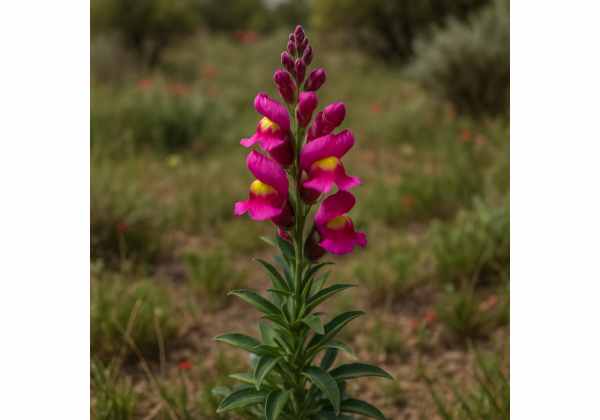
Snapdragon, or Antirrhinum majus, is a well-known ornamental flower, but it also has a quieter reputation as an edible blossom and a source of plant compounds with potential health value. Its petals and aerial parts contain anthocyanins, carotenoids, flavonoids, phenolic acids, and other phytochemicals that help explain why researchers have studied it for antioxidant, anti-inflammatory, and antimicrobial effects. In laboratory settings, snapdragon extracts have shown promising activity, especially in models related to inflammation, microbial growth, and cellular stress.
That promise, however, should be read with care. Snapdragon is not a mainstream medicinal herb with established clinical dosing or strong human trial data. Its most realistic modern uses are culinary, exploratory, and formulation-based rather than evidence-backed self-treatment. This makes it a good example of a plant that deserves interest without exaggeration. A helpful article on snapdragon should do two things at once: explain why the plant is chemically and nutritionally interesting, and clarify where the limits of the evidence still matter. That balanced approach is the best way to understand its benefits, uses, dosage questions, and safety profile.
Quick Overview
- Snapdragon flowers provide antioxidant pigments and phenolic compounds that make them chemically interesting as edible flowers.
- Extracts have shown anti-inflammatory and antimicrobial activity in laboratory studies.
- No validated medicinal oral dosage range in mg or g has been established for routine human use.
- Use only food-grade, untreated flowers if consumed as garnish or food.
- Avoid medicinal self-use during pregnancy, breastfeeding, childhood, or when the plant source is uncertain.
Table of Contents
- What snapdragon is and where its health interest comes from
- Key ingredients and what they may do
- Medicinal properties and potential health benefits
- Common uses, edible flower context, and practical forms
- Snapdragon dosage and why no standard medicinal range exists
- Safety, side effects, and who should avoid it
- How to think about snapdragon realistically
What snapdragon is and where its health interest comes from
Snapdragon is a flowering plant native to the Mediterranean region and widely grown around the world for its striking vertical blooms. Many people know it from garden borders and cut-flower displays, where its bright petals in red, yellow, orange, pink, white, and purple give it strong ornamental appeal. The unusual flower shape, which resembles a tiny opening mouth when pressed, explains the common name. In most households and landscapes, snapdragon is appreciated for beauty first.
Its health interest comes from two overlapping roles. First, it belongs to the growing category of edible flowers, a group of blossoms used in salads, desserts, teas, garnishes, and decorative culinary presentations. Second, it has attracted scientific attention because its flowers and aerial parts contain a broad range of plant compounds associated with antioxidant activity, pigment formation, and plant defense. Once researchers began profiling edible flowers more closely, snapdragon emerged as more than a decorative species. It became a plant worth examining for nutritional chemistry and possible bioactivity.
That does not mean it is a proven medicinal herb. In fact, one of the most important things to understand about snapdragon is that the evidence is mostly preclinical. Much of the literature focuses on chemical composition, antioxidant content, antimicrobial testing, macrophage inflammation models, or cell-line experiments. Those are useful starting points, but they are not the same as human clinical proof. A plant may perform well in a laboratory setting and still fail to become a practical remedy.
Another reason snapdragon draws interest is its color chemistry. Few ornamental flowers have contributed as much to the scientific understanding of pigmentation as Antirrhinum majus. It has been an important model plant in flower-color genetics, especially for anthocyanin and aurone pathways. That matters because the same pigments that create striking color often contribute to antioxidant potential and other biologically active properties.
In practical terms, snapdragon sits between three worlds:
- ornamental horticulture
- edible-flower cuisine
- exploratory phytochemical research
That combination makes it easy to overstate. Some sources present snapdragon as though it were already a validated therapeutic flower, while others dismiss it entirely because it is “just ornamental.” The truth is more interesting than either extreme. Snapdragon is a chemically rich, edible-in-context flower with measurable biological promise, but it is not yet a standard medicinal herb with established use patterns.
Readers who compare flower-based botanicals may find it helpful to contrast snapdragon with marigold and other pigment-rich medicinal flowers. The overlap in color and phytochemical interest is real, but snapdragon still has a thinner practical herbal tradition. That difference shapes everything that follows: the kinds of benefits that are plausible, the limits of dosage advice, and the safety questions that matter most.
Key ingredients and what they may do
The most useful way to understand snapdragon is through its key ingredients. Its flower color and biological activity are tied to several classes of compounds rather than to a single “active” substance. This layered chemistry helps explain why researchers keep returning to the plant.
The major groups of compounds discussed in snapdragon research include:
- anthocyanins
- carotenoids
- flavonoids
- phenolic acids
- chalcones and aurone-related pigments
- volatile compounds and aromatic fractions
Anthocyanins are among the best-known compounds in snapdragon flowers, especially in darker or more vividly colored varieties. These pigments help create purple, red, and pink tones and are often linked to antioxidant activity. They are part of the wider flavonoid family and are frequently studied because of their role in oxidative stress defense.
Carotenoids are especially important in yellow and orange flowers. In snapdragon, compounds such as lutein, zeaxanthin, and beta-carotene have been identified. These pigments are valuable not only for color but also because carotenoids are associated with antioxidant support and, in dietary contexts, visual and cellular health. They help place snapdragon within the wider world of edible flowers that are valued for natural colorants and nutrient-like compounds.
Flavonoids and phenolic acids are perhaps the most important general bioactive groups when talking about potential medicinal properties. They contribute to antioxidant behavior, may modulate inflammatory signaling, and can shape how plant extracts interact with microbes in laboratory tests. Snapdragon studies have also identified compounds such as chlorogenic acid and glucuronidated flavonoids, especially in aerial parts and flower extracts.
Chalcones and aurones deserve special mention because they are part of what makes snapdragon chemically distinctive. These pigments are heavily involved in flower coloration and are also relevant to antimicrobial and plant-defense research. They are not as familiar to the general public as anthocyanins, but in snapdragon they are part of the reason the plant is chemically interesting rather than merely decorative.
Volatile compounds add another layer. Recent work on hydrosols and essential oil chemistry suggests that snapdragon also carries characteristic volatile signatures, including ketones and apocarotenoid-related fractions. These are more relevant to aroma, extract behavior, and food or formulation science than to routine supplement use, but they expand the plant’s profile.
A practical way to think about these ingredients is this:
- Pigments provide color and antioxidant potential.
- Phenolics and flavonoids support the plant’s anti-inflammatory and antimicrobial plausibility.
- Volatiles affect aroma, extract character, and some topical or preservative research angles.
This rich chemistry makes snapdragon comparable, at least in concept, to other antioxidant-focused botanicals such as green tea with its polyphenol-centered health profile. The difference is that green tea has extensive human research, while snapdragon does not. So while the chemistry is impressive, it does not automatically translate into a supplement that people should take casually.
That distinction matters. When a plant contains anthocyanins, carotenoids, and phenolics, it is tempting to assume the benefits are already known. In reality, those compounds tell us why the plant deserves research, not why it has earned a standard medicinal place. Snapdragon’s key ingredients support interest, but they do not remove the need for caution.
Medicinal properties and potential health benefits
Snapdragon is most accurately described as a plant with potential medicinal properties rather than as a proven therapeutic herb. The distinction matters because nearly all of its promising effects come from laboratory or preclinical work, not from large, reliable human trials.
The strongest potential properties suggested by current research are these:
- antioxidant activity
- anti-inflammatory activity
- antimicrobial activity
- possible cell-protective or antiproliferative effects in experimental systems
Antioxidant potential is the easiest claim to support. Snapdragon flowers contain phenolic compounds, flavonoids, anthocyanins, and carotenoids that help explain their ability to neutralize free radicals in test systems. In edible-flower studies, snapdragon has repeatedly been described as a source of bioactive compounds with meaningful antioxidant capacity. This does not prove disease prevention in humans, but it does support the idea that snapdragon belongs to the nutritionally interesting end of ornamental flowers.
Anti-inflammatory potential also has encouraging support, though again it is preclinical. In a macrophage model stimulated with lipopolysaccharide, snapdragon extract reduced nitric oxide production and suppressed markers such as iNOS, COX-2, TNF-alpha, IL-1 beta, and IL-6. That is a meaningful signal, because it suggests that the plant’s extract can influence inflammatory pathways. Still, this is not the same thing as showing symptom relief in people with arthritis, skin inflammation, or chronic inflammatory disease.
Antimicrobial activity is another area where snapdragon shows promise. Fresh flower and leaf extracts have demonstrated antibacterial and antifungal activity in vitro, and some identified compounds appear to interact with microbial targets in docking studies. More recent work on edible-flower hydrosols also suggests that snapdragon-derived aromatic water may show antibacterial behavior under experimental conditions. This is particularly interesting for food preservation, extract formulation, and possibly topical applications. It is not yet enough to justify using snapdragon as a home treatment for infection.
A fourth area that often draws attention is cell-line anticancer research. Snapdragon flower extract has shown growth-inhibiting and anti-metastatic effects in cultured colon and lung cancer cells. This is noteworthy scientifically, but it should be interpreted with great restraint. Cell-line findings are early-stage signals, not evidence that eating the flower or taking an extract prevents or treats cancer in people.
So what are the most realistic health benefits a reader can take from this?
- It may contribute antioxidant compounds when used as an edible flower.
- It may become more relevant in future topical, food, or extract research.
- It is scientifically promising, but clinically underdeveloped.
That last point is the key one. Snapdragon is not a nootropic, not a validated anti-inflammatory supplement, not an antimicrobial replacement, and not a cancer therapy. Its benefits are best framed as research-supported possibilities rather than established outcomes.
For people looking specifically for a flower herb with clearer topical soothing traditions, calendula offers a much better-established practical comparison. Snapdragon is still earlier in its medicinal journey. Its health promise is real enough to respect, but not mature enough to overpromise.
Common uses, edible flower context, and practical forms
In modern practice, snapdragon is used far more often as an edible or ornamental flower than as a standardized medicinal herb. That fact alone should shape how people think about it. The most common real-world uses are visual, culinary, and experimental.
Culinary and edible-flower use
Snapdragon flowers are sometimes used fresh in:
- salads
- plated desserts
- cakes and pastries
- herb and flower ice cubes
- garnish-focused savory dishes
- floral teas or infusions in mixed blends
Their value in food is partly visual and partly functional. The pigments and phenolic compounds that make snapdragon interesting to researchers also make it attractive as a decorative edible flower. Still, edible does not mean medicinal, and it does not mean all snapdragon flowers are safe to eat. Florist or nursery plants may be treated with pesticides, fungicides, growth regulators, or other chemicals not intended for food use.
If a person wants to use snapdragon as food, the most important practical rules are simple:
- Use only flowers specifically grown for edible use.
- Avoid flowers from garden centers unless food-safe cultivation is confirmed.
- Wash gently and inspect for spoilage or insect damage.
- Use modest amounts as garnish rather than as a bulk ingredient.
Experimental and formulation use
Snapdragon also appears in research involving extracts, hydrosols, and topical formulations. This is where its antimicrobial and anti-inflammatory potential becomes more interesting. In the future, it may have a role in cosmetic science, mild topical products, or food-related preservation systems. That said, these are still development-stage uses rather than standard consumer practices.
Traditional and folk medicine context
There are scattered references to snapdragon in traditional use, including decoctions, astringent applications, and anti-inflammatory or stimulant descriptions in some regional sources. But compared with major medicinal herbs, its traditional profile is shallow and uneven. It is not one of the first flowers herbalists reach for when there are more established options.
What it is not commonly used for
It is not commonly used as:
- a routine daily supplement
- a clinically established tea herb
- a standard tincture herb
- a proven topical acne or wound-care mainstay
- a validated internal anti-inflammatory remedy
That boundary matters because attractive flowers are easy to romanticize. Snapdragon may look like a gentle “kitchen herb,” but its most practical modern use is still modest. It belongs more to the edible-flower and formulation world than to the core of evidence-based herbal medicine.
When readers compare it with more targeted topical botanicals such as tea tree for focused antimicrobial skin support, the difference becomes clear. Tea tree is used with a defined purpose and caution profile. Snapdragon, by contrast, remains a plant of possibility more than one of standard application.
So the best summary of its uses is this: snapdragon is mainly a food-safe ornamental flower when sourced correctly, a subject of growing phytochemical and antimicrobial research, and only secondarily a candidate for future medicinal development.
Snapdragon dosage and why no standard medicinal range exists
This is the point where many herbal articles become misleading. They move from promising chemistry to confident dosing as though the missing evidence does not matter. With snapdragon, it matters a great deal.
The most accurate statement is this: there is no validated medicinal oral dosage range for snapdragon in routine human use.
That means there is no evidence-based daily amount in mg or g that can responsibly be recommended for taking snapdragon as a therapeutic herb. There are several reasons for that.
First, the main studies on snapdragon do not establish human clinical dosing. They involve laboratory extracts, hydrosols, cultured cells, macrophage models, antimicrobial assays, or exploratory formulation work. These are useful research tools, but they do not tell a consumer how much of the plant to take safely or effectively.
Second, the form of the plant changes the chemistry. Fresh petals, dried flowers, ethanolic aerial-part extract, hydrosol, and concentrated flower extract can all behave differently. In one antimicrobial study, fresh cold-macerated flower material retained higher phenolic content than harsher processing methods. That kind of result is interesting scientifically, but it makes consumer dosing less clear, not more.
Third, snapdragon is still used more as an edible flower than as an herb. Food-level use and medicinal dosing are not the same thing. A few petals in a salad or garnish do not automatically translate into a therapeutic intake. In fact, one of the clearest lessons from edible-flower literature is that there are often no recommended daily amounts for these plants as foods, much less as medicines.
So what can be said practically?
For culinary use
- Use small garnish-level amounts.
- Treat it as a decorative edible, not a bulk vegetable or tea staple.
- Avoid repeated large servings without a good reason.
For medicinal use
- Do not assume that a tea, tincture, capsule, or homemade extract has an established dose.
- Do not convert laboratory concentrations into home doses.
- Do not infer dosing from other colorful flowers or edible blossoms.
For topical or experimental use
Topical formulations are a separate question, but even there, snapdragon does not have the same clear practical range that better-known herbs do. A formulation study is not the same as a widely accepted dosing guideline.
This is one area where comparison helps. A classic infusion herb such as chamomile has far clearer traditional preparation and dosing logic. Snapdragon does not yet have that level of agreement or experience behind it.
The lack of dosage guidance should not be read as a small technical gap. It is one of the main reasons snapdragon remains a secondary medicinal candidate. If the form, amount, intended outcome, and safety margin are all still unclear, then responsible advice has to remain cautious. For most readers, that means keeping snapdragon in the category of food-grade decorative flower or research-interest plant rather than trying to turn it into a routine medicinal herb.
Safety, side effects, and who should avoid it
Snapdragon is often described as an edible flower, but safety still needs careful handling. A flower can be edible in principle and still unsuitable in practice because of contamination, allergies, poor identification, or excessive use.
The first safety issue is source quality. This is the biggest practical concern. Most snapdragons sold for gardens or bouquets are grown as ornamentals, not as food. That means they may carry pesticide residues, fungicides, or other chemicals that make them inappropriate for eating. Any discussion of snapdragon safety that ignores this point is incomplete.
The second issue is individual tolerance. Even food-safe flowers can trigger problems in susceptible people. The most plausible reactions include:
- mild digestive upset
- nausea if consumed in large or unusual amounts
- oral irritation in sensitive individuals
- pollen-related or contact-type allergic reactions
Because edible flowers are often eaten fresh, microbiological safety also matters. Reviews of edible flowers note that these products can be contaminated by bacteria, molds, or environmental residues if they are handled poorly. This is one reason professional edible-flower use emphasizes careful cultivation, washing, refrigeration, and hygienic packaging.
Who should avoid snapdragon self-use
The following groups should be especially cautious or avoid medicinal experimentation:
- pregnant people
- breastfeeding people
- young children
- people with pollen or flower allergies
- people on multiple medications who are considering concentrated extracts
- anyone using flowers from unknown garden, florist, or roadside sources
There is also a common but subtle risk: assuming food safety equals supplement safety. Eating a few untreated petals as garnish is not the same as making a concentrated extract, blending the plant into a tea, or using large repeated amounts. Concentration changes risk, and for snapdragon there is not enough routine human data to map that risk clearly.
Topical use deserves similar caution. A flower extract that looks gentle on paper can still irritate the skin, especially if the formula includes alcohol, fragrance, or concentrated aromatic fractions. Patch testing makes sense with any experimental topical product.
A few sensible rules go a long way:
- Choose only food-grade flowers from reliable edible-flower suppliers.
- Start with small culinary exposure if trying the flower for the first time.
- Avoid concentrated home extracts unless there is a clear professional reason.
- Stop use if you notice itching, swelling, digestive upset, or rash.
Snapdragon does not currently appear to be among the most notorious risky flowers, but that is not the same as having a well-mapped safety profile. The main evidence supports cautious culinary use, not casual medicinal self-treatment. In that sense, the biggest safety lesson is simple: snapdragon is safer as a carefully sourced edible garnish than as an improvised remedy.
How to think about snapdragon realistically
Snapdragon is a plant that rewards balanced thinking. It has enough real science behind it to deserve attention, but not enough human evidence to justify confident medicinal claims. That middle position is exactly what makes it interesting.
What the evidence supports best is this:
- snapdragon flowers and aerial parts contain meaningful bioactive compounds
- those compounds help explain antioxidant, anti-inflammatory, and antimicrobial signals in laboratory studies
- the plant has a legitimate place among edible flowers with functional-food interest
- medicinal use remains exploratory rather than established
That means snapdragon should not be dismissed as “just ornamental.” Its chemistry is substantial, and the research is more serious than many readers might expect. At the same time, it should not be promoted as though it were already a validated therapeutic flower. The current evidence does not support that.
A realistic consumer summary looks like this:
Best-supported role:
A decorative edible flower with useful phytochemical richness and research interest.
Possible future role:
A source for topical, food-preservation, cosmetic, or nutraceutical ingredients if more development work confirms efficacy and safety.
Poorly supported role today:
A standard medicinal herb with known clinical dosing and predictable treatment outcomes.
That distinction can help people make better decisions. If the goal is culinary color, novelty, and modest intake of plant pigments, snapdragon can be a thoughtful choice when sourced correctly. If the goal is treatment of inflammation, infection, acne, chronic disease, or major oxidative stress-related concerns, more established herbs and medical options make more sense.
It is also worth remembering that some plants are valuable precisely because they remain at the intersection of food, beauty, and research. Snapdragon is one of them. Its flower color, edible use, and phytochemical profile make it relevant in ways that go beyond the usual “take this herb for that symptom” framework.
The most useful takeaway is not a dramatic one. Snapdragon is promising, colorful, and chemically rich, but still early in its medicinal journey. Treat it as a carefully sourced edible flower and an intriguing research plant, not as a proven self-care remedy. That is the position most likely to stay accurate as the science evolves.
References
- A Comprehensive Review of Edible Flowers with a Focus on Microbiological, Nutritional, and Potential Health Aspects 2025 (Review)
- Exploring the Volatile Composition and Antibacterial Activity of Edible Flower Hydrosols with Insights into Their Spontaneous Emissions and Essential Oil Chemistry 2024 (Research Article)
- Antimicrobial activity and molecular docking screening of bioactive components of Antirrhinum majus (snapdragon) aerial parts 2022 (Research Article)
- Anti‐inflammatory effect of Antirrhinum majus extract in lipopolysaccharide‐stimulated RAW 264.7 macrophages 2020 (Preclinical Study)
- Chemical composition of the edible flowers, pansy (Viola wittrockiana) and snapdragon (Antirrhinum majus) as new sources of bioactive compounds 2018 (Research Article)
Disclaimer
This article is for educational purposes only and is not medical advice, diagnosis, or treatment. Snapdragon is not an established medicinal herb with a validated oral dose for routine human use. If you are pregnant, breastfeeding, managing a medical condition, taking prescription medicines, or considering concentrated plant extracts, speak with a qualified healthcare professional before use. Only consume snapdragon flowers that were specifically grown and handled as edible flowers, not ornamental florist or nursery stock.
If you found this article useful, please share it on Facebook, X, or another platform you prefer to help more readers find careful, evidence-aware plant guidance.