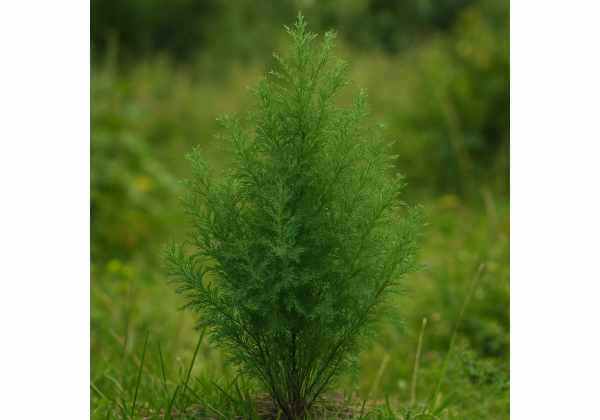
Southernwood, or Artemisia abrotanum, is an old European and West Asian medicinal herb with a character that is hard to confuse. It is strongly aromatic, lightly bitter, and traditionally valued for far more than fragrance alone. Over the centuries, it has been used in herbal medicine for digestive sluggishness, biliary complaints, respiratory discomfort, external applications, and parasite-related folk uses, while also serving as a garden herb, insect repellent, and bath plant. Modern research helps explain part of that reputation. Southernwood contains volatile compounds such as 1,8-cineole, camphor, and davanone, along with phenolic acids, flavonoids, and coumarins that may contribute to antioxidant, anti-inflammatory, antimicrobial, and antiallergic effects. At the same time, this is not a herb with strong modern oral clinical evidence. Its best-supported profile is traditional use plus preclinical activity, with one small human proof-of-concept nasal spray study adding interest but not broad confirmation. The most helpful way to approach southernwood is as a potent traditional aromatic herb that deserves both respect and restraint.
Quick Facts
- Southernwood’s most realistic benefits are digestive stimulation, aromatic respiratory support, and mild topical or external traditional use.
- Its best-known compounds include 1,8-cineole, camphor, davanone, chlorogenic acid, rosmarinic acid, and flavonoids such as quercetin and luteolin.
- A cautious infusion often starts at about 0.5 to 1 g dried aerial parts per 150 to 250 mL hot water.
- Avoid oral essential oil use and avoid medicinal use during pregnancy, breastfeeding, seizure disorders, or in young children.
Table of Contents
- What southernwood is and how it differs from other Artemisia herbs
- Key ingredients and medicinal properties of southernwood
- Potential health benefits and what the evidence actually shows
- Traditional uses and modern applications
- How to use southernwood in tea, external care, and aromatic preparations
- Dosage, timing, and duration
- Safety, side effects, interactions, and who should avoid it
What southernwood is and how it differs from other Artemisia herbs
Southernwood is a perennial aromatic shrub in the daisy family, Asteraceae, and part of the large Artemisia genus. It is sometimes called southern wormwood, lad’s love, or old man, but those names do not fully capture its personality. The plant has finely divided grey-green leaves, a warm lemony-camphoraceous scent, and a lightly bitter taste that places it somewhere between a fragrant garden herb and a classic medicinal bitter. Unlike culinary herbs used mainly for flavor, southernwood carries a strong historical identity as a functional medicinal plant.
That identity matters because the Artemisia genus can be confusing. Different species are often grouped together by non-specialists even though they are not interchangeable. Some are used mainly as bitters, some as aromatic respiratory herbs, and some have become famous for entirely different reasons. Southernwood shares a family resemblance with plants such as mugwort, but its traditional role leans more strongly toward aromatic digestive support, folk parasite use, external applications, and fragrance-rich household use.
Historically, southernwood occupied a real place in European, Middle Eastern, and Asian herbal medicine. Classical and medieval sources describe it for breathing difficulty, liver and biliary complaints, poor appetite, fever, intestinal parasites, women’s complaints, skin care, and external pain applications. In some regions it also became a “church herb” and household protective plant, carried in bouquets or grown near homes. That does not prove modern clinical efficacy, but it does show the plant was not obscure or incidental. It was important enough to stay in herbal memory for centuries.
Southernwood also differs from many modern wellness herbs because its appeal is not only internal. It has long been used in baths, compresses, aromatic bunches, hair and scalp preparations, and insect-repelling settings. In other words, its value comes from being an aromatic whole herb rather than merely a source of one isolated molecule. That broader use pattern helps explain why modern research on southernwood often focuses on essential oil composition, volatile variability, and phenolic content rather than on one single standardized extract.
This background leads to an important practical point. Southernwood is not best understood as a gentle daily tea for everyone, nor as a trendy capsule for vague “detox.” It is better understood as a potent, old-style aromatic herb whose benefits depend heavily on the form used, the reason for using it, and the degree of caution applied. Once that is clear, its benefits and limits become much easier to judge honestly.
Key ingredients and medicinal properties of southernwood
Southernwood’s medicinal profile comes from a layered chemistry rather than a single dominant active. The first layer is its essential oil. Depending on geography, growing conditions, and plant chemotype, important volatile compounds may include 1,8-cineole, camphor, borneol, davanone, linalool, and related terpenes. This variability is not a small detail. It helps explain why southernwood products do not all smell the same, act the same, or carry the same safety profile. A fragrant garden plant from one region may be chemically quite different from a distilled oil or extract produced somewhere else.
The second layer is its phenolic and flavonoid content. Reviews and newer phytochemical studies report chlorogenic acid, rosmarinic acid, caffeic acid, isochlorogenic acid, and other phenolic acids, along with flavonoids such as quercetin, quercitrin, luteolin, apigenin, kaempferol, myricetin, and rutin. These compounds help explain why southernwood repeatedly shows antioxidant and inflammation-related activity in laboratory settings. If you want context for one of the plant’s most discussed phenolics, rosmarinic acid is a useful reference point because it appears in many aromatic herbs associated with calm, defense, and tissue protection.
A third layer includes coumarins and related secondary metabolites such as scopoletin, umbelliferone, esculetin, herniarin, and isofraxidine. These compounds add to the herb’s chemical depth and may contribute to some of its traditional topical, digestive, or repellent roles. Southernwood has also been reported to contain other constituents such as tannins, sterols, organic acids, and small amounts of thujone in some preparations, though essential oil composition varies enough that no single volatile profile should be treated as universal.
When people describe southernwood’s medicinal properties, they usually mean some combination of these effects:
- aromatic and mildly bitter digestive stimulation,
- antioxidant support,
- antimicrobial and antifungal potential,
- anti-inflammatory activity,
- antiallergic interest,
- and repellent or external aromatic value.
The wording matters. “Potential” and “interest” are often more accurate than “proven treatment.” In preclinical research, southernwood extracts and oils show enough activity to justify further study. Ethanol extracts have shown antioxidant and anti-inflammatory signals. Some extracts have inhibited bacterial and fungal growth in vitro. Polyphenol-rich fractions have shown enzyme-inhibitory activity relevant to post-meal carbohydrate handling. A nasal spray preparation based on southernwood extract also showed proof-of-concept benefit in allergic rhinitis. Still, this does not mean ordinary tea, tincture, oil, and topical uses are all equally supported or interchangeable.
That is why the herb should be understood as chemically rich but clinically uneven. Its traditional reputation is broad. Its modern oral clinical evidence is not. The chemistry gives southernwood credibility. The limited human data remind us not to overstate it.
Potential health benefits and what the evidence actually shows
Southernwood is one of those herbs that can sound far more certain online than it really is in the literature. The most reliable way to discuss its benefits is to separate traditional fit, laboratory evidence, and human evidence. Once those categories are kept apart, the herb becomes much easier to understand.
The best traditional fit is digestive support. Southernwood has long been used as a bitter-aromatic herb in settings involving poor appetite, sluggish digestion, flatulence, low digestive tone, and biliary stagnation. In practical herbal terms, that means it belongs to the family of strong aromatic bitters that are most useful when the system feels cold, slow, heavy, or underactive rather than irritated, burning, or overly reactive. In that sense it shares logic with wormwood, though southernwood has its own aroma, chemistry, and safety nuances.
A second plausible benefit is antimicrobial and antifungal support, especially in topical or external contexts. Reviews of southernwood research summarize in vitro activity against organisms such as Staphylococcus aureus, Escherichia coli, and Candida albicans. This is interesting, particularly because the herb has also been used externally and aromatically in household and skin-related traditions. Still, laboratory inhibition is not the same as proving that a home tea or tincture safely treats infection in people. It supports scientific interest, not self-treatment of serious illness.
A third area is antioxidant and anti-inflammatory activity. Recent animal and in vitro work suggests that southernwood ethanol extracts can reduce inflammatory signaling and show meaningful antioxidant behavior. Polyphenol-rich extracts have also shown enzyme-inhibitory activity relevant to alpha-amylase and alpha-glucosidase. That makes southernwood interesting in metabolic and inflammatory research, but it still does not justify promising blood sugar control or anti-inflammatory therapy from ordinary home use.
The most intriguing human signal is not an oral trial at all. It comes from a small proof-of-concept nasal spray study in allergic rhinitis. In that study, a southernwood-based preparation containing essential oils and flavonols produced rapid symptom relief in patients with allergic rhinitis and related upper-airway complaints. That is worth noting because it shows southernwood has moved beyond pure folklore. At the same time, it was a small, formulation-specific study, not broad proof that every southernwood product helps allergies.
So what benefits are reasonable to state clearly?
- It may stimulate appetite and support sluggish digestion in traditional bitter-herb contexts.
- It shows antioxidant, anti-inflammatory, and antimicrobial potential in preclinical studies.
- It has limited but interesting human evidence in a nasal spray preparation for allergic rhinitis.
- It does not yet have strong modern evidence as a standardized oral treatment for chronic disease.
That balance is the key. Southernwood looks useful, especially as an aromatic traditional herb, but its strongest claims should remain modest. Its history is broad. Its evidence is selective. Used that way, it stays credible.
Traditional uses and modern applications
Traditional use is where southernwood becomes most vivid. This was not merely a bitter herb taken in one narrow way. It moved across households, gardens, bath routines, aromatic bunches, and medicine chests. Older European traditions describe southernwood for liver and bile complaints, appetite loss, respiratory weakness, fever, internal parasites, women’s concerns, and childhood conditions. It was also used externally in baths, compresses, scalp and hair preparations, and sometimes in skin-related settings.
That breadth can be misleading if read too literally. A plant used historically for many complaints was not necessarily proven for all of them. In premodern medicine, strong aromatic herbs were often applied wherever people saw stagnation, chill, heaviness, poor circulation, parasites, or dampness. Southernwood fit that worldview well because it smelled warming, tasted bitter, and seemed active. It was used where a gentle culinary herb such as fennel might not have felt strong enough.
Traditional uses also differed by region. In European contexts, southernwood often appears in discussions of bile flow, digestive weakness, and parasite-related folk care. In older writings it also appears for ulcers, hair growth, skin complaints, and painful conditions treated with oils or external applications. Some traditions describe it as an emmenagogue-style herb, which helps explain why modern pregnancy caution is sensible even in the absence of extensive direct toxicity data. More recent ethnobotanical scholarship also shows that southernwood persisted as a heritage plant in places like Sweden, even after many of its medical uses faded from everyday practice.
Modern applications work best when they stay anchored to this history without pretending the herb has been fully transformed into evidence-based mainstream phytotherapy. The most defensible present-day uses are:
- as a bitter-aromatic digestive herb in carefully chosen, modest preparations,
- as a traditional external herb in washes, baths, or aromatic household uses,
- as a fragrance-rich garden plant,
- and as a research-interest botanical for inflammation, allergy, and topical microbiology.
Where people go wrong is assuming that every traditional use should be revived exactly as written. Southernwood is not a modern go-to internal herb for children’s parasites, and it is not a safe casual essential oil for oral use. Traditional records deserve respect, but they do not remove the need for modern caution.
Its modern niche is therefore narrower than its old one. Southernwood is best seen as a strong traditional aromatic herb with selective research support, not as a broad-spectrum self-treatment tool. The wisest application is often the simplest: use it where its bitterness, aroma, or external traditional role clearly fit, and stop where evidence or safety becomes thin.
How to use southernwood in tea, external care, and aromatic preparations
Using southernwood well starts with choosing the right form. The herb has traditionally been used as infusion, tincture, bath herb, aromatic bunch, external wash, and more specialized preparation. These forms are not equivalent. A mild tea is not the same as an essential oil, and an external bath is not the same as an oral extract.
For internal use, tea is the most practical and conservative starting point. A mild infusion from the dried aerial parts is often the easiest way to explore whether southernwood’s bitter-aromatic quality suits you. Tea makes sense when the goal is gentle appetite support, mild post-meal heaviness, or old-style bitter-herb use rather than aggressive therapeutic dosing. The taste also acts as a useful guide. Southernwood is a herb you generally should notice. If the flavor feels overwhelmingly sharp, the dose is probably not the right one.
Tinctures are more concentrated and variable. They may make sense for experienced herbal users, but they also remove some of the natural moderation that comes from sipping a bitter infusion slowly. Since southernwood lacks a strong modern oral clinical dosing tradition, tinctures should be approached carefully and not treated as automatically more effective than tea.
External use has a better traditional fit than many people realize. Southernwood has been used in strengthening or soothing baths, in compress-style applications, and in fragrant external blends for scalp, skin, or household purposes. This is one area where the herb’s aroma can be an asset without forcing heavy internal exposure. Aromatic steam or external herbal bathing may also suit people who appreciate old household herb traditions more than supplement culture.
A practical home-use structure looks like this:
- Start with a weak infusion rather than a concentrated product.
- Use it around meals only if the goal is digestive stimulation.
- Consider external or aromatic use if internal bitterness feels too strong.
- Avoid improvising with essential oil by mouth.
Southernwood also combines more naturally with comfort-oriented digestive herbs than with other harsh bitters. For example, someone using a small amount of southernwood tea may soften the overall experience with a gentler companion such as peppermint. The principle is simple: southernwood provides activation, while the companion herb may provide ease.
What should be avoided? Homemade oral essential-oil use is the clearest no. Highly concentrated oil preparations are harder to standardize, harder to dose safely, and more likely to expose the user to volatile compounds in ways traditional teas did not. Likewise, multi-herb “parasite” mixtures built around aggressive marketing are a poor fit for a herb whose best-supported value remains traditional and moderate. With southernwood, the smart approach is not intensity. It is precision.
Dosage, timing, and duration
There is no universally accepted modern oral dosage for southernwood backed by strong clinical trials. That fact should shape every discussion of dosing. The herb has a substantial historical record, but modern validated oral protocols are limited. For that reason, dosage needs to be framed as cautious traditional practice rather than established evidence-based prescription.
A sensible adult starting point for infusion is about 0.5 to 1 g dried aerial parts per 150 to 250 mL hot water, steeped briefly and taken as one cup once daily at first. Some experienced herbal users may go higher, but that is not the place to start. Southernwood is strong enough in aroma and bitterness that beginning low is more informative than beginning boldly. If the herb is well tolerated and clearly useful, some people may increase to one cup up to twice daily, usually for a short period.
Timing depends on the goal. For appetite and digestive stimulation, the traditional logic is to use the herb shortly before a meal or at the very start of one. That is how bitters tend to make the most sense: they cue digestive readiness rather than act as after-the-fact antacids. If the herb feels sharp on an empty stomach, using it just before or with food may be more comfortable.
For external use, dosage is less about milligrams and more about strength and tolerance. Baths, washes, or compresses are generally better kept mild, especially for first use or sensitive skin. The point is aromatic and topical exposure, not maximal extraction.
A few practical dosing principles help keep southernwood in the useful zone:
- keep the infusion light rather than dark and harsh,
- avoid combining it with several other strong bitters at the start,
- do not treat tinctures and teas as equivalent,
- and avoid continuous long-term use without a clear reason.
Duration matters just as much as amount. Southernwood is better suited to short, purposeful use than to indefinite daily supplementation. A period of several days to two weeks is often a more reasonable self-directed trial than months of uninterrupted use. If no meaningful benefit appears in that window, increasing the dose is not always the answer. Often it is a sign that the herb is simply not the right fit.
This is especially important because southernwood is a traditional aromatic bitter, not a modern nutrient. It is meant to be felt, evaluated, and either continued briefly or set aside. That makes it different from a mild culinary tea. Its strongest role lies in selected situations, not habitual high-frequency use. The most responsible dosing mindset is therefore simple: start low, match timing to the goal, and let the herb prove itself instead of assuming that more will work better.
Safety, side effects, interactions, and who should avoid it
Southernwood’s safety profile is best when the herb stays close to traditional moderate forms and away from concentrated oil use. The main safety issue is not that the plant is uniquely dangerous in all forms. It is that its chemistry is strong, its essential oil varies by chemotype, and its oral human evidence base is much thinner than its historical reputation.
The biggest caution is oral essential oil use. Southernwood essential oil can contain potent volatile compounds, and while some preparations have shown very low or absent thujone, that cannot be assumed across all products. Essential oil composition changes with origin, extraction method, and plant material. This is one reason a formulation-specific nasal spray study cannot be used to justify casual oral use of oil at home. Tea and oil are different substances in practice, not just in concentration.
Who should avoid medicinal use unless advised otherwise?
- pregnant or breastfeeding women,
- young children,
- people with seizure disorders or a history of neurological sensitivity,
- anyone with allergy to Asteraceae plants,
- and people using multiple medicines, especially drugs affecting the nervous system, bile flow, or metabolic control.
Pregnancy caution deserves special emphasis. Southernwood has a traditional association with stimulating menstruation, and that alone is enough reason to avoid concentrated use in pregnancy. The absence of strong modern reproductive safety data makes caution more, not less, appropriate.
Possible side effects in moderate oral use may include stomach irritation, nausea, headache, reflux-like discomfort, dizziness, or simply feeling that the herb is too sharp or warming. On the skin, some people may experience irritation or rash. If any clear intolerance appears, stop. With aromatic herbs, “not a good fit” is often obvious fairly quickly.
Drug interactions have not been mapped well enough to speak with certainty, which means prudence matters more than overconfident reassurance. Since southernwood has bitter, aromatic, and enzyme-active potential, people using glucose-lowering medicines, sedating agents, or complex gastrointestinal regimens should be especially careful with concentrated extracts. The lack of definitive interaction data is not proof of safety. It is a reason to stay conservative.
A few habits reduce risk substantially:
- Use the dried herb, not the essential oil, for first internal trials.
- Keep doses low and duration short.
- Do not combine southernwood with several other strong bitter herbs immediately.
- Avoid using it as a substitute for medical evaluation in persistent digestive, allergy, skin, or respiratory problems.
The bottom line is balanced. Southernwood can be used thoughtfully and may offer real value in the right context, but it is not a casual herb for everyone. Its safety improves when form, dose, and purpose stay modest.
References
- Artemisia abrotanum L. (Southern Wormwood)—History, Current Knowledge on the Chemistry, Biological Activity, Traditional Use and Possible New Pharmaceutical and Cosmetological Applications. 2021. (Review)
- Artemisia Species with High Biological Values as a Potential Source of Medicinal and Cosmetic Raw Materials. 2022. (Review)
- Artemisia abrotanum and Symphytum officinale Polyphenolic Compounds-Rich Extracts with Potential Application in Diabetes Management. 2023. (Preclinical Study)
- Phytochemical Composition Antioxidant and Anti-Inflammatory Activity of Artemisia dracunculus and Artemisia abrotanum. 2024. (Preclinical Study)
- Characteristics, clinical effect profile and tolerability of a nasal spray preparation of Artemisia abrotanum L. for allergic rhinitis. 2004. (Clinical Trial)
Disclaimer
This article is for educational purposes only and is not a substitute for medical advice, diagnosis, or treatment. Southernwood is a traditional aromatic herb with promising phytochemistry but limited modern oral clinical evidence. Speak with a qualified healthcare professional before using southernwood medicinally, especially if you are pregnant, breastfeeding, have allergies or seizure risk, take prescription medicines, or are considering concentrated extracts or essential oil products.
Please share this article on Facebook, X, or another platform you prefer if you found it useful.