Speedwell, or Veronica officinalis, is a low-growing flowering herb with a long place in European folk medicine. It has been brewed as tea, used in tinctures, and applied in simple washes for complaints involving the throat, chest, digestion, skin, and mild rheumatic discomfort. Traditional herbalists often valued it as a gently bitter, mildly astringent herb that could soothe irritated tissues while also supporting fluid movement, expectoration, and recovery after minor illness.
What makes speedwell especially interesting is the gap between its rich traditional use and its more modest modern evidence. The plant contains iridoid glycosides, flavonoids, phenolic acids, tannins, and volatile compounds that help explain why it has attracted pharmacological attention. Laboratory and preclinical studies suggest anti-inflammatory, antioxidant, antimicrobial, and tissue-protective potential. Yet strong human clinical trials are still limited. That means speedwell is best understood as a thoughtful traditional herb rather than a proven modern cure. A useful guide should therefore do two things at once: explain why the plant earned its reputation, and show where careful expectations, proper identification, and sensible dosing matter most.
Fast Facts
- Speedwell is traditionally used for mild coughs, catarrh, and irritated throat or chest tissues.
- It also has a long folk record for digestive upset, skin washing, and minor inflammatory complaints.
- A common tea-style range is 1.5 to 2 g of dried herb per cup, taken 2 to 3 times daily.
- Avoid medicinal use during pregnancy, breastfeeding, or when product identity is unclear.
Table of Contents
- What speedwell is and how to identify the right species
- Key ingredients and medicinal properties
- Potential health benefits and what the evidence actually supports
- Speedwell for respiratory, digestive, and topical traditional use
- Common uses and the best forms to choose
- Dosage, timing, and how long to use it
- Safety, side effects, interactions, and who should avoid it
What speedwell is and how to identify the right species
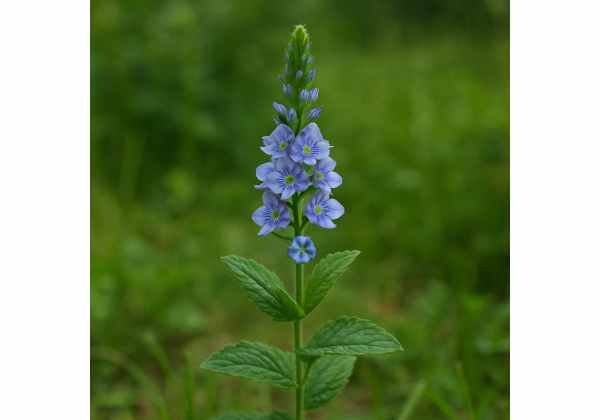
Speedwell usually refers to Veronica officinalis, a creeping perennial herb in the Plantaginaceae family. It grows across much of Europe and parts of western Asia, often in meadows, woodland edges, heaths, and dry grassy places. The plant forms low mats with softly hairy stems, opposite leaves, and small pale blue to lilac flowers gathered in slender spikes. In the herbal tradition, the aerial parts gathered during flowering are the part most often used.
That simple description matters because the genus Veronica is large. There are hundreds of species, and several are called speedwell in common speech. Some are close enough in appearance that dried commercial material can be difficult to distinguish without proper testing. This is not a trivial botanical detail. If a label says only “speedwell herb,” the buyer may not actually know whether the plant is Veronica officinalis or another related species. For anyone using the herb medicinally rather than casually, the botanical name is more important than the common name.
Historically, Veronica officinalis held a respected place in central and eastern European folk practice. It was used as tea or tincture for cough, catarrh, hoarseness, digestive discomfort, urinary complaints, sluggish recovery, and minor skin problems. In some regional traditions it was also associated with rheumatic aches, gout, and “blood-cleansing” spring tonics. These uses do not all carry equal scientific weight today, but they do help explain why the herb kept appearing in home medicine long after many other small field herbs were forgotten.
Another reason identification matters is commercial adulteration. Studies on finished products have shown that herbs sold as Veronica officinalis may contain significant amounts of Veronica chamaedrys or other related species. That affects both consistency and trust. A properly identified herb should state Veronica officinalis clearly on the label, ideally with information about the flowering aerial parts and the origin of the material.
In practical use, speedwell should be thought of as a traditional tea and tincture herb with a mild but purposeful personality. It is not an aggressively bitter digestive, a strongly aromatic expectorant, or a mucilage-rich demulcent. Its character is gentler and more mixed: somewhat bitter, somewhat astringent, and often valued as a background herb for irritated tissues and mild inflammatory states. That mixed identity helps explain both its versatility and the need to use it with realistic expectations.
Key ingredients and medicinal properties
Speedwell’s medicinal reputation comes from several classes of compounds working together. The most discussed are iridoid glycosides, especially verproside, verminoside, aucubin, and catalpol-related compounds. These are important because iridoids are widely associated with inflammation-modulating, antimicrobial, tissue-protective, and bitterness-linked digestive effects in many medicinal plants.
Verproside and verminoside are especially relevant in Veronica officinalis. Experimental work has linked them with anti-inflammatory effects in lung-cell models, and they are often treated as key marker compounds when researchers try to explain the herb’s respiratory folklore. Aucubin and catalpol, more broadly known iridoids in the genus, add to the same picture. They help position speedwell among herbs that are mildly bitter, somewhat soothing, and pharmacologically more interesting than their modest appearance suggests.
Flavonoids form the second major group. Luteolin, apigenin, quercetin, quercitrin, and related compounds have been reported in Veronica officinalis. These are commonly discussed in relation to antioxidant defense, mild anti-inflammatory effects, and vascular or tissue support. They also help explain why the herb appears in discussions of oxidative-stress-related protection even when the human data remain thin. Readers familiar with herb chemistry will recognize that this is a recurring pattern: a plant with a strong iridoid and flavonoid profile often carries overlapping digestive, respiratory, and skin-oriented uses.
Phenolic acids such as p-coumaric and ferulic acid derivatives round out the picture. These contribute antioxidant activity and may influence how the plant responds to inflammation and microbial stress. Tannins add mild astringency, which helps explain traditional uses for loose digestion, irritated mucous membranes, and skin washing. Sterols and smaller volatile fractions have also been described, though they are not the main reason the herb is valued.
This mixed chemistry helps explain speedwell’s classic medicinal properties:
- Mild anti-inflammatory potential
- Antioxidant activity
- Gentle antimicrobial action in laboratory models
- Astringent and somewhat bitter digestive effects
- Possible soothing influence on irritated respiratory tissues
One useful comparison is with chamomile as a gentler soothing herb. Chamomile leans more clearly toward calming and spasm-soothing action, while speedwell has a rougher, more mixed profile, combining bitterness, astringency, and anti-inflammatory iridoids. That does not make one better than the other. It simply means they are suited to different herbal personalities and different goals.
The best way to think about speedwell chemistry is not as a single active compound story, but as a network. Its traditional usefulness likely depends on the plant’s full combination of iridoids, flavonoids, phenolic acids, and tannins, which is why preparation method and species accuracy can change the experience so much.
Potential health benefits and what the evidence actually supports
Speedwell has a broad traditional reputation, but the modern evidence is narrower than the folklore. That does not make the herb unimportant. It simply means the strongest claims should stay modest. The best-supported modern story is not that speedwell cures disease, but that it contains biologically active compounds consistent with several traditional uses, especially for mild inflammation, irritated tissues, and functional everyday complaints.
The first plausible benefit area is respiratory support. Folk medicine repeatedly places Veronica officinalis in the setting of cough, catarrh, throat irritation, and lung discomfort. Laboratory work adds a useful mechanistic clue: standardized extracts have been shown to reduce proinflammatory mediators in a human lung-cell model through NF-kappa B-related pathways and lower COX-2 and PGE2 signaling. That is promising, but it is still preclinical. It helps explain the tradition without proving that a tea or tincture will produce strong clinical results in people with chronic bronchitis or asthma.
The second likely benefit is mild digestive support. Traditional sources describe the herb for stomach and intestinal upset, colic, and sluggish digestion. This fits its mildly bitter and astringent character. Some reviews also cite anti-ulcer and mucosal-protective findings from animal work. Again, the message is one of plausibility rather than proof. Speedwell may make sense for mild functional digestive complaints, but it should not be presented as a treatment for ulcers, inflammatory bowel disease, or persistent abdominal pain.
A third area is antioxidant and tissue-protective support. Multiple phytochemical studies show that Veronica officinalis extracts contain phenolic compounds with meaningful antioxidant activity in test systems. This supports the herb’s traditional use as a restorative tea and helps justify interest in skin and topical applications.
A fourth possible benefit is mild topical support. Folk use includes wound washing, irritated skin, and superficial inflammation. Some cosmetic and in vitro research has suggested antioxidant and collagen-supporting effects, but this area is still secondary to the herb’s respiratory and digestive tradition.
The most grounded summary looks like this:
- Most plausible: mild respiratory and throat support, gentle digestive use, and low-level inflammation support
- Reasonably supported by chemistry: antioxidant and tissue-protective actions
- Less certain: major antimicrobial, anticancer, or disease-specific claims
- Main limitation: very few strong human clinical trials
That pattern is common in older European herbs. Speedwell remains meaningful not because it has blockbuster evidence, but because its chemistry and its traditional uses still make sense together. For readers, the real value lies in using the herb in the narrow places where it plausibly fits, not in expecting it to do everything at once.
Speedwell for respiratory, digestive, and topical traditional use
In practice, speedwell is most useful when thought of as a traditional “irritated tissues” herb. Its respiratory use is probably the most familiar. It has long been taken as tea for cough, throat soreness, hoarseness, and catarrh, especially when mucus feels sticky or when the throat stays irritated after a cold. It is not a dramatic expectorant, and it is not a replacement for proper care in pneumonia, feverish chest infection, or wheezing. But it can fit well in mild upper-respiratory situations where warmth, gentle bitterness, and light astringency are desirable.
This is also where it helps to compare the herb honestly. Speedwell is softer and less formally established than great mullein for cough and throat support. Mullein is often chosen for its soothing, coating feel, while speedwell may be preferred when the picture includes irritation plus a slightly sluggish, damp, or catarrhal feel. The difference is subtle, but it helps explain why speedwell appears in old cough teas rather than as a stand-alone modern respiratory bestseller.
Digestive use is the second major traditional lane. Speedwell tea has been used for stomach discomfort, light digestive heaviness, intestinal upset, and mild loose stools. Its bitterness suggests digestive stimulation, while its tannins suggest astringency. That mixed effect makes it suitable for complaints that feel mildly inflamed, unsettled, or accompanied by excess secretions rather than for deep spasm or severe constipation. In other words, it behaves more like a modest everyday herb than a strong gastrointestinal remedy.
Topically, speedwell has been used in simple washes or compresses for superficial skin irritation and minor wounds. This use is less famous but fits the plant’s chemistry well enough. Astringency, polyphenols, and anti-inflammatory compounds make it a reasonable wash herb when the problem is mild. Even so, its topical evidence remains more traditional than clinical. For readers whose main goal is skin soothing, a more established plant such as calendula for irritated skin may be easier to match to modern expectations.
A sensible traditional-use summary looks like this:
- Tea for mild cough, catarrh, or irritated throat
- Tea for minor digestive discomfort or loose digestion
- Wash or compress for minor surface irritation
- Supportive use in folk rheumatic or “spring cleansing” blends
The common thread is moderation. Speedwell is not a heroic herb. It is an understated one. That is part of its charm and also part of its safety: it works best when asked to do a modest job well.
Common uses and the best forms to choose
The simplest and most traditional speedwell form is tea. Dried flowering aerial parts are infused in hot water and taken warm. This is still the best starting point for most people, because it reflects the herb’s historical use and allows the taste to guide the dose. Speedwell is slightly bitter and a little rough around the edges, which is useful information in itself. If a tea feels too harsh, the person may be using too much or may simply not be a good match for the herb.
Tinctures are the second common form. They are practical when someone wants a small-volume preparation or finds teas inconvenient. A tincture can also be combined more easily into respiratory or digestive formulas. The drawback is that labels vary widely, and many products do not explain extract strength clearly. For speedwell, unclear labeling matters more than many buyers expect because species substitution in the market is a real issue.
Capsules and powders exist, but they are often less appealing for this herb than for more standardized botanicals. Speedwell’s traditional identity is built around tea, not around concentrated extracts. Turning it into a capsule is possible, but it makes the experience less intuitive and sometimes less transparent. Unless there is a strong reason to avoid tea, the infusion remains the form most aligned with the herb’s history.
For topical use, speedwell is usually prepared as a cooled strong tea or wash rather than as a refined cream. That keeps it within the boundaries of traditional use. Commercial skin products with Veronica officinalis extract also exist, especially in cosmetic lines, but those are better treated as formulation products rather than straightforward herbal equivalents.
Speedwell is also often blended. Traditional combinations may pair it with soothing or aromatic herbs for coughs and colds. A tea may combine speedwell with licorice for throat-soothing blends, or with milder comforting herbs when the goal is a friendlier daily cup. Blending can improve taste and tolerance, though it also makes it harder to judge what the speedwell itself is doing.
A smart product checklist includes:
- Look for Veronica officinalis on the label
- Prefer the aerial herb gathered in flower when possible
- Choose simple teas or plainly labeled tinctures
- Be cautious with vague “speedwell complex” products
- Avoid assuming a concentrated extract is automatically better
Because speedwell is a modest herb, the best form is usually the form that keeps expectations modest too. A clean, identifiable tea often serves the plant better than an overbuilt supplement concept.
Dosage, timing, and how long to use it
Speedwell dosing is guided more by traditional herbal use than by modern clinical consensus. That means numbers should be treated as practical ranges, not as rigid evidence-based prescriptions. The safest approach is simple, tea-first, and conservative.
A common tea-style dose is about 1.5 to 2 g of the dried herb per cup, usually infused in roughly 150 to 250 mL of hot water and taken 2 to 3 times daily. Some people use slightly higher amounts, especially in traditional European household practice, but a moderate cup is the better starting point. This gives enough herb to taste and feel its bitterness without turning the tea harsh or difficult to tolerate.
For tinctures and liquid extracts, the product label matters more than any general rule. Preparations vary widely, and there is no single modern standard. With speedwell, it is wiser to follow the manufacturer’s directions closely and begin at the low end rather than improvise. If a tincture is being used for a respiratory blend, smaller repeated doses are often more sensible than one large dose.
Timing depends on the reason for use:
- For throat or chest support, warm tea spaced through the day usually works best
- For digestion, many people prefer it between meals or 15 to 30 minutes before food
- For topical use, a cooled infusion can be used as needed in short-term applications
Duration should stay modest. Speedwell is usually better treated as a short-course herb for a defined purpose than as a daily indefinite tonic. A reasonable window is several days to about two weeks. If a cough, digestive complaint, or skin problem is not clearly improving within that time, continuing the herb without reassessment is not a smart plan.
A practical routine looks like this:
- Start with one cup daily for a day or two
- Increase to two or three cups only if it feels useful and well tolerated
- Stop when the short-term complaint settles
- Reevaluate rather than extending use automatically
That approach keeps speedwell in the role it handles best: a traditional helper for minor, self-limited problems. It is not the kind of herb that becomes more impressive the longer it is forced into daily use.
Safety, side effects, interactions, and who should avoid it
Speedwell is generally considered a low-risk herb when used in ordinary tea amounts, but low risk is not the same as risk-free. The clearest safety concerns are product identity, limited formal safety data, and the possibility that a mild complaint being self-treated may not actually be mild.
Side effects are not strongly documented, and no major pattern stands out in the small literature base. Even so, mild stomach upset or individual intolerance is always possible with bitter and astringent herbs. People sensitive to herbal teas in general may notice nausea, dryness, or digestive discomfort if they start too strong. This is one reason a gradual trial works better than jumping to multiple cups a day.
Pregnancy and breastfeeding are the main avoid categories in the absence of clear safety data. That does not prove the herb is harmful, but it does mean medicinal use is not well established in these settings. Children should also not be given speedwell medicinally in concentrated forms without professional guidance. A small amount in a weak tea is different from a deliberate treatment plan.
Interactions are poorly mapped rather than clearly absent. Because speedwell is not a heavily studied mainstream medicinal herb, caution is better than confident assumption. People taking complex prescription regimens, especially for inflammatory, renal, or cardiovascular conditions, should avoid casual self-prescribing with concentrated extracts. Tea-level use is less concerning, but it is still wise to be conservative.
Another important safety issue is substitution. Because commercial products can be adulterated or replaced with related Veronica species, identity is part of safety. A mislabeled herb does not only change potency. It changes the entire reliability of the product. This is one reason clearly labeled material matters so much with speedwell.
The more serious caution, however, is diagnostic delay. Speedwell should not be used to stretch out symptoms that deserve medical care. Persistent cough, fever, blood in sputum, ongoing abdominal pain, unexplained weight loss, severe diarrhea, or wounds that do not heal are not the kind of problems a household herb should quietly cover over.
The most practical safety summary is:
- Use moderate tea amounts, not aggressive dosing
- Avoid in pregnancy and breastfeeding
- Be cautious with concentrated products and complex medication use
- Prioritize clearly identified Veronica officinalis
- Do not use the herb to postpone evaluation of persistent or worsening symptoms
Used in the right context, speedwell is a thoughtful traditional herb. Used as a substitute for diagnosis, it becomes far less helpful.
References
- Review of the Ethnopharmacology, Phytochemistry, and Pharmacology of the Veronica officinalis, An update (2020-2024) 2024 (Review)
- Targeting Inflammation with Natural Products: A Mechanistic Review of Iridoids from Bulgarian Medicinal Plants 2025 (Review)
- Wild Species Veronica officinalis L. and Veronica saturejoides Vis. ssp. saturejoides—Biological Potential of Free Volatiles 2021 (Experimental Study)
- Traditionally used Veronica officinalis inhibits proinflammatory mediators via the NF-kappa B signalling pathway in a human lung cell line 2013 (Preclinical Study)
- Veronica officinalis Product Authentication Using DNA Metabarcoding and HPLC-MS Reveals Widespread Adulteration with Veronica chamaedrys 2017 (Authentication Study)
Disclaimer
This article is for educational purposes only and is not medical advice, diagnosis, or treatment. Speedwell is a traditional herb with interesting phytochemistry and limited but suggestive preclinical evidence, yet strong human clinical data are still limited. Seek medical care for persistent cough, fever, chest pain, breathing difficulty, unexplained digestive symptoms, severe diarrhea, significant skin infection, or any condition that does not improve promptly. Use extra caution if you are pregnant, breastfeeding, taking prescription medicines, or using a product whose species identity is uncertain.
If this article was useful, please share it on Facebook, X (formerly Twitter), or another platform you prefer.