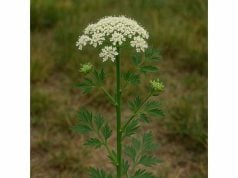
Spikenard, in this article specifically Aralia racemosa, is a North American woodland herb with a long, earthy history in traditional medicine. It has been used as a root remedy for lingering coughs, chest congestion, rheumatic aches, skin complaints, and general weakness, especially in older American herbal traditions. That history makes it appealing, but it also requires precision. “Spikenard” can refer to more than one plant in commerce, and American spikenard is not the same as the Himalayan aromatic herb sold under the same common name.
What makes Aralia racemosa especially interesting is the way it bridges traditional expectorant use and modern phytochemical research. Its roots contain saponins, diterpenoids, acetylenic lipids, sterols, volatile constituents, and phenolic compounds that help explain why the plant has drawn interest for respiratory, anti-inflammatory, and antioxidant applications. Even so, the evidence remains mostly preclinical and traditional rather than clinical. Spikenard is therefore best approached as a carefully used North American root medicine with promising chemistry, modest practical uses, and clear reasons for restraint.
Top Highlights
- American spikenard is most strongly associated with traditional respiratory support and thick, lingering mucus rather than with modern high-dose supplement use.
- Its root contains saponins, diterpenoids, and phenolic compounds linked to antioxidant and anti-inflammatory activity.
- Traditional root tincture use often ranges from 10 to 30 drops per dose, but no clinically standardized dose exists.
- People who are pregnant or breastfeeding, highly medication-sensitive, or unsure of species identity should avoid self-prescribed use.
- Spikenard is better suited to careful, short-term traditional use than to casual long-term supplementation.
Table of Contents
- What spikenard is and how it differs from other plants with the same name
- Spikenard health benefits and where evidence is strongest
- Key ingredients and medicinal properties of spikenard
- How spikenard is used in traditional herbal practice
- Spikenard dosage, timing, and how long to use it
- Common mistakes, product quality, and sustainable use
- Safety, side effects, interactions, and who should avoid spikenard
What spikenard is and how it differs from other plants with the same name
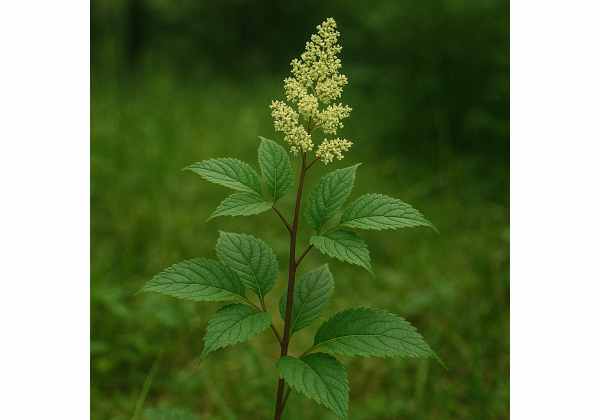
American spikenard, Aralia racemosa, is a tall perennial native to eastern and central North America. It grows in moist woods, shady edges, and rich forest soils, often reaching an impressive size for an herbaceous plant. Its large compound leaves, branching stems, greenish-white flower clusters, and dark berries give it a bold woodland presence. Beneath the soil, the aromatic root and rhizome system is the part most associated with herbal use.
Before discussing benefits, it is important to clear up a frequent source of confusion: the name “spikenard” does not belong to this species alone. In the broader herbal world, “spikenard” may also refer to Nardostachys jatamansi, a fragrant Himalayan plant used in perfumery and traditional Asian medicine. These are not interchangeable. They differ botanically, chemically, geographically, and therapeutically. American spikenard is a woodland Aralia. Himalayan spikenard is a completely different plant with a different tradition. Confusing them can lead to wrong expectations and poor product choices.
American spikenard is also distinct from other North American Aralia relatives such as Aralia nudicaulis and Aralia californica. Herbalists sometimes group these together loosely because they share overlapping qualities, but they are still separate plants. Aralia racemosa is usually the larger, more robust species and has earned a particular reputation for respiratory states marked by irritation, weakness, and heavy secretions. It also belongs to the same broader family as American ginseng, which helps explain why some herbalists describe it as mildly tonic as well as expectorant.
Traditionally, the root was widely used in North American domestic medicine and eclectic herbal practice. Historical use included coughs, asthma-like irritation, catarrh, rheumatism, skin conditions, and general debility. Some traditions also used the berries and leaves, though the root remained the main medicinal part. The plant’s warm, balsamic, somewhat sweet-resinous character likely helped it move into cough syrups, root formulas, and older tonic preparations.
What makes American spikenard distinctive is this combination of traits: it is aromatic but not strongly pungent, stimulating but not harshly irritating in the way some classic expectorants can be, and traditionally considered useful when a person is worn down rather than overheated or forcefully congested. That profile is one reason herbalists have kept it in the respiratory category for so long.
Still, identity comes first. A correct species name is not a technical luxury here. It is the foundation for all sensible use. When readers understand that Aralia racemosa is a specific North American root with a specific tradition, the rest of the article becomes much easier to interpret accurately.
Spikenard health benefits and where evidence is strongest
The most credible benefits of American spikenard are still rooted in traditional use rather than human clinical trials. That does not make them meaningless, but it does mean they should be presented honestly. The evidence is strongest for historical respiratory use, general tonic use in weakened states, and preclinical signals suggesting anti-inflammatory, antioxidant, and related biological effects.
The traditional respiratory use is the clearest and most coherent part of the herb’s reputation. American spikenard has long been used for chronic or lingering coughs, thick secretions, irritated throats, bronchial weakness, and heavy mucus. Older herbal descriptions often place it in the expectorant category, but not as a harsh stimulant. Instead, it is usually framed as a root that helps when the lungs feel bogged down and the person feels tired, depleted, or slow to recover. That makes it different in tone from sharper herbs chosen for acute, fiery respiratory states.
There is also a second major traditional theme: rheumatic and inflammatory discomfort. Historical use includes aches, stiffness, and general body soreness, especially when paired with debility. This does not mean the root has been clinically proven to treat arthritis. It means that older practitioners found it helpful in formulas aimed at soreness and sluggish recovery. Modern preclinical work on Aralia chemistry gives this traditional direction at least some biological plausibility, especially because the genus contains constituents linked with anti-inflammatory activity.
A third benefit sometimes discussed is general tonic or restorative support. This is where spikenard can be misunderstood. It is not usually treated like a modern stimulant, and it is not an adaptogen in the strict evidence-based sense. Still, some herbalists have considered the North American spikenards useful for people who are worn down, recovering slowly, or dealing with chronic irritation plus weakness. In that respect, the plant sits somewhere between respiratory herb and woodland tonic.
A realistic benefit summary would look like this:
- Most plausible: support for lingering coughs, chest congestion, thick mucus, and irritated upper airways in traditional use.
- Reasonably plausible: mild support for rheumatic discomfort, inflammation, and convalescent weakness.
- Still exploratory: antioxidant, anti-inflammatory, metabolic, enzyme-related, and topical protective effects suggested by laboratory work.
- Not established: proven treatment for asthma, pneumonia, chronic inflammatory disease, infections, or severe pain.
This matters because many herb articles flatten all benefits into one confident list. Spikenard deserves a more careful approach. There are no modern randomized trials showing a predictable effect in cough, pain, or inflammation. The strongest use case is still traditional and pattern-based.
For readers comparing roots used for cough and heavy mucus, spikenard fits more naturally beside mullein-type respiratory support than beside heavily marketed modern nootropics or adaptogens. Its value is contextual, subtle, and rooted in practice rather than headline-level data.
That does not reduce the herb’s value. It clarifies it. American spikenard is best seen as a classic North American respiratory and constitutional root with promising chemistry and limited direct clinical proof. That is a respectable position, but it is not the same as a fully validated modern remedy.
Key ingredients and medicinal properties of spikenard
American spikenard’s traditional use becomes easier to understand when you look at its chemistry. The root contains a mix of triterpenoid saponins, diterpenoids, acetylenic lipids, sterols, phenolic acids, flavonoids, volatile components, and resin-like materials. This broad chemical profile is one reason the herb feels more complex than a simple flavoring root or folk cough herb.
Saponins are especially important because they appear repeatedly in Aralia research and are often discussed in relation to tonic and expectorant-style actions. In practical herbal language, saponin-rich roots often have a way of altering secretions, softening heavy mucus patterns, and contributing to broad physiological effects rather than one narrow target action. That does not prove precisely how Aralia racemosa works in the body, but it supports the traditional idea that this is a root with systemic influence rather than purely local throat soothing.
Diterpenoids are another major point of interest. Species-specific work on A. racemosa has identified diterpenoids and acetylenic lipids, and newer research continues to show that the plant produces a rich range of secondary metabolites. These compounds matter because they may contribute to anti-inflammatory, antioxidant, cytotoxic, or enzyme-related activities in laboratory models. This is where the plant begins to look scientifically more interesting than its modest current place in herbal commerce would suggest.
Phenolic compounds and flavonoids add another layer. These are commonly associated with antioxidant and protective biological activity, and recent in vitro culture research on A. racemosa has emphasized phenolic acids and flavonoid diversity alongside saponins. This helps explain why researchers are increasingly interested in American spikenard not only as a traditional root, but also as a species with untapped phytochemical potential.
Volatile constituents and resinous fractions matter as well, especially for sensory reasons. Traditional herbalists often paid close attention to a root’s smell and taste because these qualities hinted at function. In spikenard, the aromatic balsamic character fits with its respiratory use. A root that smells warm, resinous, and somewhat penetrating often ends up in formulas for cough, stuck mucus, and airway irritation.
From a practical standpoint, spikenard’s medicinal properties are best grouped like this:
- Expectorant and pectoral potential, mainly grounded in traditional respiratory use.
- Anti-inflammatory and antioxidant potential, supported by phytochemistry and preclinical findings.
- Mild tonic and restorative potential, suggested by traditional practice and saponin-rich root chemistry.
- Possible topical relevance, especially where extracts show skin-cell tolerance or bioactive potential in laboratory settings.
The plant also reminds us that medicinal properties are not always dramatic. American spikenard is not famous because it creates a strong immediate sensation. Its traditional role is more nuanced: a root for stuck, lingering, depleted states. That nuance is often lost in modern supplement language.
If you compare it to more overtly bitter or stimulating herbs, spikenard feels gentler. If you compare it to purely soothing demulcents, it feels more active. That in-between profile is part of its appeal and also part of why product quality matters so much. A plant this chemically layered should not be reduced to a vague “root extract” without species, part, and preparation being clearly identified.
How spikenard is used in traditional herbal practice
American spikenard is primarily a root herb, and most traditional use begins there. The root is prepared as tincture, decoction, syrup base, or occasionally powdered material, depending on the tradition and the intended purpose. The leaves and ripe berries have also been used, but the root remains the plant part most consistently associated with medicinal action.
In respiratory practice, spikenard is often thought of as a herb for thick, slow, irritating mucus rather than acute dry spasm alone. Herbalists have used it when a cough lingers after an illness, when the throat feels raw from repeated irritation, or when secretions are abundant but difficult to move. It appears in the older category of pectoral and expectorant roots, meaning it was used to support the chest and encourage more effective clearing. In modern practice, some herbalists still prepare it as a tincture or syrup for this reason.
It has also been used in formulas for chronic laryngitis, pharyngeal irritation, and low-grade bronchial states marked by weakness. This is one reason it is sometimes discussed alongside older respiratory roots such as elecampane, though the two herbs are not interchangeable and their taste, energetics, and strength differ.
Traditional use does not stop at the lungs. Spikenard has also been used for rheumatic aches, sluggish convalescence, and a general sense of worn-out irritability. These uses are less famous today but still important for understanding the herb. In older North American practice, a plant did not need a single isolated target to be valued. An herb could be chosen because it fit a pattern: mucus, debility, soreness, and slow recovery.
External use appears too. Historical applications include poultice-style or wash-type uses for skin trouble, swellings, or irritated tissue. These uses are not especially standardized now, but they fit the plant’s old reputation as more than a cough herb. American spikenard was often treated as a broad domestic remedy.
The most common forms in modern herbal use include:
- Root tincture, favored for portability and flexible dose adjustment.
- Strong decoction, usually used more traditionally than commercially.
- Syrup formulas, especially in cough-oriented practice.
- Compound formulas, where spikenard is blended with soothing, expectorant, or warming herbs.
Because the herb is not widely standardized in modern commerce, it is often most useful in the hands of people who understand traditional formulation rather than those looking for a single-capsule solution. This matters because American spikenard seems to work best when matched to the right situation. It is not a universal lung herb, not a catch-all anti-inflammatory, and not a fashionable daily tonic. It is a more specific North American root whose strengths show up when the pattern fits.
That pattern-based approach may sound old-fashioned, but it is probably the most accurate way to preserve the plant’s real usefulness. Spikenard is a traditional herb first. Trying to force it into a generic supplement model often obscures what it actually does best.
Spikenard dosage, timing, and how long to use it
The first thing to say about dosage is the most important: American spikenard does not have a clinically standardized modern dose supported by human trials. Any dosage guidance you see for Aralia racemosa comes mainly from traditional herbal practice, eclectic medicine, or contemporary herbalists working in that lineage. That does not make the guidance useless, but it does mean it should be treated as customary rather than proven.
Traditional root tincture ranges often fall around 10 to 30 drops per dose, taken up to several times daily depending on the situation. Older decoction-style use often describes 2 to 4 ounces of strong decoction or cold infusion. Some historical materia medica sources also give a broad range of 5 to 40 minims for fluid preparations. These are not interchangeable with modern capsules or powdered extracts, and they should not be presented as though they were clinically validated prescription-like doses.
A sensible way to think about spikenard dosage is by form:
- Tincture: often the easiest traditional form to use because it allows small, repeated doses.
- Decoction or strong infusion: more old-fashioned, slower, and often better suited to short-term household use.
- Syrup formula: useful when the main goal is soothing irritated cough with heavy secretions.
- Capsules or powders: less traditional and harder to interpret without strong product details.
Timing depends on the goal. For respiratory use, smaller repeated doses often make more sense than one large dose. If the herb is being used in a cough formula, it may be taken across the day and again in the evening when symptoms tend to worsen. For rheumatic or restorative use, dosing is often steadier and less reactive, usually over several days rather than as a one-time dose.
Duration also matters. Spikenard is not the sort of herb that should be taken endlessly without purpose. A short-term trial for a lingering cough pattern or a post-illness period makes more sense than routine, indefinite use. Traditional tonics are often described as long-term herbs, but modern self-care is safer when it stays more focused. A reasonable practical window is several days to two weeks, followed by reassessment. If the issue is not improving, stronger evaluation is needed rather than simply more root.
A careful approach looks like this:
- Confirm that the product is really Aralia racemosa root.
- Choose one form only, rather than stacking several at once.
- Start at the low end of a traditional range.
- Match timing to the goal, such as repeated small use for cough.
- Reassess after several days instead of escalating quickly.
This kind of traditional dosing is best understood as guided experimentation, not fixed protocol. That distinction protects the user from false confidence. It also respects the fact that American spikenard remains a traditional herb without a mature clinical dosing literature.
If you need highly predictable dosing backed by human studies, spikenard is probably not the herb to choose. If you are using it within a careful traditional framework, the lower end of the customary range is the most sensible starting point.
Common mistakes, product quality, and sustainable use
The biggest mistake people make with American spikenard is assuming that a traditional reputation automatically means a herb is easy to use. Spikenard is not especially dangerous when used intelligently, but it is also not a casual “wellness root” that should be taken just because it sounds old and natural. Its best uses are specific, and its quality matters more than many popular herbs because correct species identity is central to the whole conversation.
Species confusion is the first problem. Some products use the common name “spikenard” without making it clear whether they mean Aralia racemosa, another North American Aralia, or an unrelated Asian plant. That kind of labeling is not good enough. A buyer should expect to see the full species name and ideally the plant part as well. If a label does not say root, or if it does not clearly say Aralia racemosa, confidence drops immediately.
Another common mistake is overgeneralizing the herb’s role. American spikenard is often described in broad terms such as tonic, stimulant, alterative, or expectorant. These old words can be useful, but they become misleading when turned into vague promises. Spikenard is not the best herb for every cough, every ache, or every low-energy state. It is strongest in a narrower range of patterns, especially those involving chronic irritation plus weakness.
A third mistake is choosing the wrong form. Someone wanting a fast, standardized supplement experience may not do well with a loose traditional root. Someone who wants a deep demulcent effect for dry irritation may be disappointed if they choose spikenard instead of a more soothing herb like marshmallow root for mucosal soothing. Matching the herb to the need is more important than the herb’s old reputation.
Quality issues matter too. Traditional and pharmacognostic literature repeatedly points to the importance of correct identification and standardization for Aralia racemosa. This means looking for:
- a full botanical name,
- the root as the specified medicinal part,
- a reputable supplier,
- sensible claims rather than cure-all language,
- information on extraction or preparation when relevant.
There is also a conservation-minded mistake worth avoiding: treating wild woodland roots as limitless. American spikenard is not as ubiquitous in commerce as highly cultivated herbs, and woodland botanicals can be harmed by careless harvesting. Even without turning this into a formal conservation essay, the safest practical advice is simple: choose cultivated or responsibly sourced material whenever possible and avoid unnecessary experimentation with large amounts.
A final mistake is expecting dramatic immediate results. Spikenard is not usually a showy herb. It works, when it does, in a steadier and more pattern-specific way. People who understand that tend to use it better. People who expect a dramatic sedative, stimulant, or instant cough suppressant usually come away confused.
In short, the best spikenard user is selective rather than enthusiastic. Correct species, correct part, correct situation, and reasonable expectations matter more here than in many trendy herbs. That selectivity is part of what makes the plant worth respecting.
Safety, side effects, interactions, and who should avoid spikenard
American spikenard does not have a large modern toxicity literature, but the absence of extensive harm reports should not be confused with proven safety. The best available reviews on Aralia point out that more toxicological work is still needed. That makes a cautious stance appropriate, especially when a plant is being used beyond food-like amounts and without strong clinical dosing data.
At traditional doses, side effects are likely to be mild when they occur. These may include stomach upset, mild digestive irritation, taste aversion, or sensitivity to a stronger preparation than expected. Because the herb is aromatic and resinous rather than bland, some people may simply find it too stimulating to the throat or stomach in concentrated liquid form. Lower starting doses help prevent this.
Allergy is another general concern. American spikenard belongs to the Araliaceae family, and while family-wide allergy is not a major headline issue in the same way it is with some other plant groups, any herb can provoke an individual reaction. If someone develops rash, throat irritation, wheezing, or unusual swelling after use, the herb should be stopped immediately.
Pregnancy and breastfeeding deserve extra caution. Some older materia medica references placed spikenard in gynecologic contexts, which is exactly why modern self-prescribed use during pregnancy is not wise. There is not enough solid safety evidence to support routine use in pregnancy or lactation, especially in concentrated root preparations. The safest answer in those settings is avoidance unless guided by a knowledgeable clinician.
Children also fall into the caution category. While traditional household medicine sometimes used herbs broadly, that is not the same as modern safety validation. Without clear dosing evidence, American spikenard is better reserved for adults.
Possible interaction issues are mostly theoretical rather than well-mapped, but they still matter. A complex root containing saponins, diterpenoids, phenolics, and other active compounds should be approached carefully if a person:
- takes multiple prescription medicines,
- has a fragile digestive system,
- has chronic liver or kidney disease,
- is highly sensitive to tinctures or strong herbal extracts,
- is already using several respiratory or anti-inflammatory herbs at once.
This does not mean spikenard is known to cause dramatic interactions. It means uncertainty should be treated as uncertainty, not as permission to improvise.
The people who should be most cautious or avoid self-prescribed use include:
- pregnant or breastfeeding individuals,
- children,
- anyone unsure of species identity,
- people using multiple medications,
- those with chronic illness who want to use it internally for long periods,
- anyone expecting it to replace proper care for asthma, serious infection, or persistent cough.
A practical safety rule is this: the more serious the symptom, the less suitable spikenard becomes as a self-care experiment. Lingering mild cough after illness is one thing. Chest pain, shortness of breath, fever, blood in mucus, or unexplained weight loss is another.
Used carefully, American spikenard is best seen as a moderate-trust traditional herb with incomplete modern safety mapping. That means respect, modest dosing, and good judgment are the correct companions to curiosity.
References
- Traditional uses, phytochemistry, pharmacology, toxicity and quality control of medicinal genus Aralia: A review 2022 (Systematic Review)
- Exploring the biosynthetic efficiency of Aralia racemosa L. (Araliaceae): Assessment of triterpenoid saponins and phenolic compounds production in plantlets, callus, and cell suspension cultures 2025 (Research Article)
- Assessment of Pharmacognostic, Phytochemical and Physicochemical Standards of Aralia racemosa (L.) root 2016 (Research Article)
- The medicinal chemistry of genus Aralia 2015 (Review)
- Aralia Spikenard 1997 (Traditional Herbal Monograph)
Disclaimer
This article is for educational purposes only and is not a substitute for medical advice, diagnosis, or treatment. American spikenard is a traditional herbal root with limited modern clinical study, so its uses and dosage ranges should be understood as historical and practice-based rather than medically standardized. Do not use it to self-treat asthma, serious chest symptoms, infection, persistent cough, pregnancy-related concerns, or chronic inflammatory illness without qualified guidance. Seek prompt medical care for shortness of breath, high fever, coughing blood, worsening chest pain, or symptoms that do not improve.
If this article helped you, please share it on Facebook, X, or another platform where careful herbal education is appreciated.