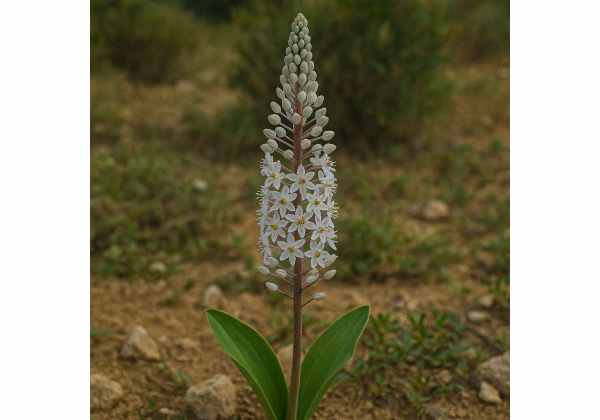
Squill, also called sea squill or Drimia maritima, is a striking Mediterranean bulb with one of the oldest medicinal histories in herbal practice. For centuries, it was used as a bitter expectorant for stubborn coughs, as a traditional remedy for fluid retention, and at times as a powerful heart-active plant. That long history explains why squill still appears in older pharmacopeias and traditional formulas such as squill oxymel. It also explains why modern use requires real caution.
What makes squill unusual is the same thing that makes it risky: its bulb contains potent cardiac glycosides, especially bufadienolides such as proscillaridin A and scillaren A. These compounds help explain the plant’s traditional actions on mucus, circulation, and inflammation, but they also create a narrow margin between a therapeutic amount and a harmful one. Today, squill is best understood as a historically important medicinal herb with limited but interesting modern evidence, especially for respiratory support in supervised formulas, and a much stronger safety story than most casual herbal users expect.
Key Facts About Squill
- Squill has a long traditional role in chesty coughs and thick respiratory mucus, but modern human evidence is still limited.
- Its bulb contains potent cardiac glycosides that may contribute to respiratory and heart-related effects while also increasing toxicity risk.
- In pilot studies, squill oxymel was used at 10 mL twice daily for 4 to 6 weeks as an add-on treatment under supervision.
- Raw bulb, homemade extracts, and unsupervised use are poor choices because potency varies and overdose can be serious.
- Pregnancy, breastfeeding, childhood, heart rhythm disorders, and use with digoxin or diuretics are strong reasons to avoid squill.
Table of Contents
- What Is Squill and Why Has It Lasted in Herbal Medicine
- Key Ingredients and Medicinal Properties
- Squill Health Benefits and Where Evidence Is Strongest
- Common Uses and Preparation Forms
- How Much Squill to Take and for How Long
- Common Mistakes When Using Squill
- Squill Side Effects, Interactions, and Who Should Avoid It
What Is Squill and Why Has It Lasted in Herbal Medicine
Squill is a bulb-forming perennial in the Asparagaceae family, native mainly to the Mediterranean region. In the wild, it is easy to overlook for much of the year, then suddenly unmistakable when its tall flower spike rises from dry ground. Herbal and medical traditions have valued the bulb far more than the leaves or flowers. That bulb is the part linked to squill’s bitter taste, strong physiological activity, and long reputation as both remedy and poison.
Historically, squill occupied an unusual place in medicine. It was used in Greco-Roman and later European and Middle Eastern traditions for dropsy, cough, asthma-like breathing trouble, sluggish digestion, and thick phlegm. In many older systems, it was seen as a plant that could “move” what was stuck: mucus in the chest, fluid in the body, or sluggish digestive function. It was also used externally in some folk settings for painful joints, skin problems, and parasites.
One reason squill survived in medicine for so long is that it does not behave like a gentle culinary herb. People noticed that it produced strong effects. In traditional respiratory formulas, this mattered because a bitter, stimulating expectorant could make heavy chest secretions feel easier to loosen. In older heart and edema care, squill’s active compounds were valued for their digitalis-like effects. That older cardiotonic role is now mostly of historical interest because modern medicine has safer, better-standardized options.
Squill also has a complicated identity in the historical record. “White squill” and “red squill” were sometimes discussed separately, with red squill becoming especially associated with rodenticide use because of its toxicity. That dual image, medicine on one side and poison on the other, is not just folklore. It reflects the plant’s real pharmacology.
For modern readers, the most useful way to understand squill is this: it is not a general wellness herb and not a casual tea herb. It is a potent traditional medicine whose relevance today lies mostly in carefully prepared formulas, narrow evidence for respiratory support, and ongoing scientific interest in its chemistry. Anyone approaching it should do so with the same respect given to stronger botanicals rather than everyday household herbs.
Key Ingredients and Medicinal Properties
Squill’s key ingredients are concentrated mainly in the bulb, and the most important group is its cardiac glycosides, especially bufadienolides. Among the best-known compounds are proscillaridin A, scillaren A, scilliroside, and related glycosides. These chemicals are the reason squill has long been described as active on the heart, circulation, and fluid balance. They are also the main reason squill can be dangerous when used carelessly.
Cardiac glycosides influence ion transport in cells, especially through effects related to sodium and potassium handling. In practical terms, that means they can alter heart rhythm and contractility. Historically, this is why squill was used for dropsy and heart-related weakness. The problem is that the same kind of activity that may produce a physiological effect can also produce nausea, vomiting, bradycardia, arrhythmia, or more severe toxicity when the dose is too high.
Squill is not only about glycosides, though. Studies also describe phenolic compounds, flavonoids, lignans, triterpenoids, and other secondary metabolites. These help explain why modern laboratory work often finds antioxidant, anti-inflammatory, enzyme-inhibiting, or cytotoxic activity in various extracts. The aerial parts and the bulb do not look chemically identical, and extraction method matters. Water, alcohol, and ethyl acetate extracts can pull out different profiles, which is one reason commercial products and homemade preparations may behave very differently.
From a medicinal-property standpoint, squill is usually discussed in five overlapping ways:
- Expectorant and mucus-modulating: traditional use suggests it may help loosen or soften dense respiratory secretions.
- Cardiotonic and diuretic-like: historically important, but not appropriate for unsupervised modern use.
- Anti-inflammatory: supported mainly by preclinical work and traditional respiratory use.
- Antioxidant and enzyme-inhibiting: seen in laboratory assays, but not the same as proven clinical benefit.
- Cytotoxic or antiproliferative: interesting in cell studies, especially around proscillaridin A, but far from a self-treatment rationale.
This is where squill differs from gentler respiratory herbs. Its chemistry is closer in seriousness to plants associated with powerful heart-active compounds, much like foxglove’s well-known cardiac glycosides, than to a soothing kitchen infusion. That does not mean squill and foxglove are interchangeable. It means both remind us that a plant can be medicinally valuable precisely because it is pharmacologically strong, not because it is automatically safe.
In everyday language, squill’s medicinal properties come with a built-in warning label: the plant may be active enough to matter, but that same strength means dosage, product quality, and context matter a great deal.
Squill Health Benefits and Where Evidence Is Strongest
When people search for squill health benefits, they often find a mix of historical claims, laboratory findings, and modern trial language blended together as though all the evidence carries the same weight. It does not. The strongest modern signal for squill is respiratory support in supervised squill oxymel formulas, not broad claims about heart health, cancer, or general detoxification.
The most practical benefit area is chronic or phlegm-heavy respiratory discomfort. In small pilot clinical trials, squill oxymel used as an add-on treatment showed improvements in some asthma and COPD-related measures. That does not prove squill is a stand-alone remedy or a replacement for inhalers, bronchodilators, or medical care. It does suggest that, in a specific prepared form and under supervision, squill may help some people with mucus-heavy respiratory patterns and functional breathing outcomes.
Traditional use also supports squill as a bitter expectorant. That means it is not meant to behave like a soothing demulcent first. Instead, it was historically valued when the chest felt loaded, sticky, or difficult to clear. Readers who want a softer comparison often do better beginning with mullein’s gentler respiratory role, because squill is the more forceful and risk-heavy plant.
Possible benefit areas can be ranked honestly like this:
- Respiratory support in traditional formulas: the most credible modern use, though still based on small studies.
- Mucus loosening and expectorant action: historically strong and still plausible.
- Anti-inflammatory support: suggested by preclinical and formulation research, but not firmly established in routine clinical practice.
- Digestive bitter effects: traditional and plausible, but less central to modern use.
- Topical folk uses for pain or skin complaints: historically present, but not well standardized.
- Anticancer potential: interesting in cell research only and not a basis for self-treatment.
A key point is that squill’s benefits are form-dependent. The bulb in a traditional oxymel is not the same thing as a raw bulb slice, a random tincture, or a homemade syrup. Benefit claims are only as trustworthy as the preparation behind them.
It is also worth saying what squill does not clearly prove. There is no solid basis for treating heart failure at home with squill, no good reason to use it casually for weight loss or cleansing, and no responsible path from a cell-culture anticancer paper to self-medicating with the bulb. If a plant has a narrow therapeutic window, overreaching is exactly what turns “traditional remedy” into “avoidable poisoning.”
So yes, squill has real medicinal interest. But its benefits are best described as promising, narrow, and preparation-specific rather than broad, everyday, or low-risk.
Common Uses and Preparation Forms
Squill has been used in many forms across traditional systems, but modern readers should separate historical use from practical use. The fact that a plant was once made into vinegar preparations, syrups, powders, oils, and even cardiotonic medicines does not mean every format still makes sense today.
The most relevant modern preparation is squill oxymel, a syrup-like blend traditionally made with squill, vinegar, and honey. This is the form most directly linked to the small modern respiratory trials. It is designed less as a pleasant herbal tonic and more as a functional preparation for thick mucus, cough, and difficult expectoration. Because oxymels already combine acidity, sweetness, and plant actives, they can be easier to take than raw bitter bulb preparations.
Other traditional and folk-use formats include:
- Powders: historically used, but not appropriate for casual self-dosing because potency varies.
- Tinctures or extracts: sometimes sold, though standardization may be unclear.
- Syrups and linctus-type cough preparations: older pharmacopeial style uses.
- Topical oils or applications: used in folk practice for joint discomfort or local skin complaints.
- Decoctions or processed bulb preparations: historically important, but risky without skilled guidance.
The raw bulb deserves special caution. It is not a sensible home remedy. Squill’s bulb can vary in active glycoside content, and homemade extraction can easily create a product that is much stronger or more irritating than intended. This is one of those herbs where “natural” preparation does not guarantee a safer or weaker result.
Topical use is another area where context matters. Some traditional users applied squill externally for pain, swelling, or skin problems, but squill can also irritate the skin. For minor irritated skin, many people are better served by gentler botanicals such as calendula for minor skin irritation, which has a much more forgiving safety profile.
In practical terms, the most reasonable current uses of squill look like this:
- a professionally prepared squill oxymel or similar product
- short-term, supervised use
- a clear respiratory goal such as difficult mucus or chronic cough support
- add-on use rather than replacement of prescribed care
The least reasonable uses are equally clear:
- chewing or swallowing raw bulb
- long-term unsupervised use
- using squill to treat heart disease at home
- relying on it for serious asthma, COPD flare, pneumonia, or cancer
- experimenting with homemade concentrated extracts
The form of a herb often determines whether it behaves like a tool or a hazard. With squill, that distinction is sharper than with most traditional herbs.
How Much Squill to Take and for How Long
Squill is one of those herbs where a simple “daily dose” answer can mislead more than it helps. There is no good modern case for recommending raw bulb dosing to the general public, because the active cardiac glycosides are potent and can vary by plant part, processing, and preparation. The safest practical dosing guidance comes from studied, prepared formulas rather than from old loose herb measures.
In the best-known pilot respiratory trials, squill oxymel was used at 10 mL twice daily as an add-on treatment. In the asthma trial, it was used for 6 weeks. In the COPD trial, it was used for 4 weeks. That gives modern readers a more grounded dosage frame than historical powders or broad folkloric advice.
A practical way to interpret this is:
- Form: standardized or professionally prepared squill oxymel
- Amount used in studies: 10 mL per dose
- Frequency: twice daily
- Timing: morning and evening, often before bed for the second dose
- Duration studied: about 4 to 6 weeks
That does not mean everyone should copy that schedule on their own. It means that, if squill is used at all, the most defensible modern pattern comes from a supervised formula at a modest liquid dose rather than from concentrated home extracts.
What about teas, powders, capsules, or tinctures? This is where caution should rise, not fall. Product labels may differ widely, and some do not clearly explain standardization to cardiac glycosides. When that happens, the user is left guessing about the most important variable. With milder traditional respiratory herbs, that may be inconvenient. With squill, it can be unsafe.
If a clinician with relevant herbal or integrative experience recommends squill, sensible rules include:
- Start with the exact product and dose they specify.
- Do not stack multiple squill products.
- Avoid extending use beyond the intended short course without review.
- Stop immediately if nausea, vomiting, dizziness, unusual fatigue, palpitations, or marked slowing of pulse occurs.
- Keep all other cardiac and respiratory medicines clearly documented.
For people mainly seeking cough support, it may be worth remembering that squill is usually chosen when the case feels more stubborn, bitter, or phlegm-heavy than average. That is why many traditional systems placed it closer to strong expectorants than to everyday comfort herbs. Even compared with horehound’s classic bitter expectorant role, squill is the more pharmacologically serious option.
So the best dosage advice is conservative: use only a reputable, measured preparation, stay close to studied ranges when supervised, and avoid improvising with the bulb itself.
Common Mistakes When Using Squill
The biggest mistakes with squill usually come from treating it like a mild herb when it is not. A careful user can learn a lot from that simple point. Most problems happen not because the plant is mysterious, but because people underestimate how active the bulb can be.
The first mistake is using raw or homemade preparations. Squill is not a forgiving kitchen herb. Making your own concentrated syrup, tincture, or bulb extract may sound traditional, but it also removes the safeguards that come from standardized preparation. Without reliable control over active glycosides, the user has no good way to judge potency.
The second mistake is using squill for the wrong symptom pattern. Traditional respiratory use points more toward sticky, heavy, difficult-to-clear mucus than toward a simple dry throat or mild seasonal irritation. If the need is gentle soothing, squill may be the wrong tool entirely. Some readers looking at older chest herbs are better matched to elecampane for sticky cough support or other milder options, depending on the situation.
The third mistake is assuming laboratory research equals proven human benefit. Squill has interesting preclinical findings around antioxidant, enzyme-inhibiting, anti-inflammatory, and cytotoxic actions. Those are real scientific observations, but they are not the same as proven treatment outcomes in people. Moving too quickly from petri dish to self-treatment is one of the classic ways herbal enthusiasm turns impractical.
The fourth mistake is combining squill casually with prescription medicine. Because of its cardiac glycoside content, interactions matter. Taking squill while also using heart medicines, potassium-altering drugs, or other rhythm-active treatments is not something to guess about.
The fifth mistake is continuing use despite early warning signs. Squill should not be pushed through nausea, vomiting, marked stomach upset, dizziness, or pulse changes. Those are not signs that the herb is “working harder.” They are reasons to stop and reassess.
The sixth mistake is using squill in place of medical care. This matters especially in respiratory illness. Wheezing, fever, chest pain, low oxygen, bloody sputum, or rapidly worsening shortness of breath require medical assessment. A traditional expectorant does not replace diagnosis.
In short, the safe user mindset with squill is not experimental or casual. It is selective, measured, and willing to say no when the preparation, indication, or supervision is unclear.
Squill Side Effects, Interactions, and Who Should Avoid It
Safety is the most important part of any squill guide. The plant’s reputation as a medicine is inseparable from its reputation as a poison, and that is not an exaggeration. The bulb’s cardiac glycosides can cause serious toxicity, especially when the form is concentrated, the dose is too high, or the user already has heart, kidney, or electrolyte-related risk factors.
Common side effects may begin in the digestive system. These can include:
- nausea
- vomiting
- abdominal discomfort
- diarrhea
- loss of appetite
With more significant exposure, symptoms can move beyond the stomach and into the cardiovascular and nervous systems. Warning signs may include:
- unusual fatigue or weakness
- dizziness
- bradycardia or irregular pulse
- palpitations
- confusion
- tremor
- more severe rhythm disturbances
Topical use is not automatically safe either. Fresh bulb material and some preparations can irritate the skin and have been associated with dermatitis in reported cases.
The most important interaction concerns other heart-active or electrolyte-sensitive medicines. Extra caution is warranted with:
- digoxin and related cardiac medicines
- diuretics that can alter potassium or magnesium
- laxative overuse, which can also shift electrolytes
- antiarrhythmic drugs
- any medicine used for significant heart disease
Who should avoid squill altogether? In most cases, that list includes:
- pregnant people
- breastfeeding people
- children
- anyone with known arrhythmias
- people with heart failure unless specifically supervised
- those with kidney disease
- people with a history of severe electrolyte imbalance
- anyone already taking digoxin or complex cardiovascular medication
- people using squill without access to a reliable product and clear dosing
Even healthy adults should not assume squill is a reasonable self-care herb just because it is plant-based. Historically, overdose has produced digitalis-like toxicity, and severe cases can be life-threatening.
The most honest modern safety summary is this: squill may have a place in carefully prepared, short-term, professionally guided use, especially in traditional respiratory formulations. Outside that setting, its risk profile rises fast. This is not a good herb for experimentation, “more is better” thinking, or vague supplement stacking.
If there is one sentence worth remembering, it is this: squill’s strongest medicinal feature and its strongest danger come from the same chemistry.
References
- Bulbous Plants Drimia: “A Thin Line between Poisonous and Healing Compounds” with Biological Activities 2021 (Review)
- Untargeted Phenolic Profiling and Functional Insights of the Aerial Parts and Bulbs of Drimia maritima (L.) Stearn 2022
- An Add-On Treatment for Moderate COPD with Squill-Oxymel (a Traditional Formulation from Drimia maritima (L.) Stearn): A Pilot Randomized Triple-Blinded Placebo-Controlled Clinical Trial 2022 (RCT)
- Squill Oxymel, a traditional formulation from Drimia Maritima (L.) Stearn, as an add-on treatment in patients with moderate to severe persistent asthma: A pilot, triple-blind, randomized clinical trial 2017 (RCT)
- Drimia maritima flowers as a source of biologically potent components: Optimization of bioactive compound extractions, isolation, UPLC–ESI–MS/MS, and pharmacological properties 2024
Disclaimer
This article is for educational purposes only and does not replace medical advice, diagnosis, or treatment. Squill is a potent medicinal plant with potentially serious toxicity, especially when used as raw bulb, concentrated extract, or alongside heart-related medicines. Do not use squill to treat heart disease, breathing problems, or any other medical condition without guidance from a qualified healthcare professional who understands both herbal medicine and drug interactions. Seek urgent medical care if squill use is followed by vomiting, marked weakness, faintness, palpitations, slow pulse, confusion, or worsening breathing symptoms.
If you found this article helpful, please share it on Facebook, X, or your preferred platform so others can learn about both the potential uses and the real safety concerns of squill.