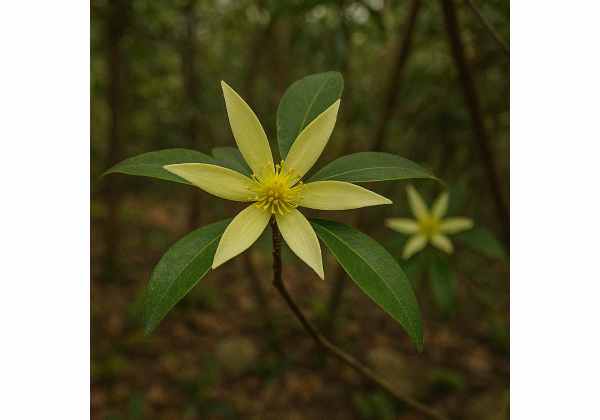
Star anise, Illicium verum, is a star-shaped spice with a sweet, warm aroma that many people recognize from broths, mulled drinks, and traditional Asian cooking. It comes from the dried fruit of an evergreen tree native to southern China and Vietnam, and it has been used for centuries as both a culinary spice and a medicinal herb. Beyond its striking flavor, star anise is valued for digestive support, respiratory comfort, antimicrobial activity, and its rich content of aromatic and polyphenolic compounds. It is also the best-known natural source of shikimic acid, a compound used in the manufacture of oseltamivir.
What makes star anise especially interesting is that it sits at the intersection of food, traditional medicine, and modern pharmacology. Its essential oil is rich in trans-anethole, while its fruit also contains flavonoids, phenolic acids, terpenes, and other bioactive substances that help explain its soothing, warming, and antimicrobial reputation. At the same time, safety matters. True Chinese star anise is not the same as toxic Japanese star anise, and that distinction is one of the most important things a reader should understand before using it medicinally.
Quick Summary
- Star anise may help support digestion and reduce gas or post-meal discomfort.
- Its aromatic compounds and polyphenols also give it mild antimicrobial and antioxidant potential.
- A practical adult tea range is often about 0.5 to 1 g ground fruit per cup, with total daily use commonly kept around 3 g.
- Avoid giving star anise tea to infants, and avoid medicinal use if the source is uncertain or contamination with toxic Japanese star anise is possible.
Table of Contents
- What Star Anise Is and Why It Needs Careful Identification
- Key Ingredients and Medicinal Properties
- Health Benefits and What the Best Evidence Actually Shows
- Traditional and Modern Uses of Star Anise
- Dosage, Forms, Timing, and How to Use It Wisely
- Safety, Side Effects, and Who Should Avoid It
- How to Choose, Store, and Get the Most from Star Anise
What Star Anise Is and Why It Needs Careful Identification
Star anise is the dried fruit of Illicium verum, an evergreen tree now placed in the Schisandraceae family. The fruit usually has eight pointed carpels arranged in a star, although the number can vary slightly. Each segment contains a glossy brown seed, but the aromatic outer fruit is the main culinary and medicinal part. The plant is native to parts of China and Vietnam, and it became globally valued not only as a spice but also as a traditional medicinal raw material.
Its flavor is often compared with anise seed, but the two are not the same plant. Star anise and anise seed as a separate aromatic herb share a licorice-like profile largely because both contain anethole, yet they come from different botanical families and have different traditional applications. This distinction matters in cooking, in herbal practice, and especially in safety conversations.
The bigger identification issue is the existence of toxic lookalikes. The most important one is Japanese star anise, Illicium anisatum, which closely resembles edible Chinese star anise but contains potent neurotoxic sesquiterpenes. In commercial markets, especially where material is sold in bulk, powdered form, or mixed herbal teas, confusion or adulteration can occur. This is why star anise safety cannot be discussed the same way as the safety of common kitchen herbs like parsley or basil. The identity of the plant is part of the safety profile.
That species confusion is also the reason infants should never be given star anise tea casually. Cases of neurologic and gastrointestinal toxicity have been linked to star anise preparations, particularly when adulteration with toxic species or overly concentrated brewing was involved. Even when the source is believed to be Illicium verum, the margin for error is not something to treat lightly.
Historically, star anise was used in Chinese and Indian medicine for warming the body, easing digestive complaints, relieving spasmodic discomfort, and supporting respiratory comfort. Those uses still shape how people think about the herb today. But unlike some herbs whose modern use became broader with time, star anise became more precise. Culinary use remains straightforward. Medicinal use requires a little more care, better sourcing, and a stronger respect for plant identity.
That combination is what defines star anise today. It is a beautiful and useful spice, a meaningful traditional medicine, and a plant whose biggest safety lesson begins before the first cup of tea is brewed: make sure it is truly Illicium verum.
Key Ingredients and Medicinal Properties
The medicinal character of star anise comes from both its essential oil and its non-volatile phytochemicals. The essential oil is dominated by trans-anethole, the sweet, aromatic phenylpropanoid that gives the spice its unmistakable licorice-like scent. That one compound explains much of star anise’s fragrance, flavor, and traditional appeal, but it is not the whole story.
Other constituents identified in star anise include anisaldehyde, estragole in smaller amounts, limonene, linalool, pinene, sesquiterpenes, flavonoids, lignans, coumarin-like compounds, and phenolic substances. The fruit is also notable as a natural source of shikimic acid, which has major pharmaceutical significance because it is used in oseltamivir manufacture. This does not mean drinking star anise tea treats influenza, but it does show that the herb has real biochemical importance beyond culinary use.
From a medicinal perspective, its main properties are usually described as:
- Carminative
- Mildly spasmolytic
- Expectorant
- Aromatic digestive stimulant
- Antimicrobial
- Antioxidant
- Mildly anti-inflammatory
These properties reflect both tradition and research. The aromatic oil helps explain why star anise has long been used after meals and in teas for bloating, heaviness, and intestinal discomfort. Aromatic spices often work partly through sensory stimulation: they encourage salivation, warm the digestive tract, and make food feel easier to tolerate. That does not make them drugs, but it helps explain why their effects can feel real and immediate.
Its antimicrobial and antioxidant properties are especially interesting in modern studies. Extracts and essential oil have shown activity against a range of bacteria and fungi in laboratory settings. These findings support star anise’s old reputation as a preserving and protective spice. They also help explain why it appears so often in traditional broths, warming formulas, and spice blends designed not only for flavor but also for comfort and stability.
Star anise also shares a broader aromatic-spice pattern with herbs like fennel in digestive herbal traditions. Both are warming, fragrant, and digestive, yet star anise is usually deeper, sweeter, and more resinous, while fennel is lighter and more green. That kind of comparison helps readers understand how medicinal plants differ even when they seem to serve similar purposes.
One more point matters here: the medicinal value of star anise is tied strongly to preparation. Whole fruits in broth, gently brewed tea, essential oil, and concentrated extract do not behave the same way. The compounds extracted and the intensity of exposure change with form. That is why the herb’s chemistry is best understood as a toolkit rather than as one single effect.
In short, star anise is a chemically rich spice-herb with a dominant aromatic compound, several useful supporting constituents, and a medicinal profile centered on digestive, respiratory, antimicrobial, and antioxidant activity. It is more than a flavoring, but it works best when its real strengths are understood clearly.
Health Benefits and What the Best Evidence Actually Shows
The health benefits most often associated with star anise fall into three categories: traditional digestive and respiratory use, laboratory-supported antimicrobial and antioxidant activity, and broader pharmacologic interest that is promising but not yet strong enough for sweeping consumer claims.
The most established practical benefit is digestive support. Star anise has a long history as a warming spice used after meals for bloating, flatulence, fullness, and cramping discomfort. This use makes sense chemically. Aromatic herbs rich in anethole and other volatile compounds often help ease digestive tension, stimulate digestive secretions, and reduce the sense of stagnation that follows a heavy meal. That does not mean it has the same level of clinical documentation as every formal gastrointestinal herbal product, but it is one of the most plausible and accessible ways to use the herb.
A second traditional benefit is respiratory comfort. Star anise fruits and essential oil have been used as expectorant and spasmolytic raw materials, especially in European and East Asian medicinal contexts. This helps explain why the spice appears in cough syrups, soothing teas, and warming winter infusions. It is important, however, not to overstate this point. Star anise can support throat and chest comfort, but it is not a treatment for serious respiratory disease.
A third frequently discussed benefit is antimicrobial activity. Laboratory studies on extracts and essential oil show activity against a variety of bacteria and fungi, and that fits its use in food systems and preservation research. In plain terms, star anise appears to be one of those spices whose aromatic chemistry can do more than merely smell good. But most of this evidence is preclinical. It supports plausibility, not a recommendation to self-treat infections.
Antioxidant and anti-inflammatory activity also appear repeatedly in recent reviews. These effects are largely tied to the herb’s polyphenols, essential oil components, and secondary metabolites. Again, this is meaningful, but it belongs in proportion. “Antioxidant” is not a guarantee of visible clinical effect. It is best understood as a mechanism that helps explain why the herb has broader protective interest.
The antiviral conversation around star anise needs special care. People often hear that star anise is linked to Tamiflu and assume the spice itself is an antiviral medicine. The truth is narrower. Star anise is a major source of shikimic acid, which is used in oseltamivir manufacture. That is an important industrial fact, but it does not mean star anise tea or star anise capsules can be treated as flu therapy.
For readers who think in terms of aromatic digestive herbs, peppermint for digestive and respiratory support provides a useful contrast. Peppermint is often more sharply cooling and more directly associated with IBS-style spasm relief, while star anise is warmer, sweeter, and more often used when coldness, heaviness, or sluggish digestion is the issue.
The best evidence-based summary is this: star anise deserves respect as a digestive and respiratory support herb with meaningful antimicrobial and antioxidant promise. It does not deserve inflated claims about curing infections, treating influenza, or replacing proper medical care.
Traditional and Modern Uses of Star Anise
Star anise has one of the rare herbal profiles that translates easily from traditional medicine to daily life. Many medicinal plants are hard to use outside formal herbal practice. Star anise is not. It appears naturally in food, tea, spice blends, medicinal preparations, confectionery, and fragrance. That flexibility is one of its great strengths.
Traditionally, the fruit was used for:
- Abdominal bloating
- Indigestion
- Intestinal cramping
- Colds and coughs
- Mild pain associated with “cold” digestive or respiratory states
- General warming support in sluggish or chilled constitutions
In culinary practice, star anise is an important ingredient in Chinese five-spice powder, Vietnamese broth traditions, mulled wine, chai-style blends, braised meats, and spiced fruit dishes. These uses are more than decorative. They reflect the herb’s underlying medicinal logic. A warming aromatic spice added to rich, slow-cooked food does not just taste good. It also makes the meal feel lighter, more digestible, and more balanced.
Modern uses now fall into three main lanes. The first is culinary and beverage use. Whole pods are simmered in broths, sauces, and teas, then removed before serving. The second is phytotherapeutic use in teas, syrups, lozenges, and aromatics aimed at digestion or chest comfort. The third is industrial use, especially as a raw material for essential oil and shikimic acid production.
One important practical difference is that whole-fruit culinary use and concentrated medicinal use are not the same thing. A star anise pod steeped into broth is food-like. A heavily brewed tea taken several times a day is closer to therapy. A purified essential oil is something else again. That distinction is worth keeping in mind because star anise is pleasant enough that people may forget it becomes stronger and more pharmacologically active as it becomes more concentrated.
As a kitchen herb, it pairs well with other warm aromatics such as ginger in warming digestive preparations. That pairing is not accidental. Both herbs support the kind of warm, spicy, aromatic profile often used for cold weather, heavy meals, and sluggish digestion. Yet ginger is often more pungent and circulatory, while star anise is sweeter and more deeply aromatic.
Modern herbal use should also include restraint. Star anise sometimes appears in homemade remedies for infant colic, but this is exactly the kind of use that now deserves firm caution. Because of contamination risks, dose uncertainty, and documented toxicity cases, infant use is not a casual folk practice to revive.
The most realistic modern uses for adults are culinary support, mild digestive tea use, occasional respiratory comfort formulas, and carefully sourced aromatic preparations. The herb’s practical value lies in its ability to work gently in ordinary life. It becomes less appealing when pushed into high-dose, high-frequency, or poorly sourced use. In that sense, star anise is most effective when it remains what it has always been: a spice with medicinal depth, not a dramatic cure.
Dosage, Forms, Timing, and How to Use It Wisely
Star anise can be used as whole dried fruits, broken fruit pieces, ground spice, tea, tincture, syrup ingredient, essential oil, or standardized extract. The best form depends on the goal. For ordinary home use, tea and culinary use are the most practical and safest starting points.
A cautious adult tea range often cited in herbal practice is about 0.5 to 1 g of ground fruit or the equivalent of about 1 whole star in roughly 150 to 200 mL of hot water. This may be taken once or a few times daily, with a common total adult intake kept around 3 g per day. These are practical traditional-use ranges rather than firm clinical prescriptions. They are best treated as moderate guidance, not as a reason to keep increasing the dose.
Common forms include:
- Whole fruit simmered in broth or tea
- Ground spice in cooking or warm water infusion
- Syrup or decoction ingredients for short-term use
- Standardized essential oil products, usually external or industrial rather than homemade internal use
The simplest approach is to match the form to the purpose:
- Use whole pods in cooking when the goal is flavor plus gentle digestive support.
- Use a mild tea after meals when the goal is bloating or heaviness relief.
- Use short-term respiratory formulas only from reputable sources.
- Avoid self-directed internal use of essential oil.
Timing matters less than purpose, but there are still a few practical rules. After-meal use makes sense for digestive complaints. Warm tea taken slowly may also suit throat and chest comfort better than fast, concentrated drinking. There is rarely a good reason to make star anise tea extremely strong. With aromatic herbs, a moderate preparation often works better than an overly intense one that becomes harsh or unsettling.
It is also important to remember that the whole fruit and the essential oil are not equivalent. Essential oil concentrates the most potent aromatic fraction of the herb and should not be swallowed casually. The pleasant smell can make it seem safer than it is. For home use, whole fruit or gently brewed tea is the more responsible path.
Readers familiar with warm fragrant spices may find cardamom for digestive and aromatic support a useful comparison. Cardamom and star anise both work well in teas and after meals, but star anise is more licorice-like and generally more resinous and concentrated in flavor.
The real key to dosage is consistency without excess. Star anise is not a herb that rewards aggressive use. Moderate, well-sourced, clearly identified preparations are the right fit. If a person feels the need to push the dose higher and higher for a symptom, that is usually a sign to stop experimenting and reconsider the problem rather than intensifying the herb.
Safety, Side Effects, and Who Should Avoid It
Safety with star anise has less to do with the normal culinary use of true Illicium verum and more to do with three specific problems: species confusion, excessive concentration, and inappropriate use in vulnerable groups. When people understand those three risks, the herb becomes much easier to use sensibly.
The most important safety issue is confusion with Japanese star anise, Illicium anisatum. This toxic relative contains neurotoxic sesquiterpenes and has been linked to vomiting, irritability, abnormal movements, and seizures. Some reports also suggest that even true Chinese star anise contains compounds such as veranisatins that may contribute to neurotoxicity at high concentrations, though the greatest concern remains adulteration or substitution. This is why “safe if it is truly Illicium verum” is not the same as “safe in any star-shaped tea from any source.”
The second major issue is infant use. Star anise tea has historically been given for infant colic, but modern safety practice does not support this. Infants are more vulnerable to neurologic and gastrointestinal adverse effects, and contamination is difficult for families to detect. For the same reason, highly concentrated homemade tea should not be used casually in children.
Possible side effects in adults include:
- Nausea
- Abdominal discomfort
- Vomiting if used too strongly
- Allergic reactions in sensitive individuals
- Neurologic symptoms in rare toxic exposures or contaminated products
People who should be particularly cautious include:
- Infants and children
- Pregnant people using medicinal amounts
- Breastfeeding people using medicinal amounts
- People with seizure disorders
- Anyone with known allergy to star anise or related aromatic compounds
- Anyone using uncertain imported teas or unlabeled powdered material
A third safety issue is misunderstanding what the herb can do. Star anise may soothe digestion and support respiratory comfort, but it should not be used as a home substitute for infection treatment, seizure evaluation, or care for persistent vomiting. In adults, case reports of toxicity often involve concentrated teas, repeated cups, or questionable plant material rather than normal culinary exposure.
Because star anise shares a warm, aromatic profile with herbs like licorice in soothing respiratory formulas, some people assume it is equally suitable for regular medicinal tea use. That is not a safe assumption. Licorice has its own cautions, but star anise adds the additional burden of species confusion.
The best safety rule is simple: use only clearly identified culinary-grade Chinese star anise from a reliable source, keep medicinal use moderate, and never give it to infants. For most adults, culinary and mild tea use is the right zone. Problems start when the herb is treated as a harmless household remedy that can be used freely in any age group or at any strength.
How to Choose, Store, and Get the Most from Star Anise
Choosing good star anise begins with the whole fruit. Whole pods are much easier to evaluate than powders because you can see their shape, color, and integrity. Good-quality star anise is usually reddish-brown to deep brown, dry but not dusty, and strongly fragrant when broken. The pods should look full and distinct rather than broken into anonymous fragments.
When buying, look for:
- Whole, intact star-shaped fruits
- Strong sweet-aromatic scent
- Clean, dry appearance without mold or excessive dust
- A reputable spice seller or medicinal herb supplier
- Clear labeling that identifies Chinese star anise, not just generic “anise”
Whole pods also help reduce the risk of accidental adulteration because the distinctive form is visible. Powder removes that advantage. If the herb is intended for tea or medicinal use rather than just cooking, whole fruit is usually the wiser choice.
Storage is straightforward. Keep star anise in an airtight container away from moisture, direct light, and strong heat. Whole pods usually keep their aroma longer than ground spice. Once ground, the spice becomes more vulnerable to staleness and scent loss. A faint-smelling powder will not necessarily be unsafe, but it is less likely to be satisfying or effective.
To get the best from star anise in daily life:
- Use whole pods in broth, compote, mulled drinks, or rice dishes.
- Remove the pods before serving when used in long-simmered food.
- Brew tea gently rather than aggressively.
- Pair it with other warm aromatics only when the flavor still feels balanced.
- Avoid stockpiling questionable bulk powder.
Star anise also works best when it stays connected to realistic use. A spice added to soup, tea, or poached fruit is easy to integrate and easy to keep moderate. A concentrated extract from an uncertain online source is much harder to judge. In that sense, star anise rewards traditional restraint. The more closely it is used like a spice-herb, the easier it is to keep it both helpful and safe.
In culinary terms, it pairs beautifully with cinnamon, citrus, ginger, and savory spice blends. Readers who enjoy broader spice-based herbal cooking may also appreciate cinnamon in warm digestive recipes, which often complements star anise well without competing with its character.
The final quality rule is the most important one: source matters more here than with many other spices. A beautiful, fragrant, clearly identified pod from a trusted source is what you want. With star anise, quality control is not only about freshness. It is part of the herb’s safety story from the very beginning.
References
- A Comprehensive Review of the Pharmacology, Chemistry, Traditional Uses and Quality Control of Star Anise (Illicium verum Hook. F.): An Aromatic Medicinal Plant 2023 (Review)
- Illicium verum (Star Anise) and Trans-Anethole as Valuable Raw Materials for Medicinal and Cosmetic Applications 2022 (Review)
- Biological Activity and Phytochemical Characteristics of Star Anise (Illicium verum) Essential Oil and Its Anti-Salmonella Activity on Sous Vide Pumpkin Model 2024 (Study)
- Comprehensive review on pharmacological potential of Illicium verum, Chinese herb 2024 (Review)
- Case series: star anise toxicity presenting to the emergency department in Eastern Regional Referral Hospital in Bhutan 2024 (Case Series)
Disclaimer
This article is for educational purposes only and is not medical advice. Star anise can be a useful culinary and traditional medicinal herb, but medicinal use requires correct plant identification and careful sourcing because toxic star anise species and contaminated products have caused serious adverse effects. Do not give star anise tea to infants, and do not use this herb to self-treat seizures, severe vomiting, significant breathing symptoms, or suspected infection. If you are pregnant, breastfeeding, managing a chronic illness, or considering concentrated internal use, speak with a qualified healthcare professional first.
If you found this article helpful, please share it on Facebook, X, or your preferred platform.