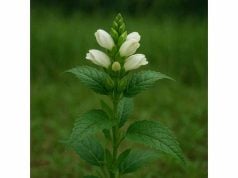
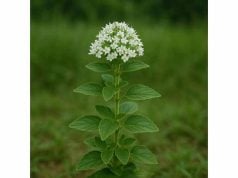
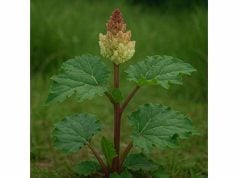
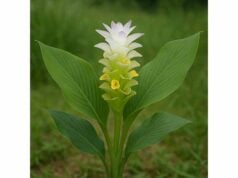
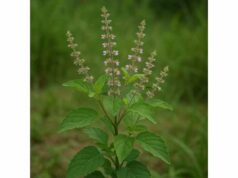
Tagara, also known as Valeriana wallichii, is a traditional Ayurvedic herb valued mainly for its calming effect on the nervous system. It belongs to the broader Valeriana group, a family of aromatic roots and rhizomes long used to support sleep, reduce restlessness, and ease mild stress-related tension. In traditional practice, Tagara is used not only as a sleep-supporting herb, but also for mental overactivity, irritability, spasmodic discomfort, and certain digestive complaints that seem to worsen under stress. Modern research on Tagara itself is still limited, yet the available clinical and pharmacological literature suggests that it may help with sleep onset, sleep quality, and anxious tension, especially when used consistently and in appropriately prepared forms. Its chemistry includes volatile oils, sesquiterpenes, valepotriates, and other compounds that appear to influence calming pathways in the brain. Even so, Tagara is not a one-size-fits-all remedy. Its value depends on the product, the dose, and the person using it.
Quick Overview
- Tagara is best known for supporting sleep onset and easing mild nervous tension.
- Its calming effects are linked to volatile oils, sesquiterpenes, and valepotriate-type compounds.
- A common adult bedtime extract range is 400 to 600 mg taken 30 to 60 minutes before sleep.
- Traditional powdered forms used in studies have also been given at 4 g three times daily for 30 days.
- Avoid Tagara during pregnancy, while breastfeeding, before driving, or with sedatives unless a clinician approves.
Table of Contents
- What Tagara Is and How It Has Been Used
- Key Ingredients and Medicinal Properties
- Tagara Health Benefits and What the Evidence Suggests
- Does Tagara Help With Sleep and Stress
- How to Use Tagara in Daily Practice
- Dosage, Timing, and Duration
- Safety, Side Effects, Interactions, and Who Should Avoid It
What Tagara Is and How It Has Been Used
Tagara is the Sanskrit and Ayurvedic name commonly used for Valeriana wallichii, an aromatic medicinal root from the Himalayan region. The part most often used is the underground root and rhizome, which has a strong, earthy odor that hints at its volatile oil content. In classical Ayurvedic use, Tagara is described as a calming herb that can help quiet an overactive mind, promote sleep, and reduce agitation. In practical terms, that means it has long been chosen for people who feel tired yet unable to settle, especially at night.
Traditional use has not been limited to sleep alone. Across the broader Valeriana literature, roots and rhizomes have also been used for spasmodic discomfort, pain, palpitations, dysmenorrhea, emotional distress, and digestive complaints linked to tension. That does not mean all of these uses are equally well proven in modern trials. It does mean Tagara belongs to a long-standing medicinal tradition in which calming the nervous system is often connected with better digestion, less muscle tightness, and improved daily functioning. This broader traditional picture helps explain why Tagara is still included in many multi-herb nighttime and stress-support formulas today.
A useful point for readers is that Tagara sits at the intersection of traditional herbal medicine and modern supplement use. Some products are sold as powder, some as tablets or capsules, and others as extracts with very different strengths. That matters because one Tagara product may behave quite differently from another. The clinical literature also shows that Tagara-specific human research is much smaller than the research base for European valerian root. The best way to think about Tagara is as a promising traditional calming herb with encouraging, but still limited, human evidence.
Key Ingredients and Medicinal Properties
The medicinal value of Tagara comes from a complex mixture of plant chemicals rather than one single active ingredient. In the broader Valeriana family, researchers have identified iridoids, sesquiterpenoids, flavonoids, lignans, alkaloids, and essential oil constituents. In everyday language, that means Tagara contains both volatile compounds that contribute to its aroma and less volatile compounds that may shape its calming, antispasmodic, and neuroactive effects. This mixed chemistry is one reason herbal extracts can vary so much between products.
Among the most discussed compounds in valerian-type herbs are valerenic-acid-related constituents, valeranone, and valepotriates. These are often linked with sedative and anxiolytic activity, although not every product contains them in the same proportion. The literature also suggests that some of these compounds may influence GABA-related signaling in the brain, which is important because GABA is one of the body’s main calming neurotransmitter systems. That proposed mechanism helps explain why Tagara is often grouped with other soothing herbs such as chamomile’s active compounds when people look for plant-based support for stress and sleeplessness.
From a practical perspective, Tagara’s core medicinal properties can be summarized in five ways:
- It appears mildly sedative.
- It may help reduce anxious tension.
- It shows antispasmodic potential, which may matter when stress and muscle tightness come together.
- It has antioxidant and anti-inflammatory activity in laboratory settings.
- It may offer broader neuroprotective effects, though those areas remain far less certain clinically than its traditional sleep use.
The most important takeaway is that Tagara is better understood as a calming nervous-system herb than as a cure for multiple unrelated conditions.
Tagara Health Benefits and What the Evidence Suggests
The most plausible health benefit of Tagara is support for sleep, especially when trouble falling asleep is tied to mental restlessness or stress. In clinical and traditional settings, people do not usually take Tagara for instant sedation. Instead, it is more often used to encourage a calmer transition into sleep and a more settled night. That distinction matters because herbs in the valerian family tend to work more like gentle regulators than like fast pharmaceutical hypnotics.
A second likely benefit is mild stress and anxiety support. Across valerian research more broadly, reductions in nervous tension and anxiety have been reported, though study quality varies. Tagara-specific evidence is smaller, but the direction of findings is consistent enough to make the herb worth considering for people whose stress shows up as mental agitation, shallow sleep, or tension-related discomfort. It fits this role better than it fits bold claims about mood disorders, cognition, or major psychiatric conditions. In that sense, Tagara may be more comparable to ashwagandha for stress support as a supportive herb than as a stand-alone treatment.
There are also traditional and laboratory-based suggestions that Tagara may help with spasmodic discomfort, digestive unease linked to stress, and certain pain states. These uses make sense within a broader relaxing pharmacology, but they are not supported by the same level of human evidence as sleep support. For most readers, the reasonable evidence-based ranking is this: strongest for sleep-related support, modest for mild anxious tension, possible but still uncertain for spasm-related and stress-linked digestive complaints, and too preliminary for more ambitious health claims.
Does Tagara Help With Sleep and Stress
The clearest Tagara-specific human evidence comes from small Ayurvedic clinical studies. In a 2015 clinical study on primary insomnia, Tagara powder was associated with significant improvements in sleep initiation, sleep duration, disturbed sleep, and the effect of poor sleep on routine activities. The study was small, and it compared Tagara with another herb rather than with placebo, so it does not settle the question completely. Still, it offers direct human evidence that Tagara may help people who struggle with sleep onset and sleep continuity.
A newer randomized controlled trial from 2024 used Tagara churna as one arm of treatment for insomnia disorder. In that study, both the Tagara group and the comparison formula group improved significantly on insomnia, sleepiness, and stress-related measures over 30 days, with the comparison formula performing better on some outcomes. The important detail is that Tagara still showed measurable benefit and appeared to have a good short-term safety profile based on liver and kidney-related lab measures within the study period. This supports the idea that Tagara is a credible traditional sleep-support herb, even if it is not always the strongest option in every formula comparison.
When Tagara is placed beside the wider valerian evidence base, the overall picture becomes more convincing, but also more nuanced. Systematic review data on valerian root suggest a potential benefit for subjective sleep quality and anxiety, while also emphasizing that outcomes vary because extracts and preparations differ. That is one reason some people respond well to Tagara while others notice very little. If sleep problems are driven by stress, racing thoughts, or bedtime restlessness, Tagara is more likely to make sense than if insomnia is caused by pain, sleep apnea, stimulant use, or a major mood disorder. For readers comparing herbs, passionflower for sleep support is often discussed in a similar context.
How to Use Tagara in Daily Practice
Tagara is commonly used in three broad forms: powdered root, capsules or tablets, and liquid or dry extracts. Traditional powdered forms are often chosen in Ayurveda, especially when the herb is used as part of a larger plan for sleep and nervous-system balance. Capsules and standardized extracts are more common in modern supplement practice because they are easier to measure and often easier to tolerate than loose powder. Tea is less common for Tagara than for some other calming herbs because the taste and smell can be strong, though decoctions and infusions are still used in some traditional contexts.
How you use Tagara depends on your goal. For bedtime support, it is usually taken in the evening or about 30 to 60 minutes before sleep. For daytime stress support, smaller divided doses may be used, but this comes with a trade-off: the same calming effect that feels helpful in the evening may feel dulling during the day. People who are sensitive to sedating herbs often do better starting at night first. Those who want a gentler nighttime blend sometimes combine Tagara with herbs such as lemon balm for evening relaxation or chamomile rather than taking large amounts of Tagara alone.
Consistency matters more than people often expect. Guidance on valerian-type preparations notes a gradual onset of effect, with better results commonly seen over two to four weeks rather than after one dose. That makes Tagara a poor choice for people who want a guaranteed same-night knockout effect, but a more reasonable choice for people looking to settle a pattern of bedtime tension or mild chronic sleeplessness.
A simple way to evaluate response is to keep a short sleep log for one to two weeks and note:
- What time you took the product.
- How long it took to fall asleep.
- Whether you woke up during the night.
- Whether you felt clear or groggy in the morning.
This kind of tracking helps you tell whether Tagara is genuinely helping or just adding drowsiness without better sleep quality.
Dosage, Timing, and Duration
There is no single universal Tagara dose because products vary widely in strength, extraction method, and standardization. The clearest practical approach is to separate traditional powder dosing from extract dosing. In Tagara-specific Ayurvedic insomnia studies, powdered Tagara has been used at 4 g three times daily for 30 days. That is a traditional therapeutic amount, not a casual starting dose for everyone. In another clinical report on stress management, Valeriana wallichii extract was used at 500 mg per capsule twice daily. These examples show how wide the dosing range can be depending on the preparation.
For modern consumers using valerian-type standardized extracts, a practical adult bedtime range is often 400 to 600 mg taken about 30 to 60 minutes before sleep. Some monograph guidance also describes related oral preparations equivalent to roughly 0.3 to 3 g of comminuted herbal material, depending on the form. That does not mean every Tagara supplement should be dosed exactly like Valeriana officinalis, but it offers a useful safety-oriented reference point when product labels are vague. The best rule is to follow the product’s standardization and manufacturer instructions, then adjust only with clinician guidance.
As for timing and duration, bedtime use makes the most sense for most people. If Tagara is being used for mild nervous tension during the day, start very low and assess drowsiness carefully. For sleep, give the herb at least several nights, and preferably one to two weeks, before deciding it is ineffective. If there is no meaningful improvement after about two weeks of consistent use, or if symptoms worsen, it is reasonable to stop and reassess the underlying cause.
A few sensible dosing habits can reduce problems:
- Start with the lowest effective bedtime dose.
- Avoid mixing Tagara with alcohol or other sedatives.
- Do not increase the dose quickly just because the first dose felt mild.
- Stop earlier in the evening if morning grogginess becomes a pattern.
Safety, Side Effects, Interactions, and Who Should Avoid It
Tagara is usually discussed as a relatively well-tolerated calming herb, but natural does not mean risk-free. The most likely problems are next-day drowsiness, mental slowing, lightheadedness, and mild stomach upset. Regulatory information on valerian-type preparations also notes gastrointestinal symptoms such as nausea and abdominal cramps. These effects may be more likely when the dose is too high, when the herb is combined with other sedatives, or when someone uses a strong extract without realizing how concentrated it is.
The main interaction concern is additive sedation. Tagara should be used carefully, or avoided, with alcohol, sleep medicines, benzodiazepines, sedating antihistamines, some anti-anxiety medications, and other strong calming supplements. Driving, operating machinery, and any task that needs quick reaction time are poor fits after using Tagara, especially while you are still learning how it affects you. People sometimes assume herbs are automatically milder than medication, but stacking several calming agents can produce more impairment than expected. For some people seeking a gentler option, lavender for anxiety and sleep may feel less sedating, though it also has its own precautions.
Some groups should be more cautious than others. Avoid Tagara during pregnancy and breastfeeding unless a qualified clinician specifically recommends it, because safety data are too limited. It is also best avoided in children under 12 unless prescribed professionally, and it deserves extra caution before surgery or when taking medicines that affect the central nervous system.
Persistent insomnia should not be brushed aside. Seek medical advice if you have any of the following:
- Loud snoring or pauses in breathing during sleep.
- Panic symptoms or worsening anxiety.
- Depression or marked daytime fatigue.
- Sleep problems lasting several weeks despite self-care.
- Dependence on alcohol or sleep medicines to get through the night.
Tagara can be a helpful support tool, but it should not delay proper assessment when sleep problems are chronic or severe.
References
- Valerian Root in Treating Sleep Problems and Associated Disorders-A Systematic Review and Meta-Analysis 2020 (Systematic Review)
- The potential of Valeriana as a traditional Chinese medicine: traditional clinical applications, bioactivities, and phytochemistry 2022 (Review)
- Efficacy of Mamsyadi Ghana capsule in Insomnia Disorder – A randomized controlled trial 2024 (RCT)
- A comparative clinical study on the effect of Tagara (Valeriana wallichii DC.) and Jatamansi (Nardostachys jatamansi DC.) in the management of Anidra (primary insomnia) 2015 (Clinical Trial)
- European Union herbal monograph on Valeriana officinalis L., radix 2016 (Monograph)
Disclaimer
This article is for educational purposes only and does not replace medical advice, diagnosis, or treatment. Herbal products can affect people differently depending on age, pregnancy status, medical conditions, allergies, and prescription medicines. Because Tagara may cause drowsiness and may interact with sedatives or other nervous-system-active drugs, it is best to check with a qualified healthcare professional before using it regularly, especially for chronic insomnia, anxiety symptoms, or complex health conditions.
If you found this guide useful, please consider sharing it on Facebook, X, or your preferred platform so others can learn about Tagara more safely and clearly.