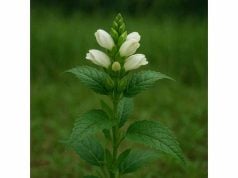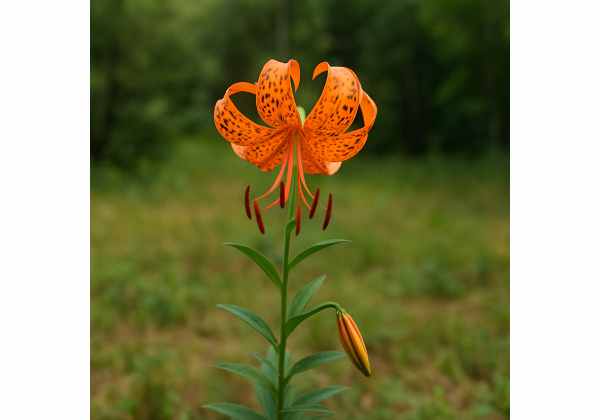
Tiger lily, botanically known as Lilium lancifolium, is one of those plants that invites both admiration and caution. It is famous as an ornamental flower, yet in East Asian food and traditional medicine the bulb has also been used as a functional food and herbal ingredient. That difference matters. Most medicinal discussion centers on the bulb, not the decorative petals in a garden bouquet.
Traditionally, tiger lily bulb has been used for dry cough, throat and lung irritation, restlessness, disturbed sleep, and general weakness after illness. Modern research adds another layer of interest by highlighting its polysaccharides, steroidal saponins, phenolic compounds, and other metabolites with antioxidant and anti-inflammatory potential. Even so, the science is still developing. The best direct human evidence so far is limited, while many broader claims come from laboratory studies or from research on the wider Lilium group rather than Lilium lancifolium alone.
A useful article on tiger lily has to stay grounded. This is a promising medicinal food plant, but it is not a shortcut remedy, and its form, dose, and safety context all matter.
Quick Overview
- Tiger lily bulb may help support dry, irritated respiratory tissues and gentle digestive nourishment in traditional use.
- The strongest direct modern human evidence so far is for modest improvement in joint pain and quality of life in one 12-week trial.
- A traditional dried lily bulb range is about 6 to 12 g per day, but extracts and tablets are not interchangeable with whole bulb.
- Pregnant or breastfeeding people should avoid self-prescribing medicinal doses because safety data are limited.
- Homes with cats should keep tiger lily plants and pollen completely out of reach, because true lilies are highly toxic to cats.
Table of Contents
- What tiger lily is and which part is actually used
- Key ingredients and medicinal properties of tiger lily
- Tiger lily health benefits with realistic expectations
- Traditional uses and where the evidence is stronger or weaker
- How to use tiger lily in foods, decoctions, powders, and extracts
- Dosage, timing, and how long to use it
- Safety, side effects, and who should avoid it
What tiger lily is and which part is actually used
Tiger lily is a true lily in the genus Lilium, and it is often listed under the botanical name Lilium lancifolium, with Lilium tigrinum treated as a historical synonym in some gardening and herbal sources. The plant is native to East Asia and is widely cultivated for its striking orange flowers covered in dark spots. That ornamental identity is familiar to most readers. Its medicinal identity is less familiar and often misunderstood.
The first point to get right is this: when people discuss medicinal or food uses of tiger lily, they usually mean the bulb. The bulb is the underground storage organ made of fleshy scales. It has been used in soups, porridges, decoctions, powders, and traditional formulas. The flowers may appear in decorative or culinary settings, and roots have also been studied in laboratory work, but the bulb is the main practical and medicinal part.
This matters because many generalized “lily bulb” claims are not specific to tiger lily alone. In traditional Chinese medicine, official medicinal lily bulb sources include Lilium lancifolium as well as other species. So if a study says “Lilii Bulbus,” it may include tiger lily, but it may not refer to tiger lily alone. A careful reader should treat those findings as relevant background, not always as species-exclusive proof.
Tiger lily also sits in an unusual space between food and medicine. In East Asian traditions, it is considered both edible and therapeutic. The bulb is often described as nourishing, moistening, and calming rather than sharply stimulating. That profile helps explain why it has been used for dry cough, irritability, disturbed sleep, and depletion after illness. It is not typically framed as a hot, pungent, or aggressive herb.
At the same time, ornamental tiger lilies sold for gardens or bouquets are not the same thing as medicinal-grade bulb material. Garden plants may be treated with pesticides, fertilizers, or preservatives that make them unsuitable for medicinal or culinary use. Cultivar confusion is another issue. A decorative plant labeled “tiger lily” may not be appropriate for herbal self-care.
A practical way to think about the plant is this:
- the bulb is the main medicinal and food part
- the ornamental flower is not a safe substitute for medicinal material
- the species name matters, because many lily claims are genus-level rather than tiger-lily-specific
- the form matters, because cooked bulb, dried powder, extract, and ornamental plant parts are not interchangeable
This distinction is especially important for people who assume a beautiful garden plant is automatically a casual home remedy. Tiger lily can be useful, but it should be approached as a specific medicinal food plant, not as a generic decorative flower with borrowed wellness claims.
Key ingredients and medicinal properties of tiger lily
Tiger lily’s medicinal interest comes mostly from the chemistry of the bulb. Recent analytical work has highlighted steroidal saponins, polysaccharides, phenolic compounds, flavonoids, amino acids, minerals, starch, and smaller amounts of other bioactive metabolites. Together, these help explain why the bulb is studied for tissue-soothing, antioxidant, anti-inflammatory, and functional-food applications.
Polysaccharides are among the most discussed components. In herbal and food science research, lily polysaccharides are often linked to moisturizing, immunomodulatory, gut-supportive, and tissue-protective effects. These are broad categories rather than guaranteed outcomes in humans, but they fit well with tiger lily’s traditional use as a moistening and nourishing bulb rather than a stimulating tonic. In practical terms, polysaccharide-rich botanicals often act more like supportive foods than like sharp pharmaceutical agents, which is why tiger lily resembles other gentle restorative materials more than it resembles strongly activating herbs.
Steroidal saponins are another major group. These molecules are chemically interesting because they are often associated with anti-inflammatory, membrane-active, and signaling effects in plant pharmacology. In tiger lily, recent extraction studies suggest that saponins may be among the most important compounds behind the bulb’s modern research profile. A few specific lily saponins and related compounds, including regaloside-like constituents, have drawn attention in anti-inflammatory and joint-related work.
The bulb also contains phenolic compounds such as p-coumaric acid and ferulic acid, along with broader polyphenolic fractions. These compounds help support antioxidant activity and may partly explain why tiger lily extracts are discussed in relation to skin appearance, inflammation, and tissue protection. This does not mean the bulb acts like a concentrated antioxidant supplement, but it does mean it has a plausible biochemical basis for some of its traditional uses.
Other useful components include:
- starches and sugars that support its role as a medicinal food
- proteins and amino acids that add nutritional value
- minerals such as calcium and iron in genus-level lily analyses
- carotenoid and flavonoid fractions in some parts of the plant
- root and bulb constituents studied for skin and pigment-related pathways
A sensible summary of tiger lily’s medicinal properties would include the following themes:
- soothing and moistening
- mildly calming
- anti-inflammatory potential
- antioxidant potential
- functional food value
- possible joint-support and skin-support activity in selected preparations
Still, chemistry does not prove equal benefit across all preparations. A bulb decoction used traditionally is not the same as a modern extract prepared with advanced solvent systems. This is similar to the gap between whole herbs and concentrated actives discussed in guides to ginger extract dosing, where the plant name stays the same but the practical effect can change with concentration and standardization.
The most responsible way to interpret tiger lily’s chemistry is to see it as promising and biologically active, but not yet fully translated into broad clinical certainty. The bulb has real medicinal character, especially as a food-like herb, yet the strongest biochemical findings still need careful human confirmation.
Tiger lily health benefits with realistic expectations
Tiger lily has several appealing health claims attached to it, but they do not all rest on the same level of evidence. Some come from long traditional use, some from test-tube and animal studies, and only a small number from direct human trials. The most helpful approach is to separate plausible support from proven treatment.
Joint comfort
This is currently the clearest direct human research area for Lilium lancifolium. In a 12-week randomized, double-blind, placebo-controlled trial, a tiger lily preparation was associated with reduced joint pain scores and improved quality of life. That is meaningful, but it still needs perspective. One positive trial does not turn tiger lily into a standard osteoarthritis therapy, and the findings may not apply equally to every bulb powder or extract on the market.
Antioxidant and anti-inflammatory support
This is one of tiger lily’s strongest laboratory stories. Bulb extracts show antioxidant activity and appear to influence inflammatory signaling pathways. These findings fit the plant’s chemistry and help explain why researchers are interested in it. But this remains a bridge area between promising mechanisms and real-world outcomes. In other words, the bulb clearly does something biologically; what is less certain is how large and consistent the effect is in ordinary clinical use.
Dry respiratory and throat support
Traditional use strongly favors tiger lily for dry cough, irritated respiratory tissues, and depleted states after illness. This is a reasonable use category, especially because the bulb is described as moistening rather than harshly expectorant. Still, modern species-specific clinical data here are limited. The claim is best framed as traditional support with plausible relevance, not as a proven respiratory therapy.
Calming and sleep-related support
Genus-level lily traditions include uses for irritability, palpitations, poor sleep, and emotional agitation. Tiger lily is part of that larger story, but again, the direct clinical evidence is still thin. It makes sense to describe this as a traditional calming role rather than a modern evidence-based sleep aid.
Skin and pigment-related applications
Tiger lily root extract has shown anti-melanogenic activity in laboratory work, which means it may influence pathways involved in pigmentation. This is interesting for cosmetic science, but it should not be turned into a casual promise about treating hyperpigmentation, melasma, or other skin disorders at home.
A realistic benefit summary looks like this:
- most credible direct human evidence: joint discomfort
- strongest traditional use categories: dry cough, dryness, restlessness, and depleted states
- best laboratory support: antioxidant, anti-inflammatory, and skin-related pathways
- weakest areas for strong claims: broad immune, metabolic, and anti-aging promises
For readers comparing it with better-studied joint botanicals, tiger lily is nowhere near as established as boswellia for joint-focused support. Tiger lily’s value lies more in its combined identity as a medicinal bulb and functional food.
That combined identity is important. A plant can be genuinely helpful without needing to act like a drug. Tiger lily may be most useful when thought of as a restorative, tissue-supportive medicinal food with a few emerging modern applications, rather than as a high-impact cure-all.
Traditional uses and where the evidence is stronger or weaker
Traditional East Asian medicine does not usually describe tiger lily in the same language as modern supplement marketing. Instead of bold claims about detox, immunity, or fat burning, lily bulb is classically framed as moistening, cooling, calming, and supportive for dry or depleted states. This older framework gives useful context because it helps explain why the bulb is used for symptoms that seem different on the surface but share a similar pattern underneath.
Traditionally, tiger lily bulb and related medicinal lily bulbs have been used for:
- dry cough and lung irritation
- throat dryness
- blood-streaked sputum in heat-dryness patterns
- irritability and emotional restlessness
- disturbed sleep
- recovery after febrile or draining illness
- general weakness with dryness and low resilience
These uses make more sense when you remember that tiger lily is not a pungent respiratory herb. It is closer to a soothing medicinal food than to a strong expectorant. In that way, its traditional role overlaps more naturally with soothing herbs for dry, irritated tissues than with sharper aromatic herbs aimed at clearing heavy congestion.
Where does modern evidence line up well with that tradition?
It lines up reasonably well with the idea that lily bulbs can support irritated tissues, mild inflammation, and restorative states. The plant’s polysaccharides, starches, and saponins help make that traditional profile plausible. Modern research also supports antioxidant and anti-inflammatory effects, which fit the broader soothing reputation.
Where is the evidence weaker?
It is weaker whenever older symptom language gets translated too aggressively into modern disease claims. For example, a traditional use for calming “restlessness” should not automatically become a modern promise for clinically significant insomnia. A traditional use for “moistening the lungs” should not be rewritten as proof of benefit in asthma or pneumonia. Those translations go too far.
Another place to be careful is with formula evidence. Tiger lily appears in compound prescriptions, and some of those formulas are studied for mood or sleep-related outcomes. But that does not prove tiger lily alone is responsible. A multi-herb formula is a different intervention from a single-species bulb powder.
There is also a practical cultural point worth keeping in view. Traditional lily use often happens through preparation methods that soften the bulb’s taste and fit it into food, soups, decoctions, or therapeutic porridges. This supports the idea that tiger lily is meant to work gently and cumulatively rather than dramatically.
So the traditional picture remains valuable, but only when it is translated honestly:
- strong as a guide to how the herb is used
- useful as a clue to which tissues or symptom patterns it may fit
- less useful when stretched into modern disease-level certainty
- most reliable when paired with preparation-specific evidence rather than broad imagination
That balanced reading protects the reader from two common mistakes: dismissing tradition as meaningless, or treating it as if it were already modern clinical proof.
How to use tiger lily in foods, decoctions, powders, and extracts
Tiger lily works best when the preparation matches the goal. This is not an herb where every form does the same job. The bulb can function as food, as a traditional decoction ingredient, as a powdered supplement, or as a standardized extract, and each form has a different practical meaning.
Cooked bulb in food
This is the gentlest and most traditional entry point. In food systems where medicinal lily bulbs are used, they may be simmered in soups, porridges, broths, and restorative dishes. Food use is especially attractive for people interested in nourishment, digestive gentleness, and mild respiratory or constitutional support rather than aggressive symptom relief.
Decoction
A decoction is a stronger traditional medicinal preparation made by simmering the dried bulb in water. This is a more classical herbal route than simple tea infusion because the bulb is denser and more food-like than delicate leaves or flowers. Decoctions are often chosen when the goal is dry cough, throat dryness, or general depletion.
Powder or capsules
Powdered bulb is one of the simplest modern formats. It is practical for people who want consistency without cooking. Still, powder retains much of the whole-bulb character and should be understood differently from a refined extract. It is often the better choice when the goal is traditional bulb support rather than targeting one narrow outcome.
Standardized extracts
These are the most research-friendly modern preparations. The 2024 joint-pain trial used a defined tiger lily product rather than ordinary kitchen bulb. Extracts are useful when a manufacturer can show composition and standardization, but they also create the greatest risk of overgeneralization. A joint-focused extract cannot automatically stand in for every traditional use of the bulb.
Topical or cosmetic applications
Root and lily-derived cosmetic research is growing, but this is still an emerging category. A laboratory finding about pigment pathways does not mean homemade tiger lily pastes are a good idea. Topical use should be handled carefully, especially because the plant can be confused with ornamental material not intended for self-care.
A practical way to choose the form is this:
- Use food preparations for gentle nourishment and traditional support.
- Use decoctions when you want a more classic medicinal approach.
- Use powder for convenience and steadier everyday use.
- Use standardized extracts only when the product clearly explains what it contains.
- Avoid improvised use of ornamental flowers or garden bulbs.
This preparation logic is quite different from aromatic infusions such as chamomile-style calming teas. Tiger lily is denser, more food-like, and more dependent on bulb quality and proper sourcing.
The most important practical rule is simple: only use medicinal or food-grade bulb material from a trusted source. Do not assume that a decorative tiger lily from a nursery or florist belongs in a soup pot, a tincture jar, or a home remedy.
Dosage, timing, and how long to use it
Tiger lily does not have one universal dose because the literature covers several different things at once: traditional dried medicinal bulb, edible cooked bulb, concentrated modern extracts, and trial-specific products. A useful dosage section therefore has to distinguish between traditional whole-bulb use and modern extract use.
For traditional dried medicinal lily bulb preparations that include Lilium lancifolium as an official source, a commonly cited pharmacopoeial oral range is about 6 to 12 g per day. This range is usually discussed for decoctions or similar traditional preparations, not for concentrated extracts. It is a helpful practical benchmark because it gives readers a conservative whole-herb frame.
A workable preparation guide looks like this:
- Dried bulb decoction: about 6 to 12 g per day
- Powdered bulb: often started lower, such as 1 to 3 g once or twice daily
- Cooked food use: flexible, meal-based, and generally gentler than medicinal dosing
- Extracts or tablets: follow product-specific instructions because they are not equivalent to whole bulb
Timing depends on the goal.
- For dry respiratory or throat support, many people prefer use earlier in the day or after meals.
- For restorative or calming use, evening dosing may make more sense.
- For digestive comfort, taking the bulb after food is usually gentler than taking it on an empty stomach.
- For extract trials, follow the product schedule rather than guessing.
Duration also matters. Food use can be ongoing if the bulb suits the person and comes from a safe edible source. Traditional medicinal use is often tried for a few days to a few weeks depending on the goal. Extract-based self-testing is usually more useful over several weeks, because benefits such as joint comfort or general restorative support may not appear immediately.
A few common dosing mistakes are worth avoiding:
- assuming whole bulb and standardized extract are interchangeable
- copying a research product without knowing its actual composition
- taking a medicinal range from one lily species and applying it casually to another plant part
- increasing dose quickly because the herb is “just a food”
That last mistake matters more than many people expect. Medicinal foods still deserve dosing respect. This is similar to the way whole herbs differ from concentrated formats in ginger food use versus stronger medicinal preparations.
The safest approach is to begin at the low end, use a trusted preparation, and reassess after one to two weeks for traditional uses or after several weeks for more structured extract use. If the herb does not seem to help, increasing indiscriminately is usually not the best answer.
Safety, side effects, and who should avoid it
Tiger lily safety depends heavily on who is using it, what form is being used, and which species or product is actually in hand. This is a plant where a calm, precise safety discussion is much more useful than a blanket statement that it is either fully safe or inherently dangerous.
For humans, medicinal or edible lily bulb preparations appear to be tolerated reasonably well in traditional use when sourced appropriately and used in moderate amounts. Still, human safety research is limited. That means the herb should be approached conservatively, especially in extract form.
Possible side effects include:
- mild stomach upset
- nausea if taken in a concentrated form
- digestive heaviness from large food amounts
- allergy or irritation in sensitive individuals
- unpredictability when using poorly labeled extracts
The biggest practical human safety issue is not dramatic toxicity. It is confusion. Readers may confuse ornamental tiger lilies with medicinal-grade bulb material, use the wrong species, or prepare bulbs that were never intended for human consumption. Garden-center plants may carry pesticide residues or belong to decorative lines not selected for food use.
Pregnant or breastfeeding people should avoid self-prescribing medicinal doses because the evidence base is too thin. Children, people with multiple chronic illnesses, and anyone taking several supplements at once should also be more cautious. Extracts may concentrate compounds in ways that do not resemble ordinary food use.
There is also a broader preparation issue. A root extract studied in a lab, a bulb tablet used in a clinical trial, and a cooked bulb in soup are not interchangeable from a safety standpoint. Concentration changes risk.
One safety point deserves special emphasis: tiger lily is highly toxic to cats. True lilies of the genus Lilium, including tiger lily, are notorious for causing severe kidney injury in cats. Even small exposures to petals, leaves, pollen, or water from a vase can be dangerous. This matters even if the article is about human herbal use, because many readers may keep the ornamental plant at home.
So who should avoid or use extra caution with tiger lily?
- pregnant or breastfeeding people
- anyone relying on poorly labeled extracts
- people with known plant allergies
- households with cats
- anyone tempted to use decorative garden plants as medicine
A helpful way to think about risk is this:
- edible, food-grade bulb from a trusted source: lower risk when used moderately
- traditional dried medicinal bulb: still needs proper dosing and sourcing
- concentrated extracts: more uncertainty, more reason to follow product-specific guidance
- ornamental plant parts in the home: serious pet risk, especially for cats
Tiger lily is not an herb for careless improvisation. It can fit well into thoughtful medicinal-food practice, but only when the source, form, dose, and household context are all considered.
References
- Traditional uses, nutritional properties, phytochemical metabolites, pharmacological properties, and potential applications of Lilium spp.: a systematic review 2025 (Systematic Review)
- The Effects of Lilium lancifolium Thunb. on the Alleviation of Joint Pain: A Randomized, Double-Blind, Placebo-Controlled Clinical Trial 2024 (RCT)
- Extraction and Identification of Active Components from Lilium lancifolium Based on NADES-UHPLC-MS/MS Technology 2025
- Anti-Melanogenic Effects of Lilium lancifolium Root Extract via Downregulation of PKA/CREB and MAPK/CREB Signaling Pathways in B16F10 Cells 2023
- Lily toxicity in the cat 2010 (Safety Review)
Disclaimer
This article is for educational purposes only and is not a substitute for medical advice, diagnosis, or treatment. Tiger lily is a medicinal food plant with interesting traditional and emerging research uses, but the clinical evidence remains limited and product quality varies. Speak with a qualified healthcare professional before using tiger lily medicinally if you are pregnant, breastfeeding, have a chronic health condition, or are considering concentrated extracts instead of food-grade bulb preparations.
If you found this article helpful, please share it on Facebook, X, or your preferred platform so others can discover it too.