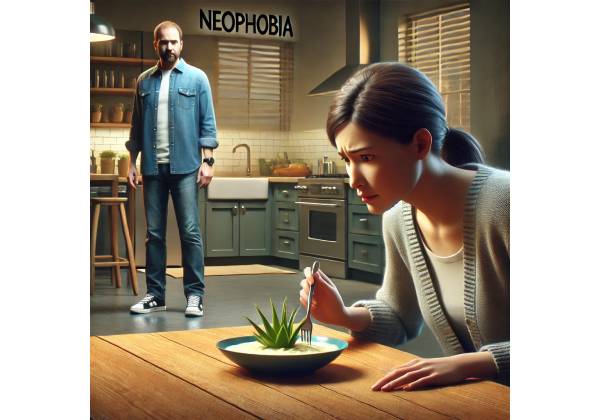
Neophobia is a strong fear of new or unfamiliar things. For some people, it shows up as marked distress around new places, new routines, new foods, new people, or any situation that feels uncertain and unfamiliar. A mild caution around novelty is normal and can even be protective. Neophobia becomes a problem when the fear is intense, persistent, and disruptive enough to limit daily life. That may mean avoiding travel, refusing unfamiliar foods, resisting needed changes at work, or feeling overwhelmed by everyday situations that other people handle with relative ease.
The term is used broadly, and in clinical settings the pattern is often assessed through the lens of anxiety disorders, especially specific phobia. In children, one common form is food neophobia, which can be part of normal development but may also become severe. Understanding the difference matters because effective treatment depends on the cause, the context, and the level of impairment.
Table of Contents
- What Neophobia Actually Means
- Signs and Symptoms
- Causes and Risk Factors
- How Neophobia Is Diagnosed
- Effects on Daily Life
- Treatment and Therapy Options
- Coping and Self-Management
- When to Seek Help and Outlook
What Neophobia Actually Means
Neophobia means fear of what is new, unfamiliar, or unknown. At its most basic level, it describes a strong tendency to pull back from novelty. That novelty might involve objects, situations, experiences, environments, or foods. The term can sound broad because it is broad. In everyday language, it may refer to a personality style marked by discomfort with change. In health and mental health settings, it matters most when the fear is severe enough to cause significant anxiety, avoidance, or loss of function.
A useful distinction is the difference between caution and impairment. Most people feel some hesitation in new situations. Starting a new job, tasting an unfamiliar meal, moving to another city, or using unfamiliar technology naturally brings some uncertainty. That is not automatically a disorder. Neophobia becomes clinically important when the reaction is disproportionate to the actual risk, happens repeatedly, and begins to control choices that a person would otherwise make.
In adults, neophobia may center on:
- unfamiliar places or travel
- changes in routine
- new social or work demands
- unfamiliar products or technologies
- unfamiliar foods or textures
- situations with uncertain outcomes
In children, one of the best-known patterns is food neophobia. Many children go through a stage in which they resist new foods, especially in the early years. That can be developmentally common. The concern rises when refusal is extreme, long-lasting, nutritionally limiting, or tied to intense fear rather than ordinary preference.
It is also important to note that neophobia is not usually a stand-alone formal diagnosis with its own unique test. Instead, clinicians often look at whether the symptoms fit a broader condition such as specific phobia, generalized anxiety, obsessive fear, trauma-related avoidance, or a feeding-related difficulty. The label helps describe the pattern, but treatment depends on what is driving the fear.
Some people experience neophobia as a fear of losing control. Others experience it as a fear of danger, embarrassment, contamination, failure, or sensory overload. That difference matters. Two people may both say they fear new things, yet one is reacting mainly to uncertainty while the other is reacting to a past trauma or an overwhelming sensory experience.
Understanding neophobia starts with a simple question: is this ordinary hesitation, or has fear of novelty started to narrow the person’s life? When fear becomes the main decision-maker, it deserves attention and often responds well to structured treatment.
Signs and Symptoms
The symptoms of neophobia can be emotional, physical, and behavioral. Some people notice them only in high-pressure situations, while others feel the reaction in many parts of daily life. The common thread is that novelty triggers anxiety rather than curiosity, and the person feels driven to retreat, delay, or refuse.
Emotional symptoms often include:
- intense apprehension before trying something unfamiliar
- dread about change or uncertainty
- irritability when routines are disrupted
- embarrassment about seeming inflexible or fearful
- panic when pressured to engage with something new
Physical symptoms may appear quickly, especially when the person cannot avoid the trigger. They can resemble a panic response and may include:
- racing heart
- sweating
- shakiness
- nausea
- chest tightness
- dizziness
- stomach discomfort
- muscle tension
- feeling unreal or disconnected
- a strong urge to escape
Behavioral symptoms are often the clearest sign that the problem has become significant. A person may:
- refuse invitations to unfamiliar places
- postpone decisions that involve change
- eat the same safe foods repeatedly
- avoid new medical treatments or procedures
- resist schedule changes even when necessary
- ask for extensive reassurance before trying something new
- leave situations early if the setting feels unfamiliar
Children may show neophobia differently. Instead of naming the fear, they may cling, cry, freeze, bargain, or have tantrums when faced with new experiences. In food neophobia, they may reject unfamiliar foods based on color, smell, texture, or appearance before tasting them. Adults are often better at masking symptoms, but the internal distress can still be severe.
One important feature is anticipatory anxiety. The distress may begin long before the new experience happens. A person can spend hours or days imagining worst-case scenarios, making backup plans, or trying to find a way out. This mental buildup often becomes as exhausting as the event itself.
Neophobia can also be mistaken for stubbornness, perfectionism, or poor adaptability. Sometimes those descriptions are based on real outward behavior, but they miss the inner experience. What looks like resistance may actually be fear. That matters because someone who is anxious needs a different response than someone who is merely uninterested.
The problem tends to follow a familiar cycle: unfamiliar trigger, rising anxiety, avoidance, brief relief, and then stronger fear the next time. That cycle is one reason neophobia can deepen over time if it is never addressed. The body learns that escape worked, so the next encounter feels even harder.
Causes and Risk Factors
Neophobia usually develops through a mix of temperament, learning, and life experience. There is rarely one single cause. More often, the brain has learned to treat unfamiliarity as a warning signal, and that lesson becomes stronger with repetition.
A common pathway is direct experience. If something upsetting, humiliating, painful, or frightening happened in a new setting, the brain may connect novelty itself with danger. That can happen after a bad travel experience, a frightening school transition, a distressing medical procedure, a major move, or a difficult social encounter. The original event does not have to seem dramatic to other people for the learning to stick.
Another pathway is indirect learning. Children and adults can absorb fear by watching others. If a parent reacts with strong anxiety to unfamiliar foods, people, or places, a child may learn that novelty is unsafe. Repeated warnings, rigid routines, or high-pressure family environments can reinforce the same message even without a single dramatic event.
Risk factors may include:
- an anxious or behaviorally inhibited temperament
- family history of anxiety disorders or phobias
- previous panic attacks
- traumatic or highly stressful experiences
- sensory sensitivity
- perfectionistic thinking
- strong need for predictability or control
- chronic stress or sleep disruption
- limited exposure to varied environments early on
In some cases, neophobia overlaps with other patterns. A person who fears contamination may avoid new foods. A person with trauma may avoid unfamiliar places because unpredictability feels unsafe. A person with strong sensory sensitivity may resist novelty because the unknown brings overwhelming sounds, smells, or textures. This overlap does not make the fear less real, but it does change how clinicians think about treatment.
Food neophobia deserves separate mention because it is both common and complex. In early childhood, some reluctance toward new foods can be a normal developmental stage. It often improves with time and repeated low-pressure exposure. Still, when the behavior is severe, highly distressing, or tied to nutritional restriction, it may require closer evaluation.
It is also helpful to understand what does not explain neophobia very well. It is not simply laziness, rudeness, lack of intelligence, or weak character. People with strong novelty fear often spend a great deal of energy trying to function normally while concealing how anxious they feel. The avoidance may look voluntary, but the underlying alarm response often feels automatic.
The more a person escapes unfamiliar experiences, the more convincing the fear becomes. That is why risk factors and maintenance factors often blend together. An anxious temperament may start the pattern, but avoidance is usually what keeps it going.
How Neophobia Is Diagnosed
Diagnosis begins with a detailed history rather than a lab test or scan. A clinician wants to know what the person fears, how the fear shows up, how long it has been present, and how much it interferes with normal life. Because neophobia is a descriptive term more than a formal stand-alone diagnosis, the assessment often focuses on whether the person meets criteria for a broader anxiety-related condition.
A clinician will usually ask questions such as:
- What kinds of new situations trigger fear?
- Does the reaction happen every time or only in certain settings?
- How intense are the physical symptoms?
- What do you avoid because of this fear?
- How much does it interfere with work, school, relationships, diet, or health care?
- Did the pattern begin after a particular event?
- Are there other symptoms, such as obsessive thoughts, trauma reactions, or sensory overload?
When the pattern looks like a phobia, the main features often include:
- marked fear or anxiety about a specific type of trigger
- immediate or near-immediate distress on exposure
- active avoidance or endurance with intense discomfort
- fear out of proportion to actual risk
- persistence over time
- clear impairment in daily functioning
Differential diagnosis is important because several conditions can mimic or overlap with neophobia. A clinician may consider:
- specific phobia
- generalized anxiety disorder
- panic disorder
- obsessive-compulsive disorder
- trauma-related disorders
- autism-related sensory or rigidity patterns
- avoidant or restrictive eating problems when food is the main issue
That does not mean every person with neophobia has one of these conditions. It means the same outward behavior can come from different underlying mechanisms. For example, someone who refuses unfamiliar food might be driven by fear of contamination, sensory discomfort, fear of choking, or a more general reluctance toward novelty. Treatment works best when those differences are recognized early.
Medical review can matter as well. A person who experiences dizziness, chest tightness, stomach pain, or shortness of breath during anxious situations may need evaluation to rule out physical causes, especially if symptoms are new or severe. In many cases, the physical symptoms are part of anxiety, but it is wise not to assume.
A good diagnosis also looks at context. In a toddler, food neophobia may be part of a developmental phase. In an adult whose diet is shrinking, whose social life is limited, or whose work is affected by fear of change, the same broad label points to a different level of concern. The purpose of diagnosis is not to attach a dramatic label. It is to identify the real pattern accurately enough that treatment can be practical, targeted, and effective.
Effects on Daily Life
Neophobia can seem narrow from the outside, but its impact often spreads. That is because everyday life is full of novelty. Even small routines involve unfamiliar details, unexpected changes, and situations that cannot be fully controlled. When novelty itself feels threatening, ordinary life can become exhausting.
The effect on daily functioning may include:
- turning down travel, social invitations, or work opportunities
- staying with overly rigid routines to feel safe
- limiting diet to a short list of familiar foods
- delaying medical care or dental care because the setting feels unfamiliar
- resisting life transitions such as moving, dating, parenting, or changing jobs
- feeling dependent on other people to test or manage new situations first
The social cost can be significant. Friends, relatives, or coworkers may interpret the behavior as inflexibility, negativity, or lack of effort. Over time, the person with neophobia may feel misunderstood and stop explaining. That can lead to shame, secrecy, and isolation. Some people begin declining invitations before they even know the details because the effort of planning for uncertainty feels too draining.
Food-related neophobia can create its own complications. In children, it may increase tension around meals and make family eating routines stressful. In adults, a highly restricted diet can affect nutrition, travel, social eating, and quality of life. The issue is not only what a person refuses. It is also how much mental energy goes into maintaining a narrow sense of safety.
One of the most damaging effects is progressive avoidance. Avoidance gives immediate relief, which makes it feel effective. But that relief reinforces the idea that unfamiliar things are genuinely dangerous. The person’s comfort zone gets smaller, and more situations start to feel unmanageable. What began as a fear of a few new experiences can expand into a broader intolerance of change.
Common complications include:
- increased anxiety sensitivity
- depressed mood
- reduced confidence
- family conflict
- academic or work limitations
- poorer access to care
- missed opportunities for growth
- unhealthy coping through alcohol, sedatives, or compulsive reassurance seeking
There can also be an internal mismatch. A person may appear high-functioning while feeling distressed for hours before and after each new experience. This hidden burden is one reason neophobia is easy to underestimate. The person may still go to work, eat selectively, or attend events, but only at a high emotional cost.
The more daily life revolves around staying familiar, the more important it becomes to intervene. Neophobia does not need to be dramatic to be limiting. Its real cost often lies in the life a person stops living.
Treatment and Therapy Options
The most effective treatment depends on the pattern behind the fear, but for many people the core approach is cognitive behavioral therapy with gradual exposure. This combination is especially useful when neophobia functions like a phobia or an avoidance-based anxiety problem. The aim is not to throw someone into overwhelming situations. It is to help the nervous system learn, through repeated practice, that novelty can be tolerated without catastrophe.
Exposure-based treatment usually works step by step. A therapist and patient may build a ladder of feared situations, starting with milder forms of unfamiliarity and moving toward harder ones. For example, a person afraid of new places might begin by looking at photos, then visiting a new café briefly, then taking a short trip alone, and later building up to more complex travel or social experiences. In food neophobia, the ladder may involve looking at a new food, smelling it, touching it, tasting a tiny amount, and repeating exposure without pressure.
Treatment often includes:
- psychoeducation about how anxiety and avoidance reinforce each other
- gradual exposure to feared novelty
- cognitive work to challenge exaggerated danger beliefs
- behavioral experiments to test feared predictions
- reduction of safety behaviors and constant reassurance seeking
- parent coaching when the problem involves a child
Cognitive work matters because many people with neophobia carry hidden assumptions such as:
- new means unsafe
- uncertain means unmanageable
- discomfort means danger
- one bad outcome means the whole category is risky
Therapy helps bring those assumptions into the open and test them in a realistic way.
Medication is usually not the main treatment for a specific phobia pattern, but it may sometimes help when anxiety is severe or when another condition is also present. For example, a clinician may consider medication if the person has broader anxiety symptoms, frequent panic, or depression. Medicines can reduce symptom intensity, but they do not usually replace the need to reduce avoidance.
Some people benefit from practical adjuncts such as relaxation training, mindfulness, sleep improvement, or family-based support. These tools can lower overall stress and make therapy easier to tolerate. Still, they work best as supports rather than substitutes for direct treatment of the fear.
Progress is rarely perfectly smooth. Many people improve, then hit a stretch where treatment feels harder because they are approaching more difficult triggers. That stage is common and often meaningful. It reflects the point where genuine relearning is taking place.
When treatment is well matched to the problem, the outlook is often good. The goal is not to eliminate all uncertainty from life. It is to make uncertainty livable again, so fear no longer dictates what the person can eat, try, visit, or become.
Coping and Self-Management
Daily coping can make a real difference, especially when it supports treatment rather than replacing it. The most helpful self-management strategies reduce avoidance gradually and build tolerance for uncertainty in a controlled way. The least helpful strategies make life more predictable in the short term but strengthen fear over time.
A strong place to begin is self-observation. Keep a brief record of:
- what was new or unfamiliar
- how anxious you felt from 0 to 10
- what you feared would happen
- whether you stayed or escaped
- what actually happened
This simple record often reveals that the feared outcome is either less likely than expected or less catastrophic than it feels beforehand.
Helpful strategies include:
- breaking new experiences into smaller steps
- repeating low-stakes exposures rather than waiting for courage
- staying in the situation long enough for anxiety to soften
- reducing safety behaviors such as excessive checking, bringing escape items, or asking for repeated reassurance
- using steady breathing to regulate the body without treating it as an escape trick
- protecting sleep, meals, and routine stress management
When the fear centers on food, low-pressure repeated exposure is usually more useful than force. That may mean placing a new food on the plate without demanding it be eaten, or encouraging a child to look, smell, touch, and eventually taste over multiple attempts. Pressure often increases resistance, while calm repetition improves familiarity.
The language you use with yourself matters. Statements such as “I hate new things” or “I cannot cope with change” reinforce a fixed identity around fear. More useful alternatives include:
- this feels new, not dangerous
- I can be uncomfortable without escaping
- I do not need certainty to take one small step
- familiarity grows through repetition
Support from others also matters. The most effective support is calm and encouraging, not rescuing. A friend or family member can help by staying present, helping plan graded steps, and celebrating effort instead of only outcomes. The goal is to increase confidence, not create dependence.
What usually backfires is total avoidance. Reorganizing life so that nothing new ever happens may bring short-term calm, but it shrinks resilience. The nervous system learns best by experiencing novelty in manageable doses and discovering that discomfort rises and then falls.
Self-management is most successful when it is consistent. Small exposures repeated many times are often more powerful than one dramatic attempt. With practice, the unfamiliar becomes less charged, and the person starts to regain something neophobia often steals first: freedom of choice.
When to Seek Help and Outlook
It is time to seek help when fear of the unfamiliar begins deciding what you can and cannot do. The problem does not have to look dramatic to be worth discussing with a clinician. If neophobia is limiting diet, medical care, work, schooling, travel, or relationships, that is enough reason to ask for support.
Consider professional evaluation if:
- the fear has lasted for months and is not easing
- panic symptoms occur when you face novelty
- you avoid important opportunities because they feel unfamiliar
- your diet is becoming very limited
- family life or parenting is being affected
- work or school performance is suffering
- shame or secrecy is making the problem harder to discuss
- you are relying on alcohol, sedatives, or compulsive rituals to cope
For children, help is especially important when fear of new foods or experiences is causing growth concerns, intense distress, severe family conflict, or broad interference with social and school functioning. Early support can prevent a narrow fear from becoming a long-term pattern of avoidance.
Urgent help is needed if anxiety is accompanied by self-harm thoughts, severe depression, fainting, chest pain, or breathing trouble that is not clearly part of a known anxiety pattern. These symptoms deserve prompt evaluation rather than assumption.
The outlook for neophobia depends on severity, duration, and cause. Mild forms may improve with repeated exposure and supportive routines. More entrenched cases usually improve most with structured therapy. Recovery does not mean loving every new situation. In most cases, it means regaining the ability to approach novelty without becoming overwhelmed or controlled by fear.
Many people improve significantly when they learn to tolerate uncertainty in small steps. That improvement can show up as broader diet, easier travel, better flexibility at work, less anticipatory dread, or simply more willingness to try. Progress is often uneven, but it is still real. The measure of recovery is not the complete absence of anxiety. It is the return of agency, choice, and confidence in the face of what is unfamiliar.
References
- Specific Phobia – StatPearls – NCBI Bookshelf 2024
- The relative efficacy and efficiency of single- and multi-session exposure therapies for specific phobia: A meta-analysis – PubMed 2022 (Systematic Review and Meta-Analysis)
- Factors influencing the success of exposure therapy for specific phobia: A systematic review – PubMed 2020 (Systematic Review)
- Neophobia-A Natural Developmental Stage or Feeding Difficulties for Children? – PubMed 2022 (Review)
- Risk Factors and Consequences of Food Neophobia and Pickiness in Children and Adolescents: A Systematic Review – PMC 2024 (Systematic Review)
Disclaimer
This article is for educational purposes only and is not a substitute for diagnosis, therapy, or medical advice. Neophobia can overlap with anxiety disorders, trauma-related conditions, sensory issues, feeding disorders, and other mental health concerns. A licensed clinician can evaluate symptoms in context and recommend the most appropriate treatment. Seek urgent care if fear or anxiety is linked with chest pain, fainting, severe breathing difficulty, or thoughts of self-harm.
If this article was helpful, please share it on Facebook, X, or another platform that matters to you.