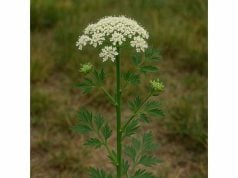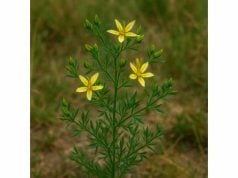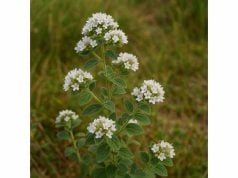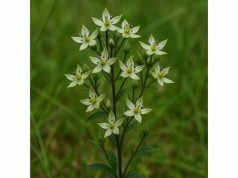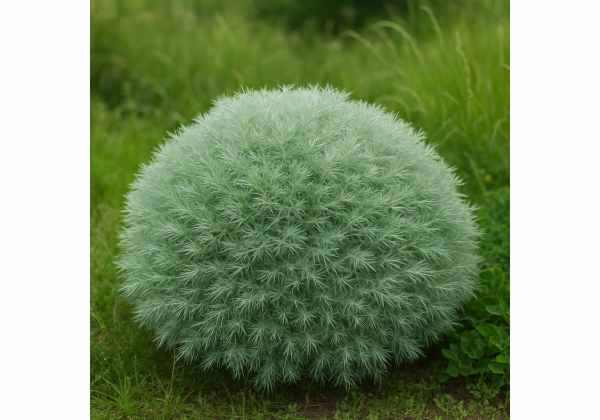
Silver Mound, botanically known as Artemisia schmidtiana, is a silvery, aromatic perennial from the wider Artemisia group. Many people recognize it from gardens rather than apothecaries, yet its fine-textured leaves and fragrant chemistry have led to growing interest in whether it also has medicinal value. That question deserves a careful answer. Silver Mound does appear to contain potentially active compounds, and a recent essential-oil study found antioxidant and enzyme-inhibitory activity in laboratory testing. At the same time, direct human research on this specific species is extremely limited, and many health claims repeated online actually belong to better-studied Artemisia relatives such as mugwort, wormwood, or sweet wormwood.
That makes this herb both interesting and easy to misunderstand. The most helpful way to approach Silver Mound is as an aromatic Artemisia with promising chemistry, a small traditional food role in Japan, and possible topical or experimental value, but not as a proven oral remedy with an established clinical dose. A grounded article should therefore do two things at once: explain what the plant may offer, and be honest about what has not yet been shown.
Quick Overview
- Silver Mound shows antioxidant and enzyme-inhibitory activity in laboratory testing, but direct human benefit has not been established.
- Its most plausible strengths are aromatic, topical, and experimental rather than strongly clinical.
- Only laboratory activity ranges of about 40 to 179 μg/mL have been reported; no standardized human oral dose exists.
- People with Asteraceae allergy, pregnancy, breastfeeding, or a history of plant-contact dermatitis should avoid self-prescribed use.
- Many claims attached to Silver Mound actually come from other Artemisia species and should not be copied over automatically.
Table of Contents
- What Silver Mound is and why it is easy to confuse with other Artemisia herbs
- Potential health benefits and what the evidence actually supports
- Key ingredients and medicinal properties of Silver Mound
- How Silver Mound is used in food, aromatics, and topical preparations
- Dosage, forms, and why a standardized oral dose is not established
- Safety, side effects, interactions, and who should avoid it
What Silver Mound is and why it is easy to confuse with other Artemisia herbs
Silver Mound belongs to the large Artemisia genus, a group known for aromatic foliage, bitter principles, essential oils, and a long history of medicinal use in different parts of Europe and Asia. That background creates an immediate problem for readers: the genus is famous, but the species matter. Artemisia annua is linked to artemisinin, Artemisia absinthium is tied to classic wormwood traditions, and Artemisia vulgaris is the mugwort most people encounter in herbal writing. Silver Mound, by contrast, is far less studied as a medicinal plant in humans. When people search for “Artemisia benefits,” they often land on mixed information that quietly shifts between species without telling them. For this plant, that species confusion is the first thing to fix.
That does not mean Silver Mound is irrelevant. A recent paper on Artemisia schmidtiana essential oil showed meaningful chemical complexity and measurable biological activity in vitro. The broader Artemisia literature also supports the idea that species in this genus can contain sesquiterpene lactones, flavonoids, phenolic compounds, coumarins, volatile oils, and other metabolites with pharmacological potential. Still, moving from “this genus contains interesting chemistry” to “this exact species is a proven therapeutic herb” is too large a leap. For Silver Mound specifically, the evidence base is still early and mostly laboratory-centered.
There is, however, one useful detail that helps place A. schmidtiana more realistically. A review of edible Artemisia species lists Artemisia schmidtiana among species used in East Asia, noting stems cooked and used for flavoring and coloring rice dumplings such as mochi. That is a very different identity from a standardized medicinal extract. It suggests that Silver Mound has at least some traditional sensory or culinary use, but not the kind of strong clinical tradition that would justify confident claims about treating infections, digestion problems, inflammation, or metabolic disease by itself.
In practical terms, Silver Mound is best understood as a niche aromatic Artemisia with three layers of relevance. First, it has a place in traditional food culture, at least in limited regional use. Second, it has a promising chemical profile that invites more study. Third, it sits in a genus where many relatives are more heavily documented, which is helpful for context but dangerous when over-applied. Readers who want a clearer comparison point within the same family of herbs can look at mugwort, which has a much larger traditional and pharmacological literature than Silver Mound itself. That comparison makes the limits of the current evidence easier to see.
The decision flow for Silver Mound, then, should start with identification rather than dosage. Before asking how much to take, it is more important to ask whether this species has actually earned a place in internal self-treatment. At present, the answer is cautious: not yet in any evidence-based, standardized way.
Potential health benefits and what the evidence actually supports
The strongest claims around Silver Mound are not the ones most people expect. There is no convincing human evidence that Artemisia schmidtiana improves digestion, reduces blood sugar, treats infection, or works as a clinically established anti-inflammatory herb. What the species does have is laboratory evidence suggesting antioxidant capacity and enzyme-inhibitory activity in its essential oil. In the 2025 species-specific study, the oil showed antioxidant activity in ABTS and FRAP testing, modest acetylcholinesterase inhibition, and measurable inhibition of α-glucosidase and β-lactamase. Those findings are scientifically interesting because they point to plausible biochemical activity. They do not, by themselves, prove a real-world benefit in people.
From a practical health perspective, the most defensible “benefits” should be described in tiers. The first tier is potential antioxidant support. That is the cleanest interpretation of the current species-specific data. The second tier is metabolic and antimicrobial interest, mainly because α-glucosidase inhibition can matter in glucose metabolism research, and β-lactamase inhibition is relevant in antibiotic-resistance science. The third tier is exploratory neurocognitive interest, based only on weak acetylcholinesterase inhibition in vitro. That last point is especially easy to overstate online, but the study itself does not justify presenting Silver Mound as a memory herb or nootropic.
Broader Artemisia reviews strengthen the idea that members of the genus can have anti-inflammatory, antimicrobial, antioxidant, digestive, and even cosmetic value, but that support belongs mainly to other species. This is where careful writing matters. Genus-level evidence may help explain why Silver Mound deserves study, yet it should not be mistaken for direct proof. A better-studied relative such as wormwood carries a deeper traditional and pharmacological record; Silver Mound does not automatically inherit that record simply because it shares the same genus.
A realistic summary of benefits looks like this:
- Most plausible: antioxidant and aromatic value, with possible topical relevance.
- Interesting but preliminary: enzyme-related effects tied to glucose metabolism, bacterial resistance pathways, and mild cholinesterase inhibition.
- Not established: evidence-based treatment of diabetes, infections, cognitive decline, digestive disease, or inflammation in humans.
That distinction is not disappointing; it is useful. It keeps expectations aligned with reality and protects readers from borrowing claims from unrelated Artemisia products. Silver Mound is promising enough to merit interest, but not mature enough to justify confident therapeutic marketing. In that sense, its real benefit today may be conceptual: it is a reminder that plant chemistry can be intriguing long before clinical value becomes clear.
Key ingredients and medicinal properties of Silver Mound
The most useful way to discuss Silver Mound’s “key ingredients” is to separate what is known directly from what is inferred from the wider Artemisia literature. Directly, the 2025 essential-oil study identified a terpene-rich profile dominated by germacrene D, falcarinol, and α-zingiberene, with smaller contributions from compounds such as fokienol and isogermacrene D. The authors linked much of the observed antioxidant effect to the abundance of conjugated terpenoid structures, which can help explain why the oil performed better in some electron-transfer assays than in radical-scavenging models that depend more heavily on hydrogen donation. That is a technical way of saying the chemistry looks active, but active in a specific, test-dependent manner.
These compounds matter because they shape what “medicinal properties” can realistically mean for this plant. Germacrene D is a common sesquiterpene seen in aromatic plants and is often discussed in relation to scent, defense, and bioactivity. Falcarinol is especially interesting because polyacetylenes and related compounds have been studied in other plants for antimicrobial, anti-inflammatory, and signaling effects, though such effects are highly context-dependent. α-Zingiberene, better known from ginger-like aromatic profiles, contributes to scent and may support part of the plant’s broader bioactive character. None of these points turn Silver Mound into a clinically proven medicine, but they do explain why its essential oil deserves scientific attention.
At the genus level, Artemisia species are also known for sesquiterpene lactones, flavonoids, coumarins, phenolic acids, volatile oils, and other secondary metabolites. Reviews from Central Asia and broader Artemisia research repeatedly describe these groups as key drivers of anti-inflammatory, antioxidant, antimicrobial, antiparasitic, and cytotoxic activity across multiple species. The crucial caution is that chemical families are shared unevenly. One Artemisia may be rich in thujones and camphor, while another is dominated by different terpenes or polyphenols. Silver Mound therefore should not be discussed as though it has the same phytochemical fingerprint as sweet wormwood, mugwort, or wormwood.
If Silver Mound has medicinal properties worth naming today, they are best described as follows:
- Aromatic properties, due to volatile terpenes that give the plant its distinctive scent.
- Antioxidant potential, supported by laboratory assays of the essential oil.
- Enzyme-inhibitory potential, especially in early screening models involving α-glucosidase and β-lactamase.
- Possible topical or cosmetic relevance, inferred from both its chemistry and the wider cosmetic interest in Artemisia extracts.
That is enough to make the plant interesting, but not enough to skip the next question: how should such a plant actually be used, if at all? The answer depends far more on form and context than on the ingredient list alone.
How Silver Mound is used in food, aromatics, and topical preparations
Silver Mound is not a mainstream medicinal tea herb, and that fact should shape its uses. The clearest documented human use is culinary rather than clinical. In the edible Artemisia review, Artemisia schmidtiana is listed as a Japanese species whose stems have been cooked and used for flavoring and coloring rice dumplings. That kind of use suggests small, food-like exposure rather than concentrated dosing. It also fits the wider pattern in Artemisia traditions, where many species are valued for bitterness, aroma, or seasoning roles before they are treated as stronger medicinal agents.
Beyond food, Silver Mound makes more sense as an aromatic or topical plant than as an evidence-based internal supplement. The fragrance of Artemisia foliage is one reason these plants keep showing up in discussions of sachets, oils, skin products, and traditional household herb use. Broader reviews on Artemisia species note increasing cosmetic interest in extracts and essential oils for skin, hair, and fragrance applications, especially where antioxidant or antimicrobial properties are desirable. For readers thinking in practical terms, this means a carefully formulated topical product is a more defensible experiment than an improvised oral tincture. It also means that a herb with fine aromatic foliage may be more comparable to topical botanicals used for skin support than to a standardized internal botanical with a firm dosing tradition.
That said, topical use is not automatically low-risk. Artemisia species are part of the Asteraceae family, and that family is well known for allergic contact reactions in susceptible people. A plant can be cosmetically interesting and still be a poor fit for sensitive skin. This is why homemade oils, salves, infused balms, or essential-oil applications deserve more caution than garden writing usually gives them. The safer approach is to think in layers: culinary use first, professionally formulated topical products second, and concentrated self-made extracts last.
The biggest mistake people make with Silver Mound is not overuse but category confusion. They see “Artemisia” and assume one of the following: that it should work like wormwood for bitters, like mugwort for traditional women’s-health uses, or like sweet wormwood for artemisinin-related claims. Silver Mound does not occupy those roles in any evidence-based way. Its sensible uses today are narrow: small culinary exposure where traditionally documented, aroma-centered or topical experimentation with caution, and research interest in its essential-oil chemistry. That narrower view may sound modest, but it is far more useful than attaching every Artemisia story to one attractive silver garden herb.
Dosage, forms, and why a standardized oral dose is not established
This is the section where honesty matters most: there is no clinically established human oral dose for Artemisia schmidtiana. No robust trial literature defines a therapeutic range, no major monograph sets a standard daily intake for this species, and the most specific published activity data come from laboratory concentrations in enzyme assays rather than from human dosing studies. In the 2025 paper, the essential oil showed α-glucosidase inhibition at an IC50 of 178.8 μg/mL and β-lactamase inhibition at an IC50 of 40.06 μg/mL, while acetylcholinesterase inhibition remained weak at the highest tested concentration. Those are experimental assay conditions, not supplement instructions.
Because of that, any article that gives a confident oral dose in milligrams or teaspoons for Silver Mound is doing more guessing than science. The best one can offer is a hierarchy of exposure rather than a therapeutic schedule. The lowest-risk exposure is its documented food use in small culinary amounts. The next level is a finished topical preparation from a reputable maker, ideally patch-tested first. The highest-risk and least justified level is unsupervised internal use of dried herb, tincture, or essential oil based on analogies to other Artemisia species. That last category is exactly where problems start, because species within the same genus can differ sharply in chemistry and tolerability.
If someone insists on experimenting despite the limited evidence, the most responsible dosing guidance is really a set of limits:
- Do not treat essential-oil assay concentrations as human doses.
- Do not borrow tea or capsule dosing from mugwort, wormwood, or sweet wormwood and assume it applies here.
- Do not use concentrated essential oil internally without professional supervision.
- Keep any first exposure small, external, and reversible when possible.
This is less satisfying than a neat range, but it is far safer. In herbal practice, the absence of a validated dose is not a small detail; it is the central fact that should shape use.
Product form also matters. “Silver Mound” may appear as fresh foliage, dried plant material, essential oil, or simply as a living ornamental herb with no medicinal standardization at all. A fresh garden plant is not the same as a tested extract, and an essential oil is not the same as a culinary herb. The more concentrated the preparation, the less room there is for casual self-experimentation. In practical terms, the dosage section for Silver Mound is really a caution section in disguise. Until human data improve, the safest “dose” is better understood as minimal exposure, careful observation, and a strong bias toward non-internal use.
Safety, side effects, interactions, and who should avoid it
Silver Mound belongs to a plant family and a genus that both deserve respect from a safety standpoint. Artemisia pollen is a recognized allergenic source in many regions, and skin contact with Artemisia species can cause dermatitis or other allergic reactions in sensitive people. Reviews of Artemisia safety also note that sesquiterpene lactones are important contributors to contact sensitivity, and case reports document allergic contact dermatitis triggered by Artemisia exposure. This makes allergy risk one of the clearest and most relevant cautions for Silver Mound, especially for people who already react to ragweed, mugwort, chamomile, or other Asteraceae plants.
Topical side effects may include redness, itching, burning, rash, or delayed eczematous reactions. Internal side effects are harder to predict for this exact species because the dosing literature is thin, but the broader Artemisia record supports caution around gastrointestinal irritation, bitter-herb intolerance, and concentrated volatile oils. Essential oils in particular are not neutral substances. Even when a plant smells pleasant, its oil can be far more pharmacologically active than the fresh herb itself. For Silver Mound, the combination of limited direct dosing data and meaningful aromatic chemistry is a strong reason not to improvise with internal essential-oil use.
Pregnancy and breastfeeding are also important caution areas. Reviews of Artemisia species note that some members of the genus have been used in fertility-related contexts and are best avoided during pregnancy. That does not prove Silver Mound shares the same reproductive effects, but in the absence of clear safety data, it is not a species that pregnant or breastfeeding people should self-prescribe. The same cautious logic applies to children, people taking multiple medications, and anyone with chronic inflammatory disease, recurrent dermatitis, or immune dysregulation. When evidence is sparse, conservative exclusion is better than casual inclusion.
The people most likely to do poorly with Silver Mound are those in the following groups:
- Individuals with known Asteraceae or Artemisia allergy.
- People with a history of plant-related contact dermatitis.
- Pregnant or breastfeeding people.
- Children and medically complex older adults.
- Anyone planning to use homemade tinctures or essential oils internally.
- People trying to self-treat infection, glucose problems, or inflammation based on laboratory results alone.
The safest general rule is simple: Silver Mound is better treated as a research-interest herb than as a self-dosed medicinal staple. If you want aroma, use caution. If you want clinical effect, choose better-studied options or professional guidance. That balance protects both curiosity and common sense.
References
- Chemical Composition, Antioxidant, and Enzyme Inhibitory Activities of Artemisia schmidtiana Maxim. Essential Oil 2025 (Research Article)
- Research Advances on Health Effects of Edible Artemisia Species and Some Sesquiterpene Lactones Constituents 2020 (Review)
- Artemisia Species with High Biological Values as a Potential Source of Medicinal and Cosmetic Raw Materials 2022 (Review)
- Traditional Use, Phytochemical Profiles and Pharmacological Properties of Artemisia Genus from Central Asia 2022 (Review)
- Allergic contact dermatitis by Artemisia: Report of two cases 2020 (Case Report)
Disclaimer
This article is for educational purposes only and should not be used as a substitute for medical advice, diagnosis, or treatment. Silver Mound is not a clinically established medicinal herb, and many claims attached to it are based on laboratory data or on other Artemisia species rather than direct human evidence for Artemisia schmidtiana. Do not use it to self-treat infection, blood sugar problems, inflammatory illness, or skin disease without qualified guidance. Extra caution is warranted in pregnancy, breastfeeding, childhood, allergy-prone individuals, and anyone considering concentrated extracts or essential oils.
If this article helped you, please consider sharing it on Facebook, X, or any platform your readers use most.