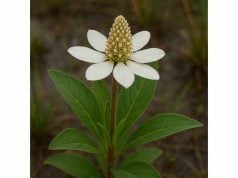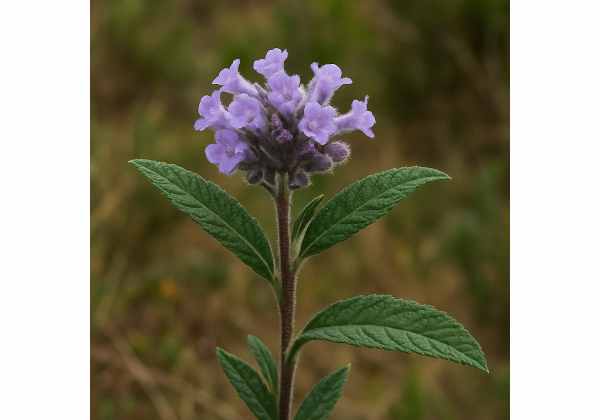
Yerba santa is a resinous evergreen shrub native to California and nearby regions, long valued in traditional Western and Indigenous herbal practice for coughs, throat irritation, chest discomfort, and topical soothing uses. The name means “holy herb,” which reflects the esteem it earned in older healing traditions. Today, the plant still draws interest, but for a broader reason: its leaves contain a distinctive group of flavonoids, including sterubin, eriodictyol, and homoeriodictyol, compounds now being studied for antioxidant, anti-inflammatory, and neuroprotective effects.
That combination makes yerba santa intriguing, but it also calls for balance. Its traditional role in respiratory comfort is far better established than strong modern clinical proof. In other words, it remains a respected herbal remedy, yet much of the newer enthusiasm comes from laboratory and animal research rather than large human trials. For readers trying to decide whether yerba santa belongs in a tea blend, tincture, or wellness routine, the most useful approach is practical and evidence-aware: understand what it does best, how it is commonly used, what dose information actually exists, and where caution is wise.
Quick Overview
- Yerba santa is best known for traditional support of cough, throat irritation, and chest congestion.
- Its key flavonoids show promising antioxidant and anti-inflammatory activity in laboratory research.
- The most specific studied extract dose is 400 to 800 mg/day for 12 weeks.
- Avoid concentrated yerba santa products during pregnancy and breastfeeding because safety data are limited.
Table of Contents
- What Yerba Santa Is and Why It Matters
- Key Ingredients and Medicinal Properties
- Traditional Uses and What Modern Evidence Supports
- Yerba Santa for Respiratory Comfort and Throat Support
- Other Potential Benefits Including Antioxidant and Metabolic Research
- How to Use Yerba Santa in Tea Tincture and Extract Form
- Dosage, Safety, and Who Should Avoid It
What Yerba Santa Is and Why It Matters
Yerba santa, usually identified as Eriodictyon californicum, is a sticky-leaved aromatic shrub with a long history in California herbal traditions. Its leaves are glossy, resinous, and strongly scented, which helps explain why the herb was valued both medicinally and as a flavoring agent. Historically, it was prepared as a tea, syrup, poultice, or fluid extract and used for coughs, asthma-like breathing complaints, colds, bruises, muscle aches, and rheumatic discomfort. In older American herbal literature, it was often described as an expectorant and stimulating respiratory herb.
What makes yerba santa relevant now is not only its history but the way modern plant science has clarified its chemistry. Researchers have identified a broad range of flavonoids and phenolic compounds in yerba santa species, especially in the leaves. That has shifted the conversation from “folk respiratory herb” to “chemically distinctive plant with several biologically active compounds.” Still, it is important not to confuse laboratory promise with established clinical effectiveness. Yerba santa has depth, but it is not one of the best-studied herbs in everyday modern practice.
It helps to think of yerba santa as having three overlapping identities.
- It is a traditional respiratory herb.
- It is a modern phytochemical source, especially of sterubin-related interest.
- It is a niche herb that deserves thoughtful use because the evidence base is uneven.
That middle point explains much of the recent attention. Plants do not stay interesting for centuries by accident, and yerba santa appears to be one of those herbs whose old reputation may partly reflect real chemical activity. Even so, the strongest practical use remains modest and specific: short-term support for irritated airways and throat discomfort, especially when thick mucus or a heavy, sticky chest sensation is part of the picture.
Its role also becomes clearer when placed beside other Western respiratory herbs. Some herbs soothe dryness. Some loosen mucus. Some warm and stimulate. Yerba santa tends to sit in the expectorant and aromatic category, which is why it is often compared with grindelia for sticky respiratory congestion rather than with purely mucilaginous plants.
For most readers, the key question is not whether yerba santa is “good” in the abstract. It is whether the herb fits the actual goal. If the goal is traditional respiratory support with a resinous, bitter-aromatic leaf that may help move mucus and ease throat irritation, yerba santa can make sense. If the goal is proven treatment for asthma, pneumonia, or chronic lung disease, it is not the right tool. Understanding that difference is the foundation for using the plant wisely.
Key Ingredients and Medicinal Properties
Yerba santa’s most important active compounds belong largely to the flavonoid family. Among them, three names appear again and again in modern discussions: sterubin, eriodictyol, and homoeriodictyol. These compounds help explain both the herb’s traditional reputation and its newer research appeal.
Sterubin is the standout. In modern pharmacology papers, it has attracted attention for antioxidant, anti-inflammatory, and neuroprotective effects in experimental models. It appears especially interesting because it does more than show generic antioxidant activity. Researchers have linked it to pathways involved in oxidative stress regulation and inflammatory signaling, which gives it a more meaningful profile than a vague “free radical scavenger” label. For a traditional herb, that is notable. It suggests yerba santa may contain compounds with real biologic relevance, even if human therapeutic applications remain preliminary.
Eriodictyol is another important flavanone. It has been studied in a wider phytochemical context for antioxidant, anti-inflammatory, and mast-cell-related effects. In yerba santa itself, it is often discussed as part of the plant’s broader respiratory and soothing character, though it does not appear to carry the same level of excitement as sterubin in recent papers. Homoeriodictyol is also relevant, especially because some standardized extracts use it as a marker compound. In commercial settings, that matters for consistency and quality control.
Yerba santa also contains other flavonoids and phenolic acids, along with aromatic resinous substances that help define its taste and feel. That sticky resin is part of why traditional users saw the leaf as especially fitting for chest and throat complaints. In practical herbal language, plants with balsamic and resinous qualities often feel more active in the respiratory tract than bland, watery herbs do.
Its medicinal properties are best understood in layers:
- Expectorant and aromatic action in traditional use
- Antioxidant and anti-inflammatory potential in laboratory research
- Possible neuroprotective relevance through sterubin-focused studies
- Limited but emerging metabolic interest in extract form
That layered view matters because yerba santa is easy to overinterpret. A plant can contain promising compounds without becoming a proven treatment. The chemistry gives context, not automatic clinical authority.
Another useful point is that whole-leaf yerba santa and standardized extracts are not the same thing. A traditional tea contains a broad mixture of compounds, but probably at a different concentration and balance than a modern extract standardized for selected flavonoids. This is one reason dosage questions are difficult. The plant’s chemistry is real, yet products vary widely.
Compared with gentler demulcent herbs, yerba santa feels more active and aromatic. Compared with sweeter mucosal herbs such as licorice in throat-support formulas, it is less soft and more resinous. That difference helps explain why herbalists often place it in blended formulas rather than as a universal stand-alone tea.
The best conclusion is a measured one: yerba santa’s chemistry is genuinely interesting, especially because its key flavonoids are now better characterized than they were in older herbal writing. But those compounds support a careful, realistic interpretation of the plant, not sweeping promises.
Traditional Uses and What Modern Evidence Supports
Yerba santa’s historical uses are broad, but they cluster around a few recurring themes: respiratory complaints, sore throat or chest irritation, topical soothing for bruises or aches, and general support in lingering cough states. Older herbal sources often described the leaf as an expectorant, which means it was used to help loosen or move mucus. It was also used in chronic cough patterns, especially when the chest felt heavy, sticky, or hard to clear.
That historical pattern still matters because it tells us how the herb was experienced over time. Traditional use is not the same as modern proof, but it can still be informative when it is consistent across generations and regions. Yerba santa clearly belongs to that category. It was not a one-off folk curiosity. It was a repeated, purposeful remedy.
Modern evidence, however, is much thinner than the plant’s heritage. There are not large, high-quality clinical trials showing that yerba santa tea or tincture reliably improves cough severity, shortens colds, or treats asthma. That gap is important. Readers searching for “health benefits” often assume there must be human trials for every traditional claim. In yerba santa’s case, that is not true.
So what does modern evidence support?
The most defensible answer is this:
- Traditional respiratory use is well established historically.
- Phytochemical and laboratory research supports plausible anti-inflammatory and antioxidant activity.
- Neuroprotective interest is promising but preclinical.
- One small modern extract study suggests a possible role in weight-related outcomes, but this is separate from its traditional respiratory identity.
That means yerba santa sits in a middle zone. It is more than an old folklore herb, because its chemistry and experimental data are meaningful. But it is not as clinically established as herbs backed by multiple modern human trials.
This balanced view is especially useful because respiratory herbs are often exaggerated. People may hear that a plant was used for asthma or tuberculosis and assume it can now be used in place of medical care. It cannot. Historical use tells us what older healers reached for, not what should replace inhalers, antibiotics, imaging, or urgent care. Yerba santa’s best modern role is supportive, not substitutive.
In practice, that makes it more comparable to classic botanical allies used for comfort and mucus movement than to disease-directed treatment. Someone interested in a broader traditional respiratory toolkit might also recognize overlaps with great mullein for cough and lung comfort, though the feel of the two herbs is quite different. Mullein is softer and more demulcent; yerba santa is more resinous and bitter-aromatic.
The most helpful takeaway is simple. Yerba santa deserves respect for its traditional role, and modern science has given us good reasons to think the plant is chemically active. But evidence-based honesty requires saying that its respiratory reputation is stronger in historical and preclinical literature than in modern clinical trials. That honesty makes the herb more useful, not less.
Yerba Santa for Respiratory Comfort and Throat Support
Respiratory comfort is where yerba santa makes the most practical sense. If someone is looking at this herb because of a cough, a coated throat, or the sensation of mucus that will not clear easily, they are following the plant’s traditional path rather than forcing it into a modern trend. That is the right starting point.
Yerba santa is traditionally used when the respiratory tract feels burdened rather than simply dry. Herbalists often describe it as fitting thick, sticky, stubborn mucus and chest heaviness more than a purely dry, scratchy throat. Its aromatic bitterness and resinous character help explain that old classification. It does not act like a simple coating herb. It feels more like a moving herb, one meant to shift secretions and bring a sense of opening.
That said, it can still be useful in throat formulas. The leaves are strongly flavored, and when brewed or extracted, they produce a distinctive preparation that many people find clarifying. In teas, syrups, and tinctures, yerba santa is often included not because it tastes pleasant, but because it gives a blend respiratory direction. It is especially at home in formulas that combine soothing, expectorant, and warming actions.
A sensible respiratory use pattern looks like this:
- lingering cough with chest congestion
- a sticky or coated throat feeling
- post-cold mucus that is hard to clear
- a formula where aromatic support is desired alongside soothing herbs
What it does not mean is that yerba santa should be used casually for wheezing, severe shortness of breath, high fever, chest pain, or suspected infection that needs medical care. Those symptoms deserve proper evaluation. Herbs can support comfort, but they should not delay treatment in more serious situations.
It is also worth noticing what yerba santa is not especially suited for. If the main problem is dryness, rawness, or an irritated throat with very little mucus, a more mucilaginous herb may feel kinder. In those cases, some people do better with slippery elm for throat-soothing support or marshmallow-style preparations. Yerba santa can still be part of a blend, but it may not be the lead herb.
The herb also makes more sense as a short-term support measure than as a permanent daily habit. Traditional respiratory herbs are usually chosen for a pattern, used for a limited window, and then reduced or stopped once the irritation passes. That is a better model than treating yerba santa like a generic everyday tonic.
Its role in respiratory care is therefore clear but modest. Yerba santa may help support the comfort of the airways and throat, especially where there is mucus and a sense of heaviness. Its traditional use is strong, and its chemistry gives that use some plausibility. But the honest framing remains important: it is a supportive herb for selected patterns, not a substitute for diagnosis or definitive treatment.
Other Potential Benefits Including Antioxidant and Metabolic Research
Modern interest in yerba santa has expanded well beyond the chest and throat. Much of that new attention centers on sterubin and related flavonoids, which have shown striking activity in cell and animal studies. This is the most exciting part of the research, but it is also the part most likely to be exaggerated.
The antioxidant and anti-inflammatory profile is the most credible starting point. Yerba santa extracts have shown the ability to influence oxidative stress pathways and inflammatory responses in laboratory models. That does not prove clinical benefit on its own, but it helps explain why the plant has remained interesting to pharmacology researchers. In other words, the herb is not chemically dull. Its bioactive compounds appear capable of meaningful biologic action.
Neuroprotective research is the most distinctive example. Sterubin, isolated from yerba santa, has been studied in screening models relevant to neurodegenerative disease and cognitive decline. In these settings, it has shown anti-inflammatory, antioxidant, and protective effects, and some animal work has suggested memory-related promise. This is scientifically interesting, but it remains far from everyday clinical use. Readers should interpret this as early-stage therapeutic potential, not as evidence that yerba santa prevents dementia.
There is also some metabolic research. One small human study of a yerba santa extract found modest weight- and body-fat-related effects in women with obesity, while a newer animal study explored lipid metabolism and hormonal pathways in more detail. These findings are worth noting, but they do not redefine yerba santa as a mainstream weight-management herb. The clinical data are limited, the extract was specific, and the results are nowhere near strong enough to justify broad claims.
This is where discernment matters. When a plant shows promise in several areas, marketers often present the longest possible list of benefits. A better approach is to rank the evidence:
- strongest traditional fit: respiratory and throat support
- promising experimental fit: antioxidant and anti-inflammatory activity
- intriguing but early: neuroprotective and metabolic applications
- not established: broad disease treatment claims
That hierarchy keeps the herb grounded in reality. It allows readers to appreciate why researchers are paying attention without turning preliminary findings into health promises.
It also helps to distinguish whole-herb use from compound-driven interest. A tea made from yerba santa leaves is not the same as a purified sterubin study. Traditional herbal use can benefit from a broad plant matrix, but modern pharmacology often focuses on isolated molecules. Those are related conversations, not identical ones.
If someone wants a general antioxidant herb for routine use, yerba santa may not be the first choice. Its modern value is more specific than that. It stands out because its traditional uses and unusual flavonoid profile happen to intersect. That is fascinating, but it still calls for restraint. The plant deserves thoughtful curiosity, not inflated expectations.
How to Use Yerba Santa in Tea Tincture and Extract Form
Yerba santa is used in several forms, and the form changes the experience. The dried leaf is the most traditional choice. It can be made into tea, included in cough blends, or prepared as a syrup base. Tinctures and fluid extracts are also common, especially because the plant’s resinous and aromatic character often translates well into alcohol-based preparations. More recently, standardized extracts have entered the conversation because research products can be measured more consistently than household teas.
Tea is the most traditional and approachable route. It tends to suit people who want yerba santa as a short-term respiratory herb rather than a concentrated supplement. The flavor is distinctive: aromatic, somewhat bitter, and resinous. That is one reason the herb is often blended instead of used alone. In real-life practice, it is commonly combined with softer herbs that round out its intensity and broaden its comfort value.
Tincture can make sense when the goal is convenience, stronger flavor concentration, or easier use in drop doses. Many herbalists prefer tinctures for resinous plants because alcohol can capture constituents that water alone may not draw out as effectively. That does not make tincture automatically better, but it can make it more practical, especially for adults who want short-term respiratory support.
Standardized extracts are different again. These are the forms most likely to show up in research on antioxidant or metabolic effects. They are not interchangeable with traditional tea. If a product is standardized to a compound such as homoeriodictyol, it should be treated as a more specific preparation rather than a general folk remedy.
A practical way to choose the form is to match it to the goal:
- tea for traditional respiratory and throat support
- tincture for convenience and concentrated leaf use
- standardized extract for product-specific goals tied to research literature
Common mistakes are easy to avoid once you know them. One mistake is assuming all yerba santa products are the same. They are not. Another is using the herb alone when a blend would be more balanced. Because yerba santa is aromatic and somewhat assertive, it is often better as part of a thoughtful combination. For example, formulas may pair it with softer mucosal or sweetening herbs such as marshmallow root for soothing balance.
A third mistake is using it too late in the decision process. If someone has escalating wheezing, blood in mucus, or persistent chest pain, herbs are not the next step. Medical evaluation is.
Used well, yerba santa is a focused, old-style herb. It tends to perform best when matched to a clear purpose, used in an appropriate form, and respected as a short-term support rather than a cure-all.
Dosage, Safety, and Who Should Avoid It
Dosage is the most difficult part of a yerba santa article because there is no well-established, evidence-based modern dosing framework for the herb as a whole. That is the honest place to begin. Traditional use clearly exists, but modern clinical data are too limited to create a standard dose for tea, tincture, syrup, and extract across all indications.
The most concrete dose in the literature comes from a small extract study, not from respiratory use. In that trial, participants took 400 mg of a yerba santa extract twice daily with meals for 12 weeks, for a total of 800 mg/day. That is a research dose for a specific extract, not a universal recommendation for every product. Still, it is the clearest modern benchmark available, which is why many summaries refer to 400 to 800 mg/day when a dosage range is needed.
For traditional use, the safer message is product-specific caution rather than false precision. Tea strength varies. Tinctures vary. Extracts vary even more. Because yerba santa is not heavily standardized in common self-care use, label directions and practitioner guidance matter.
A practical approach looks like this:
- start with the lowest labeled amount
- use short-term rather than indefinite courses
- judge the form by purpose, not by hype
- stop if irritation, allergy, or unexpected symptoms occur
Safety appears relatively favorable, but that comes with limits. There are no strongly documented, common serious adverse reactions from ordinary use, yet the absence of extensive reports is not the same as proof of universal safety. Pregnancy and breastfeeding are the clearest areas for caution because direct safety data are lacking. Concentrated products are best avoided unless a qualified clinician advises otherwise.
Children deserve similar care. Traditional herbs are often assumed to be automatically gentle, but concentrated extracts are not the same as a mild household tea. People with multiple medical conditions, heavy medication use, or a history of strong plant allergies should also proceed carefully.
Known interactions are not well documented, which sounds reassuring but should be interpreted correctly. It usually means the herb has not been studied thoroughly enough to draw confident conclusions. Lack of evidence is not evidence of no interaction.
Other sensible cautions include:
- avoid using yerba santa as a substitute for inhalers, antibiotics, or urgent respiratory evaluation
- be cautious with concentrated extracts if you are highly sensitive to new botanicals
- do not use persistent cough as a reason to delay medical assessment
- take extra care with multi-herb respiratory formulas, especially if they also contain more active herbs such as lobelia with stronger safety considerations
The bottom line on safety is balanced. Yerba santa does not appear to be a notoriously dangerous herb, and traditional use suggests a workable margin of tolerability for many adults. But it also lacks the kind of modern dosing and interaction data that justify casual confidence. Use it with respect, keep the goals specific, and treat the most studied extract dose as a reference point rather than a blanket rule.
References
- A Food Supplement with Antioxidative Santa Herba Extract Modulates Energy Metabolism and Contributes to Weight Management 2021 (Clinical Study)
- Chemical characterization and quantitative determination of flavonoids and phenolic acids in yerba santa (Eriodictyon spp.) using UHPLC/DAD/Q-ToF 2023
- Structural Requirements for the Neuroprotective and Anti-Inflammatory Activities of the Flavanone Sterubin 2022
- Therapeutic Potential of Santa Herba Extract in Obesity: Impact on Lipid Metabolism and Hormonal Balance 2025
- Yerba Santa Uses, Benefits & Dosage 2025
Disclaimer
This article is for educational purposes only and is not medical advice. Yerba santa has a long traditional history and interesting laboratory research behind it, but modern clinical evidence remains limited, especially for respiratory use. It should not replace professional care for asthma, pneumonia, severe cough, chest pain, breathing difficulty, or any persistent or worsening condition. Pregnant or breastfeeding people, children, and anyone using prescription medicines or managing chronic illness should consult a qualified healthcare professional before using concentrated yerba santa products.
If this article was helpful, please share it on Facebook, X, or another platform you trust.