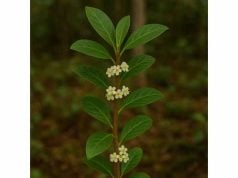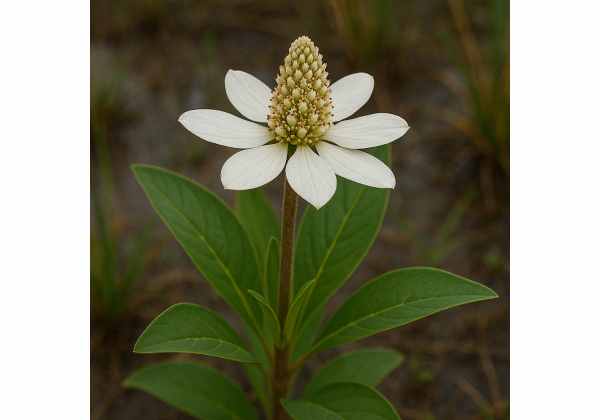
Yerba mansa, Anemopsis californica, is one of the most distinctive medicinal plants of the American Southwest and northern Mexico. It grows in wet ground, yet it is traditionally valued for qualities that feel almost opposite to its habitat: warming, drying, aromatic, and gently astringent. For generations, the root and rhizome have been prepared as teas, washes, poultices, powders, and tinctures for congestion, irritated mucous membranes, minor skin problems, and sluggish digestion. In regional herbal traditions, it has also been used for mouth and throat irritation, coughs, menstrual discomfort, and wound care.
What makes yerba mansa especially interesting is the gap between its long traditional record and its modern evidence base. It has real ethnobotanical depth and promising preclinical research, but it still lacks the kind of human trial data that would justify broad medical claims. That does not make it unimportant. It means it is best understood as a focused traditional herb: useful in the right setting, less convincing outside it, and safest when used with care, modest expectations, and respect for both dosage and sourcing.
Quick Overview
- Yerba mansa is traditionally used for boggy congestion, irritated mucous membranes, and minor topical wound care.
- Preclinical work suggests anti-inflammatory, antimicrobial, and skin-supportive activity, but strong human clinical evidence is still limited.
- A historical diluted nasal preparation used 5 to 30 drops of tincture in a 2-ounce bottle.
- People who are pregnant, breastfeeding, medically fragile, or treating serious urinary, respiratory, or wound symptoms should avoid self-treating with yerba mansa.
Table of Contents
- What yerba mansa is and why it has earned a place in herbal medicine
- Key ingredients and medicinal properties
- Traditional uses and what modern evidence can and cannot tell us
- Yerba mansa for respiratory comfort, skin support, and mucous membranes
- How yerba mansa is used in tea, tincture, washes, and poultices
- Dosage, timing, duration, and sourcing considerations
- Safety, side effects, and who should avoid it
What yerba mansa is and why it has earned a place in herbal medicine
Yerba mansa is a perennial wetland plant native to the southwestern United States and northern Mexico. It is not a general wellness herb in the modern mass-market sense. It is a place-based medicine, rooted in desert springs, riparian corridors, marshy ground, and the healing traditions of Indigenous, Latino, and regional herbal communities. That history matters because it helps explain both how the herb is used and why it continues to attract respect even without a large body of clinical trials.
The parts most often used medicinally are the root and rhizome, though leaves and flowers appear in some external preparations. The plant has a spicy, aromatic scent and a taste that many people describe as pungent, warming, and drying. Those sensory qualities match its traditional role. Yerba mansa is not typically chosen for dry, depleted tissues that need heavy moistening. It is more often used when tissues feel swollen, congested, boggy, or over-relaxed.
Historically, yerba mansa has been used for a wide range of complaints: colds, sore throats, wet coughs, mouth irritation, stomach upset, sluggish bowels, menstrual discomfort, aches, swellings, and minor wounds. It was also used as a wash, gargle, compress, poultice, and steam preparation. That broad history does not mean the herb does everything well. It means traditional healers repeatedly found it useful in conditions involving irritation plus stagnation, especially when mucous membranes were involved.
A helpful way to think about yerba mansa is as a regional mucosal herb with astringent and aromatic qualities. In traditional practice, it has often been compared to goldenseal for mucous membrane support, though the two plants are not chemically identical and should not be treated as interchangeable. Yerba mansa tends to occupy its own niche: warming, penetrating, and especially suited to damp congestion or weepy inflammation rather than deep systemic disease.
It is also a plant with cultural and ecological weight. Unlike standardized herbs grown globally in industrial systems, yerba mansa still carries the reality of habitat loss, wetland degradation, and wild harvesting pressure. That means understanding the herb requires more than listing “benefits.” It requires knowing where it comes from, what kind of conditions it traditionally matches, and why careful sourcing is part of responsible use.
For readers new to this herb, the safest starting point is simple: think of yerba mansa as a traditional Southwestern botanical that may be most relevant for short-term support of congested tissues, minor topical care, and selected mucosal complaints. The evidence is interesting, but the tradition is older than the trials.
Key ingredients and medicinal properties
Yerba mansa is chemically more complex than its folk reputation suggests. Its activity appears to come largely from volatile aromatic compounds in the root and leaf oils, along with other plant constituents that contribute astringent, anti-inflammatory, and possibly antimicrobial effects. One of the most important things modern research has shown is that not all yerba mansa is chemically identical. Different populations can contain meaningfully different dominant compounds, which helps explain why one preparation may feel stronger, warmer, or more irritating than another.
Research on essential oils in Anemopsis californica has identified compounds such as methyleugenol, elemicin, piperitone, thymol, alpha-pinene, and 1,8-cineole. These are not minor details. They shape the herb’s aroma, its traditional “warming and moving” reputation, and its possible biologic actions. In New Mexico populations, researchers identified distinct chemotypes dominated by different compound patterns, including methyleugenol-rich, elemicin-rich, and piperitone-thymol-rich profiles. That variation matters for both effectiveness and safety.
In practical herbal language, yerba mansa is often described as:
- aromatic
- astringent
- warming
- stimulating to sluggish mucous membranes
- mildly expectorant
- externally cleansing and tissue-toning
Astringency is a useful concept here. An astringent herb helps tone tissues and reduce excess seepage, bogginess, or laxity. That helps explain why yerba mansa has been used on weepy skin conditions, inflamed gums, sore throats, and moist, congested tissues. It is not the same kind of astringency as witch hazel for topical toning, but the comparison helps. Both herbs can feel tissue-tightening, yet yerba mansa is also more aromatic and warming.
The roots and rhizomes are generally regarded as more potent than the leaves. This fits both traditional practice and recent safety discussions. Roots tend to be richer in the aromatic compounds that make yerba mansa distinctive, but they also deserve more respect because that same concentration may increase both activity and risk. When people say the leaf feels milder and the root feels more penetrating, that is not just poetic language. It likely reflects real phytochemical differences.
This is also why yerba mansa should not be reduced to one tidy claim such as “it is anti-inflammatory.” It may have anti-inflammatory activity, but it is more accurately understood as a chemically variable aromatic root that can dry, stimulate, disinfect, and modulate irritated tissues depending on how it is prepared and how it is used. A gargle, a wash, a tincture, and an essential oil-rich extract are not interchangeable.
For readers, the practical takeaway is simple: the herb’s key ingredients explain both its appeal and its limits. Yerba mansa is potent in character, sometimes variable in chemistry, and best used with the understanding that “traditional herb” does not mean “chemically gentle” or “the same every time.”
Traditional uses and what modern evidence can and cannot tell us
Yerba mansa has a rich traditional use record, but the modern evidence behind those uses is uneven. That is the central fact anyone considering the herb should understand. It has strong historical continuity and interesting laboratory research, but it is not a herb with a large modern clinical literature showing clear benefits for well-defined diseases in humans.
Traditional sources describe yerba mansa as a multipurpose medicine for colds, coughs, nasal congestion, sore throats, mouth irritation, stomach pain, sluggish digestion, menstrual cramps, swellings, wounds, and various inflammatory conditions. Across communities, one pattern appears again and again: the herb was used where tissues felt irritated and stagnant rather than dry and depleted. In that sense, its traditional uses are internally consistent.
Modern research does not fully validate all those uses, but it does offer some support around the edges. Preclinical studies suggest that yerba mansa may have antimicrobial activity, anti-inflammatory effects, antioxidant activity, and skin-protective actions. Researchers have also documented phytochemical patterns that make its traditional use on mucous membranes more plausible. That is meaningful, but it is not the same as saying the herb has been clinically proven for infections, sinusitis, urinary disorders, or wound healing in humans.
This is where good herbal judgment matters. The best-supported modern view is not that yerba mansa is ineffective. It is that it is still better supported by ethnobotanical history and preclinical work than by human trials. That distinction helps protect readers from two common mistakes: dismissing the herb because it lacks pharmaceutical-style evidence, or overpromising because traditional use sounds impressive.
A balanced interpretation looks like this:
- Yerba mansa has a serious traditional record and should not be treated as folklore fluff.
- Laboratory findings make several traditional uses biologically plausible.
- Human clinical evidence remains limited, so claims should stay modest.
- The herb fits best in short-term, lower-risk self-care rather than treatment of severe or persistent illness.
This also helps explain why modern herbalists often use it more selectively than older sources did. Instead of calling it a cure-all, they tend to reserve it for boggy upper respiratory congestion, irritated oral tissues, minor topical wound care, and sluggish, damp mucosal states. In this way, yerba mansa resembles other regionally valued herbs such as grindelia for respiratory and skin support: respected, useful, and most convincing when matched carefully to the right pattern rather than pushed as a universal remedy.
So does yerba mansa “work”? In the strict modern clinical sense, that question is still only partly answered. In the practical herbal sense, it has enough continuity, coherence, and early mechanistic support to remain relevant. The wisest approach is to respect both truths at once.
Yerba mansa for respiratory comfort, skin support, and mucous membranes
If yerba mansa has a core identity, it is probably this: a mucous membrane herb for tissues that are irritated, swollen, congested, or overly wet. That framing helps separate its strongest traditional use-cases from the many broader claims that have accumulated around it.
For the respiratory tract, yerba mansa has long been used for colds with thick mucus, lingering nasal congestion, irritated throats, and wet, sticky catarrh. Traditional practitioners described it as helping move mucus rather than merely suppressing it. That is why old preparations included gargles, steams, and even diluted nasal sprays. The herb’s warming and aromatic quality makes it a better fit for heavy, sluggish secretions than for a dry, scratchy throat caused by dehydration or environmental dryness.
This is where contrast helps. A soothing demulcent like marshmallow root is often chosen when tissues need moisture and coating. Yerba mansa is more likely to suit the opposite end of the spectrum: tissues that feel puffy, dripping, stagnant, and in need of tone and movement. Some people need both qualities in different stages of the same illness, which is one reason herbal formulas often combine herbs rather than rely on one.
For the mouth and throat, yerba mansa is especially interesting. Traditional use includes chewing the root, gargling the tea, and using it for inflamed gums, sore throats, oral irritation, and mouth infections. This makes sense because the herb delivers a local aromatic and astringent effect right where it is applied. In that setting, the goal is often not deep systemic action but direct tissue contact.
For the skin, yerba mansa has traditionally been used in washes, powders, poultices, and salves for small wounds, sores, swellings, and irritated skin. Modern preclinical work on photoaging and collagen-related pathways does not prove that traditional wound uses are clinically effective, but it does strengthen the idea that the plant may influence inflammatory signaling and tissue repair in ways relevant to skin health. That makes its long topical history more plausible, even if strong human wound-healing trials are still lacking.
The skin and mucosal uses share one practical rule: keep expectations narrow. Yerba mansa may be well suited to:
- minor irritated gums or throat tissues
- thick upper respiratory congestion
- clean, superficial skin irritation
- mild, short-term topical care
It is not a replacement for emergency care, antibiotics, formal wound management, or evaluation of symptoms that may signal serious infection. A worsening cough, fever, shortness of breath, spreading redness, or deep skin injury falls outside the herb’s safe self-care zone.
In other words, yerba mansa’s most promising applications remain local, short term, and pattern-specific. Used that way, its old reputation becomes easier to understand.
How yerba mansa is used in tea, tincture, washes, and poultices
The form of yerba mansa matters almost as much as the herb itself. Because the root and rhizome are tough, aromatic, and resinous, preparations are often chosen for how well they pull out those qualities. In practice, yerba mansa is less like a casual herbal tea and more like a purposeful medicine chest herb.
A tea or light decoction is one of the simplest ways to use it. This form is especially suited to gargles, mouth rinses, throat support, warm washes, compresses, and mild internal use when the goal is to work on mucous membranes. The taste is strong and not especially gentle. That is often part of the point. Yerba mansa is meant to signal its presence, not disappear into the background.
Tinctures are another common form. Alcohol preparations extract aromatic constituents efficiently and are portable, concentrated, and convenient for formulas. Traditional and modern monograph material suggests that dried roots and rhizomes are often prepared as relatively strong tinctures, and glycerin may be included to keep the preparation stable and workable. Tinctures may be chosen when the goal is respiratory stimulation, oral application, or formula flexibility.
Topical use remains one of the most compelling traditional applications. Yerba mansa has been used as:
- a wash for small wounds and irritated skin
- a compress for swollen or tender areas
- a powder or paste for superficial sores
- a poultice made from fresh or softened plant material
- an infused oil or salve for minor skin support
This is also where the herb pairs naturally with other topical botanicals such as calendula in skin-soothing formulas. The two are not interchangeable, but they can complement each other well: calendula is often softer and more vulnerary, while yerba mansa brings more pungency, astringency, and local stimulation.
The old literature also describes specialized uses such as diluted nasal preparations and chewed root for oral or throat discomfort. Those preparations are more targeted and less suitable for casual experimentation. A beginner is usually better served by starting with a gargle, wash, or professionally prepared tincture rather than improvising concentrated internal use.
The final issue is quality of plant material. Yerba mansa grows in wetland systems, and that raises two practical questions. First, chemically rich roots can vary meaningfully from one region or growing environment to another. Second, wetland plants may absorb contaminants from the surrounding environment. This is one reason reputable sourcing matters so much with this herb. The product should not only be botanicaly correct. It should also be grown or harvested with attention to ecology and purity.
Used well, yerba mansa is less about one “best form” than about choosing the preparation that matches the tissue and the task.
Dosage, timing, duration, and sourcing considerations
Yerba mansa does not have a well-established modern clinical dosage range in the way that a standardized supplement or drug might. That is important to say plainly. Most dosing guidance comes from traditional practice, practitioner monographs, historical formulas, and the form of the product itself rather than from strong human trial data. So the safest dosage advice starts with restraint.
A useful rule is to think in terms of preparation-specific use rather than a universal number. Historical and traditional preparations include teas, decoctions, powders, gargles, wound washes, poultices, and tinctures. One documented early liquid formula for nasal congestion used 5 to 30 drops of yerba mansa tincture in a 2-ounce bottle with glycerin and water. That is not a universal internal dose, but it does illustrate how concentrated liquid preparations have historically been used in a measured, diluted way rather than by guesswork.
In modern practice, a cautious approach looks like this:
- Start with the mildest form that matches the goal.
- Use external forms first for external problems.
- Use gargles or mouth rinses for throat and gum support instead of jumping straight to concentrated internal dosing.
- Keep internal use short term unless guided by a qualified clinician.
- Let the product label guide quantity when using a professionally prepared tincture or extract.
Timing depends on the use-case. For congested upper respiratory symptoms, people often use yerba mansa at the stage where mucus is thick, tissues feel swollen, and the goal is to move secretions rather than suppress them. For mouth or throat use, repeated local contact may matter more than a large single dose. For skin use, short repeated applications tend to make more sense than one very strong treatment.
Duration should also stay modest. For uncomplicated self-care, a window of several days is more sensible than long, open-ended use. If there is no meaningful improvement within a few days, or if symptoms worsen, the answer is not usually “take more yerba mansa.” It is to reassess the problem.
Sourcing deserves special emphasis with this plant. Yerba mansa’s wetland habitat means roots may reflect environmental conditions in ways other herbs do not. Recent discussion in the literature has highlighted both chemotype variation and the possibility of absorbing arsenic or other heavy metals from contaminated groundwater. At the same time, cultivation research suggests the plant can be grown successfully and may help reduce pressure on wild populations.
That makes good sourcing part of good dosing. A carefully prepared cultivated product is often a better choice than an unknown wild-harvested root. This is especially true for a plant whose chemistry can shift with region, elevation, temperature, and water conditions. With yerba mansa, quality is not a side issue. It is part of the medicine itself.
Safety, side effects, and who should avoid it
The most honest safety summary for yerba mansa is that it deserves more caution than its folk reputation sometimes suggests. It is not known as a highly poisonous herb, but it is also not backed by robust human safety data. Its roots are chemically active, its preparations vary, and recent reviews have drawn attention to compounds such as methyleugenol and elemicin, along with the possibility of heavy metal uptake from wet habitats.
That does not mean ordinary use is automatically dangerous. It means concentrated, frequent, or poorly sourced use is harder to justify. The safest stance is short-term, purpose-specific use rather than casual daily supplementation.
Possible problems include:
- irritation from an overly strong preparation
- excess dryness in already dry tissues
- local sensitivity on skin or mucous membranes
- unpredictability from variable chemistry
- contamination concerns when sourcing is poor
The root and rhizome are generally stronger than the leaves, so concentrated root products deserve the most care. Essential-oil-rich or high-proof preparations may be especially unsuitable for people with sensitive tissues. A herb that can tone boggy tissues can also overshoot and aggravate tissues that are already dry, raw, or inflamed.
Yerba mansa is not a good choice for unsupervised use during pregnancy or breastfeeding because the safety evidence is too limited. It is also a poor candidate for young children, long-term daily self-dosing, and self-treatment of serious symptoms such as fever with shortness of breath, blood in urine, deep wounds, rapidly spreading skin infection, or severe ongoing pelvic or urinary pain. In those settings, the bigger risk is not only the herb. It is delaying diagnosis and appropriate care.
People with chronic medical conditions, heavy medication use, or a history of reacting strongly to concentrated herbal tinctures should also be more conservative. The same is true for those who are tempted to use yerba mansa as a substitute for condition-specific urinary herbs such as uva ursi in urinary self-care discussions. Traditional overlap does not guarantee the right fit, and urinary symptoms often need clearer clinical evaluation than self-treatment allows.
A practical safety checklist is simple:
- Use reputable products.
- Prefer short-term use.
- Match the form to the problem.
- Stop if tissues become more irritated, dry, or uncomfortable.
- Seek medical care quickly when symptoms suggest infection, breathing difficulty, kidney involvement, or a wound that is not staying superficial and clean.
Yerba mansa can be a thoughtful herb. It should not be a casual one.
References
- Anemopsis californica (yerba mansa) Monograph 2020 (Monograph). ([yerbamansaproject.org][1])
- Chemotypic Variation of Essential Oils in the Medicinal Plant, Anemopsis californica 2008 (Phytochemistry Study). ([PMC][2])
- Anemopsis californica Attenuates Photoaging by Regulating MAPK, NRF2, and NFATc1 Signaling Pathways 2021 (Preclinical Study). ([PMC][3])
- Medicinal Plants from Latin America with Wound Healing Activity: Ethnomedicine, Phytochemistry, Preclinical and Clinical Studies—A Review 2022 (Review). ([MDPI][4])
- Environmental and internal drivers of genotoxic carcinogens accumulation in botanicals and their preparations 2025 (Review). ([PMC][5])
Disclaimer
This article is for educational purposes only and is not medical advice, diagnosis, or treatment. Yerba mansa has a strong traditional record, but its modern human evidence base remains limited, and product quality can vary. Do not use this herb to self-treat serious infections, persistent urinary symptoms, breathing difficulty, deep wounds, or unexplained pain. Pregnant or breastfeeding people, children, and anyone with significant medical conditions or regular medication use should speak with a qualified healthcare professional before using concentrated herbal preparations.
If you found this article helpful, please share it on Facebook, X, or any platform where thoughtful herbal education can help someone else.