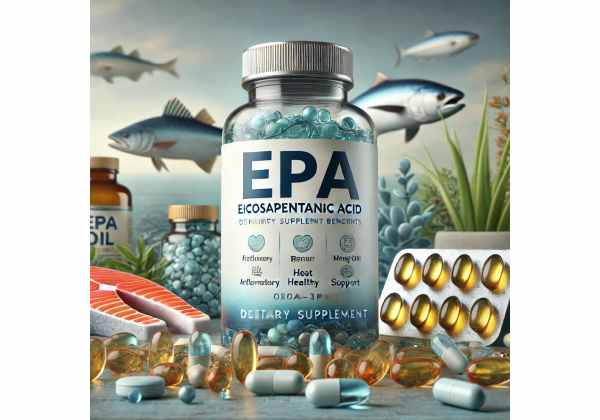
Eicosapentaenoic acid, better known as EPA, is one of the main marine omega-3 fats found in fish, seafood, and many fish oil supplements. It is often discussed alongside DHA, but the two are not interchangeable. DHA is more concentrated in brain structure, while EPA seems to matter more for inflammatory signaling, stress biology, and some mood-related pathways. That difference helps explain why EPA-rich formulas are often studied for depression, emotional resilience, and brain health support rather than for raw memory enhancement alone.
For readers trying to sort through fish oil labels and mental wellness claims, EPA is worth understanding on its own. It may be useful in the right context, especially when low-grade inflammation, cardiovascular health, or mood symptoms are part of the picture. This guide explains what EPA does, where its benefits are most convincing, how to use it intelligently, and what safety issues deserve attention before you start.
Table of Contents
- What EPA Is and Why It Differs
- How EPA May Support Brain and Mood
- Where the Evidence Is Strongest
- EPA and Cognition Over Time
- Uses, Forms, and Dosage
- Safety, Side Effects, and Interactions
What EPA Is and Why It Differs
EPA is a long-chain omega-3 fatty acid found mainly in marine foods such as salmon, sardines, herring, anchovies, mackerel, and shellfish. It is also concentrated in many fish oil, krill oil, and algae-based supplements. Most people first encounter EPA on a supplement label next to DHA, but those two fats do not play identical roles in the body or the brain.
DHA is the better-known structural omega-3. It is heavily incorporated into neuronal membranes and is especially important for the physical architecture of the brain and retina. EPA, by contrast, is present in smaller amounts in brain tissue. That has led some people to assume it matters less for brain health. In practice, that is too simplistic. EPA appears to exert many of its effects through signaling, inflammation control, vascular function, and the production of bioactive molecules that influence how the brain and body respond to stress.
That difference has practical consequences. If your main interest is fetal brain development or retinal health, DHA usually gets more attention. If your interest is low mood, inflammatory stress, or adjunctive support in depression, EPA often becomes the more relevant part of the conversation. This is one reason some psychiatric research has focused on EPA-predominant formulas rather than generic fish oil products.
EPA is also worth separating from the broader omega-3 category. Many supplements advertise “1,000 mg fish oil,” but that number usually refers to total oil, not active EPA. A standard softgel may contain only about 180 mg EPA and 120 mg DHA, which is much less than many people assume. Reading labels closely matters, especially if you are trying to match the kinds of doses used in studies.
A useful mental model is:
- fish oil is the product category
- omega-3 is the family name
- EPA and DHA are the active long-chain fatty acids
- the balance between them can change the likely effect
That balance is one reason EPA should not be discussed as though it automatically does everything fish oil is claimed to do. EPA may be especially relevant when inflammation, cardiovascular risk, or mood symptoms are part of the picture. DHA may be more relevant when the focus is structural brain support, early development, or certain cognition questions.
For readers comparing marine omega-3s, it helps to understand the broader relationship between EPA and DHA in brain support. They often work together, but they are not interchangeable, and choosing the right emphasis depends on the goal.
How EPA May Support Brain and Mood
EPA’s brain and mental wellness value comes less from acting like a stimulant or nootropic and more from improving the conditions under which the brain functions. That makes it a slower, more foundational nutrient than many people expect.
One of EPA’s most important roles involves inflammation. Chronic low-grade inflammation is linked with depression, cognitive decline, vascular disease, and the sense of mental drag that many people describe as brain fog. EPA helps shift the body away from more pro-inflammatory signaling by competing with omega-6 fatty acids and serving as a precursor to anti-inflammatory mediators such as resolvins and related compounds. That does not make EPA an anti-inflammatory drug, but it does help explain why it is studied so often in mood disorders and age-related brain health.
EPA may also influence cell signaling and membrane function indirectly. Even though DHA is the more dominant structural fat in the brain, EPA can still affect membrane behavior, receptor function, and downstream neurotransmitter systems. Researchers have looked at EPA in relation to serotonin, dopamine, and stress-related signaling, especially in people with depression or high inflammatory burden. This is one reason EPA is often described as more “functional” or signaling-oriented, while DHA is described as more structural.
Another important pathway is vascular health. The brain is highly energy dependent and depends on steady blood flow. EPA can support cardiovascular function, triglyceride control, endothelial health, and circulation. Those effects matter because brain health is never isolated from vascular health. In some people, part of EPA’s mental benefit may come from improving systemic conditions that support better cerebral perfusion and lower inflammatory stress.
EPA may also shape the stress response. There is ongoing interest in how omega-3 fats influence the hypothalamic-pituitary-adrenal axis, cortisol signaling, and the body’s reaction to chronic stress. In practical terms, this means EPA may help some people feel less biologically “stuck” in a pro-inflammatory, high-stress state that worsens mood and cognitive efficiency.
The most important thing to understand is that EPA usually works indirectly. It is not the nutritional equivalent of pressing a mental “on” switch. Instead, it may help through a cluster of quieter effects:
- dampening inflammatory signaling
- supporting healthier vascular function
- influencing stress biology
- improving the environment for neurotransmission
- contributing to long-term resilience rather than short-term stimulation
That profile helps explain why EPA sometimes shows better results in people who are not functioning at baseline. Someone with major inflammation, metabolic strain, cardiovascular risk, or low mood may notice more than a healthy adult looking for a dramatic productivity spike.
This broader mechanism also fits with what is known about inflammation and mental fatigue. When inflammation and stress signaling are reduced, concentration, mood, and mental clarity may improve even without a classic stimulant effect.
Where the Evidence Is Strongest
EPA’s evidence base is strongest in mental health where mood, especially depression, is part of the picture. That does not mean it works for everyone, and it does not mean all fish oil products are equivalent. But compared with many supplements sold for mental wellness, EPA has a more serious research history.
The clearest pattern is in depressive symptoms. Multiple reviews and clinical discussions suggest that omega-3 products richer in EPA may offer modest benefit, especially as an adjunct to standard treatment rather than as a stand-alone replacement. That distinction matters. EPA is not best viewed as a substitute for therapy, antidepressant care, or formal diagnosis. It is better viewed as a potential add-on that may help some people, particularly when inflammation-related biology may be contributing to symptoms.
Several details seem to matter:
- EPA-predominant formulas often perform better than DHA-heavy formulas in depression research.
- Doses around 1 to 2 grams of EPA per day are common in clinical discussions.
- Benefits tend to require consistent use for at least several weeks, not a few days.
- People with more significant symptoms or higher inflammatory burden may be more likely to respond.
The evidence for anxiety is less settled. Some studies and meta-analyses suggest omega-3 supplementation may help anxiety symptoms, but the data are more mixed, and EPA-specific conclusions are less secure than they are for depression. That means EPA may be reasonable to consider in people with stress-sensitive mood symptoms, but it should not be oversold as a proven anxiety treatment.
The evidence is also weaker for general “mental performance” claims in healthy adults. EPA may help some people feel more emotionally steady or less mentally slowed when the underlying issue involves inflammation, poor diet quality, or low marine omega-3 intake. But that is different from saying EPA reliably boosts focus, reaction time, or motivation in healthy high performers.
A balanced summary looks like this:
- strongest use case: adjunctive support for depressive symptoms
- possible but less certain use: stress-related emotional resilience
- weak use case: immediate cognitive enhancement in already healthy adults
This is where product choice becomes important. A mixed fish oil containing small amounts of EPA may not resemble the kinds of EPA-predominant interventions that have been studied in mood disorders. Someone pursuing a mood-related goal should care less about total fish oil and more about the actual EPA amount per serving.
EPA also makes more sense when used as one part of a broader mood-support plan. Sleep, movement, protein intake, alcohol use, therapy, social isolation, and blood sugar stability all affect depression and stress biology. A supplement works better when it is supporting a system that is already being addressed. Readers comparing adjunctive options sometimes look at ingredients such as saffron for depression and anxiety, but EPA stands out because its research history is broader and its biological rationale is unusually plausible.
EPA and Cognition Over Time
EPA is often folded into broad claims about memory, focus, and dementia prevention, but this is the area where precision matters most. The cognitive story for EPA is more mixed than the mood story, and it is also harder to separate EPA from DHA because many studies test them together.
In general, omega-3 supplementation may offer modest cognitive benefits in some groups, especially older adults, people with low baseline omega-3 intake, or those with mild cognitive impairment. But when researchers look closely at mechanism, DHA often appears more directly tied to structural brain support, while EPA may contribute through inflammation control, vascular support, and metabolic signaling. That means EPA still matters for long-term cognitive health, just often in a less direct way than people imagine.
This distinction helps explain why claims can be misleading. Saying “EPA improves memory” suggests a clean, predictable effect. A more accurate statement is that EPA may help support conditions linked to brain aging, including inflammation, triglyceride burden, endothelial dysfunction, and systemic stress. In some people, improving those conditions may help preserve cognitive function or reduce the likelihood of decline. That is meaningful, but it is not the same as a guaranteed memory boost.
Healthy adults should keep expectations realistic. If you already sleep well, exercise, eat fish regularly, and have no major inflammatory or vascular issues, EPA may not produce a dramatic change in attention or recall. On the other hand, an older adult with a low seafood intake, high cardiometabolic risk, or chronic inflammation may have more reason to consider it.
It is also worth separating prevention from treatment:
- prevention asks whether long-term EPA intake helps protect brain health over years
- treatment asks whether taking EPA now will noticeably improve current cognition
The first question is more plausible than the second. Long-term diet quality, vascular health, and inflammation reduction are all relevant to brain aging. The second question depends much more on the individual and is less reliable.
EPA may be especially relevant when cognition and mood overlap. Many people with low mood also complain of slowed thinking, poor concentration, and mental fatigue. In those cases, an ingredient that helps mood and inflammatory tone may indirectly improve cognitive function even if it is not a classic memory supplement.
Still, no omega-3 supplement should be mistaken for a complete brain-health strategy. The strongest drivers of cognitive aging remain the basics:
- blood pressure control
- physical activity
- sleep quality
- hearing and social health
- blood sugar management
- nutrient-dense eating patterns
That is why EPA belongs within a broader plan for cognitive decline prevention rather than at the center of it. It may add value, especially over time, but it works best as support for a system, not as a stand-alone solution.
Uses, Forms, and Dosage
EPA can be obtained through food or supplements, and the best option depends on your goal. For general health, oily fish remains the most straightforward source. Salmon, sardines, herring, anchovies, trout, and mackerel all provide EPA along with DHA, protein, selenium, and other nutrients that capsules do not fully replicate.
Supplements become more useful when intake from seafood is low or when a person wants a more specific EPA target. In that setting, the most important label detail is not the size of the capsule. It is the actual EPA amount per serving.
This is where many people get misled. A product labeled “1,000 mg fish oil” may contain far less active EPA than expected. Some formulas provide modest EPA amounts suited to general wellness, while others are clearly EPA-predominant and closer to the ranges used in mood research.
Practical use tends to fall into three broad categories:
- general wellness: lower-dose mixed EPA and DHA products
- mood support: EPA-predominant products, often around 1,000 to 2,000 mg EPA daily
- clinician-guided use: higher-dose or condition-specific products, sometimes including prescription EPA
Timing is usually simple. EPA can be taken once or twice daily, often with meals to improve tolerance. Taking it with food may reduce fishy aftertaste and stomach upset. Because EPA is not sedating, time of day matters much less than consistency.
Form also matters. Marine omega-3 supplements come in several chemical forms, including triglycerides, ethyl esters, re-esterified triglycerides, and phospholipids. Differences in absorption exist, but for most people the bigger issue is product quality, dose accuracy, and whether the supplement is actually concentrated enough in EPA to match the intended use.
A practical selection process looks like this:
- decide on the goal
- check the EPA amount, not just total fish oil
- choose a product with third-party testing when possible
- start with a moderate dose and reassess after several weeks
- avoid stacking multiple new supplements at once
For food-first users, regular seafood intake may be enough. For mood-related supplement users, a more concentrated EPA formula is often more appropriate than a generic fish oil softgel. For people comparing broader marine fat strategies, it can also help to read about omega-3 use for mood and focus, since many real-world products combine EPA and DHA rather than offering EPA alone.
One final point is easy to miss: prescription EPA products used for triglyceride lowering are not the same as casual wellness supplements. They differ in dose, purity, intended use, and medical context. That does not make supplements useless. It simply means that “EPA” can refer to very different real-world products, and careful label reading matters more than marketing language.
Safety, Side Effects, and Interactions
EPA is generally well tolerated, especially at routine supplement doses, but safety still deserves attention. Many people think of omega-3 products as almost risk free. That is usually too casual, particularly when the dose climbs or prescription-level products are involved.
The most common side effects are mild and mainly digestive. These may include:
- fishy burps or aftertaste
- nausea
- loose stools
- stomach discomfort
- heartburn
- mild headache
Taking EPA with meals often helps. Enteric-coated products or dividing the dose can also improve tolerance, though not everyone needs those steps.
Bleeding concerns come up often, and this area deserves a balanced answer. At usual supplemental doses, EPA does not appear to cause major clinically significant bleeding in most people. Even so, it can have mild antiplatelet effects, and caution is reasonable when it is combined with anticoagulants, antiplatelet drugs, or a history of bleeding problems. People taking warfarin, direct oral anticoagulants, or multiple agents that affect clotting should treat high-dose omega-3 use as a medication-level decision, not a casual supplement experiment.
Another issue is atrial fibrillation. This is not a common concern with ordinary food intake, but high-dose marine omega-3 therapy, especially around 4 grams per day in cardiovascular settings, has been linked with a small increase in atrial fibrillation risk in some higher-risk groups. That does not mean a standard supplement is dangerous for the average person. It does mean that high-dose EPA or mixed omega-3 therapy should be approached more carefully in people with cardiac disease, arrhythmia history, or clinician-directed prescription use.
Use extra caution if you are:
- taking blood thinners or antiplatelet medication
- preparing for surgery
- using prescription omega-3 therapy
- managing known atrial fibrillation or other arrhythmias
- pregnant, breastfeeding, or using multiple supplements without guidance
There are also product-quality issues. Poorly purified fish oils can oxidize, and low-quality products may have weaker potency or an unpleasant taste that makes adherence difficult. Reputable testing matters, especially for concentrated oils.
EPA should also not distract from bigger warning signs. If low mood is worsening, if concentration is collapsing, or if memory problems are becoming noticeable, the right move is not just increasing fish oil. Mental health symptoms and cognitive changes deserve proper evaluation.
A safer framework is simple:
- choose a well-tested product
- use the lowest dose that fits the goal
- review medications first if you take any regularly
- stop and reassess if side effects or palpitations appear
- talk with a clinician before using high-dose EPA long term
That is especially important in the broader market of supplements sold for focus and brain performance, where “natural” can sometimes hide real differences in potency, evidence, and risk.
References
- Omega-3 Fatty Acids – Health Professional Fact Sheet 2025 (Health Professional Fact Sheet)
- Omega-3 Polyunsaturated Fatty Acids in Depression 2024 (Review)
- Clinician guidelines for the treatment of psychiatric disorders with nutraceuticals and phytoceuticals: The World Federation of Societies of Biological Psychiatry (WFSBP) and Canadian Network for Mood and Anxiety Treatments (CANMAT) Taskforce 2022 (Guideline)
- A systematic review and dose response meta analysis of Omega 3 supplementation on cognitive function 2025 (Systematic Review and Meta-Analysis)
- Bleeding Risk in Patients Receiving Omega-3 Polyunsaturated Fatty Acids: A Systematic Review and Meta-Analysis of Randomized Clinical Trials 2024 (Systematic Review and Meta-Analysis)
Disclaimer
This article is for educational purposes only and is not medical advice. EPA supplements are not approved to diagnose, treat, cure, or prevent depression, anxiety disorders, dementia, or other medical conditions on their own. Research is strongest in selected situations, especially as adjunctive support, and results vary by dose, formulation, diet, and underlying health status. Speak with a qualified healthcare professional before using EPA if you are pregnant, breastfeeding, have a bleeding disorder, take anticoagulants, have a history of arrhythmia, or use prescription medications for mental health or cardiovascular disease. Seek prompt medical care for severe depression, suicidal thoughts, sudden cognitive decline, chest symptoms, or troubling palpitations.
If you found this article useful, consider sharing it on Facebook, X, or another platform you prefer so others can find more accurate information about EPA and mental wellness.