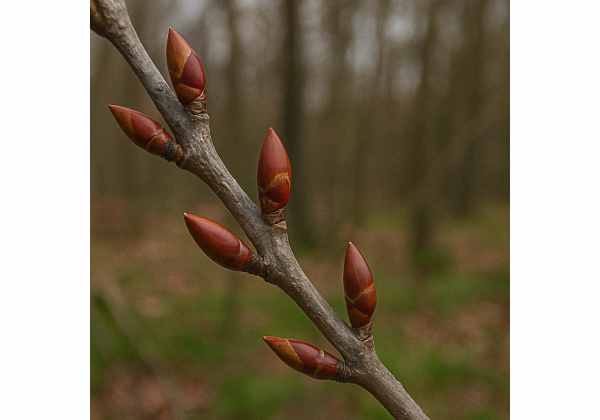
Poplar buds are the sticky, resin-coated young buds of various poplar trees, including black poplar, balsam poplar, and related species in the Populus genus. Long valued in traditional herbal practice, they are best known for their rich aroma, soothing resins, and broad topical uses. Herbalists have used them for generations in salves, infused oils, and tinctures for irritated skin, minor aches, and seasonal respiratory discomfort. Today, interest in poplar buds is growing because modern phytochemical research has confirmed that they contain salicylate-like compounds, flavonoids, phenolic acids, and fragrant resins with notable antioxidant, anti-inflammatory, and antimicrobial activity.
What makes poplar buds especially interesting is the way tradition and modern science overlap. Their strongest modern case is as a topical herb, especially in salves often called Balm of Gilead. Internal use also has a long history, but dosing is less standardized and evidence is thinner. For most readers, the key question is not whether poplar buds are useful, but how to use them wisely, how much to take, and who should be cautious.
Essential Insights
- Poplar buds are most promising for topical support of irritated skin and minor inflammatory discomfort.
- Their main strengths come from salicylate-like compounds, flavonoids, phenolic acids, and resinous antimicrobial constituents.
- For short-term topical use, a thin layer of salve or ointment is commonly applied 2 to 3 times daily.
- People with aspirin or salicylate sensitivity, resin allergies, or bee-product allergies should avoid them unless a clinician advises otherwise.
Table of Contents
- What poplar buds are and why they matter
- Key compounds and how they may work
- Poplar Buds for skin support, inflammation, and minor pain
- Respiratory, antimicrobial, and traditional internal uses
- How to prepare and use poplar buds
- Dosage, timing, and practical best practices
- Safety, side effects, interactions, and who should avoid them
What poplar buds are and why they matter
Poplar buds are unopened leaf or flower buds harvested before they fully expand in spring. At that stage, they are coated in a fragrant, sticky resin that helps protect the developing plant tissue from cold, moisture, and microbial attack. That protective resin is one reason poplar buds attract so much herbal interest. In traditional practice, the buds were often infused into oil, alcohol, or fat to capture these aromatic compounds, then used in chest rubs, wound salves, and soothing liniments.
The buds can come from several species and hybrids, which matters because chemistry is not identical across the genus. Black poplar and balsam poplar are especially well known in herbal medicine, while some regional traditions use cottonwood or other resin-rich poplars. This species variation helps explain why different preparations can smell, feel, and perform a little differently. A darker, more resinous bud may produce a stronger aromatic salve than a milder one, even if both are sold simply as “poplar buds.”
Historically, poplar buds have been associated with “Balm of Gilead,” a name commonly used for poplar bud preparations made into salves or tinctures. They also have an interesting connection to propolis production, because bees often gather resin from poplar buds as a source material for propolis in temperate climates. That overlap helps explain why poplar buds and propolis sometimes share a similar scent profile and some overlapping antimicrobial and soothing properties.
In practical terms, poplar buds matter for three main reasons. First, they are a concentrated plant material. A small amount of resin carries a surprisingly high load of active compounds. Second, they are versatile. They can be used in topical oils, salves, ointments, compresses, and in some traditions tinctures or syrups. Third, they sit at the crossroads of folk medicine and lab research. Unlike many herbs that are known only through tradition, poplar buds now have meaningful phytochemical and preclinical data supporting their anti-inflammatory, antioxidant, and antimicrobial potential.
That said, it is important to set realistic expectations. Poplar buds are not a cure-all, and the best current support is for careful, short-term use, especially on the skin. They are better thought of as a well-rounded traditional remedy for minor problems than as a replacement for prescription treatment. Used with that mindset, they can be a valuable herbal option with a long history and a chemistry profile that makes good biological sense.
Key compounds and how they may work
The medicinal reputation of poplar buds comes from a dense mix of salicylate-like substances, flavonoids, phenolic acids, aromatic esters, and resinous compounds. These are not just abstract lab findings. They help explain why traditional preparations often feel warming, soothing, mildly numbing, and protective on irritated tissue.
One important group is the salicylate-like phenolic glycosides, including salicin, populin, and related compounds. These are often compared with the constituents found in willow bark. They are relevant because salicylate-rich plants have a long record of use for pain, fever, and inflammation. In poplar buds, however, salicylates are only part of the story. The buds also contain many non-salicylate compounds that likely contribute to their broader effects.
Flavonoids are another major class. Commonly reported flavonoids in poplar buds include pinocembrin, pinobanksin, galangin, chrysin, and related molecules. These compounds are of interest because they can help reduce oxidative stress and may influence inflammatory signaling. Some studies suggest they contribute to reduced release of inflammatory messengers and help explain the antioxidant behavior seen in poplar bud extracts.
Phenolic acids and their esters also deserve attention. Caffeic acid, p-coumaric acid, cinnamic acid, ferulic acid, and related derivatives appear often in poplar bud research. These molecules are relevant for several reasons. They may help protect tissues from oxidative damage, contribute to antimicrobial activity, and influence how a preparation behaves on the skin. In topical products, this can translate into a soothing, protective feel that fits well with traditional wound and irritation care.
The resin fraction adds yet another layer. Resins are sticky for a reason: they form a protective barrier. In herbal preparations, that resin can create a coating effect that helps salves cling to the skin. Some resin-associated compounds also appear active against certain bacteria and fungi, particularly Gram-positive organisms. This does not mean poplar buds should be used as a stand-alone infection treatment, but it helps explain why traditional wound salves often included them.
Several practical points follow from this chemistry:
- Alcohol tends to extract the resinous and flavonoid-rich fraction well.
- Oils and fats capture aromatic and resinous constituents effectively for topical use.
- Simple water infusions are usually less efficient for sticky bud resins than tinctures or infused oils.
- Different species and hybrids can produce noticeably different chemical profiles.
This mixed chemistry is one reason poplar buds are better understood as a whole-herb material than as a single-ingredient remedy. Their value likely comes from synergy: salicylate-like compounds for inflammatory comfort, flavonoids for oxidative balance, phenolic acids for broad protective effects, and resins for both function and topical usefulness. That complexity is also why quality matters so much. Fresh, aromatic, resin-rich buds generally make stronger preparations than old, dried, or poorly stored material.
Poplar Buds for skin support, inflammation, and minor pain
Among all the ways poplar buds are used, topical skin support is the clearest and most practical. Traditional preparations have long been applied to dry, cracked, rough, or mildly irritated skin, as well as to sore muscles, minor inflammatory discomfort, and superficial abrasions. Modern research does not prove every traditional claim, but it does make the topical use case more believable.
The first reason is anti-inflammatory potential. Poplar bud extracts have shown the ability in preclinical studies to reduce inflammatory markers and moderate oxidative stress. In plain terms, that means they may help calm irritated tissue. This fits well with how herbalists have used poplar buds in ointments and salves for redness, soreness, and environmental skin stress.
The second reason is antioxidant action. Skin under stress from friction, weather, or UV exposure experiences oxidative burden. Antioxidant-rich plant extracts can help support recovery, especially when used in a formula that also protects the skin barrier. That makes poplar buds appealing in restorative balms and after-exposure skin care.
The third reason is antimicrobial support. Poplar buds are not a substitute for proper wound care, but their extracts have shown activity against several microbes in laboratory settings. For minor skin care, this can be useful as part of a broader soothing formula. It is one reason poplar buds are often combined with other classic topical botanicals such as calendula for minor skin irritation.
A reasonable way to think about benefits is by category:
- Minor skin irritation: poplar bud salves may help soothe rough, inflamed, or weather-stressed skin.
- Mild muscle and joint discomfort: resin-rich rubs can be used for localized comfort after physical strain.
- Superficial wounds and abrasions: traditional use is strong here, though medical care is still needed for infected, deep, or slow-healing wounds.
- Hemorrhoidal and anal-area discomfort: some older traditions mention this use, but modern users should be cautious because irritated mucosal tissue can react strongly.
Pain relief is usually mild to moderate rather than dramatic. Poplar buds are not the herb most people reach for when they want fast systemic pain relief. Instead, they shine as a local soothing measure, especially when the discomfort is paired with skin irritation, stiffness, or low-grade inflammation.
Their best use is often simple: as a salve massaged into an irritated area once or several times a day. That approach respects both tradition and current evidence. The more a person expects them to act like a pharmaceutical anti-inflammatory drug, the more likely they are to be disappointed. The more they are used as a thoughtful, topical botanical for everyday minor complaints, the more sense they make.
Respiratory, antimicrobial, and traditional internal uses
Poplar buds also have a long history of internal use, especially for coughs, chest congestion, sore throats, and upper respiratory irritation. Traditional systems often describe them as expectorant, warming, resinous, and protective. In that role, they are usually taken as tinctures, syrups, or occasionally teas, and sometimes used in steam or chest-rub preparations for inhaled aromatic support.
This traditional respiratory use is plausible, but it is important to separate plausibility from proof. Modern research does support antimicrobial and anti-inflammatory activity in poplar bud extracts, yet human clinical evidence for cough or bronchitis relief remains limited. In other words, poplar buds may support comfort and secretion movement, but they should not be presented as a proven treatment for pneumonia, asthma attacks, or serious respiratory infection.
Their internal appeal comes from a few overlapping actions:
- Resinous soothing action: sticky aromatic compounds may help coat and comfort irritated tissues.
- Expectorant tradition: many herbal practitioners use poplar buds when mucus is thick and hard to clear.
- Mild antimicrobial support: lab studies suggest activity against some bacteria and fungi.
- Inflammatory moderation: salicylate-like and flavonoid compounds may help reduce irritation.
This is also where good judgment matters most. A person with a brief, uncomplicated seasonal cough might try a conservative herbal formula. A person with high fever, shortness of breath, wheezing, chest pain, or symptoms that last longer than expected needs medical evaluation, not stronger herbs.
Poplar buds are sometimes combined with other aromatic respiratory plants. For example, they may appear alongside pine-based respiratory support in chest rubs or herbal syrups designed for cold weather congestion. The goal in such formulas is not only antimicrobial activity, but also aromatic opening, tissue soothing, and a comforting sensory effect.
Internal use has another limitation: consistency. Because species, harvest timing, and extraction methods vary, one tincture may not behave like another. That makes oral dosing less predictable than topical use. It also raises safety questions, especially for people sensitive to salicylates or resins.
For most readers, the practical takeaway is this: internal use is part of the historical identity of poplar buds, but it is not the strongest modern use case. A chest rub, steam preparation, or well-formulated topical balm may provide some of the traditional comfort people seek, with a lower risk profile than taking large oral doses. When internal use is chosen, it should be short-term, conservative, and guided by product instructions or a qualified clinician.
How to prepare and use poplar buds
Poplar buds can be used in several forms, but some preparations make more sense than others because of the plant’s sticky chemistry. The resinous coating does not extract especially well in plain hot water, so oil and alcohol preparations are usually preferred. This is one reason poplar buds are famous in salves and tinctures rather than in everyday herbal teas.
The most classic preparation is an infused oil or fat. Fresh or properly wilted buds are macerated in oil over time so the resinous compounds move into the carrier. That infused oil can then be turned into a salve, ointment, or balm. This is the traditional “Balm of Gilead” style approach and remains the best way to use poplar buds for skin comfort.
Common forms include:
- Infused oil: useful for massage into dry, sore, or irritated areas.
- Salve or balm: ideal for targeted topical use because it stays in place and protects the skin surface.
- Alcohol tincture: more common for internal use or for adding to liniments and sprays.
- Steam or chest-rub preparations: chosen mainly for their aromatic comfort during seasonal congestion.
When buying a product, look for clarity about plant part, species, and extraction type. “Poplar bud extract” is not a complete description. A salve made from fresh balsam poplar buds in olive oil and beeswax is very different from a dried bud powder capsule or a high-proof tincture. Extraction method changes what you actually get.
For home use, a few habits improve results:
- Start with a small area.
- Use clean, intact skin unless the product is specifically intended for superficial abrasions.
- Avoid applying heavy resinous formulas to large body areas at first.
- Stop if stinging, rash, or unusual warmth develops.
- Store preparations in a cool place because aromatic compounds can degrade over time.
Some people like to combine poplar bud oil with other skin-supportive ingredients. For example, a formula may include witch hazel for astringent skin care or a little calendula-infused oil for extra soothing effect. The key is not to overload the formula. Poplar buds already bring a strong aroma and active resin profile, so simpler blends are often better.
The least practical form is a standard tea made from the buds alone. It can be done, but water does not capture the resin fraction as effectively as oil or alcohol. A tea may make sense in a traditional setting, but for most people today, salves and tinctures are the better match for the plant’s chemistry and most likely to deliver noticeable results.
Dosage, timing, and practical best practices
Dosage is the part of poplar bud use that needs the most honesty. There is no well-established, standardized human dose supported by strong clinical trials. That means practical dosing should be conservative, form-specific, and guided by product instructions whenever possible. In general, topical dosing is more straightforward and more defensible than internal dosing.
For topical use, a simple approach works best. Apply a thin layer of salve, balm, or ointment to the affected area 2 to 3 times daily. That range is common in herbal practice and fits the short-term, localized way poplar buds are usually used. More is not always better. Heavy overapplication can increase the chance of irritation, especially on sensitive skin.
A sensible topical routine looks like this:
- Apply a small amount first as a patch test.
- If tolerated, use a thin layer on the target area.
- Reapply 2 to 3 times daily as needed.
- Reassess after 5 to 7 days.
- If the area worsens, becomes infected, or does not improve, stop self-treatment and seek care.
For tinctures, caution is essential. Traditional and practitioner-style guidance often places oral use in the range of about 1 to 2 mL, up to 3 times daily, but this is not a clinically standardized dose and should not override a manufacturer’s directions. Product strength varies widely, and some formulas are designed for external use only. That is why oral use should be short-term and more selective.
Timing also matters. Topical use is often most helpful:
- after bathing, when the skin is slightly damp
- before bed, when the area can stay protected
- after physical strain, if using it as a localized rub
- early in the course of mild irritation, before the skin becomes more inflamed
Common mistakes include using old, weak preparations, applying salves to obviously infected skin, assuming every “Balm of Gilead” product is interchangeable, and ignoring patch testing. Another frequent mistake is trying to force poplar buds into roles that do not suit them. They are not a broad internal tonic, not a replacement for antibiotics, and not a fast solution for severe pain.
The best-practice mindset is simple: use the smallest effective amount, start externally, keep the duration short, and let the form fit the goal. For skin and localized comfort, poplar buds are often practical and pleasant. For internal use, restraint and product-specific guidance are much more important.
Safety, side effects, interactions, and who should avoid them
Poplar buds are often described as gentle, but that can be misleading. Like many resin-rich herbs, they have clear safety considerations. The main concerns are salicylate sensitivity, allergic reactions, and uncertainty around internal dosing.
The first major caution is aspirin or salicylate sensitivity. Poplar buds contain salicylate-like compounds, so people who react to aspirin, some anti-inflammatory drugs, or salicylate-rich products should avoid them unless a qualified clinician says otherwise. This is one of the most important contraindications.
The second caution is allergy. Because poplar buds contain sticky aromatic resins and are closely related to materials involved in propolis chemistry, they can trigger skin reactions in some people. Anyone with a history of reactions to propolis, Peru balsam, fragrant resin products, or strongly aromatic topical herbs should be especially careful. A patch test is wise even for people without a known allergy history.
The third caution involves pregnancy, breastfeeding, and children. There is not enough reliable safety data to recommend internal use in pregnancy or breastfeeding. Because salicylate exposure raises an additional concern, internal use in children is also best avoided unless directed by a clinician.
Other groups who should be cautious include people with:
- bleeding disorders
- active stomach ulcers
- significant kidney disease
- asthma that worsens with aspirin or salicylates
- upcoming surgery
- regular use of anticoagulants, antiplatelet drugs, or frequent NSAIDs
Possible side effects include skin redness, itching, rash, burning, stomach upset with internal use, and intolerance to strong aromatic preparations. Most problems are more likely when the dose is too high, the product is poor quality, or the user ignores an allergy risk.
A few practical safety rules go a long way:
- Patch test before wider topical use.
- Do not use on deep wounds, spreading infections, or heavily damaged skin without medical advice.
- Do not take internally just because a product is “natural.”
- Follow label directions and do not exceed them.
- Stop immediately if you develop rash, wheezing, facial swelling, or unusual stomach symptoms.
In the end, poplar buds are best for informed, limited use. Their most reasonable role is topical support for minor irritation and localized discomfort. People seeking strong internal anti-inflammatory effects or long-term daily use should look for more standardized options and discuss them with a healthcare professional.
References
- Extracts of Poplar Buds (Populus balsamifera L., Populus nigra L.) and Lithuanian Propolis: Comparison of Their Composition and Biological Activities 2021. (Open-access study) ([PMC][1])
- Balsam Poplar Buds Extracts-Loaded Gels and Emulgels: Development, Biopharmaceutical Evaluation, and Biological Activity In Vitro 2023. (Open-access study) ([PMC][2])
- Characterization of Secondary Metabolites of Leaf Buds from Some Species and Hybrids of Populus by Gas Chromatography Coupled with Mass Detection and Two-Dimensional High-Performance Thin-Layer Chromatography Methods with Assessment of Their Antioxidant Activity 2024. (Open-access study) ([PMC][3])
- Phytochemical Profiles and Antimicrobial Activity of Selected Populus spp. Bud Extracts 2024. (Open-access study) ([PMC][4])
- Wound healing potential of a formula based on Populus nigra L. flower buds extract with anti-inflammatory activity 2024. (Preclinical study) ([PubMed][5])
Disclaimer
This article is for educational purposes only and does not replace medical advice, diagnosis, or treatment. Poplar bud preparations can cause allergic reactions and may not be safe for people with aspirin or salicylate sensitivity, pregnancy, breastfeeding, bleeding risk, or certain medication use. Seek professional care for severe pain, infected wounds, breathing difficulty, persistent cough, or any symptom that is worsening rather than improving.
If you found this article helpful, please consider sharing it on Facebook, X, or your preferred platform so others can discover it too.