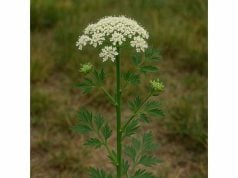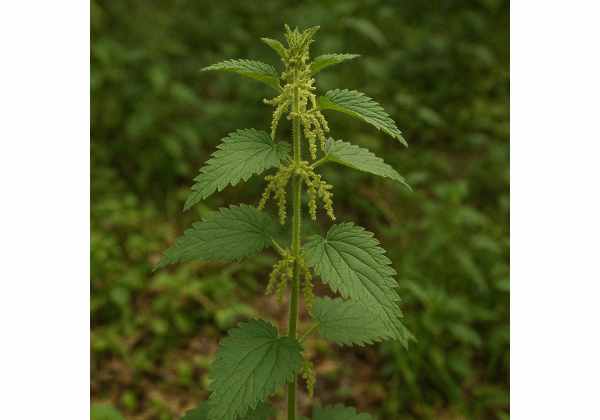
Stinging nettle, Urtica dioica, is one of those plants that can seem humble until you look closely. Known for the sharp sting of its fresh hairs, it is also a long-used food, tea herb, topical remedy, and medicinal root. Different parts of the plant serve different purposes. The leaves are valued for their mineral-rich, green, nutritive profile and for traditional use in minor joint discomfort, urinary support, and seasonal wellness. The root is best known for its role in lower urinary tract symptoms linked to benign prostatic enlargement. Modern research supports some of these uses more than others, and that distinction matters.
Nettle is not a single-purpose herb. Its chemistry includes polyphenols, flavonoids, carotenoids, minerals, chlorophyll, sterols, lignans, lectins, and other compounds that help explain its broad reputation. But the evidence is uneven. Some uses are backed by official herbal monographs and clinical research, while others remain mostly traditional or early-stage. The most useful way to understand stinging nettle is to separate leaf from root, food use from medicinal use, and realistic benefits from exaggerated claims.
Essential Insights
- Nettle leaf has the strongest traditional support for minor urinary complaints, mild joint discomfort, and use as a nutrient-dense green herb.
- Nettle root is most often used for lower urinary tract symptoms related to benign prostatic hyperplasia.
- A common adult nettle leaf tea dose is 1.5 g in 150 mL of boiling water, taken 3 to 4 times daily.
- Avoid medicinal use during pregnancy and breastfeeding unless a qualified clinician advises otherwise.
- Fresh raw leaves can sting the skin, while concentrated products may cause stomach upset or rash in sensitive people.
Table of Contents
- What stinging nettle is and why the plant part matters
- Key ingredients and how nettle may work
- Health benefits and where the evidence is strongest
- Common uses, forms, and how people take nettle
- Dosage, timing, and how long to use stinging nettle
- Safety, side effects, and who should avoid it
- How to set realistic expectations for nettle
What stinging nettle is and why the plant part matters
Stinging nettle is a perennial herb found across Europe, Asia, North America, and other temperate regions. It grows in disturbed soils, damp edges, fields, woodlands, and gardens, and it is easy to recognize once you know its jagged leaves, upright stems, and tiny stinging hairs. Those hairs are part of the reason the plant has such a strong identity. Fresh nettle can irritate the skin within seconds, causing a short-lived burning, tingling, or rash-like reaction. Yet once cooked, dried, or processed, the plant changes completely. It becomes a food, an infusion herb, and a medicinal material.
One of the most important things to understand is that nettle is not used the same way across all its parts. The leaf and aerial parts are the main forms used for tea, juice, cooked food, and traditional support for minor urinary complaints, mild articular pain, and seborrhoeic skin conditions. The root is different. It is used mainly for lower urinary tract symptoms related to benign prostatic hyperplasia, often shortened to BPH. The seed also appears in herbal practice, but it is not the focus of the strongest official guidance. That separation matters because people often speak about “nettle benefits” as though the whole plant does the same thing.
Nettle also sits in an interesting space between food and medicine. It is one of the more nutritious traditional greens, rich in minerals and plant compounds, and it has a long reputation as a spring tonic. In that sense, it belongs to the same broad conversation as other nutrient-dense green herbs and foods, though its medicinal identity is more strongly tied to traditional European phytotherapy than to modern superfood marketing.
The plant’s reputation comes from several overlapping roles:
- as a cooked green vegetable and wild food
- as a leaf tea and fresh-juice herb
- as a root medicine for prostate-related urinary symptoms
- as a traditional support for joints, mild inflammation, and seasonal complaints
This variety is one reason nettle is so easy to misunderstand. Someone searching for allergy relief may be reading about leaf extracts. Someone researching prostate support is often looking at root. Someone interested in nutrition is really asking about the cooked leaf. All of those are legitimate, but they should not be blended into one vague story.
A good nettle article has to keep those differences visible. Without that, dosage becomes confusing, safety advice becomes sloppy, and the reader is left with a plant that sounds far more magical than it really is. Nettle is impressive enough without exaggeration. It is a versatile herb and food with distinct uses, not a single all-purpose remedy.
Key ingredients and how nettle may work
The chemistry of stinging nettle helps explain why different parts of the plant have different uses. Leaves and roots do not just taste different or look different. They contain different groups of compounds, and those differences shape how nettle is used in herbal medicine.
Nettle leaf and aerial parts
The leaf is rich in:
- polyphenols and flavonoids
- carotenoids
- chlorophyll
- minerals such as calcium, magnesium, iron, and zinc
- organic acids and other antioxidant compounds
These constituents make nettle leaf especially interesting as both a food and a medicinal herb. The polyphenols and flavonoids are often discussed in connection with antioxidant and anti-inflammatory activity. The minerals and chlorophyll help explain why nettle is so often described as a strengthening or rebuilding herb rather than only a symptomatic one. In practice, this means nettle leaf often feels more like a nutritive plant with medicinal overlap than like a sharply targeted pharmaceutical herb.
Nettle root
The root has a different profile. It is richer in:
- phytosterols
- lignans
- coumarins
- polysaccharides and sugars
- lectins, especially Urtica dioica agglutinin
This is important because nettle root is the part most associated with prostate-related uses. Its action is thought to involve hormone-related pathways and inflammatory signaling rather than simple “diuretic” activity. Older and newer reviews suggest that nettle root may influence sex hormone-binding globulin, aromatase-related activity, prostate cell signaling, and inflammatory factors, though the exact mechanism is still not fully settled.
The sting itself
Fresh nettle’s sting comes from tiny hairs that inject low-molecular-weight irritant compounds. Histamine, serotonin, acetylcholine, and related irritants are commonly discussed here. That is why fresh contact feels so immediate, while dried or cooked nettle loses that effect.
A practical way to think about nettle is this:
- Leaf chemistry supports its role as a mineral-rich green and traditional anti-inflammatory-style herb.
- Root chemistry supports its prostate-focused use.
- Fresh stinging hairs explain the plant’s counterirritant and contact reaction profile.
This split also explains why nettle can be discussed in very different health contexts. Someone using nettle tea for a gentle daily herbal routine is relying mostly on leaf chemistry. Someone using a standardized root extract for lower urinary tract symptoms is relying on a different set of compounds entirely.
For readers who like antioxidant-rich plants, nettle leaf shares some conceptual ground with green tea and other polyphenol-rich botanicals, but it is less stimulant-like and more nutritive in character. That distinction helps explain why nettle is often taken over longer periods as part of a food-herb routine rather than as a quick-effect supplement.
Health benefits and where the evidence is strongest
Stinging nettle has many claimed benefits, but they are not all supported equally. The most useful approach is to rank them by how solid the evidence is and by which plant part is being used.
1. Lower urinary tract symptoms related to benign prostatic hyperplasia
This is one of nettle’s best-known medicinal roles, and it belongs to the root, not the leaf. Official European herbal monographs recognize nettle root as a traditional herbal medicinal product for relief of lower urinary tract symptoms related to benign prostatic hyperplasia after serious conditions have been ruled out by a doctor. Clinical studies and reviews suggest that nettle root may offer modest improvement in symptoms such as urinary frequency, incomplete emptying, and nocturia, though it should not be treated as a stand-alone replacement for medical evaluation.
This is the area where nettle root is most relevant in modern herbal practice. People comparing options sometimes also look at saw palmetto for prostate-focused support, since both herbs are commonly discussed in the same BPH context.
2. Minor urinary complaints and gentle diuretic support
This role belongs mostly to the leaf or herb. European monographs recognize nettle herb as a traditional option for relief of symptoms associated with minor urinary complaints when used along with adequate fluid intake. This is a modest claim, and it should stay modest. It does not mean nettle treats urinary tract infections, stones, or kidney disease. It means the herb has a traditional place in gentle urinary support.
3. Minor articular pain
Nettle herb also has official traditional use status for minor articular pain. This is consistent with the plant’s long-standing anti-inflammatory reputation. It is best understood as a supportive herb for mild joint discomfort rather than as a replacement for evidence-based arthritis care.
4. Seasonal allergy support
Nettle is often promoted for allergic rhinitis. This claim is plausible, and there have been clinical trials using nettle in that setting. Still, the broader evidence remains mixed and relatively low certainty. A 2024 systematic review of single medicinal plants for allergic rhinitis included Urtica dioica among the studied herbs, but the overall evidence for this category remained very-low-to-low certainty. In practical terms, nettle may help some people, but it is not a first-line certainty.
5. Nutritive and functional-food value
This is not always treated as a “benefit,” but it should be. Nettle leaf is rich in minerals and phytochemicals, and this makes it valuable as a seasonal food and functional herb. In that role, it may matter more as a consistent nourishing plant than as a dramatic remedy.
What should be treated more cautiously are big claims about blood sugar control, blood pressure reduction, or generalized detoxification. These ideas exist in the literature and in early research, but they are not the strongest, clearest reasons to choose nettle in routine use. Nettle is most useful when its purpose is specific and its plant part is chosen correctly.
Common uses, forms, and how people take nettle
Stinging nettle is unusually versatile. It can be eaten, infused, juiced, extracted, or taken as a root preparation, and each form points toward a slightly different use.
Nettle leaf tea
This is one of the most common traditional forms. Dried leaf or herb is infused in hot water and taken as a daily tea. It is used for gentle urinary support, mild joint discomfort, and as a mineral-rich herb in everyday routines. It is not as strong or targeted as a standardized extract, but it is often the most practical option for people who want nettle as part of a broader wellness pattern.
Cooked nettle as food
Once blanched, steamed, or cooked, the sting disappears. Cooked nettle can be used like spinach in soups, stews, egg dishes, pesto, and savory fillings. In this form, nettle sits partly in the culinary world and partly in the herbal one. For many people, this is the most realistic and sustainable way to benefit from the plant.
Fresh juice and liquid extracts
Juice from fresh herb and liquid extracts are recognized in official monographs and are used in some commercial products. These forms allow more concentrated dosing than tea, though they also make product quality and formulation much more important.
Powdered herb and capsules
Powders and capsules are convenient, especially for people who do not want tea. The challenge is that quality varies, and powder hides the plant more than cut leaf does. That matters when buyers are trying to confirm that the product is truly leaf, not root, or vice versa.
Nettle root extracts
These are a different category. Root extracts are typically marketed for prostate-related urinary symptoms and are often standardized or formulated as dry extracts, liquid extracts, or tincture-like products. They should not be confused with leaf tea or leaf capsules.
Topical and personal-care uses
Nettle also appears in shampoos, scalp products, skin products, and occasionally topical preparations aimed at oily skin or seborrhoeic conditions. These uses reflect both traditional practice and the plant’s biochemical appeal.
A practical way to match the form to the goal is this:
- Leaf tea or cooked leaf for nutritive use and gentle support
- Leaf juice or extract for more concentrated herb use
- Root products for prostate-focused purposes
- Topical formulas for scalp or skin-focused applications
People looking for clearer allergy-focused herbal traditions sometimes compare nettle with butterbur in allergic rhinitis discussions. The difference is that nettle often overlaps with food and nutritive use, while butterbur is more narrowly positioned around allergy and migraine support.
Dosage, timing, and how long to use stinging nettle
Nettle dosage depends heavily on the part used and the goal. There is no single universal nettle dose, and that is one of the easiest places for articles to become misleading.
Leaf and herb dosing
For adult use, official European monographs give several traditional oral dosing patterns for nettle herb.
For minor urinary complaints, one common form is:
- herbal tea: 1.5 g of comminuted herb in 150 mL of boiling water, taken 3 to 4 times daily
Other leaf-based forms include powdered herb, expressed juice, and dry extract. For example, dry extracts prepared with water are listed in the range of 300 to 450 mg, 3 to 4 times daily depending on the product.
For minor articular pain, the leaf dose is often higher:
- herbal tea: 3 to 6 g in 200 mL of boiling water, 3 times daily
This illustrates a key point: even within leaf use, the dose changes by indication and formulation.
Root dosing
For lower urinary tract symptoms related to benign prostatic hyperplasia, nettle root monographs list several different preparations. A traditional comminuted-root preparation is:
- 2 g in 150 mL of water, 2 to 3 times daily
Dry extracts are also used, and depending on the extract ratio and solvent, monograph dosing ranges include examples such as:
- 150 to 160 mg, 3 times daily
- 240 mg, 3 times daily
- 250 mg, twice daily
This wide range is not a contradiction. It reflects different extract strengths and manufacturing methods.
Timing
Leaf tea is usually best taken:
- between meals or with meals for steady daily use
- with food if you are prone to nausea
- consistently for at least a short trial window
Root products for BPH-style symptoms are often taken once to three times daily depending on the preparation. Consistency matters more than chasing quick effects.
How long to use it
Nettle leaf can fit into longer routines more easily than many herbs, especially when used as tea or food. Root use for prostate-related symptoms also tends to be longer term rather than immediate. Still, long-term use should not mean unmonitored use. If you are using nettle root for urinary symptoms, medical evaluation matters because those symptoms can overlap with more serious conditions.
Children and adolescents are a separate issue. Many monograph preparations are not recommended under age 12 or under age 18 depending on the indication and form. Pregnancy and breastfeeding also call for extra restraint.
If your goal is simple urinary support rather than prostate-related symptoms, some people compare nettle with horsetail and similar urinary herbs, but the two herbs are not interchangeable. Nettle leaf is more nutritive, while root use is much more prostate-specific.
Safety, side effects, and who should avoid it
Stinging nettle is often well tolerated, but “often” is not the same as “risk-free.” The plant’s safety profile depends on whether you are talking about fresh leaf, dried leaf, a standardized root extract, or a mixed supplement.
Fresh plant contact
Fresh nettle causes contact irritation. That is the most immediate and obvious safety issue. The sting is usually short-lived, but it can be intense and uncomfortable. Gloves matter when harvesting or processing fresh plants.
Common oral side effects
Official herbal monographs and safety summaries most often mention:
- nausea
- vomiting
- diarrhea
- heartburn
- bloating or fullness
- flatulence
- rash, urticaria, or pruritus in allergic individuals
These effects are not inevitable, but they are realistic. They tend to matter more with concentrated products than with moderate food use.
Pregnancy and breastfeeding
For nettle leaf and herb, safety during pregnancy and lactation has not been established, and use is generally not recommended in the absence of sufficient data. This is an area where casual online advice can become much more confident than the evidence deserves.
For nettle root, official monographs describe pregnancy and lactation as not relevant to the approved indication because the indication is male lower urinary tract symptoms related to BPH. In practical terms, that still does not make root supplements a good self-care choice during pregnancy or breastfeeding.
Children and adolescents
Many nettle herb preparations are not recommended under age 12 or under age 18 depending on the indication. Root use is not considered relevant in children and adolescents under 18 years for its monograph use.
Interactions and medical caution
Formal interaction data are limited, but caution is wise if you take medicines that affect:
- fluid balance
- blood pressure
- blood sugar
- blood clotting
The reason is not that nettle has a long list of proven dangerous interactions. The reason is that plant part, concentration, and product type vary so much that cautious use is simply smarter.
People with urinary symptoms need a separate warning. If you have fever, blood in the urine, painful urination, urinary retention, or worsening symptoms, you should not treat that casually with nettle. That deserves medical evaluation.
Nettle can be a useful herb, but it is safest when it is matched to the right person, the right plant part, and the right goal.
How to set realistic expectations for nettle
The best way to use stinging nettle is to decide first what kind of herb you want it to be in your life. If you want a mineral-rich spring green, nettle leaf can be excellent. If you want a gentle daily tea with traditional urinary and joint-support uses, leaf tea makes sense. If you want prostate-focused urinary support, that is a root question, not a leaf question.
That part-specific thinking prevents a lot of disappointment.
Nettle leaf is often at its best when treated as a food-herb rather than a miracle supplement. Its value can come from consistency, nourishment, and modest symptom support. People sometimes overlook this because they want dramatic effects. But nettle’s real strength may be that it is useful in ordinary ways: a cooked green, a steady infusion, a supportive herb that can fit daily life.
Nettle root is different. Its main evidence-based identity is narrower. It may help some men with lower urinary tract symptoms related to benign prostatic hyperplasia, but it is not a guaranteed solution, and it is not a substitute for medical evaluation. In that setting, it is better framed as supportive than curative.
A realistic checklist looks like this:
- choose leaf for nutritive, tea, and minor joint or urinary support goals
- choose root only for prostate-related urinary goals
- use food and tea forms when you want the gentlest approach
- use standardized extracts only when the goal is specific enough to justify them
- avoid assuming that every claimed benefit applies equally to every part of the plant
Nettle is also a good reminder that old herbs can be both ordinary and impressive. It does not need inflated claims to be worthwhile. It already has a place in traditional medicine, official herbal monographs, wild-food traditions, and modern botanical research.
Used thoughtfully, stinging nettle is a practical herb with distinct roles. Used vaguely, it becomes a bundle of half-true claims. The first approach is the one that actually helps.
References
- Urticae herba – herbal medicinal product | European Medicines Agency (EMA) 2025 (Guideline)
- Urticae radix – herbal medicinal product | European Medicines Agency (EMA) 2025 (Guideline)
- Medicinal plants for allergic rhinitis: A systematic review and meta-analysis 2024 (Systematic Review)
- Stinging Nettle (Urtica dioica) Roots: The Power Underground—A Review 2025 (Review)
- Nettle (Urtica dioica) leaves as a novel food: Nutritional, phytochemical profiles, and bioactivities 2025 (Review)
Disclaimer
This article is for educational purposes only and is not medical advice, diagnosis, or treatment. Stinging nettle may be used as food, tea, topical herb, or root extract, and those forms do not share the same indications, dose ranges, or safety considerations. Speak with a qualified healthcare professional before using nettle medicinally if you are pregnant, breastfeeding, taking prescription medicines, managing urinary symptoms, or treating chronic inflammatory or allergic conditions. Seek medical care promptly for blood in the urine, urinary retention, fever, severe reactions, or worsening symptoms.
If you found this article helpful, please share it on Facebook, X, or another platform you prefer so more readers can find careful, evidence-aware herbal guidance.