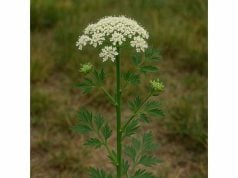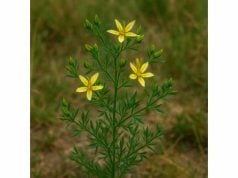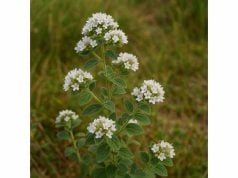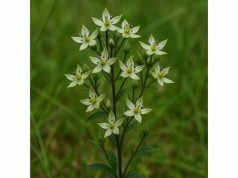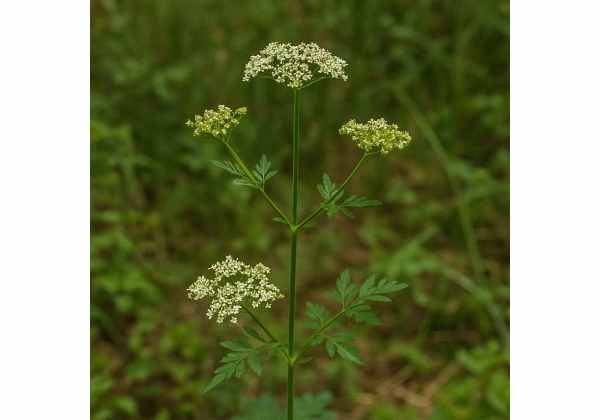
Stone parsley, or Sison amomum, is a lesser-known aromatic herb in the carrot family, native to parts of Europe, North Africa, and western Asia. Although its name sounds familiar, it is not the same as common culinary parsley. Historically, it has been gathered as a local food plant and noted in older herbal traditions for digestive, diuretic, and warming effects. Modern interest in the plant comes less from folk reputation alone and more from its essential-oil chemistry, which includes fragrant compounds such as sabinene and beta-phellandrene.
Even so, stone parsley is not a well-studied medicinal herb by modern standards. Most current evidence comes from phytochemical and in vitro studies, especially on the essential oil, rather than from human clinical trials. That means the plant may hold promise as an aromatic digestive support herb, but its real-world medicinal value is still much less certain than that of better-known Apiaceae species. Used carefully, it is an intriguing traditional plant. Used carelessly, especially in wild foraging, it can be confused with far more dangerous relatives.
Essential Insights
- Stone parsley may offer mild traditional digestive support as an aromatic, carminative herb.
- Its essential oil shows preclinical antibacterial and broader bioactive potential, but human evidence remains very limited.
- No standardized medicinal dose has been established; if used at all, keep to culinary-scale amounts or a light infusion of about 0.5 to 1 g crushed seed or dried aerial parts once daily, short term.
- Pregnant or breastfeeding people, children, anyone with Apiaceae allergy, and anyone unsure of plant identification should avoid self-treatment.
Table of Contents
- What Stone Parsley Is and Why Identification Matters
- Stone Parsley Key Ingredients and Medicinal Properties
- What Health Benefits Are Most Plausible
- How Stone Parsley Has Been Used in Food and Herbal Practice
- Dosage, Timing, and Practical Use
- Common Mistakes and Overstated Claims
- Safety, Side Effects, Interactions, and Who Should Avoid It
What Stone Parsley Is and Why Identification Matters
Stone parsley is a biennial herb in the Apiaceae family, the same broad plant family that includes parsley, carrot, coriander, cumin, fennel, dill, and many other aromatic herbs and spices. Botanically, however, it stands apart from garden parsley. Its accepted scientific name is Sison amomum, and it grows mainly in western and southern parts of Europe, the Mediterranean region, and nearby areas. It is usually found on hedgebanks, rough ground, roadsides, and calcareous or lime-rich soils.
The first important point is that the name “stone parsley” can mislead people into assuming a close culinary or medicinal equivalence with common parsley. That is not warranted. While both plants belong to the same family, their traditional use, aroma, and evidence base are different. Stone parsley is far less common, far less studied, and much more likely to be encountered through foraging or specialist botanical interest than through ordinary kitchen use.
The second important point is safety through identification. Apiaceae plants are famous for useful herbs, but they are also a family in which mistaken identity can be serious. Several wild umbellifers resemble one another at first glance, and some are highly toxic. That makes stone parsley a plant that should never be foraged casually by beginners. Even if older sources describe the roots, leaves, or seeds as edible, correct identification comes first.
Historically, stone parsley has been recorded as both a food and a medicinal plant. Older references note that:
- the leaves and seeds were used as a condiment
- the roots were reportedly eaten in some settings
- the plant was associated with carminative, diaphoretic, and diuretic properties
Still, those reports belong more to ethnobotanical and older herbal literature than to modern evidence-based practice. The plant’s present-day interest lies less in traditional “country herb” use alone and more in the fact that its essential oil has measurable chemical activity.
This makes stone parsley a good example of a plant that is easier to admire than to recommend broadly. In a family full of better-established aromatic herbs, it remains an obscure relative. Readers who are more familiar with coriander as an aromatic Apiaceae herb may find that comparison useful: both plants are aromatic members of the parsley family, but coriander has much deeper culinary tradition and much clearer modern study.
So before asking what stone parsley can do, it helps to ask what it is. It is a real medicinally referenced plant, but not a mainstream one. That means its identity, history, and evidence limits all matter from the start.
Stone Parsley Key Ingredients and Medicinal Properties
Stone parsley’s modern scientific interest comes mainly from its volatile chemistry. Like many aromatic plants in the carrot family, it produces essential oils rich in small fragrant molecules that can influence smell, taste, and biological activity. In the case of Sison amomum, published analyses of the flowering aerial parts describe an oil dominated by sabinene, with smaller amounts of beta-phellandrene, germacrene D, terpinen-4-ol, gamma-terpinene, and myrcene.
That profile matters because these kinds of compounds often help explain why aromatic herbs have traditional reputations as digestive stimulants, carminatives, or preservative plants. They do not automatically prove human health benefits, but they do create a plausible bridge between folk use and laboratory observations.
The key ingredient groups worth knowing are:
- Volatile terpenes and terpene-rich essential oil compounds
These are the most visible part of the plant’s chemistry and the main reason modern studies have focused on its oil. - Aromatic secondary metabolites
These likely contribute to scent, taste, and at least some of the plant’s biological activity in vitro. - Broader phytochemical background typical of Apiaceae herbs
Although stone parsley is not nearly as well profiled as major culinary species, it fits the general pattern of an aromatic, chemically active herb rather than a bland green.
From a medicinal point of view, the most defensible properties of stone parsley are modest:
- aromatic
- carminative in older herbal usage
- mildly warming and stimulating in traditional interpretation
- preclinical antibacterial and antiparasitic potential
- possible mild diuretic tendency in older herbals
That last point deserves caution. The older medicinal description of stone parsley as diuretic survives in secondary herbal databases and older references, but it has not been backed by the kind of modern clinical evidence that would justify strong claims today.
Its antibacterial and broader bioactive reputation comes largely from essential-oil studies. These do not show that drinking a tea or sprinkling seed on food will reproduce the same effect in the body. What they do show is that the plant contains chemically active compounds, and that modern research has paid more attention to those compounds than to human dosing or therapeutic outcomes.
This is an important distinction. Stone parsley is better described as a bioactive aromatic herb with limited direct clinical evidence than as a well-established medicinal remedy. A similar contrast can be seen when comparing lesser-known aromatic herbs with better studied seeds such as caraway, which has stronger digestive tradition and evidence.
So the plant’s chemistry is interesting and real. But the correct conclusion is not that stone parsley is a hidden cure. It is that its essential oil profile gives it plausible traditional uses and makes it worthy of scientific curiosity, while still leaving large gaps in what can honestly be promised to human users.
What Health Benefits Are Most Plausible
For stone parsley, the most plausible health benefits are the ones that stay closest to traditional aromatic-herb use and the actual scope of modern research. That means mild digestive support is much easier to defend than dramatic detox, infection, or disease-treatment claims.
The first plausible benefit is digestive support in a traditional carminative sense. Older herbal references describe stone parsley as carminative, which generally means a plant used to reduce gas, ease digestive heaviness, or gently stimulate digestion. This is biologically plausible because aromatic Apiaceae plants often contain volatile compounds that promote salivation, digestive secretions, and a sense of digestive warmth. Even so, stone parsley itself has not been studied in human digestive trials, so this remains a traditional rather than clinically proven use.
The second plausible benefit is mild antimicrobial support at the level of essential-oil activity. Studies of uncommon essential oils that included Sison amomum found antibacterial activity against selected organisms in vitro. That does not translate directly into clinical antimicrobial use, but it does show that the plant’s oil is not chemically inert.
A third possible but more speculative benefit is broader antiparasitic or biocidal activity. Some published research has explored the essential oils of Apiaceae plants, including stone parsley, against insect vectors and parasitic organisms in laboratory settings. This is scientifically interesting, but it belongs more to pharmacological screening and agricultural or neglected-disease research than to everyday herbal medicine.
Possible benefits, stated carefully, would therefore be:
- mild traditional digestive support
- preclinical antibacterial activity
- preclinical antiparasitic or insecticidal bioactivity
- aromatic condiment value that may indirectly support digestion
What should not be claimed:
- that stone parsley is a proven digestive medicine
- that it is a validated antimicrobial treatment in humans
- that it safely “detoxes” the body
- that it has established clinical dosing for any disease
- that essential-oil lab activity automatically equals a useful herbal remedy
This balance matters because unusual herbs often attract exaggerated language precisely because there is so little well-known information about them. The vacuum gets filled by confident but weak claims. Stone parsley deserves the opposite approach. Its most believable role is as a modest aromatic herb with some traditional digestive use and some intriguing essential-oil research.
For perspective, readers may think of cumin as a more established aromatic digestive seed. Stone parsley may share broad family-level logic, but it does not share cumin’s depth of culinary use or evidence.
So what benefits are most plausible? Mostly the modest ones. If stone parsley does anything useful in ordinary practice, it is likely to do so as a lightly stimulating aromatic herb rather than as a strong medicinal intervention. That may seem restrained, but it is the most trustworthy way to read the evidence.
How Stone Parsley Has Been Used in Food and Herbal Practice
Stone parsley sits in an unusual space between food plant, aromatic herb, and little-used medicinal species. Older references report that its leaves and seeds were used as condiments and that the root was at times eaten. Those uses are important because they show that the plant was not viewed only as a medicine. It also had a practical place in local plant use.
In herbal terms, however, stone parsley was never elevated to the same level of familiarity as parsley, fennel, dill, coriander, or caraway. That helps explain why modern use is so limited. There is simply less continuity between old references and present-day household herbalism.
Traditional and practical uses can be grouped into three broad categories:
- Culinary or condiment use
The aromatic leaves and seeds were used in small amounts rather than as a major vegetable crop. - Digestive herbal use
Older references describe the herb as carminative, suggesting use after meals or in the setting of heaviness and gas. - Mild household herb use
Older herbals also associated it with diaphoretic and diuretic actions, though these uses are much less established now.
If someone were to approach stone parsley today, the most sensible path would be culinary or lightly aromatic, not strongly medicinal. That might mean:
- using only correctly identified plant material
- keeping quantities small
- favoring seed or leaf aroma rather than concentrated extracts
- treating any infusion as experimental and short-term
The plant’s family resemblance to other aromatic herbs may tempt people to use it more aggressively than the evidence supports. That is not wise. Stone parsley does not have the same safety familiarity or broad culinary normalization as better-known spices.
A practical comparison is dill as a kitchen herb with digestive tradition. Dill is also aromatic, also in the carrot family, and also associated with digestion, but it has a far stronger record of culinary use and practical familiarity. Stone parsley, by contrast, is better thought of as a minor historical herb than as a modern pantry staple.
There is also an important ethical and practical issue around wild use. Because the plant is uncommon in many places and because identification can be difficult, stone parsley is not an ideal herb for casual experimental foraging. A plant can be “edible” in historical literature and still be a poor choice for modern users if it is easy to confuse with other umbellifers.
So how has stone parsley been used? Historically, lightly. As a condiment, as a small medicinal herb, and as part of local plant knowledge rather than industrial herbal medicine. That is still probably the right scale for thinking about it today.
Dosage, Timing, and Practical Use
One of the most important truths about stone parsley is that no standardized medicinal dose has been established in modern clinical practice. There is no widely accepted monograph dose, no routine therapeutic extract standard, and no modern herbal consensus comparable to what exists for mainstream medicinal plants.
That means any dosage discussion has to begin with honesty. If someone wants an herb with clear medicinal dosing, stone parsley is not a strong choice. If someone is interested in it as a historical aromatic herb, then the safest use remains small-scale and conservative.
A cautious practical approach looks like this:
- keep use culinary first
- avoid essential-oil self-dosing
- use only well-identified plant material
- do not treat it as a daily long-term tonic
If a person insists on trying it as a light household herb, the most conservative approach would be something like:
- 0.5 to 1 g of lightly crushed seed or dried aerial parts
- infused in 150 to 200 mL of hot water
- taken once daily
- only for a short trial period
Even this should be treated as a cautious, culinary-herbal estimate rather than an established medicinal protocol. It is not validated by clinical trials. It is simply a restrained way to think about small-scale aromatic use.
Timing would depend on the goal:
- before or after meals if the interest is digestive aroma or carminative support
- earlier in the day rather than late at night if there is concern about mild urinary stimulation
- never in escalating doses to “force” an effect
A few practical rules matter more than the exact number:
- Small is smarter than large.
Stone parsley is not a herb where higher doses are justified by stronger evidence. - Short-term use makes more sense than routine use.
Without safety data or standardization, indefinite use is hard to defend. - Infusion is safer than concentrated oil.
Essential oils are not equivalent to whole-plant culinary or tea use. - Do not mix guesswork with look-alike plants.
A perfect-looking dose is meaningless if the plant is misidentified.
This is also where comparison helps. Someone who wants a more established aromatic digestive plant might do better with anise for digestive and aromatic use or another well-known culinary seed herb. Those plants offer clearer tradition, clearer handling, and fewer identity concerns.
So the best dosing advice for stone parsley is modest and slightly unsatisfying, but honest: there is no modern validated medicinal range, and use should remain conservative, occasional, and closer to aromatic food-herb practice than to supplement-style therapy.
Common Mistakes and Overstated Claims
Because stone parsley is obscure, the most common mistake is not taking too much. It is assuming obscurity means hidden power. In herbal writing, less-known plants are often marketed as forgotten cures. Stone parsley does not deserve that treatment.
The first mistake is confusing family resemblance with evidence. Since the plant belongs to the same family as parsley, cumin, dill, coriander, and caraway, people may assume it must have similar proven benefits. That is not how herbal evidence works. Related plants can share scent and chemistry patterns without sharing the same therapeutic reliability.
The second mistake is treating essential-oil studies as human health proof. Much of the modern science on Sison amomum focuses on essential-oil composition and bioactivity in bacteria, parasites, or insect models. Those findings are interesting, but they do not prove that drinking stone parsley tea will produce the same effects in people.
Other common errors include:
- assuming old herbal labels such as “carminative” or “diuretic” equal modern clinical efficacy
- trying to use the herb as a treatment rather than as a modest aromatic support
- foraging it casually without expert identification
- using concentrated oils or extracts instead of gentle, food-like forms
- ignoring the fact that some Apiaceae look-alikes are dangerous
A third mistake is inventing dosage confidence where none exists. When a plant lacks modern dosing standards, that is not a minor gap. It is a major reason to stay conservative. Stone parsley is better approached as a curiosity with limited practical use than as a supplement awaiting aggressive experimentation.
There is also a content-marketing mistake worth naming. Claims such as these should be treated skeptically:
- “powerful natural antibiotic”
- “ancient kidney cleanser”
- “forgotten medicinal super herb”
- “strong detox parsley relative”
- “natural parasite treatment”
None of those descriptions reflect the current evidence fairly.
A more grounded mindset is to see stone parsley as a plant with:
- recorded historical medicinal use
- chemically active essential oil
- plausible mild digestive relevance
- sparse direct human evidence
- significant identification limitations
That is still interesting. It just is not sensational.
Readers who want a more dependable aromatic herb for everyday use usually do better with plants that have both culinary continuity and clearer medicinal tradition. Stone parsley may still deserve a place in specialized botanical, ethnobotanical, or historical herbal discussion. But that place should be measured. With this plant, moderation is not a lack of enthusiasm. It is the clearest sign of good judgment.
Safety, Side Effects, Interactions, and Who Should Avoid It
Safety is where stone parsley becomes most practical. The central risk is not that it is known to be a highly toxic herb in itself. The central risk is that it belongs to a plant family in which misidentification can be dangerous, and that it lacks the safety data that would make routine medicinal use easy to justify.
The most important safety rules are these:
- Do not forage or self-identify this plant unless you are highly confident with Apiaceae identification.
- Do not use concentrated essential oil preparations without expert guidance.
- Avoid medicinal self-treatment in pregnancy and breastfeeding because safety data are lacking.
- Avoid use in children because no standard medicinal use is established.
- Avoid use if you have known allergy to parsley-family plants.
Possible side effects are not well characterized, which itself is a caution. Based on its family and aromatic chemistry, reasonable concerns include:
- digestive irritation in sensitive people
- nausea from overly strong or unpleasant preparations
- allergic reactions in those sensitive to Apiaceae plants
- unpredictable effects from concentrated oil exposure
Interaction data are also sparse. That does not prove an absence of interactions. It means there has been too little careful study to speak confidently. In that setting, caution is reasonable for people who:
- take multiple medicines
- have chronic kidney, liver, or gastrointestinal conditions
- are already using other strong herbal extracts
- are prone to allergies to aromatic herbs or spices
There is also a practical exposure issue. Stone parsley is not a plant with a long modern history of standardized supplement manufacturing. That means the more a preparation moves away from food-like use and toward concentrated extract use, the less clear the safety picture becomes.
One more point matters: historical use is not the same as blanket safety. Many older herbals gave plants diuretic, warming, or cleansing reputations without the kind of safety screening expected now. Stone parsley belongs to that older world more than to the modern evidence-based supplement one.
For readers wanting gentle aromatic support with a far better understood profile, herbs such as garden cress in traditional kitchen-herb use or other familiar culinary plants are easier to recommend. Stone parsley is simply not a first-line herb for everyday self-care.
The safest overall conclusion is straightforward. Stone parsley may be an interesting historical and aromatic herb, but it should be approached with restraint, proper identification, and realistic expectations. When evidence is thin and look-alikes matter, caution is not optional. It is the most medicinally sensible choice.
References
- Sison amomum L. | Plants of the World Online | Kew Science 2026
- Search results for Amomum – Medicinal Plant Names Services 2026
- Apiaceae Family as a Valuable Source of Biocidal Components and their Potential Uses in Agriculture 2022 (Review)
- Chemical composition and antibacterial activity of seven uncommon essential oils 2018
- Identification of highly effective antitrypanosomal compounds in essential oils from the Apiaceae family 2018
Disclaimer
This article is for educational purposes only and is not medical advice, diagnosis, or treatment. Stone parsley is a historically referenced herb with limited modern clinical evidence, and it should not be used to replace medical care for digestive, urinary, infectious, or chronic health problems. Because it belongs to a plant family that includes dangerous look-alikes, wild identification carries real risk. Speak with a qualified healthcare professional before using this plant medicinally, especially if you are pregnant, breastfeeding, have allergies to parsley-family plants, take prescription medicines, or are considering any concentrated extract or essential oil product.
If this article helped you, please share it on Facebook, X, or any platform where careful herbal information is valued.