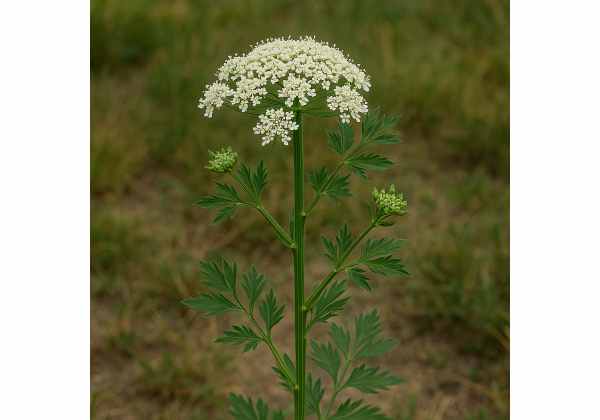
Szechuan lovage, better known in Chinese medicine as Chuanxiong, is the dried rhizome of Ligusticum chuanxiong, a long-used aromatic herb in the parsley family. It has been valued for centuries in East Asian practice, especially for headaches, blood-stasis patterns, menstrual discomfort, and circulation-related complaints. Modern research helps explain why it remains important. The rhizome contains phthalides such as ligustilide and senkyunolide A, phenolic acids such as ferulic acid, alkaloids including tetramethylpyrazine, and volatile oils that together shape its reputation for vascular, anti-inflammatory, and pain-relieving activity. Even so, Szechuan lovage is not a simple herb to summarize. Its clinical use often happens in formulas rather than alone, and many published studies involve traditional combinations, extracts, or compound preparations rather than the crude herb by itself. That means the evidence is promising but uneven. The best way to understand Szechuan lovage is as a classic circulation and pain-support herb with deep traditional roots, meaningful pharmacology, and a safety profile that calls for thoughtful dosing and careful use.
Key Takeaways
- Szechuan lovage is best known for traditional support in headache, migraine, and blood-flow-related discomfort.
- Its strongest modern interest involves circulation, inflammation, and neurovascular protection rather than general wellness use.
- Traditional decoction use commonly falls around 3 to 9 g dried rhizome daily, depending on the formula and the practitioner’s goal.
- Avoid self-prescribing during pregnancy, with heavy bleeding, or alongside anticoagulant drugs unless a qualified clinician advises it.
Table of Contents
- What Szechuan lovage is and why it matters
- Key ingredients and medicinal properties of Szechuan lovage
- Potential health benefits and what the evidence really shows
- Traditional uses and modern applications
- How Szechuan lovage is prepared and used
- Dosage, timing, and duration
- Safety, side effects, interactions, and who should avoid it
What Szechuan lovage is and why it matters
Szechuan lovage is the dried rhizome of Ligusticum chuanxiong, an aromatic perennial in the Apiaceae family. That family also includes celery, parsley, and medicinal relatives such as angelica, which helps explain why the plant combines fragrance, pungency, and strong medicinal potential in one underground stem. In English, it is often called Szechuan lovage rhizome, while in Chinese medicine it is known simply as Chuanxiong. The medicinal part is the rhizome rather than the leaf, and that distinction matters because the rootstock has been the center of both traditional and pharmacological attention.
Its importance begins with its role in traditional Chinese medicine. Chuanxiong has been used for more than two thousand years and is classically described as pungent, warm, and able to move both blood and qi. In practice, that meant it became associated with pain patterns involving stagnation, especially headache, menstrual pain, traumatic discomfort, and circulation-related disorders. Unlike many herbs that stay confined to one narrow niche, Szechuan lovage developed a reputation for “reaching upward to the head” while also addressing deeper blood-flow and pelvic patterns. That is one reason it remains one of the most recognizable herbs in its category.
Modern interest in the herb goes beyond history. Researchers have identified more than one hundred metabolites in the plant and repeatedly returned to it as a source of vascular, antiplatelet, anti-inflammatory, antioxidant, and neuroprotective compounds. These properties help explain why it appears so often in discussions of migraine, ischemic injury, blood flow, and inflammatory pain. Still, context matters. Much of the modern literature comes from formula-based traditional use, laboratory work, animal studies, or Chinese clinical settings that do not always translate neatly into global supplement practice.
That mixed evidence profile is exactly why the herb matters today. Szechuan lovage is not just an old remedy preserved for cultural interest. It is an herb with a real biochemical identity and a meaningful history of clinical use, but it also requires discernment. Readers searching for a modern health guide need more than praise. They need a realistic picture of what this rhizome is, what it is best known for, and where the research is strong, suggestive, or still incomplete.
Key ingredients and medicinal properties of Szechuan lovage
Szechuan lovage owes its reputation to a rich chemical profile rather than one single superstar compound. The best-known groups of constituents include phthalides, alkaloids, phenolic acids, volatile oils, polysaccharides, and other secondary metabolites that may work together rather than in isolation. This is one reason the herb has such a broad traditional profile. Its chemistry supports effects on circulation, pain, vascular tone, oxidative stress, and inflammation all at once.
Among the most discussed compounds are ligustilide and other phthalides such as senkyunolide A. These substances are often highlighted in studies on vascular protection, pain modulation, and blood-stasis-related patterns. Phthalides are one reason Chuanxiong is so closely associated with circulation and discomfort in traditional practice. They are chemically interesting because they combine aromatic volatility with biological activity, which fits the herb’s warming and moving reputation.
Another major compound group is the phenolic acids, especially ferulic acid and caffeic acid derivatives. Ferulic acid is frequently used as a quality marker for Szechuan lovage and is often discussed in relation to antioxidant effects, platelet behavior, endothelial support, and neurovascular protection. In simple terms, it helps connect traditional circulation language with modern vascular and inflammatory science. Organic acids and phenolics also support the idea that the herb is not only aromatic, but structurally suited to broader tissue-protective effects.
Tetramethylpyrazine, often called ligustrazine in clinical literature, is another key name. Although it can also be studied separately from the whole herb, it remains one of the most recognized compounds linked to Chuanxiong. It is often discussed for effects on blood flow, vascular smooth muscle, platelet activity, and neurological protection. This matters because many modern conversations about Szechuan lovage actually blend evidence from the whole rhizome with evidence from isolated tetramethylpyrazine or related preparations.
Volatile oils contribute yet another dimension. The plant’s aromatic nature is not cosmetic. It reflects a real concentration of active volatile constituents that may help explain its traditional use for pain, headache, circulation, and wind-cold patterns. Polysaccharides and other less famous compounds have also drawn attention in newer work, especially in antioxidant and immune-related research.
Taken together, the medicinal properties most commonly associated with Szechuan lovage include:
- support for blood circulation and vascular function,
- antiplatelet and anticoagulant potential,
- anti-inflammatory and antioxidant activity,
- neuroprotective and pain-modulating effects,
- and traditional support for headache and menstrual discomfort.
That does not mean every product made from Chuanxiong will deliver all of those effects equally. Whole rhizome decoctions, alcohol extracts, purified compounds, and formula-based preparations can behave quite differently. The plant’s chemistry explains why it remains important, but it also explains why a careful guide has to distinguish between traditional whole-herb use and modern isolated-compound claims.
Potential health benefits and what the evidence really shows
The strongest way to talk about Szechuan lovage benefits is to separate traditional clinical logic, human research, and preclinical promise. All three matter, but they are not the same. Chuanxiong has a broader evidence base than many traditional herbs, yet that evidence is still uneven because much of it comes from formulas, adjunctive treatments, or region-specific practice rather than from large international trials of the single herb.
One of the best-supported uses is headache, especially migraine-related patterns. Chuanxiong has long been considered a leading herb for headache in Chinese medicine, and modern clinical literature gives that tradition some support. A systematic review of high-quality randomized trials found that Chuanxiong-based formulae improved migraine frequency, duration, pain severity, and overall response rates compared with controls. That is meaningful, but it also comes with a caveat: the evidence is strongest for formulas containing Chuanxiong, not necessarily for the standalone herb in a capsule bought without context. This is a good example of why tradition and evidence need to be read together. For readers comparing options, more familiar migraine-support herbs such as feverfew sit in a different evidence tradition, even when the practical goal overlaps.
A second major area is circulation and cardiocerebrovascular support. Reviews published in the last few years repeatedly describe Szechuan lovage as relevant to blood flow, endothelial function, platelet aggregation, vascular tone, and ischemia-related injury. It is often used in China for hypertension, ischemic stroke, cerebral hemorrhage, coronary heart disease, and angina-related settings, especially in formulas and preparations designed to “activate blood circulation and remove blood stasis.” Even so, the leap from widespread use to universally accepted evidence should not be made too quickly. Many clinical reports are adjunctive, not definitive, and often combine Chuanxiong with other herbs or standard medical care.
A third plausible area is dysmenorrhea and menstrual discomfort. Traditional use is strong here, and the herb’s phthalides are often discussed in relation to blood flow and pain patterns involving stagnation. The traditional rationale is coherent, but modern standalone trials are still limited compared with the amount of enthusiasm the herb receives.
Other promising areas, including neuroprotection, anti-inflammatory support, and vascular protection in metabolic disease, remain largely preclinical or compound-driven. Tetramethylpyrazine, ligustilide, and ferulic acid each have substantial experimental literature behind them, but that does not mean the crude rhizome should be portrayed as a proven treatment for stroke recovery, hypertension, or nerve damage.
A fair summary of evidence looks like this:
- Better supported: migraine and headache support within Chuanxiong-containing formulas.
- Moderately supported: circulatory and cardiocerebrovascular applications in traditional and regional clinical practice.
- Traditionally strong but less well confirmed alone: menstrual pain and blood-stasis-related discomfort.
- Mostly preclinical: broad neuroprotection, anticancer claims, and many disease-specific promises.
That balanced reading keeps the herb useful without exaggeration. Szechuan lovage has real value, especially for pain and circulation-related traditional patterns, but the strongest claims still belong to the intersection of tradition and selective evidence rather than to universal proof.
Traditional uses and modern applications
Traditional use is central to understanding Szechuan lovage. In Chinese medicine, Chuanxiong is classically used to invigorate blood, move qi, expel wind, and relieve pain. Those older terms are still practical when translated carefully. They point toward the kinds of situations where the herb has historically been chosen: headache, dizziness, painful menstruation, traumatic injury, chest discomfort, and other patterns where circulation, tension, and pain seemed bound together.
One reason the herb is so enduring is that it is considered versatile within that framework. It is often described as rising to the head while also moving through the blood. That gave it a particularly strong role in headaches and upper-body pain, but it also kept it relevant in gynecological formulas and circulation-focused prescriptions. In traditional Chinese medicine, Chuanxiong is very often paired with other herbs rather than used alone. For example, it commonly appears alongside Chinese angelica in formulas for menstrual pain and blood deficiency with stagnation, where the combination seeks both nourishment and movement rather than forceful stimulation alone.
Modern applications still reflect this tradition. Chuanxiong is used in Chinese clinical settings for headache, migraine, stroke-related disorders, hypertension, angina, dysmenorrhea, traumatic pain, and blood-stasis syndromes. It is also used in patent medicines, decoctions, injectable preparations in some contexts, and modern research formulas. Outside Chinese medicine, however, the herb is usually encountered as a capsule, tincture, or powdered supplement, which can make it seem simpler than it really is. That simplification can be misleading.
The herb works best conceptually when matched to its original style of use. It is not really a broad “anti-inflammatory herb” in the same way turmeric or ginger are usually marketed in the West. It is more specific and more pattern-based. Traditional use leans toward pain with stagnation, headache with circulation imbalance, menstrual pain with clotting or fullness, and vascular complaints understood through the language of blood movement.
Modern users can still apply that logic in a practical way:
- for headache formulas where circulation and tension are both part of the picture,
- for menstrual discomfort patterns historically linked to blood stasis,
- for practitioner-guided support in circulation-focused formulas,
- and for short-term use in targeted traditional contexts rather than vague long-term supplementation.
At the same time, a few modern boundaries are important. Chuanxiong should not be used as a substitute for emergency care in stroke, chest pain, or severe neurological symptoms. It also should not be assumed to be the correct herb for every kind of headache or menstrual pain. The herb is most convincing when it is used in its proper context: a well-established traditional Chinese medicine rhizome that often works best in formulas, not a universal standalone fix for every vascular or pain-related complaint.
How Szechuan lovage is prepared and used
Szechuan lovage is usually prepared from the dried rhizome. In traditional use, the most common format is decoction, where the sliced rhizome is simmered with other herbs as part of a formula. This matters because Chuanxiong is rarely treated like a casual herbal tea. It is usually part of a more deliberate preparation, often aimed at a defined pattern such as headache, menstrual pain, or blood-stasis-related discomfort.
In modern supplement settings, the herb is also sold as powders, capsules, concentrated extracts, tinctures, and formula tablets. These forms can be useful, but they change the experience of the herb. A decoction taken as part of a balanced traditional formula is not the same as a standardized extract or a capsule purchased for self-treatment. This is one reason some people report strong benefits while others feel very little. The preparation, the accompanying herbs, and the reason for use all matter.
Decoction remains the most traditional route. It usually suits people working with a practitioner or following a structured formula. Capsules and powders are more common in self-directed use because they are easier to dose and more convenient for daily routines. Tinctures are less common than decoctions in classical Chinese practice but can be found in Western herbal commerce.
The herb is also known for pairing well with other botanicals that modify its action. For example, it may be used with warming, moving herbs such as ginger in formulas for cold-type pain or poor circulation, or with blood-nourishing herbs in menstrual settings. These combinations are not random. They are designed to shape how strongly the herb moves, warms, or disperses.
A practical use structure for modern readers looks like this:
- Choose the form based on the goal: decoction for classical formulas, capsules for convenience, extracts for more concentrated use.
- Keep the purpose specific rather than broad.
- Prefer reputable products that clearly identify the rhizome and not just a vague “circulation blend.”
- Avoid improvising with large doses because the herb feels familiar or plant-based.
It is also worth noting that Chuanxiong is used in some modern functional foods and culinary applications, especially in China, where leaves and aromatic parts may appear in more food-like contexts. Still, the rhizome remains the medicinal focus. Most people exploring the herb for health purposes should think of it as a structured botanical, not a kitchen spice.
In practice, Szechuan lovage is best used when form and intention match. The more clearly the goal is defined, the more rational the preparation becomes. This is not an herb that benefits from vague “detox” use. It is most persuasive when applied thoughtfully, with an understanding of whether the aim is headache support, circulation-focused traditional use, or formula-based pain care.
Dosage, timing, and duration
Szechuan lovage dosing depends heavily on the form used, the tradition being followed, and whether the herb is being taken alone or in a formula. In classical decoction practice, a common range is about 3 to 9 g of dried rhizome daily, though some practitioners may adjust upward or downward depending on the pattern, constitution, and the presence of other herbs. This range is useful as a practical reference, but it should not be treated as a one-size-fits-all instruction.
For powders or capsules, the dose is usually lower by weight because the preparation is more concentrated or more tightly measured. A common cautious approach is to begin near the equivalent of the lower traditional range rather than jumping to the high end. With standardized extracts, label directions vary, and that variation reflects a real issue: not all Chuanxiong products contain the same concentration of ligustilide, ferulic acid, or other active fractions.
Timing depends on the intended use. For headache or upper-body pain formulas, the herb is often taken consistently rather than as an emergency remedy. For menstrual support, it is more often used around the symptomatic period or as part of a formula chosen for a defined cycle pattern. For circulation-focused uses, it is typically taken with the formula schedule rather than according to a stimulant-like timing rule.
A practical way to think about timing is simple:
- take it with a formula when following a traditional Chinese medicine approach,
- take it with food if the stomach is sensitive,
- and use it regularly through a short defined period when assessing benefit.
Duration should remain purposeful. Chuanxiong is not usually the kind of herb that needs indefinite casual use. It makes more sense in short to moderate trials tied to a clear reason. For example:
- a few days to a couple of weeks for acute headache-focused formula support,
- one or two menstrual cycles when evaluating practitioner-guided menstrual use,
- and several weeks only when the indication is clear and the product is well tolerated.
This is also the place where restraint matters. Because Szechuan lovage has a strong reputation for moving blood and relieving pain, some people assume more will work better. That is not a safe or intelligent default. A herb with circulation-related and antiplatelet potential should be treated carefully, especially when a person is already taking other medicines or using several “blood-moving” botanicals at once.
The best dosing strategy is to start low, stay specific, and reassess honestly. If a preparation helps, that usually becomes apparent within a reasonable trial. If it does nothing, escalating the dose without guidance is not always wise. With Chuanxiong, precision is more useful than enthusiasm. The herb’s tradition supports targeted use, not casual overuse.
Safety, side effects, interactions, and who should avoid it
Szechuan lovage is generally regarded as a herb with relatively low overt toxicity in standard medicinal use, but that should not be mistaken for universal safety in every situation. It is an active circulation-oriented herb, and the very properties that make it useful also explain why certain people should be more cautious.
The first major caution is pregnancy. Although Chuanxiong has a long historical record, modern safety discussions still raise concern because the herb is traditionally considered blood-moving and because animal work has suggested embryotoxicity at high exposures. For practical self-care, that means medicinal use during pregnancy is best avoided unless it is specifically prescribed and supervised by a qualified professional who understands the formula, the dose, and the reason for use. The same caution extends to breastfeeding because modern safety data remain limited.
A second important concern is bleeding risk and interaction with anticoagulants or antiplatelet drugs. Chuanxiong is repeatedly discussed in pharmacological literature for effects related to platelet aggregation, coagulation, and vascular flow. That does not automatically mean every cup of decoction will thin the blood dangerously, but it does mean caution is sensible if a person takes warfarin, direct oral anticoagulants, aspirin, clopidogrel, or multiple circulation-oriented supplements. The same logic applies when combining it with other strong botanicals in this category, including garlic in concentrated medicinal use.
Possible side effects are usually mild when they occur, but they still deserve attention. These may include:
- stomach discomfort,
- dizziness or light-headedness,
- headache aggravation in the wrong pattern,
- flushing or a sense of heat,
- or excessive menstrual flow in susceptible individuals.
Formula studies for migraine have generally reported mild adverse events, but that does not remove the need for care. Many of those trials involved specific preparations, specific patient groups, and clinical supervision rather than casual supplement use.
Who should avoid self-directed use?
- pregnant or breastfeeding women,
- people with heavy bleeding or bleeding disorders,
- anyone taking anticoagulant or antiplatelet medication,
- people preparing for surgery,
- and those with severe unexplained headache, chest pain, stroke symptoms, or neurological changes.
A few practical rules make the herb much safer:
- Use a reputable product that clearly identifies the rhizome.
- Start with a low or moderate dose.
- Avoid stacking it with several other blood-moving herbs at the same time.
- Stop and seek advice if bleeding, dizziness, rash, or worsening symptoms appear.
- Do not substitute it for urgent medical care in cardiovascular or neurological emergencies.
The bottom line is balanced. Szechuan lovage is not among the most feared herbs in traditional practice, but it is strong enough to deserve respect. When the reason for use is clear and the dose is sensible, it can be a valuable herb. When used casually in the wrong setting, its risks become easier to overlook.
References
- Ligusticum chuanxiong: a chemical, pharmacological and clinical review 2025. (Review)
- Evaluation of the Pharmaceutical Activities of Chuanxiong, a Key Medicinal Material in Traditional Chinese Medicine 2024. (Review)
- Research Advances in Cardio-Cerebrovascular Diseases of Ligusticum chuanxiong Hort. 2022. (Review)
- The evaluation of embryotoxicity of Ligusticum chuanxiong on mice and embryonic stem cells 2019. (Safety Study)
- Chuanxiong Formulae for Migraine: A Systematic Review and Meta-Analysis of High-Quality Randomized Controlled Trials 2018. (Systematic Review and Meta-analysis)
Disclaimer
This article is for educational purposes only and is not a substitute for medical advice, diagnosis, or treatment. Szechuan lovage is a traditional Chinese medicine herb with meaningful pharmacological research, but many of its clinical uses still depend on formulas, practitioner judgment, and context rather than simple self-prescribing. Speak with a qualified healthcare professional before using this herb, especially if you are pregnant, breastfeeding, have a bleeding disorder, take anticoagulant or antiplatelet medicines, or are treating severe headaches, menstrual pain, or circulation-related symptoms.
Please share this article on Facebook, X, or another platform you prefer if you found it helpful.