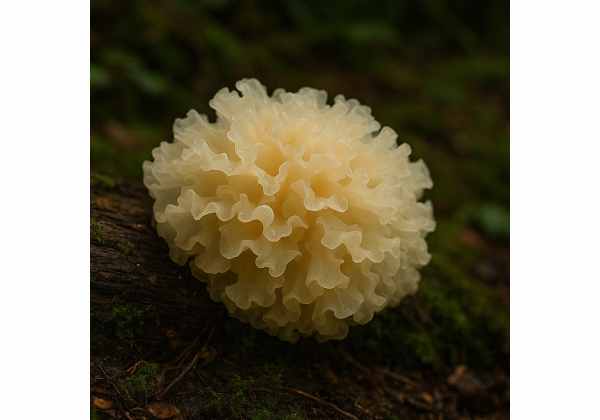
Tremella, Tremella fuciformis, is an edible medicinal mushroom best known as snow fungus, white fungus, or silver ear. For centuries, it has been used in East Asian food and traditional wellness practices, especially in sweet soups, broths, and restorative tonics. What makes tremella especially interesting today is that it sits at the crossroads of food, skin care, and medicinal mushroom research. Its signature polysaccharides are linked to moisture retention, antioxidant activity, immune modulation, and tissue support, while newer studies suggest possible roles in gut health, skin barrier function, and cognitive support.
At the same time, tremella is often marketed too aggressively. It is not simply “plant hyaluronic acid,” nor is every benefit equally well proven in humans. The strongest evidence still centers on its polysaccharides, preclinical immune and gut findings, and growing interest in skin hydration and barrier support. A small human trial also suggests promise for subjective cognitive complaints, but it does not settle a standard daily dose for everyone.
Used as food, tremella is gentle and versatile. Used as a concentrated supplement, it deserves a more careful, evidence-aware approach.
Key Takeaways
- Tremella’s best-supported strengths are skin hydration support and broad polysaccharide-driven antioxidant and immune activity.
- Research also suggests promise for gut balance, inflammation regulation, and cognitive support, though most evidence is still preclinical.
- In one small 8-week human trial, 600 to 1200 mg/day was studied, but this does not establish a universal medicinal dose.
- People with mushroom allergy, pregnancy or breastfeeding concerns, or complex medication use should avoid unsupervised supplement use.
Table of Contents
- What tremella is and why it differs from many other medicinal mushrooms
- Key ingredients and medicinal properties
- Potential health benefits and where the evidence is strongest
- Traditional and modern uses of tremella
- Dosage and how to use tremella sensibly
- Safety, side effects, and interactions
- How to set realistic expectations and choose the right form
What tremella is and why it differs from many other medicinal mushrooms
Tremella is a jelly fungus rather than a dense, woody mushroom. When dried, it looks pale, delicate, and almost coral-like. Once soaked and cooked, it develops a slippery, gelatinous texture that makes it especially useful in soups and desserts. This physical character is not just culinary trivia. It reflects the very thing that makes tremella so important in modern wellness discussions: its water-binding polysaccharides.
That already sets tremella apart from many other medicinal mushrooms. While some mushrooms are primarily discussed in terms of beta-glucans, bitter triterpenes, or strong immune signaling, tremella is often approached through a softer set of benefits. It is traditionally associated with nourishment, moisture, recovery, and resilience rather than stimulation or sharp physiologic effects. In older East Asian herbal frameworks, it was used to support dryness, weakness, and the stomach and lungs. In modern language, those traditional ideas overlap most clearly with hydration, barrier support, gut comfort, and general restorative nutrition.
Another key difference is that tremella is deeply rooted in food culture, not only in supplement culture. That matters. Many people first encounter it in recipes, not capsules. It appears in sweet soups, broths, porridges, beauty tonics, and festival foods. This gives tremella an advantage that some “medicinal” mushrooms lack: it already has a long record of culinary use in ordinary amounts.
Still, culinary familiarity can create false confidence. Because tremella is edible, some people assume that concentrated extracts, powders, gummies, serums, and capsules must all be equally straightforward. They are not. Food use is one thing. Standardized or semi-standardized supplement use is another. Research on tremella has grown quickly, but the science is still uneven depending on the outcome being discussed.
It also helps to recognize that tremella is usually valued for a different reason than darker or more bitter mushrooms. Its strongest appeal is often hydration and tissue support, especially for skin and mucosal surfaces, rather than the heavier “immune fortress” identity common in other mushroom marketing. That is why it is sometimes compared to humectants or moisture-binding ingredients more than to classic tonic fungi.
A useful comparison is other medicinal mushrooms such as shiitake. Shiitake is often discussed for immunity, lipids, and culinary umami. Tremella, by contrast, is more often discussed for its polysaccharide texture, moisturizing potential, and gentle restorative profile. Both are edible fungi with medicinal value, but they occupy different niches.
So what is tremella, in practical terms? It is an edible medicinal mushroom with a long traditional food history, unusually hydrating polysaccharides, and a growing but still incomplete evidence base. That balance is important. It keeps tremella from being underrated as “just a culinary fungus,” but it also prevents it from being oversold as a fully standardized cure-all.
Key ingredients and medicinal properties
The main active compounds in tremella are its polysaccharides, commonly called Tremella fuciformis polysaccharides or TFPs. These are the plant-like, gel-forming molecules most closely linked to tremella’s texture, food functionality, moisturizing behavior, and many of its biological effects. While tremella also contains proteins, dietary fiber, phenols, flavonoids, trace minerals, and other minor components, the polysaccharides are clearly the center of the medicinal conversation.
Structurally, these polysaccharides are complex and variable. Broadly speaking, they are acidic heteropolysaccharides with backbones and side chains built from sugars such as mannose, xylose, glucuronic acid, galactose, arabinose, and small amounts of fucose. That variability matters because different extraction methods, strains, fermentation conditions, and purification steps can produce polysaccharides with different molecular weights and, quite possibly, different biologic effects. This is one reason the tremella literature looks impressive but does not translate easily into a single standard consumer dose.
From a medicinal-properties standpoint, tremella’s polysaccharides are associated most often with:
- Moisture retention and film-forming activity
- Antioxidant effects
- Anti-inflammatory potential
- Immunomodulatory activity
- Gut microbiota interaction
- Wound-supportive and barrier-protective effects
- Possible neuroprotective or cognition-supportive relevance
The moisturizing aspect deserves special explanation because it is often simplified in marketing. Tremella is sometimes advertised as a natural replacement for hyaluronic acid. That is too simplistic. Tremella polysaccharides are not identical to hyaluronic acid, but they can behave in similarly useful ways as water-binding, viscosity-building, moisture-retaining compounds. In topical products, that makes them relevant for hydration, barrier support, and texture improvement. In food and supplement settings, the same gel-like character may help explain some of the plant’s traditional soothing reputation.
The immunologic side is also important. Research suggests that tremella polysaccharides can interact with immune cells and influence cytokines, gut microbial balance, and inflammatory tone. This does not mean tremella is a stimulant or a substitute for medical immune therapy. It means the mushroom appears to engage biologic pathways that may support resilience and immune regulation.
Some studies also suggest that molecular weight matters. Higher- and lower-weight fractions may not behave the same way in skin, gut, or immune models. That nuance is often lost in product marketing, where “tremella extract” sounds like a single thing. In reality, the source and structure likely matter a great deal.
This is one reason tremella deserves a more careful reputation. It is not just a trendy beauty mushroom. It is a structurally complex functional fungus whose medicinal identity is driven largely by polysaccharides. Readers who like polyphenol-rich, structure-sensitive ingredients may find it helpful to compare tremella conceptually with other bioactive natural materials such as green tea, where extraction method and compound profile strongly influence the final effect.
In short, tremella’s key ingredients are real, interesting, and biologically plausible. But their complexity is also the reason the plant’s evidence base feels promising without yet being fully standardized for everyday supplement use.
Potential health benefits and where the evidence is strongest
Tremella is often promoted for everything from beauty to immunity to brain function. Some of those claims have meaningful support. Others still rest mainly on early or indirect evidence. The best way to understand tremella is to sort its benefits by how well they are currently supported.
1. Skin hydration, barrier support, and wound-related potential
This is one of the most coherent areas of evidence. Reviews of tremella’s cutaneous benefits suggest that its polysaccharides may help with hydration, barrier support, photoprotection, wound healing, and anti-aging biology. Much of this evidence comes from in vitro work, animal models, and cosmetic-style studies rather than large human trials, but the overall pattern is strong enough to take seriously. Tremella seems especially relevant when the goal is moisture retention and support for stressed or aging skin.
2. Antioxidant and anti-inflammatory support
Tremella repeatedly shows antioxidant activity in cell and animal research. This appears to overlap with anti-inflammatory effects, especially in tissues affected by oxidative stress. These properties probably explain why the mushroom keeps appearing in discussions of skin protection, gut support, and cognitive resilience. That said, antioxidant activity alone should never be treated as proof of broad disease treatment. It is better understood as a foundational mechanism that may support other benefits.
3. Gut health and immune modulation
This is an exciting but still evolving area. Tremella polysaccharides appear able to influence gut microbiota, microbial metabolites, immune tolerance, and inflammatory signaling. In animal models of colitis and atopic dermatitis, these changes were linked to reduced inflammatory damage and improved immune balance. This makes tremella especially interesting as a food-derived polysaccharide with prebiotic and immunomodulatory potential.
4. Cognitive support
A small randomized controlled trial in people with subjective cognitive impairment found that tremella supplementation at 600 or 1200 mg/day for 8 weeks was associated with improvements in memory-related outcomes, without a higher rate of adverse events than placebo. This is one of the most useful human data points in the tremella literature. It does not prove that tremella is a nootropic for everyone, but it does show that its cognitive reputation is not purely speculative.
5. General restorative and nourishing use
Traditional use often described tremella as a nourishing or restorative fungus, especially for dryness, recovery, and weakness. Modern science does not translate those older terms perfectly, but the skin, gut, and oxidative-stress findings make the traditional reputation more understandable.
What should readers not overstate? Tremella has also been studied in relation to antitumor pathways, blood sugar regulation, lipid balance, and neuroprotection. These areas are promising, but most are still far from mature clinical application.
For readers focused mainly on skin support, it may help to compare tremella’s role with aloe vera in hydration and barrier-support discussions. Aloe is easier to understand topically, while tremella is more unusual because it bridges food, supplement, and skin-care use. That breadth is part of its appeal, but it also means the evidence should be interpreted carefully rather than all at once.
Traditional and modern uses of tremella
Tremella has one of the most graceful transitions from traditional use to modern product development. In traditional East Asian food and medicine, it was prized as a moistening, nourishing ingredient used in soups and tonics. In modern life, it appears in powders, capsules, gummies, drink mixes, functional beverages, and skin-care serums. Yet the older and newer uses are more connected than they first appear. Both are grounded in the same core feature: tremella’s polysaccharides.
Traditional uses
Traditionally, tremella was often used in dishes meant to be restorative rather than stimulating. It was associated with the stomach and lungs, with dryness and recovery, and with a kind of gentle rebuilding rather than quick symptom suppression. This is important because it shapes the plant’s overall character. Tremella is not typically framed as a sharp digestive stimulant, strong bitter tonic, or intense antimicrobial herb. It is softer, more food-like, and more supportive.
A classic example is sweet tremella soup, often prepared with dates, pear, or other gentle ingredients. This culinary context matters because it shows how deeply tremella belongs to nourishment-based medicine.
Modern food and supplement uses
Today, tremella is used in several practical forms:
- Dried culinary fungus for soups, porridges, and desserts
- Powdered supplements added to smoothies, coffee, or broth
- Capsules or tablets with labeled milligram amounts
- Extract-based beauty or “glow” formulas
- Skin-care serums or creams featuring tremella polysaccharides
Each of these forms carries a different expectation. Food use is usually about nourishment and texture. Supplements lean toward beauty, cognition, gut health, or immune resilience. Topical products focus on hydration and barrier support.
Topical and cosmetic use
Tremella’s modern beauty reputation is substantial. It is often added to serums, masks, and moisturizers because it forms a hydrating film and may help reduce water loss. This is one of the areas where traditional and modern logic meet especially well. A fungus long valued for moistening and nourishment now appears in products designed to support the same idea on the skin surface.
What tremella is not
Even with all this promise, tremella should not be treated as a cure-all or as a substitute for treatment of serious disease. Its best current use is as a supportive food fungus and functional ingredient, not as a replacement for standard medical care.
Because tremella bridges kitchen and wellness so elegantly, it can be compared to ginger as another food-to-medicine bridge. The difference is that ginger is more stimulating and digestive, while tremella is gentler, wetter, and more nourishing in both texture and tradition.
For many people, this is exactly why tremella feels so attractive. It does not demand an all-or-nothing medicinal identity. It can start in a bowl of soup, continue in a beauty routine, and only later become a supplement question. That layered usefulness is part of what makes it enduring.
Dosage and how to use tremella sensibly
Tremella dosing is much clearer in supplements than in traditional food, but even there, it is not fully standardized. The most honest guidance starts with a distinction: food use and supplement use are not the same thing.
For culinary use, tremella is typically soaked, trimmed, and cooked in amounts that vary widely by recipe. In this form, it is a food ingredient, not a standardized therapeutic dose. A bowl of tremella soup can be deeply traditional and practically useful, but it does not translate neatly into milligrams of active polysaccharides.
For supplement use, the clearest human data point comes from a small 8-week randomized controlled trial in subjective cognitive impairment. In that study, tremella was given at 600 mg/day or 1200 mg/day. That does not create a universal recommended dose, but it does give readers a realistic human supplemental range that has actually been studied.
This leads to a practical framework:
Food use
- Best for general nourishment and routine intake
- Amount depends on recipe rather than medical precision
- Most culturally established form
Supplement use
- Usually labeled in milligrams
- Often used for skin, cognition, or general wellness goals
- Still lacks a universally validated therapeutic dose
Topical use
- Applied through finished serums, masks, and creams
- Dose is product-specific rather than easy to generalize
Several points can help readers use tremella more sensibly:
- Start with food or with a clearly labeled, low-to-moderate supplement amount.
- Do not assume more is better.
- Do not treat one small human trial as proof that everyone needs 600 to 1200 mg/day.
- If using a supplement, prefer products that specify mushroom identity and testing.
- Be cautious with blends where tremella is only one of many ingredients.
One common mistake is assuming that all tremella products are equivalent. They are not. Some are fruiting body powders, some are polysaccharide-rich extracts, some are fermented materials, and some are beauty blends with little meaningful dosing clarity. That variability is one reason dosage remains less settled than marketing suggests.
If a reader wants a very straightforward daily infusion herb with much clearer household dosing, chamomile as a simpler tea-based herb is easier to use confidently. Tremella is more complex because it spans food, supplement, and topical use at once.
The most practical summary is this: treat tremella first as a nourishing edible fungus, and treat supplemental dosing as an area where modesty matters. The 600 to 1200 mg/day range is meaningful because it has been studied in humans, but it should be described as a studied range, not a universal prescription.
Safety, side effects, and interactions
Tremella is generally regarded as a low-risk edible mushroom for healthy adults when used as food. That is one of its major strengths. Still, “edible” is not the same thing as “risk-free in every form.” Supplements, extracts, concentrated polysaccharides, and topical products create different questions than a sweet soup or culinary broth.
The best human safety signal comes from the small randomized trial in subjective cognitive impairment, where adverse events occurred at rates similar to placebo across the studied groups. That is reassuring, but it has limits. It does not fully answer questions about long-term use, high-dose use, pregnancy, breastfeeding, or complicated medical conditions.
Possible side effects with tremella use may include:
- Mild digestive discomfort
- Bloating or loose stools
- Nausea in sensitive users
- Rash or irritation with topical products
- Allergic reaction in people sensitive to mushrooms
The most obvious group who should avoid tremella is anyone with a mushroom allergy. This is especially important because tremella is increasingly added to beauty products, wellness drinks, and blended mushroom formulas where the user may forget it is still a fungal ingredient.
People who should use extra caution include:
- Pregnant or breastfeeding individuals
- Children unless advised by a clinician
- People taking multiple prescription medications
- People with severe immune disorders
- People using immunosuppressive therapy
- People trying concentrated extracts rather than food forms
Tremella is often marketed as immune-supportive, and that sounds harmless until a person already has an immune-sensitive condition or is taking drugs designed to alter immune activity. The research does not yet define all the interaction boundaries. That does not prove danger, but it does justify caution.
There is also a quality issue. Mushroom supplements vary widely in species verification, extract type, heavy-metal testing, and polysaccharide standardization. A low-risk fungus can still become a poor supplement if manufacturing quality is weak.
For topical use, tremella tends to be well tolerated, but that does not eliminate the possibility of irritation. Patch testing remains wise, especially for reactive skin or formulas that combine many actives.
If a reader is mostly interested in cognitive mushroom supplementation, lion’s mane as another brain-focused mushroom option may feel more familiar in the supplement world, though tremella has its own distinct place. The broader point is that safety depends not only on the species, but also on the form, the person, and the dose.
So the best safety conclusion is balanced: tremella is generally gentle as food, promising as a supplement, and fairly skin-friendly in many topical settings, but concentrated use still deserves the same careful judgment one would apply to any bioactive mushroom product.
How to set realistic expectations and choose the right form
Tremella is most impressive when it is not forced to be everything at once. It is not a miracle mushroom, but it is more than a wellness fad. The most useful way to think about it is as a gentle, food-based medicinal fungus with strong polysaccharide relevance and several plausible applications. That is already plenty.
If your goal is beauty and hydration support, tremella makes sense both topically and, to a more limited extent, as a food-derived supplement. Its strongest modern reputation is probably here, and the science on skin hydration, barrier support, and wound-related biology is coherent enough to justify continued interest.
If your goal is general wellness, tremella fits well as a culinary fungus or modest supplement. It is especially appealing for people who prefer food-like, nourishing ingredients over more stimulating botanicals.
If your goal is targeted disease treatment, expectations should be lower. Tremella has preclinical evidence in gut inflammation, immune regulation, skin recovery, oxidative stress, and cognitive support, but it is not yet a replacement for established therapies.
The most practical way to choose a form is to match the form to the goal:
- Dried culinary tremella for traditional nourishment and routine food use
- Capsules or powders for structured supplementation
- Topical serums or creams for hydration-focused skin use
- Blended formulas only if the label makes the tremella content clear
What should readers avoid?
- Treating every tremella product as equivalent
- Assuming “polysaccharides” means clinically proven
- Believing social media claims that tremella is simply stronger than hyaluronic acid
- Using one small human trial as proof for broad cognitive treatment
- Choosing low-quality blends with unclear sourcing
A realistic mindset is especially helpful here. Tremella’s strongest case today is not that it cures disease. It is that it offers a rare combination of edibility, traditional use, skin relevance, and scientifically plausible polysaccharide activity. That combination makes it valuable even without exaggerated claims.
For readers mainly seeking a more established anti-inflammatory or immune-focused medicinal mushroom, reishi as a more classic immune-oriented mushroom may be a better fit. Tremella occupies a different niche. It is softer, more hydrating, and more food-like. That is not a weakness. It is exactly what gives it its appeal.
The best final expectation is this: tremella is most useful as a daily-support mushroom rather than a high-drama remedy. When used that way, it feels less like hype and more like what it has long been—a nourishing fungus with real potential and a surprisingly modern relevance.
References
- Recent advances in polysaccharides from Tremella fuciformis: isolation, structures, bioactivities and application 2025 (Review)
- The potential cutaneous benefits of Tremella fuciformis 2023 (Review)
- Tremella fuciformis Polysaccharides Inhibited Colonic Inflammation in Dextran Sulfate Sodium-Treated Mice via Foxp3+ T Cells, Gut Microbiota, and Bacterial Metabolites 2021
- A review on the production, structure, bioactivities and applications of Tremella polysaccharides 2021 (Review)
- Efficacy and Safety of Tremella fuciformis in Individuals with Subjective Cognitive Impairment: A Randomized Controlled Trial 2018 (RCT)
Disclaimer
This article is for educational purposes only and is not medical advice, diagnosis, or treatment. Tremella is an edible medicinal mushroom with promising research, but many benefits still rely on preclinical data, and no universal therapeutic dose has been established. Do not use tremella supplements or topical products as a substitute for care for memory concerns, inflammatory bowel symptoms, chronic skin disease, or any ongoing medical condition. People with mushroom allergy, pregnancy or breastfeeding concerns, immune-related illness, or prescription medication use should seek professional guidance before using concentrated tremella products.
If you found this article helpful, please share it on Facebook, X, or any platform where clear and careful herbal information can help others.