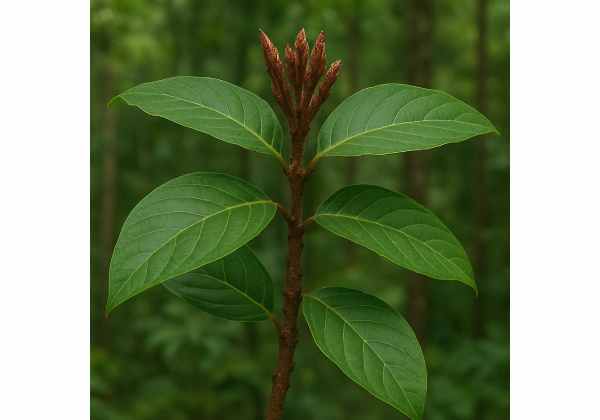
Yohimbe is the bark of a Central African evergreen tree, Pausinystalia johimbe, a species also often labeled Pausinystalia yohimbe in modern references. It has a long reputation as a traditional aphrodisiac and stimulating medicinal bark, and its best-known active compound is yohimbine, an indole alkaloid that has been studied for erectile dysfunction, sympathetic stimulation, and possible effects on body fat and exercise performance. That history gives yohimbe strong search interest, but it also demands caution. This is not a gentle tea herb. The gap between purified yohimbine used in research and variable bark-based supplements sold over the counter is one of the most important facts readers need to understand. Some evidence suggests modest benefits in narrow settings, especially older research on erectile dysfunction, yet the same compound can also raise heart rate, blood pressure, anxiety, and the risk of serious side effects. A useful article on yohimbe, then, has to do two things at once: explain why people seek it out, and explain clearly why it deserves far more care than many other herbal products.
Key Facts
- Yohimbe’s strongest evidence is for older use in erectile dysfunction, but the effect is modest and tied more to purified yohimbine than to raw bark supplements.
- It is also marketed for fat loss and performance, though the evidence is weaker and the safety tradeoff is less favorable.
- Research on purified yohimbine has often used about 5 to 10 mg three times daily, but bark products are not equivalent and vary widely.
- People with high blood pressure, anxiety, heart disease, kidney disease, liver disease, or psychiatric conditions should avoid self-use.
- Combining yohimbe with stimulants, decongestants, antidepressants, or pre-workout products raises the risk profile.
Table of Contents
- What Yohimbe Is and Why Bark and Yohimbine Are Not the Same
- Key Ingredients and How Yohimbe Works
- Potential Health Benefits and What the Evidence Supports
- Common Uses and When Yohimbe Is Chosen
- Yohimbe Dosage Timing and Duration
- Product Quality Problems and Common Mistakes
- Safety Side Effects and Who Should Avoid It
What Yohimbe Is and Why Bark and Yohimbine Are Not the Same
Yohimbe is not just a single modern supplement ingredient. It is the bark of an African tree with a long traditional history, later adopted into Western medical and supplement culture because of its stimulating and aphrodisiac reputation. In practical use today, however, two different things are often blurred together: yohimbe bark and purified yohimbine. That confusion is the source of many inaccurate claims.
The bark contains yohimbine, but it also contains other alkaloids and plant constituents. A pharmaceutical or standardized preparation of purified yohimbine gives a measured dose of a known compound. A bark product may not. Two bottles labeled “yohimbe” can differ greatly in alkaloid content, strength, and risk. That means people sometimes read clinical information about yohimbine and assume it applies directly to any bark supplement on the shelf. It does not.
This difference changes how the herb should be judged. If someone is asking whether yohimbe has any credible medicinal history, the answer is yes. If someone is asking whether a random bark capsule on the internet should be treated like a carefully dosed research product, the answer is no. That distinction should shape every decision about expected benefits, dosing, and safety.
Another reason the distinction matters is that yohimbe does not belong in the same low-risk category as many popular “wellness herbs.” It is more pharmacologically forceful than a calming tea, digestive leaf, or mild tonic. Its best-known active alkaloid works on adrenergic signaling, which means the body can feel it in a real way: faster pulse, greater alertness, nervousness, shakiness, elevated blood pressure, and sometimes a sense of mental activation that is unpleasant rather than helpful.
Historically, yohimbe became known for sexual performance support, and that is still the main reason many people search for it. Yet modern consumers also encounter it in fat-burners, pre-workouts, and libido stacks. Those uses are not equally supported, and they are not equally safe. Readers comparing it with gentler choices such as maca for libido support should understand that yohimbe is the more aggressive option by a wide margin.
A balanced view, then, starts here: yohimbe is a traditional bark with a potent alkaloid profile, real physiologic activity, and a risk-benefit profile that depends heavily on the form used. That makes it interesting, but it also makes it a poor candidate for casual experimentation. With yohimbe, the first useful question is not “What can it do?” but “Which version of it are we really talking about?”
Key Ingredients and How Yohimbe Works
The key ingredient in yohimbe is yohimbine, an indole alkaloid that has been studied far more than the bark as a whole. Yohimbine is considered the primary driver of the bark’s classic stimulant and sexual-function effects. It acts mainly as an alpha-2 adrenergic receptor antagonist. In simpler terms, it blocks a braking mechanism that normally helps restrain norepinephrine release. When that brake is reduced, sympathetic activity rises. That is a large part of why users may feel increased alertness, stronger circulation-related effects, and sometimes unwanted anxiety or cardiovascular stimulation.
Yohimbe bark also contains other alkaloids, including compounds such as rauwolscine and corynanthine, along with additional plant constituents that may influence the experience and complicate product standardization. This is one reason bark extracts can feel less predictable than purified yohimbine. The label may emphasize yohimbine, but the actual pharmacology of a bark product can be broader and more variable.
From a mechanistic standpoint, several effects are relevant:
- Adrenergic stimulation, which may raise norepinephrine tone and contribute to alertness, agitation, or increased heart rate.
- Possible pro-erectile effects, partly through peripheral vascular and neural mechanisms in erectile tissue.
- Lipolytic interest, because adrenergic pathways are involved in fat mobilization, especially under low-insulin conditions.
- Central nervous system effects, including increased arousal, stronger stress responses, and in some settings an anxiogenic effect.
That last point matters more than many supplement descriptions admit. Yohimbine is not simply a “blood flow herb.” It is also a compound with real central nervous system activity. In research settings it has even been used experimentally to provoke stress or anxiety responses. That is not a trivial detail. It helps explain why one person may experience yohimbe as energizing while another finds it tense, uncomfortable, or even panic-like.
Bioavailability is another important issue. Yohimbine absorption and blood levels can vary substantially between individuals. That means the same nominal dose can feel moderate in one person and surprisingly intense in another. Once you combine that interindividual variability with inconsistent supplement quality, the result is a product class that can be deceptively potent.
The phrase “key ingredients” is therefore somewhat misleading with yohimbe, because one ingredient dominates the conversation so thoroughly. In practice, yohimbine is the main reason the bark is used medicinally at all. The other constituents matter, but mostly because they make the bark less predictable. Readers familiar with standardized botanical discussions, such as articles on well-characterized herbal actives, will notice that yohimbe sits at the harder end of the spectrum: strong pharmacology, meaningful variability, and less room for casual guessing.
That combination is exactly why people should avoid thinking of yohimbe as a simple tonic. Its medicinal properties are real, but they are inseparable from its stimulant burden.
Potential Health Benefits and What the Evidence Supports
Yohimbe is associated with several claimed benefits, but the evidence is uneven, and some of the most repeated marketing claims are far more confident than the research deserves. The cleanest way to understand its benefits is to separate better-supported uses, emerging or mixed uses, and weakly supported claims.
Erectile dysfunction is the most established benefit historically. Older randomized trials and an older systematic review suggest that yohimbine can outperform placebo in some men with erectile dysfunction. That said, the effect is generally described as modest rather than dramatic, and much of the evidence predates modern first-line therapies. It is also more accurate to say the research supports purified yohimbine than to say it broadly proves the value of every yohimbe bark supplement. That distinction becomes especially important when products vary so much in actual alkaloid content.
Sexual arousal and libido support are related but not identical claims. Yohimbe’s traditional reputation as an aphrodisiac helps drive interest, and some users do report stronger arousal. Still, the evidence is more convincing for erectile function than for generalized libido enhancement. In other words, it may help some people physiologically without reliably transforming sexual desire or satisfaction.
Weight loss and fat loss are commonly advertised uses, yet the evidence here is much thinner. Yohimbine’s adrenergic actions make the idea plausible, and some performance circles promote it for “stubborn fat” because of how alpha-2 receptors influence fat mobilization. But plausible is not the same as practically proven. Human results are limited, and the safety burden rises quickly when people combine yohimbe with fasting, caffeine, and other stimulants in pursuit of faster fat loss.
Exercise and performance support are also emerging but unsettled. Some recent reviews suggest low doses may acutely enhance certain performance variables, largely because of sympathomimetic effects. Yet the same pathway that may sharpen performance can also increase nervousness, blood pressure, and physiologic strain. That makes yohimbe a questionable fit for many recreational users.
Mood and energy enhancement are among the weakest casual-use claims. Yohimbe can certainly make a person feel more stimulated, but stimulation should not be confused with better mood. For people prone to anxiety, irritability, or panic, the compound may do the opposite of what they hoped.
Overall, the most defensible conclusion is this:
- best support: older evidence for erectile dysfunction, mainly with purified yohimbine;
- possible but less settled: acute performance-related effects;
- weak and risk-heavy for routine use: fat loss, mood enhancement, and general vitality claims.
That places yohimbe in a very different category from softer sexual health botanicals often used in formulas such as tongkat ali for sexual vitality. Yohimbe is not attractive because it is broad or gentle. It is attractive because it is pharmacologically forceful. That strength is exactly why any real benefit has to be weighed against a comparatively higher chance of trouble.
Common Uses and When Yohimbe Is Chosen
In modern practice, yohimbe or yohimbine is usually chosen for one of four reasons: erectile dysfunction, libido-oriented supplement stacking, fat-loss protocols, or stimulant-heavy performance products. Each of these has a different level of credibility and a different level of prudence.
For erectile dysfunction, yohimbine has the strongest clinical history. This is the context in which it makes the most pharmacologic sense. Even here, however, it is not a first-choice self-care herb for most people today. The response can be inconsistent, the effect is usually modest, and the safety profile is less forgiving than many alternatives. It also does not solve the broader causes of erectile dysfunction such as diabetes, vascular disease, medication effects, low testosterone, depression, or relationship stress.
For libido stacks, yohimbe often appears alongside other ingredients marketed for sexual performance. This is where the herb’s reputation becomes more commercial than careful. Multi-ingredient formulas may combine yohimbe with caffeine, nitric oxide boosters, stimulants, or undeclared compounds. That approach can make both benefit and risk harder to interpret. Someone may believe yohimbe is working when the actual experience is driven by multiple ingredients, or even by ingredients not listed honestly.
For fat loss, yohimbe is usually framed as a fast-acting metabolic aid. In real life, this is one of the most problematic uses. People often take it in the morning, in a fasted state, and with caffeine or a pre-workout. That combination increases the chance of tremor, racing heart, anxiety, sweating, and blood pressure spikes. Even if the compound has a physiologic rationale for lipolysis, the practical downside often outweighs the likely cosmetic upside for average users.
For athletic performance, yohimbine is sometimes chosen for its acute stimulant effect rather than because it improves training adaptation in a meaningful long-term way. That is an important distinction. Feeling more “amped” is not the same as improving performance quality or recovery. In people who tolerate stimulants poorly, the sense of activation may actually worsen execution, especially in technical sports or longer sessions.
The most responsible answer to “When is yohimbe chosen?” is therefore quite narrow: it is usually chosen when someone wants a stronger, faster, more pharmacologically active effect than gentler botanicals provide. That does not mean it is the best choice. It simply explains why it stays popular. Herbs such as traditional aphrodisiac herbs may appeal to users looking for a softer profile, while yohimbe appeals to those willing to accept more risk for a more immediate physiologic push.
If there is one practical lesson here, it is that yohimbe is rarely a good “starting herb.” It belongs, if anywhere, later in the decision tree, after medical causes, safer options, and product quality concerns have all been considered seriously.
Yohimbe Dosage Timing and Duration
Dosage is where yohimbe becomes especially complicated, because people often search for a clean herbal dose when the honest answer is more conditional. There is no reliable casual dosage recommendation for raw yohimbe bark supplements as a class, because their alkaloid content can vary too much. A bark capsule with a vague label is not the same thing as a purified or standardized yohimbine product.
What can be said with more confidence is this: in older clinical use and in several reviews, purified yohimbine has often been given in the range of 5 to 10 mg three times daily, for a typical daily total around 15 to 30 mg. That range belongs to the active alkaloid itself, not to unstandardized bark. It is also not a promise of benefit, and it is not a guarantee of tolerance.
Timing matters because yohimbine is stimulating. Many users do poorly if they take it late in the day. For erectile-function use, divided daytime dosing has historically been more common than single large servings. For performance or fat-loss use, people sometimes take it before exercise or when fasting, but that is exactly the context in which unwanted sympathetic effects often become more noticeable.
Three practical points matter more than the number itself:
- Start lower than you think you need. Interindividual response varies.
- Do not assume bark milligrams equal yohimbine milligrams. They do not.
- Do not escalate quickly. A second dose taken too soon can turn a merely stimulating experience into a very uncomfortable one.
Duration should also be conservative. Yohimbe is not the sort of herb that invites indefinite self-experimentation. If the goal is erectile support and it is not clearly helpful within a limited trial period, continuing to push the dose is not a wise strategy. If the goal is fat loss or performance, prolonged use can also lead people into chronic stimulant-style habits that mask poor sleep, overtraining, or anxiety.
It is also worth remembering that the most search-friendly dosage answer is not always the safest one. Many readers want a simple number. With yohimbe, the safer answer is partly a refusal: if the product is unstandardized bark, no dependable dose can be recommended with confidence. That is less satisfying than a bold dosage claim, but it is more honest and more useful.
Compared with many libido or performance products such as tribulus-based supplement formulas, yohimbe leaves less room for casual overuse because the downside often shows up quickly. That is exactly why restraint matters more than enthusiasm in the dosing conversation.
Product Quality Problems and Common Mistakes
One of the biggest problems with yohimbe is not just the compound itself. It is the market around it. Many yohimbe products are sold in spaces where strong claims, incomplete labels, and aggressive formulation styles are common. That makes product quality a central issue, not a side note.
The first mistake is assuming that a label clearly tells you how much active yohimbine you are getting. Often it does not. Some products list “yohimbe bark extract” without disclosing standardization. Others list yohimbine separately but fail to make the relationship between bark amount and alkaloid content clear. Inconsistency here is more than a labeling annoyance. It directly affects safety.
The second mistake is stacking. Yohimbe is frequently combined with caffeine, synephrine-like stimulants, pre-workout blends, decongestants, or fat burners. That can turn a borderline-tolerable ingredient into a problematic one. The user may experience:
- rapid heart rate,
- sweating,
- shakiness,
- chest discomfort,
- rising anxiety,
- elevated blood pressure,
- poor sleep followed by more stimulant use the next day.
The third mistake is using yohimbe for the wrong problem. Some people reach for it when the real issue is low sleep, high stress, medication-related sexual dysfunction, depression, relationship strain, or cardiometabolic disease. In those cases, yohimbe may add stimulation without addressing the cause. Sometimes it can even make the core problem worse.
The fourth mistake is interpreting discomfort as proof that the product is “working.” With yohimbe, feeling flushed, jittery, or intensely activated is not a sign of superior benefit. It is often a sign that the adrenergic burden is already too high.
The fifth mistake is ignoring context. Fasted use, hot environments, dehydration, lack of sleep, and concurrent stimulant use all shift the risk curve in the wrong direction. A product that felt barely tolerable once may feel much stronger under less favorable conditions.
This is why yohimbe deserves more skepticism at the point of purchase than many other botanicals. It is one thing to buy a mild leaf tea with variable flavor. It is another to buy a potent stimulant-like bark extract with variable alkaloid content. Readers who have seen similar issues in other stimulant supplements will recognize the pattern: marketing tends to reward perceived intensity, while safer use depends on restraint, transparency, and product quality.
In practical terms, the smartest “how to use it” advice for yohimbe often begins before the first capsule: ask whether the product is standardized, whether the active content is actually disclosed, whether the formula is stacked with other stimulants, and whether the hoped-for benefit justifies the uncertainty.
Safety Side Effects and Who Should Avoid It
Safety is the most important section in any honest article on yohimbe. The herb has enough pharmacologic activity that side effects are not hypothetical. Even when adverse effects are mild, they are often unpleasant. When they are severe, they can be serious.
Commonly reported side effects include:
- anxiety or inner tension,
- rapid heartbeat or palpitations,
- raised blood pressure,
- sweating,
- tremor,
- insomnia,
- irritability,
- headache,
- nausea,
- chest discomfort.
At higher exposures or in sensitive individuals, much more severe reactions have been reported, including marked hypertension, arrhythmias, panic-like episodes, seizures, and other toxic reactions. Overdose is a real concern, particularly when product quality is poor or when the compound is taken with other stimulants.
Who should avoid self-use of yohimbe or yohimbine?
- people with high blood pressure,
- people with heart disease, arrhythmias, or chest pain history,
- people with panic disorder, generalized anxiety, PTSD, bipolar disorder, or other psychiatric vulnerability,
- people with kidney disease or liver disease,
- people who are pregnant or breastfeeding,
- children and adolescents,
- people using stimulant-heavy pre-workouts or fat-loss stacks,
- anyone with a history of sensitivity to adrenergic or stimulant medications.
Drug interaction risk also matters. Yohimbe may interact poorly with:
- antidepressants, especially those affecting norepinephrine,
- decongestants,
- stimulant medications,
- blood pressure medications,
- other performance enhancers,
- PDE5 inhibitors in unsupervised combinations,
- alcohol in users who assume it will “smooth out” stimulation.
Another essential caution is that absence of liver injury in a narrow clinical reference does not equal global safety. Yohimbine may not be a prominent liver-toxic herb, but cardiovascular and neurologic strain remain the larger concern. In other words, the risk profile of yohimbe is not driven mainly by the liver. It is driven by how strongly the compound can affect the autonomic nervous system.
This is why the final verdict on yohimbe is more guarded than the verdict on many other herbal products. It does have real medicinal properties. It may offer modest benefit in limited contexts. But those points do not erase the fact that it is one of the less forgiving herbs commonly sold for sexual health, body composition, or performance. Multi-ingredient formulas can make it even harder to predict.
For readers browsing libido or energy products, the safest principle is simple: a herb should not demand medical-level caution unless there is a very good reason to accept that burden. With yohimbe, many people will conclude that the burden is too high for the likely payoff. That is not anti-herbal thinking. It is good risk judgment.
References
- Yohimbe: Usefulness and Safety | NCCIH 2025 (Official)
- Multifaced Nature of Yohimbine—A Promising Therapeutic Potential or a Risk? – PMC 2024 (Review)
- Ergogenic and Sympathomimetic Effects of Yohimbine: A Review – PubMed 2024 (Review)
- Yohimbine – LiverTox – NCBI Bookshelf 2020 (Clinical Reference)
- Yohimbine for erectile dysfunction: a systematic review and meta-analysis of randomized clinical trials – PubMed 1998 (Systematic Review)
Disclaimer
This article is for educational purposes only and is not medical advice, diagnosis, or treatment. Yohimbe is a higher-risk botanical product than many common herbs and should not be used as a substitute for professional evaluation of erectile dysfunction, hypertension, anxiety, chest symptoms, weight concerns, or exercise-performance issues. Because supplement quality varies and stimulant-related side effects can be serious, speak with a qualified healthcare professional before using yohimbe, especially if you take prescription medicines or have any cardiovascular, psychiatric, kidney, or liver condition.
If this article was useful, please share it on Facebook, X, or your preferred platform so more readers can find balanced, safety-aware herbal information.