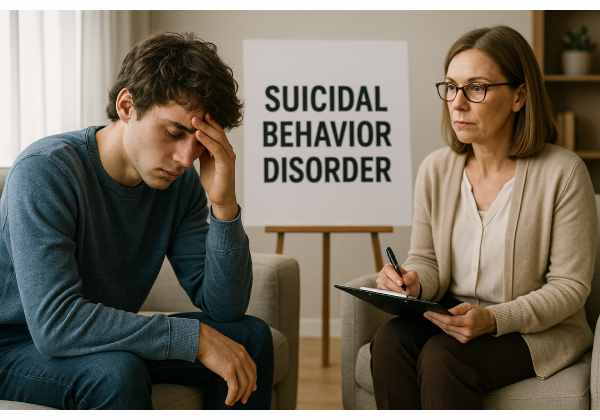
Suicidal behavior disorder is best understood as a clinical and research term used to describe a history of suicidal behavior, especially a suicide attempt, rather than as a simple label for a person’s character, intent, or future. The term has changed in status over time: it was once listed in DSM-5 as a condition for further study, but it has since been removed from that section of DSM-5-TR because suicidal behavior can arise from many different causes and a past attempt alone does not define a mental disorder.
The topic still matters because suicidal behavior is medically serious, emotionally complex, and often connected with mental health symptoms, substance use, trauma, major stress, physical illness, isolation, or a combination of these factors. It is also safety-sensitive. If someone is in immediate danger, has made a recent attempt, has a current plan, or may act on suicidal thoughts soon, urgent professional evaluation is needed through local emergency services, an emergency department, or a crisis line.
Table of Contents
- What Suicidal Behavior Disorder Means
- Diagnostic Status and Important Limits
- Symptoms, Signs, and Warning Behaviors
- How It Differs From Related Terms
- Causes and Contributing Factors
- Risk Factors and Vulnerable Situations
- Diagnostic Context and Assessment
- Complications and Health Effects
- When Urgent Evaluation Is Needed
What Suicidal Behavior Disorder Means
Suicidal behavior disorder refers to a pattern centered on suicidal behavior, especially a suicide attempt, rather than on suicidal thoughts alone. In its earlier DSM-5 research form, the proposed condition focused on a self-initiated act that the person expected could lead to their own death.
This distinction is important because suicidal behavior is not the same as feeling distressed, thinking about death, or having intrusive thoughts about self-harm. A person may have suicidal thoughts without acting on them. Another person may make an attempt during an acute crisis, intoxication, severe depression, psychosis, trauma reaction, or overwhelming life event. The behavior is clinically significant in either case, but the meaning and level of current danger can differ widely.
The original proposed concept was designed to help clinicians and researchers identify suicidal behavior more consistently. It placed attention on the attempt itself, including whether the person expected the action to be fatal at the time. That focus separated it from nonsuicidal self-injury, where the person intentionally harms themselves without intending to die, even though the behavior can still be medically and psychologically serious.
In everyday clinical language, “suicidal behavior” may include several things:
- A suicide attempt
- Preparatory behavior suggesting possible movement toward an attempt
- Repeated or escalating suicidal actions
- Behavior that occurs with current suicidal intent
- A lifetime history of suicidal behavior documented during an evaluation
However, the phrase should be used carefully. It does not explain why the behavior occurred, whether the person is currently suicidal, or what kind of mental health condition may be present. It also does not mean that a person will always remain at the same level of risk. Suicidal risk is dynamic; it can rise or fall with mood, sleep, substance use, pain, interpersonal stress, access to lethal means, shame, agitation, support, and treatment context.
The term can still be useful when it encourages careful documentation, compassionate assessment, and recognition that a prior attempt is a major clinical warning sign. But it can be harmful if it becomes a permanent, stigmatizing label. A person’s history of suicidal behavior is one part of a broader clinical picture, not the whole person.
Diagnostic Status and Important Limits
Suicidal behavior disorder is not currently a standalone DSM-5-TR mental disorder diagnosis. It was previously included in DSM-5 Section III as a proposed condition for further study, but the American Psychiatric Association later removed it from that section.
The reason for this change is central to understanding the term. A suicide attempt is a serious behavior, but it can have many different causes. It may occur in the setting of major depression, bipolar disorder, psychosis, substance intoxication, trauma, severe anxiety, personality disorder symptoms, neurodevelopmental conditions, grief, chronic pain, social crisis, or other situations. Because the same behavior can arise from very different pathways, defining it as a separate mental disorder created concerns about accuracy and stigma.
A second limit is that a past attempt does not automatically describe current risk. Someone who attempted suicide two years ago may now have strong support and no current suicidal intent. Another person with no prior attempt may be in immediate danger because they have a current plan, severe agitation, intoxication, command hallucinations, or access to lethal means. History matters, but it must be interpreted alongside present circumstances.
Current DSM-5-TR coding still allows clinicians to document suicidal behavior and a history of suicidal behavior as issues that may be a focus of clinical attention. That means the behavior can be recorded because it affects assessment, safety, prognosis, or clinical understanding, without treating it as a separate disorder in itself.
This distinction also helps reduce stigma. Suicidal behavior should not be framed as a moral failing, attention-seeking, weakness, or manipulation. It is a serious sign of distress or impaired safety that deserves careful evaluation. At the same time, it should not be treated as a fixed identity. Many people who survive suicidal crises later report very different feelings, circumstances, and levels of hope.
For readers comparing diagnostic terms, it may help to think of suicidal behavior as a clinical event or pattern that requires attention. Related evaluations, such as suicide risk screening, are designed to understand current danger, recent behavior, intent, protective factors, and context rather than to reduce a person to a single label.
Symptoms, Signs, and Warning Behaviors
The main feature associated with suicidal behavior disorder, as the term was originally proposed, is a suicide attempt or recent suicidal behavior. Around that behavior, clinicians look for warning signs that may suggest rising distress, impaired safety, or a possible near-term crisis.
Warning signs can be spoken, emotional, behavioral, or situational. They are especially concerning when they are new, escalating, combined with intoxication or agitation, or linked to a recent loss, humiliation, conflict, diagnosis, legal problem, or major life change.
Common warning signs include:
- Talking about wanting to die, not wanting to exist, or feeling unable to keep going
- Saying one is a burden, trapped, hopeless, ashamed, or in unbearable pain
- Withdrawing from friends, family, work, school, or usual routines
- Saying goodbye in unusual ways or giving away meaningful belongings
- Sudden risky behavior, especially when it is out of character
- Dramatic changes in sleep, appetite, energy, or mood
- Increased alcohol or drug use
- Severe agitation, rage, panic, emotional numbness, or despair
- Looking for information or resources related to ending one’s life
- A sudden calm after intense distress, especially if it follows signs of planning
Some signs are subtle. A person may not openly say they are suicidal. They may describe feeling “done,” “tired of everything,” “like everyone would be better off,” or “out of options.” Others may appear irritable rather than sad, especially adolescents, men, people under intense stress, or those who do not easily express emotional pain.
It is also possible for suicidal behavior to occur impulsively. In those situations, the person may move quickly from distress to action during a short period of intense emotion, intoxication, conflict, fear, shame, or pain. This is one reason clinicians take acute changes seriously even when someone has not spoken about suicide for a long time.
Symptoms that often appear alongside suicidal behavior are not specific to suicidal behavior disorder itself. They may reflect underlying or co-occurring conditions such as depression, bipolar disorder, PTSD, substance use disorder, psychosis, panic, obsessive-compulsive symptoms, eating disorders, or personality-related emotional dysregulation. For example, persistent hopelessness and loss of interest may lead clinicians to consider depression screening, while trauma-related nightmares, hypervigilance, and emotional flashbacks may point toward PTSD screening.
The safest interpretation is this: warning signs do not prove that a suicide attempt will happen, but they do mean the situation deserves attention. The combination, timing, intensity, and context of the signs matter more than any single symptom.
How It Differs From Related Terms
Suicidal behavior disorder is often confused with suicidal ideation, self-harm, and suicide attempt history. These terms overlap, but they are not interchangeable.
| Term | What it usually means | Why the distinction matters |
|---|---|---|
| Suicidal ideation | Thoughts about death, suicide, or ending one’s life | Thoughts may be passive or active and may or may not include intent or planning. |
| Suicide attempt | A self-initiated act carried out with at least some expectation of death | An attempt is a major clinical warning sign and requires careful evaluation of current safety. |
| Nonsuicidal self-injury | Intentional self-injury without intent to die | It is serious, but the immediate intent differs from a suicide attempt. |
| Suicidal behavior | Actions connected to suicidal intent, attempts, or movement toward an attempt | It focuses on behavior, not only thoughts or emotional distress. |
| History of suicidal behavior | Past suicidal behavior documented in a clinical history | It can affect risk assessment, but it does not define current danger by itself. |
Suicidal ideation can range from fleeting thoughts such as “I wish I would not wake up” to active thoughts with intent and planning. Passive thoughts can still be serious, especially when they are persistent, worsening, or combined with hopelessness, agitation, substance use, or major stress. Active suicidal ideation with a plan is usually more urgent because it may indicate movement toward action.
Nonsuicidal self-injury is also distinct but clinically important. Some people self-injure to reduce emotional numbness, express distress, interrupt unbearable feelings, or regain a sense of control. They may not intend to die. Even so, nonsuicidal self-injury can coexist with suicidal thoughts, and patterns can change over time. Clinicians therefore assess intent, medical severity, frequency, triggers, and whether suicidal thoughts are also present.
Another important distinction is between a past event and current risk. A lifetime history of suicidal behavior tells clinicians that the person has crossed from thoughts to action in the past. That matters. But current danger depends on what is happening now: intent, planning, access to lethal means, intoxication, impulsivity, support, mental state, recent losses, and the person’s ability to stay safe.
Structured tools such as the C-SSRS suicide risk assessment may help organize questions about thoughts, intent, behavior, and timing, but no tool can perfectly predict whether a person will attempt suicide. Clinical judgment and a full understanding of the person’s situation remain essential.
Causes and Contributing Factors
There is no single cause of suicidal behavior. It usually develops from an interaction of psychological pain, mental state, biology, environment, stress, access to means, and the person’s current ability to cope.
One helpful way to understand suicidal behavior is through overlapping pressures. A person may have long-standing vulnerability, such as trauma history, mood disorder symptoms, impulsivity, chronic pain, or family history of suicide. Then an acute trigger may occur, such as a breakup, job loss, public humiliation, legal trouble, medical diagnosis, conflict, relapse, bullying, or sudden financial pressure. If the person also feels trapped, isolated, ashamed, intoxicated, or unable to imagine change, risk can rise quickly.
Mental health conditions are common contributors, but they are not the only causes. Depression may bring hopelessness, self-blame, and loss of pleasure. Bipolar disorder may involve severe depression, mixed states, agitation, impulsivity, or psychosis. PTSD can involve intrusive memories, emotional flashbacks, numbness, and intense threat responses. Psychotic disorders may involve frightening beliefs, command hallucinations, or disorganized thinking. Substance use can worsen mood, lower inhibition, increase impulsivity, and make crises more dangerous.
Biological and cognitive factors can also play a role. Some people experience stronger emotional reactivity, difficulty calming after distress, impaired problem-solving during crisis, or impulsive decision-making under stress. Sleep deprivation, pain, inflammation, neurological illness, and certain medications or substances may also affect mood and judgment in vulnerable people.
Social context matters as well. Isolation, discrimination, unstable housing, interpersonal violence, abuse, financial insecurity, migration stress, bereavement, family conflict, academic pressure, and exposure to suicide can all contribute. These factors do not cause suicide in a simple, predictable way, but they can increase strain and reduce perceived options.
The causes are often mixed and may change over time. A suicide attempt during intoxication after an argument is different from one during months of severe depression, and both are different from suicidal behavior linked to psychosis or chronic pain. This is why a careful mental health evaluation looks beyond the event itself and asks about recent changes, psychiatric symptoms, medical factors, substance use, relationships, trauma, and immediate safety.
Risk Factors and Vulnerable Situations
Risk factors increase concern but do not make suicide inevitable. Many people with several risk factors never attempt suicide, while some people who attempt suicide may not fit an obvious stereotype.
A previous suicide attempt is one of the most important known risk factors. It shows that the person has already moved from thought to action. The period after an attempt can be especially important clinically, but the level of current risk still depends on present symptoms, supports, access to means, and recent events.
Major risk factors include:
- Previous suicide attempt or recent suicidal behavior
- Current suicidal intent, planning, or rehearsal behavior
- Depression, bipolar disorder, psychosis, PTSD, eating disorders, or severe anxiety
- Alcohol or drug use, especially intoxication or relapse
- History of trauma, abuse, bullying, or interpersonal violence
- Chronic pain, disabling illness, terminal illness, or major functional loss
- Severe insomnia, agitation, panic, rage, or emotional instability
- Social isolation, loneliness, rejection, humiliation, or perceived burdensomeness
- Recent bereavement, breakup, job loss, legal crisis, financial crisis, or housing instability
- Family history of suicide or exposure to suicide in peers, family, community, or media
- Access to highly lethal means
- Barriers to care, stigma, discrimination, or fear of consequences for speaking openly
Certain life situations can also heighten vulnerability. Adolescents and young adults may be affected by bullying, family conflict, identity stress, academic pressure, impulsivity, social media exposure, and rapid emotional shifts. Older adults may face loneliness, bereavement, chronic illness, pain, loss of independence, or perceived burdensomeness. People in high-stress occupations may fear stigma, job consequences, or loss of status if they disclose suicidal thoughts.
Risk can also rise during transitions. Hospital discharge, release from incarceration, military-to-civilian transition, postpartum periods, relationship separation, migration, retirement, and major medical diagnosis can all bring instability. In these settings, risk may come less from one diagnosis and more from the convergence of stress, isolation, disrupted routines, and reduced support.
Substance use deserves special attention because it can turn distress into danger quickly. Alcohol and drugs can increase impulsivity, intensify mood symptoms, worsen sleep, and reduce the pause between urge and action. When suicidal thoughts occur with intoxication, withdrawal, or escalating use, clinicians often treat the situation as more urgent. Screening for alcohol or drug-related contributors may include tools such as alcohol use screening when the history suggests it.
Protective factors also matter, though they do not cancel risk automatically. Connection to supportive people, reasons for living, cultural or spiritual beliefs, responsibility to dependents, restricted access to lethal means, willingness to talk, and engagement with professional help can reduce danger. Still, a person with protective factors may remain at risk if acute intent, planning, agitation, psychosis, or intoxication is present.
Diagnostic Context and Assessment
Assessment of suicidal behavior is not a simple checklist or score. A thorough evaluation considers the event, the person’s current mental state, the surrounding context, and the difference between past behavior and present danger.
Clinicians usually ask direct, specific questions because indirect questioning can miss important information. This may include questions about suicidal thoughts, intent, planning, past attempts, recent self-harm, substance use, access to lethal means, current stressors, medical problems, trauma history, and protective factors. Asking about suicide does not cause suicidal behavior; it helps clarify what is already happening and whether urgent safety steps are needed.
A diagnostic assessment may consider several layers:
- What happened: whether there was an attempt, preparatory behavior, self-injury, or suicidal ideation
- Intent: whether the person expected or wanted death to occur
- Timing: whether the behavior was recent, escalating, or part of a longer pattern
- Mental state: mood, anxiety, agitation, psychosis, intoxication, sleep loss, impulsivity, and judgment
- Context: losses, conflict, trauma, illness, financial stress, legal problems, or social isolation
- Medical severity: injury, poisoning, complications, or need for emergency medical care
- Co-occurring conditions: depression, bipolar disorder, PTSD, psychosis, substance use, eating disorders, personality disorder symptoms, neurodevelopmental conditions, or cognitive impairment
- Supports and barriers: trusted people, access to care, stigma, privacy concerns, and practical constraints
Screening tools may be used in primary care, emergency departments, schools, pediatric settings, hospitals, and mental health clinics. For children and adolescents, tools such as ASQ suicide screening may be used to identify young people who need further evaluation. In adults, structured suicide risk assessments can help standardize questioning, but they do not replace clinical judgment.
One major limitation is prediction. Suicide risk cannot be accurately reduced to “low,” “medium,” or “high” as if it were static. Risk can change within hours when intoxication, conflict, access to means, sleep deprivation, shame, panic, or psychosis changes. For that reason, modern guidance emphasizes individualized assessment and formulation rather than relying only on a numerical score.
Diagnostic context also includes differential diagnosis. A clinician may need to determine whether suicidal behavior occurred in the setting of a mood episode, psychosis, delirium, intoxication, withdrawal, trauma response, personality-related crisis, obsessive intrusive thoughts, severe anxiety, or another medical or psychiatric condition. That distinction affects how the event is understood, documented, and monitored.
Complications and Health Effects
The most serious complication of suicidal behavior is death by suicide. Nonfatal suicidal behavior can also lead to physical injury, medical complications, trauma, disability, and lasting psychological effects.
Medical complications depend on the nature of the event, but they may include injury, poisoning, neurological effects, organ damage, infection, pain, scarring, or complications from delayed medical care. Some people recover physically; others experience chronic consequences. Even when there is little visible injury, the event may signal a period of high emotional and safety risk.
Psychological complications can be profound. A person may feel shame, fear, confusion, grief, numbness, regret, anger, or embarrassment after a suicidal crisis. Some people worry they will be judged, hospitalized, punished, rejected, or treated differently. This fear can make them less likely to disclose future suicidal thoughts unless the response around them is calm and nonjudgmental.
Suicidal behavior can also affect relationships. Family members and friends may feel frightened, guilty, angry, helpless, or unsure what to say. Misunderstandings are common. Loved ones may over-monitor the person, avoid the topic entirely, or react with blame because they are scared. The person who attempted suicide may feel exposed or controlled, even when others are trying to help.
Other possible complications include:
- Interrupted work, school, caregiving, or daily functioning
- Emergency medical bills or financial strain
- Legal or occupational consequences in some settings
- Increased stigma or discrimination
- Recurrent suicidal crises or repeated attempts
- Worsening substance use or withdrawal from support
- Trauma symptoms in the person and in those close to them
- Loss of trust between the person and family, clinicians, or institutions
There are also public health effects. Suicide and suicidal behavior affect families, schools, workplaces, healthcare systems, and communities. Exposure to suicide can increase distress in others, especially when the death or attempt is discussed in graphic, romanticized, blaming, or sensational ways. Responsible language matters. Phrases such as “died by suicide” or “attempted suicide” are more respectful and less stigmatizing than older moralizing language.
A prior attempt should be taken seriously, but it should not be treated as a life sentence. Many people with a history of suicidal behavior later live without ongoing suicidal intent. The clinical challenge is to recognize both truths at once: the history is important, and the person is more than the history.
When Urgent Evaluation Is Needed
Urgent professional evaluation is needed when suicidal behavior may be current, imminent, escalating, or medically dangerous. This is true even if the person later says they are unsure, embarrassed, or “didn’t mean it.”
Immediate concern is warranted when someone:
- Has made a suicide attempt or medically dangerous self-harm act
- Has a current plan or intent to end their life
- Has access to lethal means and may act soon
- Is intoxicated, withdrawing, severely agitated, or unable to stay safe
- Is hearing voices or experiencing beliefs that tell them to harm themselves
- Is saying goodbye, giving away possessions, or preparing for death
- Has rapidly worsening hopelessness, panic, rage, shame, or emotional pain
- Cannot agree to avoid acting on suicidal thoughts long enough to get help
- Is missing, unreachable, or behaving in a way that suggests imminent danger
In these situations, the safest next step is emergency-level evaluation through local emergency services, an emergency department, or a crisis service. The goal is not to punish the person or label them permanently. The goal is to assess immediate safety, medical risk, mental state, and the level of support needed at that moment.
For less immediate but still concerning situations, professional evaluation is still important when suicidal thoughts are persistent, increasing, linked with substance use, associated with self-harm, or occurring alongside severe depression, bipolar symptoms, psychosis, trauma symptoms, eating disorder behaviors, or major life stress. A person does not need to be “certain” they will act for the concern to be real.
It can also be appropriate to seek urgent evaluation when family members, friends, teachers, coworkers, or clinicians notice a sharp change in behavior and cannot determine whether the person is safe. Guidance on emergency-level warning signs may overlap with broader situations covered in mental health emergency evaluation, especially when suicidal behavior appears alongside confusion, psychosis, intoxication, severe agitation, or neurological symptoms.
The key point is simple: suicidal behavior is always worth taking seriously, and current danger should be assessed directly. A past attempt, a current plan, severe agitation, intoxication, access to lethal means, or inability to stay safe can shift the situation from concerning to urgent.
References
- DSM-5-TR® Update 2025 (Guideline Update)
- Addition of Diagnostic Codes for Suicidal Behavior and Nonsuicidal Self-Injury 2022 (Position Statement)
- DSM-5 suicidal behavior disorder: a systematic review of research on clinical utility, diagnostic boundaries, measures, pathophysiology and interventions 2024 (Systematic Review)
- Suicide 2025 (Fact Sheet)
- Warning Signs of Suicide 2025 (Public Health Resource)
- Self-harm: assessment, management and preventing recurrence 2022 (Guideline)
Disclaimer
This article is for general educational purposes only and is not a substitute for professional medical advice, diagnosis, or treatment. Suicidal thoughts, suicidal behavior, or a recent attempt should be assessed by qualified professionals, and immediate danger requires emergency help.
Thank you for reading; sharing this article thoughtfully may help others recognize suicidal behavior with more accuracy, compassion, and urgency.