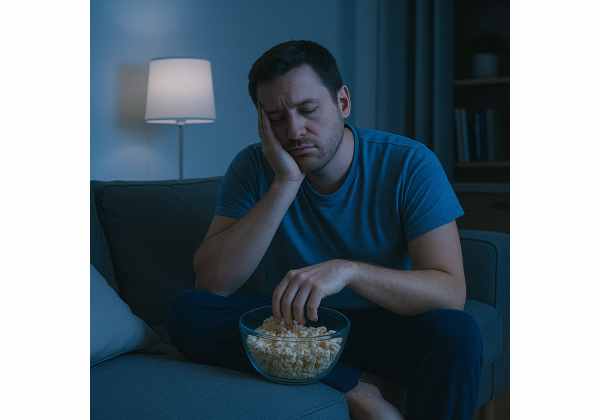
Boredom eating at night can feel irrational because it often shows up after dinner, when you are not truly hungry. You may wander into the kitchen, snack while scrolling, or keep looking for “something good” even though no specific food really satisfies you. In many cases, the problem is not physical hunger at all. It is under-stimulation, mental fatigue, habit, and the way evenings leave more room for food cues to take over.
The good news is that boredom eating is usually very changeable. Once you understand why it happens at night, you can build a few simple routines that make evenings calmer, more satisfying, and much less snack-driven. The goal is not to create a strict nighttime rulebook. It is to stop eating out of emptiness, restlessness, or autopilot.
Table of Contents
- Why Boredom Eating Shows Up at Night
- Boredom or Real Hunger?
- The Evening Triggers That Keep It Going
- Build an Evening Routine That Reduces Snacking
- What to Do When the Urge Hits
- Change Your Food Environment Before Night Starts
- When Boredom Eating May Need Extra Help
Why Boredom Eating Shows Up at Night
Nighttime boredom eating is rarely about food alone. It usually happens when the structure of the day falls away and your brain starts looking for stimulation, reward, comfort, or a transition into rest. During the day, work, errands, family demands, and deadlines often keep you occupied. At night, that external structure disappears. If you are tired but not ready for bed, too drained for a meaningful activity, or stuck in passive screen time, food becomes an easy source of novelty.
That is why boredom eating often feels different from ordinary hunger. The urge can show up suddenly while watching television, scrolling on your phone, or standing in the kitchen “just looking.” It can feel like you want something, but not necessarily because your body needs energy. Often, what you really need is stimulation, a break from monotony, or a sense that the day is not over yet.
Night is also when decision fatigue catches up with you. After a long day, it takes more effort to make deliberate choices. Easy, tasty foods start to look like the simplest answer to low-grade restlessness. This overlaps with the broader problem of screen time and appetite drift, where passive evening habits keep food in the background and make random snacking feel normal.
Another reason boredom eating shows up at night is that boredom itself is often mixed with other feelings. What looks like boredom may actually be loneliness, emotional flatness, avoidance, or low-level stress. That is why it can help to think in terms of boredom vs stress eating. The surface experience may be “I just want a snack,” but underneath it might be “I feel under-stimulated,” “I do not want the day to end,” or “I do not know what else to do with myself.”
Nighttime also increases opportunity. Food is nearby, rules loosen, and there is less social friction around extra bites, refills, or dessert. A daytime urge might get interrupted by work or movement. A nighttime urge often has space to grow.
The key insight is that boredom eating at night is not a sign that you lack discipline. It is often a highly predictable response to under-stimulation, fatigue, loose routines, and easy access to rewarding foods. Once you see it that way, the solution becomes much more practical.
Boredom or Real Hunger?
One of the most useful skills is learning to tell the difference between true physical hunger and boredom-driven eating. The two can overlap, especially if you under-ate earlier in the day, but they usually feel different once you know what to look for.
Physical hunger tends to build gradually. It often comes with stomach emptiness, lower energy, or the sense that a real meal would help. Boredom eating tends to show up suddenly and feels more like an urge than a need. It is often specific, restless, and hard to pin down. You may want something crunchy, sweet, or “fun,” but not necessarily a balanced meal.
| Clue | More like physical hunger | More like boredom eating |
|---|---|---|
| How it starts | Gradual and steady | Sudden, often during down time |
| What sounds good | Several foods would work | You want something specific or exciting |
| Body signals | Stomach hunger, low energy, genuine emptiness | Restlessness, flatness, fidgeting, wanting something to do |
| After eating | You feel satisfied and can stop | You may keep looking for more or feel unsatisfied |
| Context | You have gone a while without eating | You are usually scrolling, watching, or wandering |
A quick check before eating can help:
- When did I last eat a real meal or snack?
- Would a normal meal or protein-based snack sound good right now?
- What am I feeling besides “hungry”?
- If food were not available, what else would I want?
If you skipped dinner, ate lightly, or had a long gap since your last meal, real hunger may be part of the picture. This is why night eating problems are sometimes linked to earlier under-fueling. People often think they have a nighttime willpower issue when they actually have a daytime structure issue, which is closely tied to meal timing and appetite control.
It is also worth noticing whether your evenings are being set up by earlier habits. For example, breakfast skipping and later cravings can make night urges much stronger because your hunger catches up late in the day.
The goal is not to talk yourself out of food every night. If you are hungry, eating is the right response. The goal is to stop confusing restlessness with hunger. Once you can tell the difference more quickly, you can meet the actual need instead of reflexively opening the pantry.
The Evening Triggers That Keep It Going
Nighttime boredom eating usually does not come from a single cause. It is more often the result of several evening triggers stacking together until food feels inevitable.
The first big trigger is passive downtime. Television, streaming, social media, and long stretches on the couch can create exactly the kind of low-stimulation state that makes snacking attractive. You are not fully engaged, but you are not actually resting either. Food fills the gap.
The second trigger is fatigue. When you are tired, everything that requires effort feels less appealing. You may not have the energy to read, fold laundry, prepare for tomorrow, or start a hobby. Eating is quick, easy, and rewarding. Poor sleep can also make cravings stronger and make stopping points harder to notice, which is part of why poor sleep often increases hunger the next day and later at night.
Another common trigger is “revenge bedtime” behavior. Some people snack at night because it feels like the only personal time they have. They stay up later than they planned, drift through screens, and keep eating because going to bed would mean the day is truly over. If you also get nighttime cravings for sweets, it may overlap with patterns behind night-time sugar cravings, where fatigue, habit, and reward-seeking pile up together.
Other triggers include:
- Open-ended kitchen access: easy grazing without a real eating occasion
- Visible snack foods: food cues that keep calling for attention
- Loneliness or flat mood: food acting as company or stimulation
- Stress letdown: once the day ends, delayed feelings finally show up
- Habit timing: the body and brain expect a snack at a certain hour
One useful way to think about boredom eating is that it thrives in the space between “not hungry enough for a meal” and “not engaged enough to do anything else.” That is why random nighttime snacking often keeps going even after the first portion. The food is not solving the real problem, so your brain keeps looking for more stimulation.
This is also why boredom eating tends to feel repetitive. It happens in the same chair, at the same hour, during the same show, or after the same routine. When those cues repeat, the urge starts to feel automatic. You are not deciding from scratch each night. You are stepping into a pattern that has been rehearsed many times.
The more clearly you identify your specific evening triggers, the easier it becomes to change what happens before the urge takes over.
Build an Evening Routine That Reduces Snacking
The most reliable way to stop boredom eating at night is to make the evening feel more defined. You do not need a rigid schedule, but you do need enough structure that your brain is not left drifting toward food by default.
Start by creating a clear transition out of the day. That might be dinner, a short walk, a shower, changing clothes, cleaning the kitchen, or making tea. The point is to send a signal that the workday or busy part of the day is over. This matters because many people snack not from hunger, but because the evening has no obvious beginning.
A strong nighttime routine often has three phases:
- Close the eating part of the evening with intention.
Eat dinner sitting down, not half-distracted. If you want something after dinner, decide what it is instead of grazing unpredictably. - Choose a real evening activity.
Not just “watch something,” but something with enough engagement to compete with food. A puzzle, a phone call, stretching, reading, journaling, light chores, crafts, or planning tomorrow usually works better than passive scrolling. - Create a wind-down pattern.
This helps because many boredom eaters are not actually looking for more excitement. They are looking for a softer landing into rest. A simple night routine that prevents overeating often helps more than another snack rule.
The best routines are small and repeatable. This is where habit stacking can work well. For example:
- After dinner, I clean the kitchen.
- After cleaning the kitchen, I make herbal tea.
- After tea, I spend ten minutes on one non-food activity.
- After that, I start my wind-down routine.
The sequence matters more than the length. Once the pattern becomes familiar, it reduces the “What now?” feeling that so often sends people to the pantry.
It also helps to be honest about what type of night you are having. If you are mentally drained, choose low-effort but absorbing activities. If you are physically restless, standing, stretching, or walking may help more than trying to sit still. If you are emotionally flat, connection may work better than distraction.
Do not aim for an ideal evening. Aim for an evening with fewer empty spaces where boredom can quietly turn into eating. That is usually enough to make nights feel more manageable within a week or two.
What to Do When the Urge Hits
Even with a good routine, the urge to boredom eat will still happen sometimes. What matters most is having a short plan that interrupts autopilot before the eating gets going.
A useful five-step approach looks like this:
- Pause for two to five minutes.
You are not banning food. You are delaying the automatic response long enough to get some clarity. - Name the real need.
Ask yourself: am I hungry, bored, lonely, tired, avoiding bed, or just wanting stimulation? - Choose the matching response.
If you are hungry, eat a real snack or small meal. If you are bored, change your state. If you are tired, start the bedtime routine. If you are emotionally unsettled, soothe the feeling directly. - Make food deliberate if you still want it.
Put it on a plate or bowl. Sit down. Avoid standing at the counter or eating from the package. - End the moment clearly.
Once you are done, close the kitchen, brush your teeth, make tea, or move to a different room.
A short list of boredom-breaker options can be surprisingly effective:
- Walk around the block or inside your home
- Stretch for five minutes
- Take a shower
- Text or call someone
- Do a small chore that gives closure
- Read a chapter of a book
- Work on a puzzle or game
- Journal for five minutes
- Make decaf tea and sit somewhere other than the kitchen
It helps to decide these responses in advance. That is where if-then planning for cravings becomes useful. Examples:
- If I go into the kitchen after dinner but I am not hungry, then I will make tea first.
- If I want to snack during television, then I will pause and stretch before deciding.
- If I feel restless at 9:30 p.m., then I will start my bedtime routine instead of opening snacks.
This also connects well with mindful eating. In a practical sense, mindfulness here just means noticing what is happening early enough to choose differently. It is not about perfect calm. It is about catching the moment when boredom starts disguising itself as hunger.
The more specific your replacement responses are, the easier it becomes to interrupt the urge without feeling deprived.
Change Your Food Environment Before Night Starts
Nighttime eating is much harder to manage when the environment keeps pushing you toward it. If your evening snack foods are visible, easy to grab, and connected to your usual boredom routines, you are asking yourself to rely on willpower in the weakest part of the day.
A better strategy is to redesign the environment earlier, when your brain is clearer.
Start with visibility. Foods you repeatedly overeat out of boredom should not live on the counter, on the coffee table, or at eye level in the pantry. Even a small increase in friction helps. Put them out of sight, portion them ahead of time, or stop buying certain items for a while if they reliably turn into a nighttime loop.
This is where a basic food environment reset can make a real difference. The goal is not to create a “clean” house or ban every treat. It is to make the impulsive option slightly harder and the intentional option much easier.
A few practical changes tend to work well:
- Keep fruit, yogurt, or a planned snack visible if true hunger sometimes shows up
- Store trigger foods in less convenient places
- Avoid eating directly from large bags or containers
- Keep the kitchen physically tidy after dinner
- Do not leave leftovers or dessert foods in plain sight
- Keep a water bottle or tea setup ready in the evening
It can also help to decide ahead of time what counts as a reasonable nighttime snack if you are truly hungry. This removes the “What should I have?” wandering that often ends in overeating. A simple rule such as “If I am physically hungry after dinner, I choose one planned option with protein or fiber” is often enough. This is a form of pre-commitment, where you make a calm decision earlier so you do not have to negotiate during a vulnerable moment.
If you snack while watching television, change the setup there too. Do not keep food on the coffee table. Keep blankets, books, tea, or hobby materials within reach instead. If the couch has become tightly linked to snacking, changing what is available in that space matters.
Environment changes may seem basic, but they work because boredom eating is cue-driven. When fewer food cues are competing for your attention, the urge often loses intensity before it even starts.
When Boredom Eating May Need Extra Help
Boredom eating at night is common, but that does not mean it should always be dismissed as minor. Sometimes what looks like boredom eating is actually emotional eating, chronic under-eating during the day, sleep disruption, low mood, loneliness, or a stronger loss-of-control pattern.
Pay closer attention if any of these are true:
- You feel unable to stop once you start
- You regularly eat large amounts at night
- You eat in secret or feel ashamed afterward
- The pattern is happening most nights
- You are also struggling with mood symptoms, insomnia, or high stress
- Night eating feels like your main way to cope or unwind
In those situations, the solution may need to go beyond habit tweaks. For some people, the next step is learning more about self-soothing without food because boredom is only the surface layer of a deeper emotional need. For others, the better answer may be speaking with a registered dietitian, therapist, or physician to sort out whether the problem is tied to anxiety, depression, binge eating, sleep problems, or medication effects.
It is also worth getting curious if the cycle tends to follow the same pattern: nighttime eating, guilt, harsh rules the next day, and then another nighttime episode. That kind of rebound loop can slowly strengthen the habit. Earlier support often helps people break it faster and with less frustration.
The goal is not to pathologize every evening snack. Sometimes a nighttime snack is just a snack. The bigger concern is when eating feels detached from hunger, hard to control, and emotionally loaded night after night.
A good sign of progress is not “I never want food at night again.” A better sign is that your evenings feel less empty, food takes up less mental space, and you can tell the difference between real hunger and boredom more quickly. That is the kind of change that lasts.
References
- Consumed by Boredom: Food Choice Motivation and Weight Changes during the COVID-19 Pandemic 2022 (Open Access Study)
- A Narrative Review on Sleep and Eating Behavior 2025 (Review)
- Effects of mindfulness-based interventions on food craving in adults: a systematic review and meta-analysis of controlled clinical trials 2025 (Systematic Review and Meta-Analysis)
- An Updated Review of Night Eating Syndrome 2022 (Review)
- Emotional Eating and Obesity: An Update and New Insights 2025 (Review)
Disclaimer
This article is for general educational purposes only and is not a substitute for medical advice, diagnosis, or treatment. If nighttime eating feels compulsive, is affecting your sleep or mental health, or may be linked to binge eating, anxiety, or depression, speak with a qualified healthcare professional.
If this article helped you, please share it on Facebook, X, or any platform where it could help someone else build calmer evenings and fewer mindless nighttime snacks.