Dessert does not have to disappear just because you are trying to lose weight. In fact, one of the fastest ways to make a calorie deficit feel unsustainable is to build a plan so rigid that every sweet craving turns into a rebound binge. Healthy desserts for weight loss work best when they do two things at once: they satisfy the desire for something sweet, and they keep calories controlled enough that dessert still fits into the rest of your day.
The best options are not just “sugar-free” or low in calories on paper. They are desserts that feel worth eating, pair sweetness with some fullness, and are easy to portion in real life. This guide covers what makes a dessert weight-loss friendly, which dessert types work best, simple dessert ideas, and the common mistakes that turn a smart treat into a calorie bomb.
Table of Contents
- Why dessert can still fit
- What makes a dessert weight-loss friendly
- Best types of healthy desserts
- 12 healthy dessert ideas
- How to build desserts that satisfy
- Mistakes that make desserts less helpful
- How to fit dessert into a calorie deficit
Why dessert can still fit
A calorie deficit does not require dessert elimination. It requires total energy intake that stays below what you burn over time. That distinction matters because many people approach weight loss with an all-or-nothing mindset: dessert is either totally banned or totally uncontrolled. Neither extreme works especially well for long-term consistency.
For some people, skipping dessert entirely feels easy. For many others, it backfires. The stricter the rule, the more emotionally charged sweets become. Then one cookie turns into a “cheat day,” and the day turns into several hundred or several thousand extra calories. In that situation, a planned dessert is often more useful than a forbidden dessert.
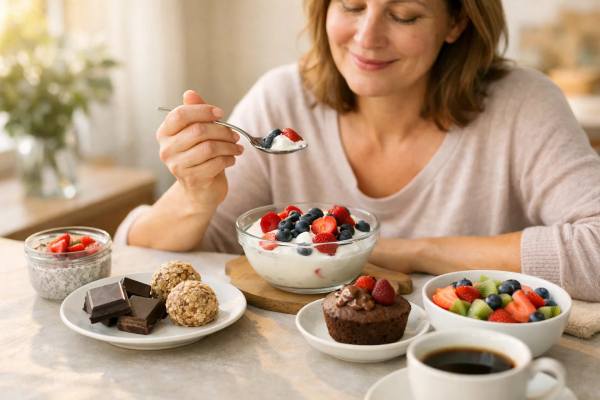
Healthy desserts for weight loss work best when they reduce friction, not when they become a fake version of dessert that leaves you still hunting for something else. A small bowl of Greek yogurt with berries and dark chocolate chips, a frozen banana blended with cocoa, or a portioned fruit-and-protein snack may not look like traditional “diet food,” but they can satisfy the same moment much more effectively than simply trying to white-knuckle the craving.
Another reason dessert can fit is that adherence matters more than purity. A food plan that includes some pleasure is easier to repeat. That does not mean dessert should become a free-for-all. It means that strategically chosen sweets can help reduce feelings of deprivation and make a calorie deficit more livable.
This is especially true at night, when many people are not truly hungry for another meal but still want something sweet. If that is your hardest window, planned dessert can be a better strategy than random snacking. It overlaps well with approaches like sweet tooth swaps for weight loss and even better late-evening structure if you also struggle with late-night snacking.
The bigger idea is simple: dessert is not the enemy. The problem is usually unplanned, oversized, low-satiety dessert that quietly pushes the day out of a deficit.
What makes a dessert weight-loss friendly
A dessert becomes weight-loss friendly when it gives you enough satisfaction for the calories it costs. That sounds obvious, but it is the filter that matters most. A “healthy” dessert that is bland, tiny, and forgettable often leads to a second dessert. That makes the first one a poor choice, even if it looked virtuous on paper.
There are four qualities that usually make desserts more useful in a calorie deficit.
1. Reasonable calorie density
A helpful dessert is not necessarily ultra-low-calorie, but it should be controlled enough to fit the day without forcing the rest of your meals to become unsustainably small. In many cases, that means something in a modest range rather than a restaurant-style dessert portion.
2. Strong sweetness payoff
Dessert should actually feel like dessert. If the sweet hit is too weak, people often keep searching. Fruit, cocoa, cinnamon, vanilla, yogurt, protein pudding, or a small amount of chocolate can make a dessert feel real without turning it into a calorie dump.
3. Some fullness or stopping power
The best desserts often include at least one of these:
- protein
- fiber
- water-rich fruit
- portion structure
- slower eating
That is why a bowl of Greek yogurt with berries can work better than a handful of sweet cereal, even if the calories are similar. It takes longer to eat and usually has more staying power.
4. Easy portion control
A dessert that comes with a natural stopping point is often easier to manage. Single-serve yogurt, a portioned fruit bowl, a measured square of chocolate, or one frozen yogurt bark serving works better for many people than eating directly from a tub or package.
A useful comparison looks like this:
| More helpful dessert | Less helpful dessert | Why it matters |
|---|---|---|
| Greek yogurt with berries and cocoa | Large bowl of granola and honey “dessert yogurt” | The first gives more protein and fewer calorie-dense extras |
| Frozen fruit and measured dark chocolate | Mindless candy from a family-size bag | The first has built-in portion friction |
| Protein pudding or cottage cheese bowl | Pastry that disappears in minutes | The first usually provides more satiety |
This is why healthy desserts fit best into a broader pattern built around filling foods. If your meals are already strong in protein and fiber, dessert becomes easier to enjoy without spiraling. That is also where guides on high-protein, high-fiber eating and foods that work in a calorie deficit connect well with dessert planning.
Best types of healthy desserts
Not every healthy dessert needs to be built from the same ingredients. Different dessert types solve different problems. Some are best for nightly cravings, some are better for high-protein goals, and some are mainly useful because they feel generous for relatively few calories.
Fruit-based desserts
These are some of the easiest desserts to fit into a calorie deficit because fruit provides sweetness, volume, and usually some fiber. Berries, apples, peaches, cherries, grapes, bananas, and frozen mango all work well depending on the craving.
Fruit-based desserts are especially useful when you want a larger portion. A big bowl of strawberries, warm cinnamon apples, or frozen grapes can feel more substantial than a tiny packaged “diet” treat. They also pair well with themes from fruit choices that support weight loss.
Yogurt-based desserts
Greek yogurt is one of the most useful dessert bases because it brings protein, creaminess, and versatility. Plain yogurt can be turned into dessert with fruit, cocoa powder, cinnamon, vanilla, or a small amount of chocolate or crushed cereal. It feels more substantial than many lower-calorie sweets and works well for people who want dessert to actually reduce hunger.
Protein-based desserts
These include protein puddings, protein shakes turned thick and cold, cottage cheese dessert bowls, and simple high-protein mousse-style recipes. They are useful when dessert tends to turn into second dinner or when you want something sweet after training. These also connect naturally with high-protein snack ideas if you treat dessert as a structured snack rather than random grazing.
Frozen desserts
Frozen desserts can slow eating and make small portions feel more satisfying. Frozen berries, frozen banana blends, yogurt bark, portioned light ice cream, and fruit pops made at home can all work. The best frozen desserts are the ones that make the experience last longer without relying on huge amounts of sugar or fat.
Small chocolate-based desserts
Chocolate can fit weight loss perfectly well. The issue is usually quantity, not the ingredient itself. A few squares of dark chocolate, chocolate-covered strawberries, or cocoa mixed into yogurt can satisfy a craving far more efficiently than pretending chocolate has to disappear from your life.
Better bakery-style swaps
Baked oats, portioned protein brownies, banana-oat muffins, and lighter mug cakes can fit when they are treated as actual desserts with a real portion limit. They work best when they do not try to imitate a full bakery indulgence with half the calories and double the toppings.
The most useful question is not whether a dessert is “clean.” It is whether it helps you stop at a satisfying amount.
12 healthy dessert ideas
The best healthy desserts are simple enough to make on an ordinary weeknight and satisfying enough that you do not immediately keep searching for something else. Here are 12 options that fit well into a calorie deficit.
1. Greek yogurt with berries and cinnamon
Creamy, sweet, high in protein, and easy to portion. Add a few dark chocolate chips if you want more dessert energy.
2. Protein pudding bowl
Use a ready-made higher-protein pudding or make one from a protein shake thickened with yogurt or chia. Top with sliced strawberries or banana.
3. Frozen grapes
A classic because they feel candy-like while staying very simple. Best when portioned into a bowl rather than eaten straight from the freezer bag.
4. Warm cinnamon apples
Microwave or sauté apple slices with cinnamon and a little water. Add a spoon of yogurt if you want extra creaminess.
5. Cottage cheese with pineapple or peaches
This sounds plain until you add cinnamon, vanilla, or a little cocoa. It works well for people who want dessert with more staying power.
6. Chocolate Greek yogurt
Mix cocoa powder and a little sweetener or vanilla into plain Greek yogurt. Top with berries or sliced banana.
7. Frozen yogurt bark
Spread yogurt on a tray, top with berries and a few chocolate bits, freeze, and break into portions.
8. Banana and peanut butter bite plate
Use banana slices with a measured amount of peanut butter. The key is measured, not “a spoonful that became four spoonfuls.”
9. Fruit and whipped topping cup
Fresh berries or peaches with a small amount of light whipped topping can scratch the dessert itch surprisingly well.
10. Portion-controlled dark chocolate and fruit
A few squares of dark chocolate with strawberries, clementines, or raspberries makes dessert feel intentional without becoming huge.
11. Protein mug cake
Useful when you want a warm dessert. Best when kept simple instead of loaded with toppings that double the calories.
12. Nice cream made from frozen banana
Blend frozen banana with cocoa, berries, or a spoon of yogurt. This works best as a small bowl, not a giant blender batch eaten mindlessly.
| Dessert | Best for | Main strength |
|---|---|---|
| Greek yogurt and berries | Nightly dessert | Protein plus sweetness |
| Frozen grapes | Candy cravings | Slow eating and easy prep |
| Warm apples and cinnamon | Comfort dessert | Big volume for modest calories |
| Chocolate yogurt bowl | Chocolate cravings | Creamy and high in protein |
| Dark chocolate and fruit | Balanced indulgence | Feels real without going overboard |
| Protein mug cake | Warm dessert mood | More filling than typical cake |
If you prefer quick assembly rather than baking, some of these also overlap with lower-calorie snack ideas and can function as either dessert or a structured snack depending on the time of day.
How to build desserts that satisfy
The easiest way to make dessert fit a calorie deficit is to build it with a simple formula instead of improvising when cravings hit.
A useful dessert formula is:
- Pick one sweet base
Fruit, yogurt, pudding, cottage cheese, banana blend, or a portioned chocolate item. - Add one satisfaction booster
Protein, creaminess, crunch, temperature contrast, or richer flavor. - Keep one indulgent element
A few chocolate chips, a drizzle of peanut butter, a crushed cookie, or whipped topping can make a dessert feel complete. The point is a small amount that improves satisfaction, not a topping avalanche. - Portion it before eating
Bowls, ramekins, jars, and single-serve containers work better than eating from tubs or bags.
Here are a few practical builds:
- berries + Greek yogurt + a few chocolate chips
- apple + cinnamon + yogurt
- protein pudding + banana slices
- cottage cheese + pineapple + cinnamon
- frozen fruit + small chocolate portion
- banana + cocoa + measured peanut butter
Texture matters more than many people realize. Desserts feel more satisfying when they combine creamy and crunchy, cold and chewy, or warm and soft. That is one reason simple desserts often work better than ultra-processed “diet treats.” You can tailor texture to what you actually crave.
Another useful rule is to make dessert distinct from snacking. Sit down, plate it, and eat it on purpose. Mindless bites from the freezer, pantry, or countertop rarely feel like dessert even when they contain plenty of calories. Intention improves satisfaction.
This is also where protein can help. Not every dessert needs to be high in protein, but if dessert tends to become the start of a long grazing session, a more protein-forward option often works better than something purely sugary. That logic overlaps with protein timing and fullness, especially for people who struggle most at the end of the day.
Mistakes that make desserts less helpful
Healthy desserts stop being helpful when they are treated like health halos instead of actual desserts with real calorie consequences.
Mistake 1: Making the dessert too “healthy” to satisfy
A tiny bowl of plain fruit may be nutritionally solid, but if what you really want is creamy, cold, chocolatey, or crunchy, it may not scratch the itch. That often leads to a second dessert later. Better to make the first dessert more satisfying than to force an unsatisfying one.
Mistake 2: Overloading toppings
This is one of the biggest traps. Yogurt bowls, smoothie bowls, fruit plates, and oatmeal-based desserts can look healthy while quietly becoming calorie-dense through:
- nut butter
- granola
- honey
- coconut
- chocolate drizzle
- crushed cookies
- nuts
- extra cereal
A small amount can improve the dessert. Several “small” add-ons can double it.
Mistake 3: Eating dessert straight from the container
Ice cream tubs, nut butter jars, chocolate bags, whipped topping containers, and family-size snack packages all make portion control weaker. The easiest fix is simple: portion first, then eat.
Mistake 4: Treating every craving like a baking project
Healthy brownies, macro cookies, protein cheesecake bars, and low-calorie ice cream hacks can all fit, but if every dessert becomes a highly engineered recipe, it is easy to spend more mental energy on sweets than they are worth. Simpler usually works better.
Mistake 5: Using dessert to patch over poor meals
If dinner was low in protein, low in fiber, and not very satisfying, dessert often becomes a second attempt to feel full. In that case the real problem is not dessert. It is meal structure. This is where filling low-calorie meals and high-protein, high-fiber dinners often do more for cravings than another “healthy dessert recipe.”
Mistake 6: Turning dessert into constant grazing
A planned dessert is one thing. Repeated handfuls, bites, spoonfuls, and “just a little more” across the evening are another. This is where even healthy foods can quietly erase a deficit.
How to fit dessert into a calorie deficit
The simplest way to fit dessert into a calorie deficit is to plan for it instead of hoping it somehow disappears from your personality. When dessert is expected, it becomes easier to budget for and easier to control.
Use dessert intentionally, not impulsively
If you know you like something sweet after dinner, build that into the day. Keep dessert modest and predictable rather than fighting the craving until you eventually overeat something else.
Match dessert size to the rest of the day
A lighter lunch and protein-rich dinner might leave room for a slightly more indulgent dessert. A day that already included several extras may call for a fruit-and-yogurt option instead. Flexibility works better than rigid rules.
Decide whether dessert is replacing or adding
This is the question that matters most. Is dessert replacing a higher-calorie sweet habit, or is it extra food on top of a day that is already full? A structured dessert can help. An accidental fourth snack may not.
Keep dessert visible but portionable
Stocking helpful options makes a huge difference:
- berries
- plain Greek yogurt
- frozen fruit
- dark chocolate
- light whipped topping
- portioned pudding
- cottage cheese
- cinnamon
- cocoa powder
This kind of setup turns healthy dessert into the easy choice rather than the backup plan. It also fits well with a smart grocery list for weight loss.
Remember that some desserts can be fully “real”
A calorie deficit does not require every dessert to be protein pudding or fruit. Sometimes a small cookie, a brownie square, or a measured serving of ice cream fits just fine. Healthy dessert is often about portion, frequency, and context more than perfection. If you tend to swing between restriction and overeating, that flexibility can be a major advantage.
The goal is not to prove you can live without sweets. The goal is to build a pattern where sweets no longer control the day.
References
- Dietary Guidelines for Americans, 2020-2025 2021 (Guideline)
- How to Have Healthier Meals and Snacks 2024 (Official Guidance)
- The role of dietary fibers in regulating appetite, an overview 2024 (Review)
- Get the Facts: Added Sugars | Nutrition 2024 (Official Guidance)
- Healthy Eating Tips | Nutrition 2026 (Official Guidance)
Disclaimer
This article is for general educational purposes only and is not a substitute for professional medical advice, diagnosis, or treatment. If you have diabetes, an eating disorder history, digestive conditions, or medical nutrition needs that affect sugar, calories, or meal timing, get personalized advice from your clinician or a registered dietitian before making major dietary changes.
If this article helped, please share it on Facebook, X, or your preferred platform so others can enjoy sweets in a more balanced, sustainable way.