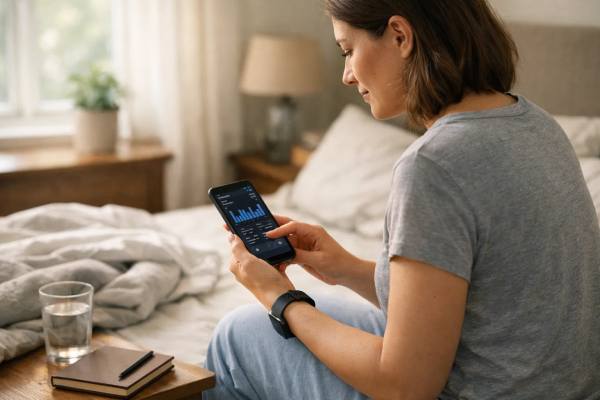
Sleep tracking can help with weight loss, but not in the magical way many people hope. A smartwatch or app does not burn fat, fix your eating habits, or replace a calorie deficit. What it can do is make hidden patterns visible. If poor sleep keeps driving late-night eating, low energy, higher cravings, inconsistent workouts, or weekend recovery cycles, tracking may help you spot those patterns early enough to change them.
That makes sleep tracking a useful behavior tool rather than a standalone solution. The real value is not in collecting sleep scores. It is in learning which parts of your sleep are affecting hunger, routine, and decision-making, then using that information to build steadier habits. This article explains what to track, what consumer sleep trackers can and cannot tell you, and how to use sleep data in a way that actually supports better weight loss results.
Table of Contents
- Why sleep tracking can matter
- What sleep data is worth tracking
- What wearables can and cannot tell you
- How sleep affects hunger and consistency
- How to use sleep data to change habits
- When sleep tracking helps and when it backfires
- A simple sleep tracking routine
Why sleep tracking can matter
The best reason to track sleep during a weight loss effort is simple: sleep affects behavior the next day. When people sleep poorly, they often do not just feel tired. They become less patient, less active, more impulsive around food, and more likely to rely on convenience. That can quietly shape calorie intake and routine quality long before the scale reflects it.
This is why sleep matters even when nutrition is still the main driver of fat loss. Weight loss usually depends on repeated decisions: what you eat at breakfast, whether you snack after dinner, whether you move during the day, whether you cook or order takeout, whether you keep a routine when stressed. Sleep influences many of those choices. Poor sleep can make the harder option feel much harder and the easy option much easier.
That is especially relevant if you already notice patterns like:
- stronger cravings after a short night
- more grazing when tired
- missed workouts after late bedtimes
- heavier evening eating after a rough sleep
- “catch-up” weekends that throw off the next week
A tracking system helps turn those vague impressions into visible evidence. Instead of saying, “I think bad sleep messes me up,” you can start saying:
- “I snack more when I sleep under six hours.”
- “My steps drop by 3,000 to 4,000 on nights I go to bed after midnight.”
- “My sleep becomes irregular on weekends, and Monday always feels harder.”
- “I do better when bedtime stays within the same 30- to 60-minute window.”
That kind of pattern awareness is useful because it gives you something concrete to work on. It moves sleep from the category of “nice to improve someday” into the category of “this clearly affects my eating and consistency.”
Tracking also helps you see the difference between chronic problems and isolated bad nights. One short night does not ruin fat loss. A repeating pattern of poor sleep often does. The value is not in reacting dramatically to one low score. The value is in noticing that poor sleep is happening often enough to shape your appetite, recovery, mood, or routine.
This is similar to other forms of self-monitoring. Good tracking does not create change by itself. It creates awareness that helps you adjust. That is why self-monitoring habits can be so effective when they stay focused on useful patterns rather than perfection.
Sleep tracking can also reduce confusion. Many people blame themselves for “lack of discipline” when the real issue is that poor sleep is eroding decision quality. That does not mean sleep excuses every food choice. It means it provides context. And context makes better problem-solving possible.
So can monitoring sleep improve weight loss results? Yes, sometimes. But the benefit comes from what you do with the information. Sleep tracking helps most when it leads to earlier bedtimes, steadier wake times, better evening routines, fewer triggers, and more realistic expectations on tired days. The data matters less than the adjustments it helps you make.
What sleep data is worth tracking
One of the biggest mistakes people make with sleep tracking is paying attention to everything the device offers instead of the measures that are most actionable. Most trackers can generate a surprising amount of data, but not every metric is equally useful for a weight loss goal.
If your main question is whether monitoring sleep can improve results, the best sleep data to track is usually the data that helps explain appetite, energy, consistency, and routine drift.
For most people, the highest-value sleep metrics are:
- total sleep time
- bedtime and wake time
- sleep schedule consistency
- number of awakenings or restless nights
- simple notes on what may have affected sleep, such as alcohol, caffeine, screens, stress, or late meals
These tend to be more useful than becoming overly attached to nightly sleep stage percentages. Deep sleep and REM estimates can be interesting, but for behavior change they are often less practical than basic schedule and duration patterns.
| Metric | Why it matters | How useful it usually is | Best tracking method |
|---|---|---|---|
| Total sleep time | Helps explain hunger, energy, and next-day decision quality | Very high | Tracker or sleep diary |
| Bedtime and wake time | Shows schedule drift and late-night habit patterns | Very high | Tracker or sleep diary |
| Sleep consistency | Irregular timing can affect appetite and routine stability | Very high | Weekly review |
| Night awakenings | Can explain poor recovery even when total hours look adequate | Moderate to high | Tracker plus personal notes |
| Sleep stages | Interesting but often less precise and less actionable | Moderate | Tracker only |
| Alcohol, caffeine, screens, late meals | Shows the behaviors that may be disrupting sleep | Very high | Short note or diary |
A good rule is to track the sleep data that helps answer real questions:
- Am I sleeping enough on most nights?
- Is my schedule drifting later through the week?
- Do I sleep worse after alcohol or late eating?
- Are my hardest food days also my worst sleep days?
- Is my weekend routine making weekdays harder?
That is why a simple sleep diary can still be extremely effective. Even with a wearable, short notes often tell the story better than a score alone. If your device says you slept poorly but your notes show two glasses of wine, a heavy dinner, and 90 minutes of scrolling in bed, the next step is much clearer.
This is also where sleep consistency matters. A person who gets seven hours one night and five the next, then sleeps in on the weekend, may feel much less stable than someone who sleeps a little less overall but keeps a predictable schedule. Routine quality often matters as much as raw sleep time when it comes to appetite control and sustainable habits.
You do not need a complex spreadsheet. A useful setup can be as simple as:
- hours slept
- bedtime
- wake time
- one-line note on disturbances or habits
That is enough for many people to spot what is really happening. Better tracking is not about more metrics. It is about tracking the few variables that make it easier to connect poor nights with harder days and then do something practical about them.
What wearables can and cannot tell you
Consumer sleep trackers can be helpful, but they are not the same as a clinical sleep study. That matters because many people treat the numbers from a watch or ring as exact when they are really better understood as estimates and trends.
In general, wearables are most useful for identifying broad patterns:
- when you tend to go to bed
- how long you appear to sleep
- whether your schedule is regular or irregular
- whether you are getting enough time in bed
- whether your sleep seems worse after certain habits
That is a strong use case. For many people, that level of information is enough to improve routines.
Where sleep trackers are weaker is precision. Sleep stage breakdowns, exact awakenings, and detailed nightly scores can be less reliable than people assume. A device may estimate when you were asleep based on movement, heart rate, temperature, or other signals, but it does not “know” your sleep in the same way a formal sleep lab test does. That means the data should guide reflection, not create false certainty.
A practical way to think about consumer devices is:
- good for trend awareness
- useful for routine monitoring
- helpful for habit experiments
- not ideal for diagnosis
- not something to trust blindly when the result conflicts with how you feel
For example, if your watch says your sleep was excellent but you woke up three times and feel awful, your experience still matters. If the device says your deep sleep was low for one night, that is usually not something you need to fix directly. But if it shows your bedtime drifting later every week, that may be very actionable.
This is why sleep trackers work best when paired with basic sleep hygiene habits rather than treated like a scoreboard. A device may help you notice that your sleep gets shorter after late caffeine, evening alcohol, or long screen sessions. But the improvement still comes from changing the habit. A tracker can point to the pattern; it cannot solve the pattern for you.
That makes a sleep hygiene checklist more useful than chasing the perfect sleep score. If you want better weight loss consistency, the most valuable question is not “How do I maximize tonight’s readiness score?” It is “What habit is repeatedly causing bad nights?”
Wearables are often most helpful in short experiments. For two weeks, you might:
- stop caffeine after a set time
- move dinner earlier
- cut down on screens before bed
- keep the same wake time
- reduce late-night snacking
Then you can see whether sleep duration, awakenings, morning energy, or next-day cravings improve. That turns the device into a practical feedback tool.
A tracker is also useful if it helps you notice a pattern serious enough to discuss with a professional, such as repeated poor sleep, heavy snoring, frequent waking, or exhaustion despite enough time in bed. But it should not be used to self-diagnose sleep disorders.
So yes, wearables can help. But their real strength is not clinical accuracy. It is behavior visibility. The more you treat them as rough guides that help you test habits, the more useful they become.
How sleep affects hunger and consistency
Sleep tracking becomes much more motivating when you understand what poor sleep may be doing to your weight loss habits. The link is not only about feeling tired. Poor sleep can affect the full chain of behavior that shapes fat loss: hunger, cravings, food choices, movement, mood, and routine stability.
One of the most common effects is increased appetite or stronger cravings, especially for highly palatable foods. After short or broken sleep, many people do not just want more food. They want easier, sweeter, saltier, or more energy-dense food. That matters because those choices can make a modest calorie deficit disappear without feeling like a major “cheat.”
Poor sleep also changes how hard normal habits feel. Meal prep feels more annoying. Workouts feel easier to postpone. A structured breakfast feels less appealing than grabbing something quick. A planned dinner can turn into takeout. Late-night eating feels more tempting because tiredness lowers the friction around instant reward.
This is why poor sleep making you hungrier is not just an interesting theory. It is often one of the missing links behind inconsistent weeks. A person may think they are struggling with motivation when the deeper problem is that repeated short nights are making hunger and impulse control harder to manage.
Sleep can also affect meal timing. When people stay up later, they create a longer eating window. That often increases the chance of extra snacking, second dinners, dessert habits, or mindless eating while watching screens. This is one reason poor sleep and late nights often overlap with the kinds of patterns covered in late dinners and weight loss habits.
Another frequent issue is next-day energy. Even if poor sleep does not dramatically change your workouts, it can lower daily movement. Steps often fall when people are tired. They sit longer, take fewer breaks, and become more convenience-driven. Over time, that quieter drop in activity can matter just as much as one missed training session.
Sleep can also affect emotional regulation. When people are tired, they are often more reactive, more stressed, and more likely to use food for comfort. That makes tiredness a trigger amplifier. A stressful day that might have felt manageable after good sleep can feel much more draining after a poor night.
Tracking sleep helps reveal these links. You might notice:
- your hardest craving days follow your shortest nights
- you snack more when bedtime drifts later
- poor sleep increases weekend overeating
- you skip morning movement after bad nights
- tired evenings make you more vulnerable to “reward eating”
This is where sugar cravings after bad sleep becomes more than a curiosity. It becomes a pattern you can anticipate and plan for.
The practical takeaway is not that poor sleep makes weight loss impossible. It does not. The real point is that better sleep often makes the core habits of weight loss feel more manageable. When sleep improves, some people notice less appetite drift, fewer late-night calories, steadier movement, and better routine follow-through. That is exactly why sleep tracking can improve results: it helps you see when sleep is quietly making consistency harder.
How to use sleep data to change habits
The most effective use of sleep tracking is not passive observation. It is active adjustment. The purpose of the data is to help you identify which changes are most likely to improve sleep and, by extension, improve your ability to stay consistent with food and activity habits.
A good way to use sleep data is to run small experiments. Instead of trying to redesign your whole life at once, choose one sleep-related habit and watch what happens for one or two weeks.
Examples of useful experiments include:
- going to bed 30 minutes earlier
- keeping the same wake time every day
- stopping caffeine earlier
- avoiding alcohol on weeknights
- ending screen use 30 to 60 minutes before bed
- moving dinner earlier
- replacing late-night snacking with a set wind-down routine
Then compare the results. Did your total sleep time improve? Did your wake time become more stable? Did cravings feel more manageable? Were you more likely to exercise? Did evening overeating decrease?
This is where a simple routine beats vague intention. If your sleep data keeps showing late bedtimes, you likely do not need more information. You need a more reliable evening structure. That is why a bedtime routine for weight loss can be so practical. It gives the last part of the day more shape and reduces the drift that leads to short nights.
The same goes for stimulant timing. If your records show that sleep worsens on days when caffeine runs late, you have a clear lever to pull. That makes caffeine timing an easy example of how sleep tracking can support weight loss without becoming complicated.
When reviewing your sleep data, ask questions like:
- What happened before my best nights?
- What habits show up before my worst nights?
- Is the problem mainly duration, timing, or quality?
- Do my poor nights cluster around certain days of the week?
- Which one change would be easiest to test next?
Also pay attention to cause-and-effect chains. For example:
- Late work leads to late dinner.
- Late dinner leads to screens and later bedtime.
- Later bedtime leads to short sleep.
- Short sleep leads to higher cravings and skipped movement.
That is a much more useful pattern than simply saying, “I need to sleep more.”
A common mistake is trying to optimize everything at once. In most cases, sleep data points to one or two bottlenecks, not ten. Maybe your biggest issue is schedule inconsistency. Maybe it is alcohol. Maybe it is bedtime scrolling. Maybe it is late eating. Once you know which one matters most, you can work on that first.
The best use of sleep tracking is practical and targeted. You do not need to chase perfect sleep. You need to find the habits that are hurting your nights often enough to affect your days. When the tracking helps you do that, it becomes a real tool for better results rather than just another app collecting numbers.
When sleep tracking helps and when it backfires
Sleep tracking is not automatically helpful for everyone. For some people, it increases awareness and improves routines. For others, it creates stress, perfectionism, or overfocus on numbers that are not precise enough to deserve that much emotional weight.
It tends to help most when:
- you are curious about patterns, not desperate for perfect scores
- you want to understand why some days feel harder
- you are willing to test simple habit changes
- you can review trends calmly instead of reacting nightly
- you use the data to support routine, not self-criticism
It tends to backfire when:
- you obsess over every sleep stage
- one low score ruins your mood
- you trust the device more than your own experience
- you constantly change your plan based on one night
- the tracking adds pressure that makes sleep worse
This problem is sometimes called “trying too hard to sleep.” Once sleep tracking becomes a performance test, it can increase anxiety instead of reducing it. People start chasing perfect metrics, checking scores first thing in the morning, and interpreting any bad number as proof that the whole day will go badly. That mindset can make both sleep and weight loss feel much more fragile than they need to be.
Tracking is most useful when it stays in the background rather than taking over your attention. A sleep tracker should help you notice trends like late bedtimes, inconsistent wake times, or alcohol-related disruptions. It should not turn bedtime into a stressful exam.
It is also important to notice when the problem may be bigger than a habit issue. If your tracking repeatedly suggests severe sleep disruption, loud snoring, waking up gasping, daytime exhaustion, or persistent insomnia symptoms, the right next step may be evaluation rather than more self-experimenting. In those cases, pages like sleep apnea and weight loss or insomnia and weight loss may be more relevant than optimizing your wearable settings.
Another sign that sleep tracking may be backfiring is when it crowds out the basics. If you know your bedtime is too late, your room is too bright, your phone is in bed, and your caffeine runs too late, you probably do not need more device data. You need a simpler evening system.
A good rule is this: if the data helps you make clear, low-stress improvements, keep using it. If the data mainly fuels rumination, blame, or overcontrol, simplify the method or take a break from it.
For some people, a low-tech sleep diary works better than a wearable because it focuses attention on routine rather than ratings. For others, a wearable is fine as long as they review it once a day and think in terms of trends instead of nightly judgment.
The point of sleep tracking is not to become a perfect sleeper. It is to make sleep-related patterns visible enough that your weight loss habits become easier to maintain. If it is helping you do that, it is useful. If it is making you tense, rigid, or overly dependent on a device, it needs to change.
A simple sleep tracking routine
The best sleep tracking system for weight loss is usually much simpler than people expect. It does not need to be elaborate, expensive, or full of complicated scores. It just needs to help you notice patterns you can actually act on.
A practical weekly system looks like this:
- Track a few basics each day.
Record bedtime, wake time, estimated sleep duration, and one short note about anything likely to affect sleep, such as late caffeine, alcohol, stress, a heavy dinner, or screen use. - Notice next-day behavior.
You do not need a full diary. A few quick observations are enough:
- stronger cravings than usual
- late-night snacking
- low steps
- skipped workout
- low patience or high stress eating
- Review once a week.
Look for repeated connections. Did worse sleep line up with harder food choices? Did weekends throw off the whole week? Did earlier bedtimes help everything else feel easier? - Choose one adjustment.
Pick the smallest useful change for the next week. That might be setting a cutoff time for caffeine, keeping the same wake time, or starting a wind-down routine 30 minutes earlier. - Repeat without overreacting.
One bad night does not need a new plan. A pattern does.
This kind of routine works especially well when combined with a weekly check-in routine so that sleep becomes part of your broader review instead of something you obsess over every morning.
A simple format could be:
- Bedtime:
- Wake time:
- Estimated sleep:
- Sleep quality: good, fair, or poor
- What affected sleep:
- Next-day note:
That is enough to show a great deal over two or three weeks.
You can also pair sleep tracking with one behavior target at a time. For example:
- This week I will keep my wake time within 30 minutes every day.
- This week I will stop caffeine after 2 p.m.
- This week I will avoid eating in front of the TV after 9 p.m.
- This week I will start my wind-down routine by 10:30 p.m.
That approach works because it keeps the process tied to habit-building. And habit-building is what actually moves weight loss forward. Tracking is just there to make the process clearer. That is also why building healthy habits that stick matters more than finding the perfect sleep app.
The simplest answer to the main question is this: monitoring sleep can improve weight loss results when it helps you protect the habits that poor sleep tends to disrupt. If sleep tracking helps you eat with more control, keep a steadier routine, reduce late-night drift, and recover better, it is doing exactly what you need it to do.
You do not need perfect data. You need useful data. And you only need enough of it to make better decisions more consistently.
References
- Effect of Sleep Extension on Objectively Assessed Energy Intake Among Adults With Overweight in Real-life Settings: A Randomized Clinical Trial 2022 (RCT)
- Sleep extension and cardiometabolic health: what it is, how to do it, and where to go from here 2024 (Review)
- Insomnia, Short Sleep, and Their Treatments: Review of Their Associations with Weight 2024 (Review)
- Accuracy of 11 Wearable, Nearable, and Airable Consumer Sleep Trackers: Prospective Multicenter Validation Study 2023 (Validation Study)
- About Sleep | Sleep | CDC 2024 (Official Guidance)
Disclaimer
This article is for general educational purposes only and is not a substitute for professional medical advice, diagnosis, or treatment. If you have chronic insomnia, loud snoring, repeated nighttime awakenings, severe daytime sleepiness, or concerns about a sleep disorder, speak with a qualified healthcare professional.
If this article helped, please share it on Facebook, X (formerly Twitter), or your preferred platform so others can use sleep tracking more wisely during weight loss.