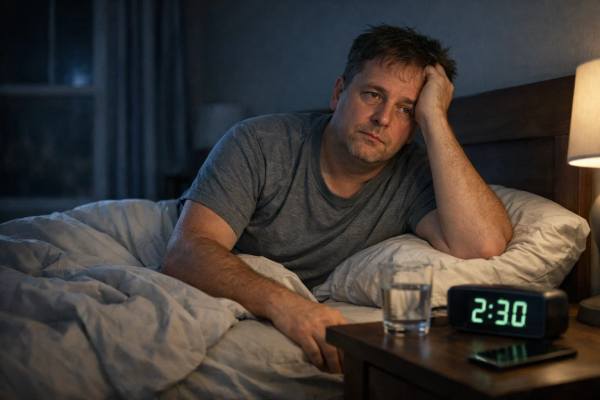
Insomnia can make weight loss harder even when your diet plan looks solid on paper. If you regularly struggle to fall asleep, stay asleep, or wake too early and cannot get back to sleep, the problem is not just feeling tired. Poor sleep can change hunger, cravings, food choices, exercise motivation, stress tolerance, and even how your body responds to a calorie deficit.
That does not mean fat loss becomes impossible. It does mean that sleep deserves more attention than it usually gets in weight-loss advice. This article explains how insomnia affects appetite and body composition, why poor sleep can quietly reduce your results, what to do if sleep is stalling progress, and when it is worth getting evaluated for a sleep disorder rather than trying to push through it.
Table of Contents
- How insomnia interferes with weight loss
- Poor sleep, appetite, and cravings
- Energy, exercise, and daily movement
- Why body composition can change
- How insomnia disrupts weight-loss routines
- What to do if sleep is stalling fat loss
- When to get checked for a sleep problem
How insomnia interferes with weight loss
Insomnia and weight loss are connected in more ways than most people expect. Many people assume that if they are in a calorie deficit, sleep quality is secondary. In reality, poor sleep can change the conditions under which that calorie deficit has to work.
Insomnia is not just one bad night here and there. It usually means a repeated pattern of trouble falling asleep, trouble staying asleep, waking too early, or sleeping in a way that does not feel restorative. Over time, that kind of sleep disruption affects more than energy. It can shape hunger, stress, food reward, patience, activity levels, recovery, and routine consistency.
That matters because fat loss is not driven by math alone. It is also driven by what you can repeat. If poor sleep makes you hungrier, less active, more impulsive, and more likely to snack late at night, the same diet plan becomes much harder to carry out in real life.
A useful way to think about it is this: insomnia does not always “cause” weight gain or stop fat loss directly, but it creates a daily environment where the behaviors that support fat loss become harder to sustain.
| Area affected | What poor sleep often does | Why that matters for weight loss |
|---|---|---|
| Hunger | Increases appetite and interest in highly palatable foods | Makes it harder to stay in a comfortable calorie deficit |
| Food choices | Raises the appeal of sugary, salty, and energy-dense foods | Pushes eating toward less filling, higher-calorie options |
| Energy | Reduces motivation and physical drive | Makes workouts and daily movement less consistent |
| Stress tolerance | Lowers emotional resilience and patience | Raises the chance of stress eating and reward eating |
| Routine | Disrupts meal timing, planning, and evening habits | Creates more reactive eating and schedule drift |
| Body composition | May reduce the quality of weight loss during energy restriction | Can make fat loss less efficient even when scale weight changes |
This is why sleep often acts as a force multiplier. If your sleep is steady, your nutrition and activity plan usually feel easier to follow. If your sleep is poor, the same plan can feel far more demanding than it should. That is one reason poor sleep makes you hungrier is not just an interesting side topic. It is often one of the hidden reasons people feel stuck.
Another important point is that insomnia is not always obvious from total sleep time alone. You might technically spend enough time in bed but still sleep lightly, wake repeatedly, or lie awake for long stretches. That kind of fragmented sleep can still affect appetite, stress, and recovery.
So when someone says, “I am doing everything right but fat loss feels unusually hard,” sleep deserves a serious look. Not because it replaces nutrition and exercise, but because it changes how well those tools work.
Poor sleep, appetite, and cravings
One of the clearest ways insomnia affects weight loss is through appetite. After a poor night of sleep, many people notice that they are not just tired. They are hungrier, snackier, and much more interested in fast, rewarding foods.
This is not just about “being emotional.” Poor sleep can change the way the brain responds to food and can alter the signals that help regulate hunger and fullness. In simple terms, your body may ask for more energy while your brain becomes more interested in foods that provide quick comfort.
That often shows up as:
- stronger cravings for sweets, refined carbs, or salty foods
- less satisfaction from normal meals
- more interest in snacking, especially in the evening
- feeling hungry again soon after eating
- a lower threshold for reward eating after a stressful day
A major issue here is that poor sleep tends to shift food preference, not just food quantity. After a rough night, an apple and yogurt may sound much less compelling than cereal, pastries, chips, takeout, or dessert. That makes a calorie deficit feel more restrictive even if your plan has not changed.
This is also where people get confused by the idea of willpower. After insomnia, the struggle is not always “I do not care anymore.” It is often “everything tempting feels louder than usual.” If that pattern sounds familiar, sugar cravings after bad sleep is often part of the same picture.
Why hunger feels different after bad sleep
Sleep loss can influence the systems that affect fullness, food reward, and meal timing. People often describe this as a mix of physical hunger and mental preoccupation with food. They may find themselves thinking about snacks earlier, wanting a larger breakfast, or feeling more vulnerable to overeating after dinner.
That does not mean everyone responds the same way. Some people lose appetite when they are overtired. But even in those cases, later eating can become more chaotic because decision-making worsens as the day goes on.
The appetite side of sleep loss also overlaps with hormone regulation. Hunger is not controlled by one signal alone, but sleep disruption can affect the broader hormonal environment related to appetite and satiety. If you want to understand that layer better, hunger hormones and sleep is a useful companion topic.
Why this matters for fat loss
A calorie deficit works best when hunger is manageable. Poor sleep often raises the effort required to keep that deficit intact. It makes unplanned eating more likely, planned portions less satisfying, and comfort foods harder to resist.
So while insomnia does not erase the laws of energy balance, it can absolutely make them harder to work with. For many people, that is the real problem: not that sleep “stops metabolism,” but that poor sleep makes a reasonable fat-loss plan feel much less reasonable.
Energy, exercise, and daily movement
Insomnia affects weight loss through more than food. It also changes how much physical effort feels possible.
When sleep is poor, structured exercise tends to feel harder, recovery feels slower, and everyday movement often drops without you noticing. You may still intend to work out, but the workout becomes easier to skip, shorten, or perform at a lower quality. Even more importantly, your non-exercise activity often declines. You sit more, walk less, and do fewer small effortful things across the day.
That matters because fat loss does not depend only on gym sessions. It also depends on daily movement, energy expenditure, and how physically engaged you stay when you are not training.
Common patterns after insomnia include:
- canceling or postponing workouts
- choosing easier sessions than planned
- moving less between tasks
- sitting longer after meals
- feeling unusually drained by normal activity
- needing extra caffeine or sugar to get through the day
The frustrating part is that this drop in activity can happen quietly. People often notice appetite changes first, but the movement side can be just as important. When poor sleep reduces both activity and restraint around food, the overall effect on weight loss can become significant.
Insomnia also changes exercise decision-making
A rough night does not just reduce physical energy. It can also reduce your willingness to do things that pay off later but feel difficult now. Exercise, meal prep, and planned walks all fall into that category.
This is where mental fatigue becomes relevant. After poor sleep, the brain often prioritizes relief and convenience over longer-term goals. That is one reason decision fatigue and overeating can become more noticeable after a run of bad nights. The same mental state that makes takeout more tempting can also make training feel negotiable.
Reduced movement can amplify nighttime hunger
There is another indirect effect. Poor sleep can make the day feel harder, which can lead to more sitting, less daylight exposure, and more screen time. That often feeds into late-evening restlessness and snacking. Some people feel physically tired but mentally wired, which is a classic setup for couch snacking, reward eating, or second-dinner behavior.
If insomnia includes repeated awakenings or long periods awake at night, this can create an even messier pattern of low daytime energy and irregular nighttime appetite. In that case, waking up at night and weight gain often overlaps with what you are experiencing.
The key point is that poor sleep makes fat loss harder from both sides. It may increase intake while reducing output, and it does so in a way that feels subjective and inconsistent. That is why many people do not realize sleep is part of the problem until they start sleeping better and notice that the same plan suddenly feels easier to follow.
Why body composition can change
One of the more important but less discussed links between insomnia and weight loss is body composition. Even when the scale moves, poor sleep may affect the quality of that weight loss.
In plain language, losing weight is not always the same as losing fat efficiently. The goal for most people is not just a lower number on the scale. It is a better ratio of fat loss to lean-mass loss, along with better energy, strength, and sustainability.
Research in sleep and energy restriction suggests that insufficient sleep may make that process less favorable. When sleep is short or disrupted, the body may not respond to a calorie deficit in the same way it does under better-rested conditions. That can mean poorer recovery, greater difficulty preserving lean mass, and less efficient fat loss.
This matters especially for people who are:
- already dieting aggressively
- doing a lot of exercise while under-recovered
- struggling with repeated short nights
- noticing more fatigue than expected during a deficit
- seeing the scale move without feeling or looking much leaner
Why this happens
Several mechanisms may contribute:
- higher appetite and more unplanned intake
- worse training quality
- less spontaneous movement
- elevated stress load
- poorer muscle recovery
- disrupted routine around meals and exercise
None of those factors acts alone. But together they can make the body-composition side of weight loss less favorable.
This is where people sometimes reach for dramatic explanations like “my metabolism is broken” or “my body is holding onto fat because of cortisol.” The truth is usually less dramatic and more useful. Poor sleep can create a cluster of small disadvantages that add up over time. It does not need to completely shut down fat loss to make progress slower, more frustrating, and less predictable.
Another reason this matters is adherence. If poor sleep leads to lower workout quality and a less satisfying dieting experience, many people end up tightening calories too much or adding more cardio in response. That can worsen recovery and make the situation even less sustainable.
A better interpretation is this: if insomnia is ongoing, your fat-loss environment is compromised. You may still make progress, but the process can become less efficient and harder to maintain. That is one reason sleep is often one of the most underestimated “plateau” variables in people who are otherwise doing many things right.
So if you feel as though your body is not responding the way you expect, do not look only at calories and workouts. Look at sleep quality, sleep continuity, and how recovered you actually feel from week to week.
How insomnia disrupts weight-loss routines
A lot of the damage from insomnia is indirect. Poor sleep makes weight loss harder not only through appetite and energy, but through routine disruption.
Most successful fat-loss habits depend on some degree of regularity. You go to bed at a sensible time, wake up with enough energy to function, eat meals in a more predictable rhythm, plan food ahead, and make better decisions before you get overly tired. Insomnia makes all of that harder.
It often disrupts weight-loss routines in ways like these:
- sleeping late or inconsistently after bad nights
- skipping workouts because mornings feel impossible
- relying on caffeine, then sleeping badly again
- delaying meals and getting too hungry later
- using food as a reward for making it through the day
- drifting into screen time and late-night snacking
This routine disruption is one reason sleep problems can create a vicious cycle. Poor sleep leads to poorer choices, and those choices often make sleep worse. Late caffeine, irregular meal timing, too much screen exposure, alcohol, heavy late dinners, and stress eating can all feed back into insomnia.
Consistency matters more than people think
A lot of people focus only on total sleep, but schedule stability matters too. Going to bed and waking up at wildly different times can make it harder to fall asleep predictably and can weaken other habits that support fat loss. If your schedule is sliding around constantly, sleep consistency for weight loss is often as important as total hours.
Nighttime habits can either protect or undermine sleep
When insomnia is present, evenings deserve extra attention. The hours before bed can either calm the system down or keep it activated. Many people accidentally create a sleep-disrupting pattern by doing some combination of stress scrolling, late snacking, late work, caffeine, alcohol, and bright screens.
That does not mean you need a perfect bedtime ritual. But you do need a routine that stops the evening from becoming chaotic. In many cases, a better night routine to prevent overeating improves both sleep and calorie control because the same late-night behaviors often drive both problems.
Another overlooked issue is self-sabotage through compensation. After a bad night, people often tell themselves they will “be extra good” with food, train harder, or power through with caffeine. That can work for a day or two, but it often leads to rebound eating, more sleep disruption, or both.
The more useful question is not “How do I force my plan despite insomnia?” It is “How do I reduce the number of ways insomnia is knocking my plan off course?”
What to do if sleep is stalling fat loss
If poor sleep is making fat loss harder, the goal is not to become a perfect sleeper overnight. It is to improve the sleep factors that give you the biggest return.
Start by looking for the lowest-effort changes that reduce the cycle of insomnia, fatigue, and overeating.
Focus on the basics first
These habits are not flashy, but they matter:
- keep your wake time as consistent as possible
- get out of bed at a regular time even after a poor night when you can
- reduce late caffeine
- keep meals and snacks more predictable
- dim the stimulation in the hour before bed
- avoid turning bad nights into all-day chaos
If your evenings are especially messy, a structured sleep hygiene checklist for weight loss can help you spot the specific behaviors making things worse.
Do not let caffeine quietly keep the cycle going
Caffeine can feel essential after insomnia, but late intake is one of the easiest ways to prolong the problem. People often underestimate how much afternoon coffee, energy drinks, or pre-workout supplements are keeping them alert at bedtime. If you suspect that is part of your pattern, caffeine timing for weight loss is worth tightening up before you assume you simply “cannot sleep.”
Protect the day after a bad night
The day after insomnia is when many weight-loss plans get derailed. A useful recovery strategy often includes:
- Eat normally rather than compensating by skipping meals.
- Use simple, satisfying meals instead of relying on willpower.
- Keep movement gentle if needed, but do not turn the whole day sedentary.
- Limit extra caffeine late in the day.
- Return to your normal bedtime routine instead of giving up on the day.
This matters because one bad night is manageable. The bigger problem is what you do after it.
Do not overreact with harsher dieting
If sleep is poor and hunger is higher, the answer is usually not to cut calories harder. An overly aggressive deficit tends to worsen recovery, increase irritability, and make cravings louder. A more moderate, sustainable approach often works better when sleep is a limiting factor.
Another useful mindset shift is to track sleep and fatigue alongside body weight for a couple of weeks. Many people find that stalled progress, overeating episodes, or hard-to-explain hunger line up closely with the worst sleep periods. Once that pattern becomes visible, sleep stops feeling like a side issue and starts looking like a real part of the plan.
When to get checked for a sleep problem
Sometimes the right answer is not another habit tweak. It is getting evaluated.
If insomnia is frequent, persistent, or clearly affecting your daily function, weight-loss efforts, or mental health, it deserves attention as a health issue, not just a productivity annoyance.
Consider getting checked if you regularly have:
- trouble falling asleep for long periods
- repeated awakenings that leave you unrefreshed
- early morning awakening you cannot control
- daytime sleepiness despite enough time in bed
- loud snoring, gasping, or witnessed breathing pauses
- worsening mood, anxiety, or concentration problems
- a pattern that has lasted for weeks or months
This matters because not every sleep problem is simple insomnia. Some people who think they have insomnia actually have another issue, such as sleep apnea, circadian disruption, medication effects, or restless sleep linked to stress or another condition.
Sleep apnea is especially important not to miss. It can fragment sleep, worsen fatigue, affect appetite and blood sugar control, and make weight loss much harder. If snoring, choking, witnessed pauses, or morning headaches are part of the picture, sleep apnea and weight loss is the more relevant question than sleep hygiene alone.
It is also worth remembering that chronic insomnia often responds best to targeted treatment rather than generic advice. Cognitive behavioral therapy for insomnia is widely recommended as a first-line approach. That can be more effective than simply trying to “tire yourself out,” take random supplements, or keep adding stricter rules around bedtime.
If your sleep problem is milder, improving the basics may help a lot. But if you feel stuck in a cycle of bad sleep and hard-to-manage hunger, do not assume that is just how your body is. Sleep is a legitimate part of weight management, and getting proper help can make the rest of your plan work much better.
References
- Behavioral and psychological treatments for chronic insomnia disorder in adults: an American Academy of Sleep Medicine clinical practice guideline 2021 (Guideline)
- Sleep Deprivation: Effects on Weight Loss and Weight Loss Maintenance 2022 (Review)
- Sleep Disturbance and Changes in Energy Intake and Body Composition During Weight Loss in the POUNDS Lost Trial 2022 (Trial Analysis)
- Effect of Sleep Extension on Objectively Assessed Energy Intake Among Adults With Overweight in Real-life Settings: A Randomized Clinical Trial 2022 (RCT)
- The Relationship Between Sleep Quantity, Sleep Quality, and Weight Loss in Adults: A Scoping Review 2024 (Scoping Review)
Disclaimer
This article is for general educational purposes only and is not a substitute for medical advice, diagnosis, or treatment. If insomnia is persistent, severe, or accompanied by snoring, breathing pauses, daytime sleepiness, anxiety, or depression, speak with a qualified clinician or sleep specialist.
If this article helped you, please share it on Facebook, X, or your preferred platform so others can understand how sleep may be affecting their weight-loss progress.