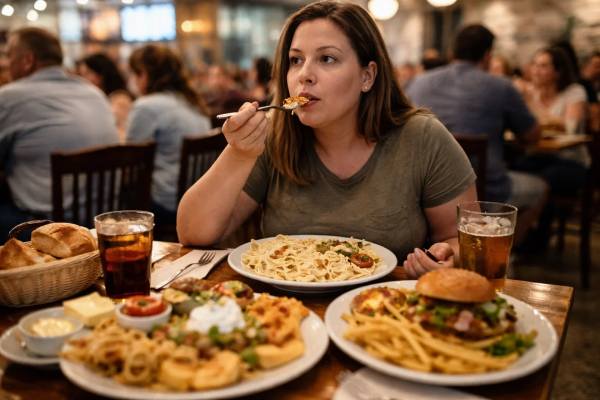
Eating out can feel like the smallest part of a weight loss plan and still create some of the biggest setbacks. The problem is not just restaurant calories. It is the combination of large portions, social pressure, alcohol, convenience, reward thinking, and default choices that make overeating feel normal. Many people do not walk into a restaurant planning to overdo it. They drift into it.
This article explains why restaurant meals can derail weight loss even when you know what to order, the most common habit traps that show up when eating out, and how to build a repeatable strategy that helps you enjoy restaurants without turning every meal out into a setback. The goal is not perfect restaurant behavior. It is fewer automatic mistakes and more deliberate choices.
Table of Contents
- Why Restaurants Change How You Eat
- The Most Common Restaurant Habit Traps
- Why Knowing Better Often Is Not Enough
- How Showing Up Hungry Sets You Up
- Ordering Habits That Reduce Overeating
- Social and Emotional Pressure at Restaurants
- A Practical Restaurant Game Plan
Why Restaurants Change How You Eat
Restaurant overeating is not usually a character flaw. It is often the predictable result of an environment designed to make eating more appealing, easier, and less noticeable in the moment. When people say they can eat reasonably well at home but lose control at restaurants, that makes sense. The cues are different.
At home, you usually have more control over portion size, cooking method, ingredient choice, and leftovers. At a restaurant, a lot of those decisions are already made for you. Portions are often larger than what most people would serve themselves, meals can be more energy-dense than they appear, and there are extra prompts to keep eating: bread baskets, chips, drinks, appetizers, desserts, and social momentum.
Restaurants also change the psychology of eating. A meal out often feels like a reward, a break, or a special event. That mindset can quietly loosen boundaries. People tell themselves they will “just enjoy it,” which can be a healthy thought in moderation, but it easily turns into “it does not count” or “I already went off plan, so I might as well keep going.”
Another reason restaurants feel tricky is decision timing. You are often making food choices when you are already hungry, distracted, talking, or trying to be easygoing with other people. That is a perfect setup for reactive eating. This overlaps with decision fatigue and overeating, where the quality of choices drops as mental energy drops.
Restaurant food also tends to compress several overeating triggers into one place:
- highly palatable food
- larger portions
- faster eating
- more distractions
- more alcohol
- more social influence
- fewer stopping cues
At home, a meal ends when you decide it ends. In restaurants, a meal often ends when the plate is empty, when other people are done, or when dessert menus stop circulating. That sounds minor, but it matters. Many people use external cues to decide how much to eat, and restaurants are full of external cues that push upward.
This is also why simply “eating healthier restaurant foods” is not always enough. You can still overeat a healthier entree if you arrive starving, split no appetizer, drink alcohol, eat quickly, and clean a portion that was never realistic for your needs in the first place.
The practical takeaway is that restaurants are not just places where you eat different food. They are places where you enter a different set of eating rules. Once you understand that, it becomes much easier to stop blaming yourself and start planning around the environment.
The Most Common Restaurant Habit Traps
Most restaurant overeating follows familiar patterns. These are not random mistakes. They are habit traps that repeat because they fit the environment so well.
One common trap is the starter spiral. You arrive hungry, eat bread, chips, or shared appetizers while waiting, then still order a full entree because that was always the plan. By the time the main meal arrives, you are already past the point where appetite alone would have guided you well.
Another trap is portion completion. Many people keep eating because the food is there, not because hunger is still there. Restaurant portions create a strong “finish what was served” cue, especially if leaving food feels wasteful or awkward.
A third trap is reward stacking. One restaurant meal turns into a drink, appetizer, entree, dessert, and maybe something sweet later at home because the meal felt like a treat. This is especially common when eating out has become a release valve after a stressful day or week.
Then there is social matching. People often unconsciously match the pace, amount, or type of food others are eating. If the table orders rounds of drinks, appetizers, and dessert, saying no can feel like stepping outside the group. That is why social settings can quietly override your own preferences.
A fifth trap is the healthy-item halo. You order something that sounds lighter, then stop paying attention. A salad with creamy dressing, cheese, crispy toppings, and a large side can still turn into a very energy-dense meal. The problem is not the label. It is assuming the label means you can switch off awareness.
| Trap | What happens | Helpful interruption |
|---|---|---|
| Starter spiral | You eat before the main meal without adjusting the rest | Decide in advance whether the meal includes an appetizer or a full entree, not both by default |
| Portion completion | You keep eating because the plate is full | Pause halfway and decide intentionally whether the second half is hunger or momentum |
| Reward stacking | One treat becomes several layers of extras | Choose your priority: drink, appetizer, or dessert |
| Social matching | You mirror the table without noticing | Decide your order before group energy takes over |
| Healthy-item halo | You assume a meal is light because it sounds healthy | Look for protein, preparation method, extras, and portion size |
Another trap is weekend drift. People may handle restaurant meals fairly well during the week, then lose structure on weekends, where eating out blends with late nights, alcohol, desserts, and less routine. That is one reason weekend overeating habits can erase progress more quickly than expected.
Finally, some people fall into compensation logic: “I will eat less earlier so I can eat out tonight.” Sometimes that works. Often it leads to arriving too hungry and eating past the point of intention. A restaurant meal is hard enough to manage without adding catch-up hunger to it.
The more clearly you can spot your personal trap pattern, the easier it becomes to intervene before the meal starts sliding.
Why Knowing Better Often Is Not Enough
Many people feel frustrated by restaurant eating because they already know the basics. They know fried food is usually heavier than grilled food. They know sugary drinks add calories. They know giant appetizers can be a problem. Yet they still overeat. That does not mean the information is useless. It means information alone is not the main issue.
Restaurants create a gap between knowledge and behavior. You may know a meal is large, but if you are hungry, distracted, celebrating, or trying not to be difficult, that knowledge has to compete with stronger cues in the moment. Taste, price, convenience, and social ease often matter more than nutrition facts when the order is actually being made.
That is also why menu labeling helps only so much. Calorie information can support some people, but it does not erase portion distortion, emotional eating, alcohol, social pressure, or the instinct to get the “best value” by ordering more. Knowledge can guide a decision, but it rarely overrides every cue in the environment.
This matters because many people keep approaching restaurant meals as an information problem. They tell themselves to “be more disciplined” or “pick the healthy item next time.” But restaurant overeating is usually more of a systems and habits problem than a knowledge problem.
For example:
- if you always arrive overhungry, the issue is timing
- if you automatically order whatever the table orders, the issue is social patterning
- if you treat every meal out as a reward, the issue is emotional framing
- if you always intend to stop halfway and never do, the issue is not knowing when to stop but having no built-in stopping routine
This is why pre-commitment strategies tend to work better than vague intentions. Deciding before you arrive that you will choose either drinks or dessert is much more powerful than trying to improvise restraint when both are in front of you.
Another common mistake is overestimating how much motivation will matter in the restaurant itself. Once you are there, you are already in the cue-rich environment. That is late in the process. The strongest restaurant habits are the ones that happen before the server arrives: checking the menu ahead, eating a planned snack if needed, deciding your order early, or knowing how you will respond if the table wants to split everything.
This does not mean you need to turn every meal out into a rigid performance. It means you need enough structure to stop the environment from deciding for you. Knowledge helps most when it is translated into specific behaviors, not when it stays as general advice floating in the background.
A useful shift is this: instead of asking, “Why do I keep messing up at restaurants?” ask, “What part of the restaurant environment keeps pulling me into the same pattern?” That question usually leads to a practical solution instead of self-criticism.
How Showing Up Hungry Sets You Up
One of the easiest ways to make restaurant overeating more likely is to arrive too hungry. When people are trying to “save room” for dinner out, they often think they are being strategic. Sometimes they are just lowering their margin for good decisions.
Extreme hunger changes restaurant behavior fast. It makes bread baskets more tempting, appetizers harder to resist, drinks more impulsive, and portion control less realistic. It also makes waiting feel harder, which means you are more likely to graze before the meal really begins.
This is where restaurant overeating often starts long before the restaurant. If you under-eat during the day, skip lunch, or go too long without food, the evening meal becomes responsible for fixing several hours of deprivation. That is a very different situation from arriving comfortably hungry and making a choice you can actually feel through.
This same logic shows up in other contexts too. People often discover that earlier habits affect later overeating because hunger is cumulative. The restaurant is just where the catch-up happens.
A better strategy is to arrive stable, not stuffed and not starving. That may mean:
- eating a normal breakfast and lunch earlier in the day
- having a protein-rich snack if dinner will be late
- avoiding the “I will be extra good now so I can be bad later” cycle
- drinking some water before you arrive so thirst is not blending with hunger
A small pre-restaurant snack can be especially helpful if you know the meal will be late, social, or alcohol-heavy. Something like yogurt, fruit and cheese, a protein shake, or a small sandwich can reduce the urge to inhale whatever hits the table first. It will not ruin dinner. It will often improve dinner.
This is also where consistent routine helps. People who regularly go long stretches without food are more likely to experience the kind of late-day eating that feels harder to stop. That connects with consistent meal routines for appetite control. Structure is not about rigid timing for its own sake. It is about preventing hunger from becoming an emergency.
If you find that restaurant meals become chaotic mainly because you arrive ravenous, focus there first. You may not need a more complicated restaurant strategy. You may simply need to stop starting the meal in a biologically disadvantaged state.
A practical rule is this: do not try to earn a restaurant meal by under-eating all day. Arrive with enough stability that you can still act on your actual preferences, not just your strongest impulses.
Ordering Habits That Reduce Overeating
The best restaurant ordering habits are the ones that remove the need for repeated in-the-moment restraint. You do not need to order perfectly. You need to order in a way that makes overeating less automatic.
One helpful habit is to decide your priority before you order. If the meal is meant to be enjoyable, pick what matters most: the entree, the drink, the appetizer, or dessert. Most restaurant overeating happens when people want every extra on top of a full meal. Choosing your priority lets you enjoy the meal without stacking every indulgence at once.
Another strong habit is to look at the menu before you arrive. This is especially helpful if you tend to get swayed by the table or order impulsively once you are hungry. Deciding early creates a small buffer between your long-term intention and the momentary restaurant environment.
When you order, look for meals with enough protein and some volume, not just the lowest number or the “healthiest” label. A meal that keeps you satisfied is more useful than one that looks disciplined but leaves you searching for more food later. This is where knowing how to build a high-protein plate can carry over well to restaurant meals too.
A few ordering habits that help many people:
- order an entree and skip automatic extras unless they matter to you
- ask for dressing, sauce, or buttery add-ons on the side when relevant
- choose one indulgent element instead of several
- pause before adding an appetizer “just because everyone is”
- consider boxing part of the meal early if giant portions are a repeat problem
- do not order for your most deprived self if you are already very hungry
People also do better when they decide how to handle the table’s defaults. If bread, chips, or shared starters are common, choose your rule ahead of time. You might have some and enjoy it, skip it, or treat it as your appetizer and adjust the rest of the meal. What works best is not one universal rule. It is having a rule at all.
This is also a place where specific restaurant guidance can help. Many people find it easier to navigate eating out when they have examples, like lower-calorie restaurant meal ideas or a few reliable strategies for cuisines they order often. Not because they need to count every calorie, but because familiarity reduces decision pressure.
One more helpful habit is to stop making restaurant meals a test of moral character. If you order fries, eat them because you want them, not because you already “blew it.” Intentional enjoyment usually causes less overeating than guilt-driven eating.
The most sustainable ordering habit is not extreme restriction. It is choosing in a way that still feels satisfying while making it harder for the meal to snowball.
Social and Emotional Pressure at Restaurants
Restaurants are social environments first and eating environments second. That is why food decisions there are rarely just about hunger. They are also about belonging, awkwardness, celebration, reward, and not wanting to be the difficult person at the table.
Social pressure shows up in small ways. Someone suggests appetizers for the table. Another person orders dessert “for everyone to share.” A friend comments that you are being too healthy. A partner wants drinks. None of these moments feels dramatic on its own, but together they can pull you far away from how you planned to eat.
For many people, the hardest part of restaurant eating is not the menu. It is the feeling that managing your intake might disrupt the mood. That is why learning how to say no without feeling awkward can matter so much. A calm, simple response works better than overexplaining:
- “I am good with my meal.”
- “I will skip that, but thanks.”
- “I am full enough already.”
- “I want to save room for what I ordered.”
Emotional pressure matters too. Restaurant meals often happen when people want comfort, connection, or relief. After a hard day, eating out can become less about food and more about being taken care of. That emotional role is important to notice, because it can lead to over-ordering without much awareness.
Alcohol can intensify both issues. It lowers inhibition, increases table momentum, and makes “just one more thing” easier to say yes to. For some people, restaurant overeating is really restaurant drinking plus restaurant eating. That is why reviewing your alcohol habits and weight loss tradeoffs can be more useful than obsessing over the entree.
Another emotional trap is the scarcity mindset: “I do not eat here often, so I should get everything I want.” There is nothing wrong with a special meal. The problem is when “special” becomes the automatic justification for losing all structure. You can enjoy a restaurant fully without acting like it is your only chance to ever taste pleasure again.
A more grounded mindset is: I want to enjoy this meal and still like how I feel after it. That thought tends to produce better choices than either rigid control or total surrender.
If social restaurant meals are a frequent trigger, it helps to decide your behavior standard before you go. Not your perfect standard. Your realistic one. Maybe that means one drink, one shared dish, and no automatic dessert. Maybe it means eating slowly and stopping when satisfied even if others keep going. Maybe it means focusing on conversation more than grazing.
Restaurant overeating often looks like a food problem. Sometimes it is really a boundary problem, a stress problem, or a people-pleasing problem wearing a food costume.
A Practical Restaurant Game Plan
The most useful restaurant strategy is not trying to control every variable. It is having a simple, repeatable plan that works well enough most of the time.
A practical game plan starts before you leave home.
Before the meal
- Do not arrive starving.
- Check the menu if you can.
- Decide your priority: appetizer, drink, dessert, or entree extras.
- Set one rule for yourself, such as “I am not doing drinks and dessert” or “I am splitting an appetizer instead of getting one for myself.”
During the meal
- Order intentionally, not reactively.
- Notice table starters before they become automatic.
- Slow down enough to register fullness.
- Pause halfway through the main meal and ask whether you still want more or are just continuing.
- If the portion is very large, normalize leftovers instead of treating them as failure.
After the meal
- Do not compensate with extreme restriction the next day.
- Do not label the meal a disaster.
- Notice which trap showed up if you overate.
- Adjust the system for next time.
This matters because restaurant eating becomes much easier when it stops being emotionally loaded. One meal out does not determine whether your weight loss is working. What matters is the pattern across weeks. This is the same logic behind consistency over perfection. A good restaurant strategy is one you can repeat, not one that depends on flawless restraint.
You can also build restaurant-specific habits based on your most common risk points:
- If you always overeat after work dinners, eat a planned snack first.
- If you always get influenced by the table, check the menu in advance.
- If you always overdo the first round of food, decide how to handle starters before you sit down.
- If desserts are your main weakness, choose dessert on purpose and simplify the rest of the meal instead of pretending you will not want it.
For many people, the best long-term goal is not “eat perfectly at restaurants.” It is “stop turning restaurant meals into automatic overeating events.” That is a much more achievable target.
You do not need a restaurant personality transplant. You need a few habits that protect you from the most predictable traps:
- eat before you get desperate
- decide before the environment decides for you
- pick what matters most
- let one enjoyable choice stay one enjoyable choice
- leave the meal and move on without guilt
When restaurant eating stops being a series of unplanned reactions, it becomes much less likely to derail your weight loss. Not because restaurants become healthy by default, but because you stop walking into them unprepared.
References
- Portion Size and Energy Intake: A Systematic Review 2024 (Systematic Review)
- Eating out of Home: Influence on Nutrition, Health, and Policies: A Scoping Review 2022 (Scoping Review)
- Pooled prevalence of food away from home (FAFH) and associated non-communicable disease (NCD) markers: a systematic review and meta-analysis 2022 (Systematic Review and Meta-Analysis)
- Calorie (energy) labelling for changing selection and consumption of food or alcohol 2025 (Cochrane Review)
- Calorie labelling and other drivers of takeaway food choices 2025 (Observational Study)
Disclaimer
This article is for general educational purposes only and is not a substitute for medical, nutrition, or mental health advice. If eating out regularly leads to loss-of-control eating, binge eating, severe guilt, or repeated restriction-and-overeating cycles, seek personalized support from a qualified clinician or registered dietitian.
If this article helped, please share it on Facebook, X, or another platform so more people can enjoy eating out without letting restaurant habits quietly derail their progress.