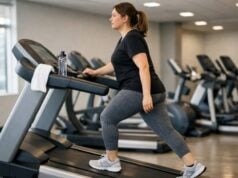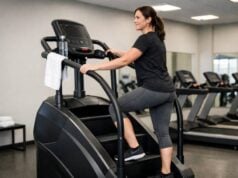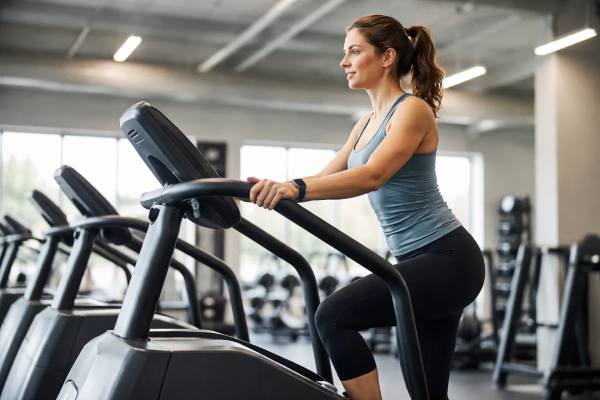
Yes, the StairMaster can be very effective for fat loss. It is one of the more demanding cardio machines because you are repeatedly lifting your body weight against gravity, which can drive heart rate up fast and make shorter sessions feel productive. It also trains your legs and glutes harder than many people expect, so it can feel more like real work than flatter forms of cardio.
That said, the StairMaster is not a shortcut. It helps fat loss when it fits into a realistic weekly routine, supports a calorie deficit, and does not leave you so drained that the rest of your activity drops off. This article covers how the StairMaster works for fat loss, realistic calorie-burn estimates, the best workouts for different levels, common form mistakes, and what kind of results you can actually expect.
Table of Contents
- Why the StairMaster works for fat loss
- Calories burned on the StairMaster
- Muscles worked and why that matters
- Best StairMaster workouts for fat loss
- Form mistakes that change your results
- How often to use the StairMaster
- Results timeline and what to expect
Why the StairMaster works for fat loss
The StairMaster works for fat loss because it combines high muscular demand with strong cardiovascular demand. Every step asks your legs to push your body upward, which costs more energy than level walking and usually feels harder than many gym users expect. That combination can make the machine a strong choice if your goal is to burn calories, improve conditioning, and make cardio sessions feel efficient.
It also has a practical advantage: it is simple. You do not need advanced coordination, complicated programming, or a long learning curve. Most people can get on, choose a pace, and start working. That matters because exercise only helps fat loss when it is consistent.
Still, it helps to be clear about what the StairMaster does and does not do.
What it does do well:
- raises heart rate quickly
- challenges large lower-body muscles
- allows both steady-state and interval training
- can create a high training effect in 15 to 30 minutes
- fits well into a broader fat-loss routine
What it does not do:
- spot-reduce belly fat
- guarantee weight loss on its own
- replace strength training
- outwork a consistently high calorie intake
That last point is important. The StairMaster can support fat loss, but it works best when paired with a sustainable calorie deficit. If the machine makes you hungrier and you regularly eat back more than you expend, results can stall even when the sessions feel intense.
The StairMaster is also not automatically the best cardio machine for everyone. Some people recover better from cycling, incline walking, or rowing. Others love the stair machine because it feels purposeful and time-efficient. What matters most is not which machine looks toughest. It is which machine you can use consistently and progressively. That is why it often makes sense to think in terms of the best cardio machine for your goal and recovery instead of assuming there is one universal winner.
For many people, the StairMaster shines because it sits in a useful middle ground. It can be intense enough to feel productive, but not as impact-heavy as running. It can be easier on the joints than repeated sprinting, yet still hard enough to build real fitness. Used well, it is a strong fat-loss tool. Used badly, it turns into a sweaty leg burner that people dread and avoid.
The difference usually comes down to programming and form.
Calories burned on the StairMaster
The StairMaster can burn a lot of calories, but the real number depends on body weight, pace, workout length, rail use, and how honestly you are working. The machine console may give you an estimate, but it is still only an estimate. Some people let the machine do the work by leaning hard on the rails, while others stay upright and drive every step. The display may not fully capture that difference.
In general, StairMaster sessions can burn more calories than many people expect because stair climbing is a vigorous activity for most adults. It is one reason many users feel breathless much faster than they do on flatter cardio.
A practical way to think about calorie burn is in ranges, not exact promises.
| Body weight | 15 minutes | 20 minutes | 30 minutes |
|---|---|---|---|
| 150 lb | 125 to 165 | 165 to 220 | 250 to 330 |
| 180 lb | 150 to 200 | 200 to 270 | 300 to 400 |
| 220 lb | 185 to 245 | 245 to 325 | 360 to 490 |
These are rough training estimates for moderate to hard stepping, not guarantees. Your actual burn can be lower if you hold the rails heavily, shorten your range of motion, or move at a pace that feels easier than you think. It can be higher during harder intervals, though those harder sessions are usually shorter.
That is also why longer is not always better. A focused 20-minute StairMaster session can be more productive than a sloppy 35-minute one where posture fades and the rails carry half your weight.
A few factors change the numbers most:
- Body weight: heavier bodies generally expend more energy at the same pace
- Intensity: faster step rate and harder intervals raise total burn
- Posture: upright climbing demands more than hanging on the rails
- Duration: longer sessions increase burn, but fatigue can lower quality
- Fitness level: fitter people may sustain harder workloads, though more efficiency can slightly change the cost per minute
This is where it can help to think beyond one machine readout and look at your total training picture. A StairMaster workout is one part of your weekly output, not the whole story. If you want a broader view of what different activities tend to cost, comparing it with common exercise calorie-burn patterns can help set better expectations.
A useful mindset is this: use the StairMaster to create consistent hard-enough work, not to chase the biggest console number. People who obsess over “How many calories did I burn?” often miss the more important question: “Can I repeat this kind of session three or four times a week without breaking down?”
That question usually matters more for fat loss than one perfect number ever will.
Muscles worked and why that matters
The StairMaster is cardio, but it is not only cardio. It also places a meaningful demand on your lower body, especially when you climb with good posture and do not let your arms take over. That matters for fat loss because training more muscle mass usually increases overall work demand and can make shorter sessions feel more productive.
The main muscles worked on the StairMaster are:
- glutes
- quadriceps
- hamstrings
- calves
- hip stabilizers
- core muscles that help keep you upright
Your glutes and quads do a lot of the visible work because each step involves driving the body upward and controlling the next foot placement. The calves help with push-off and ankle stability. The core is not moving like a crunch exercise, but it still matters because you need trunk control to stay tall and efficient.
This is one reason the StairMaster feels different from some other cardio machines. It is not just about breathing hard. It is also about local muscular fatigue, especially in the legs. That can be a benefit, but it also means the StairMaster should not automatically replace strength training.
Why? Because the machine challenges your legs through repeated stepping, but that is still different from structured resistance work. If your goal is fat loss with better body composition, you usually want some combination of cardio and strength, not cardio alone. A StairMaster-heavy routine works even better when it is paired with regular lifting or bodyweight strength sessions. That is where an article on strength-training frequency for fat loss becomes useful, because muscle retention matters while dieting.
The machine can also create a false sense of lower-body strength work if you are not honest about form. If you lean forward, grip the rails tightly, and push down with your arms, you reduce how much your legs are really doing. The session may still feel tiring, but the training effect changes.
A few technique choices shift the muscular emphasis:
- upright posture increases honest stepping demand
- heavier rail support reduces the work your legs do
- slower, heavier steps can feel more glute-dominant
- faster, lighter steps often feel more cardio-dominant
- skipping steps increases difficulty but also increases joint and balance demands
That last point matters because many people try to turn the StairMaster into a trick machine. For most fat-loss training, simple stepping with clean form works better than flashy variations. You do not need acrobatics. You need repeatable effort.
The lower-body demand is one of the reasons the StairMaster can be effective. It recruits big muscles, pushes heart rate up, and creates a meaningful workload quickly. But it also means recovery matters, especially if you are already doing squats, lunges, or leg training elsewhere in the week.
Best StairMaster workouts for fat loss
The best StairMaster workout for fat loss depends on your fitness level, recovery, and how often you plan to use the machine. There is no single best format for everyone. What works best is usually a mix of steady sessions and interval sessions across the week.
| Workout type | Best for | Length | Main benefit |
|---|---|---|---|
| Steady climb | Beginners and recovery days | 15 to 30 minutes | Builds consistency and aerobic base |
| 1 to 1 intervals | Intermediate users | 15 to 25 minutes | Raises intensity without very long sessions |
| Pyramid intervals | People who want variety | 20 to 30 minutes | Progressive challenge and pacing practice |
| Tempo climb | Conditioning focus | 20 to 35 minutes | Sustained hard effort |
Workout 1: Beginner steady climb
This is the best starting point for most people.
- 3 minutes easy warm-up
- 10 to 20 minutes at a steady pace you can sustain
- 2 to 3 minutes easy cooldown
The goal is not to crush yourself. The goal is to learn posture, pacing, and breathing. This is especially useful if you are still figuring out how long workouts should be for weight loss without overdoing them.
Workout 2: Basic 1 to 1 intervals
Once steady climbing feels manageable, intervals can make the machine more effective and less monotonous.
- 4 minutes easy warm-up
- 1 minute hard climb
- 1 minute easier recovery pace
- repeat 6 to 10 times
- 3 minutes easy cooldown
These intervals work well because the recovery minutes help you hit better effort on the hard minutes.
Workout 3: Pyramid workout
This is a good option when you want structure without all-out intensity.
- 3 minutes easy
- 1 minute moderate
- 2 minutes harder
- 3 minutes harder still
- 2 minutes harder
- 1 minute moderate
- repeat once if appropriate
- cooldown
Pyramids help you practice control and pace changes instead of mindlessly grinding.
Workout 4: Short finishers after lifting
The StairMaster can also work well after lower- or upper-body training if the session is short.
- 8 to 12 minutes
- mostly moderate pace
- one or two brief pushes near the end
This is a good fit if you are balancing cardio with lifting and want to think carefully about how cardio fits around weights.
A smart weekly plan often includes two to four StairMaster sessions, not daily punishment. Some people also do better rotating it with other cardio options so their joints and mind get a break. Fat loss usually improves from consistency and programming, not from doing the same hard stair session every day.
Form mistakes that change your results
StairMaster form matters more than many people realize. Two people can use the same machine at the same setting and get very different training effects depending on posture, rail use, and step quality.
The most common mistake is leaning heavily on the rails. A light touch for balance is one thing. Supporting a large chunk of your body weight with your arms is something else. Once that happens, the workout becomes easier than the display suggests and the calorie estimate becomes less trustworthy.
Other common mistakes include:
- hunching forward from the hips
- staring down the whole session
- stepping too fast for your ability
- barely placing the foot on each step
- turning every workout into a max-effort grind
- skipping steps when you do not have the control for it
A better setup looks like this:
- keep your chest tall
- look forward, not straight down
- use the rails lightly if needed
- place the foot securely
- drive through the legs instead of hanging on the machine
- choose a pace you can maintain with clean form
You do not need perfect posture like a statue. But you do want honest movement. The StairMaster becomes much more productive when your legs are doing the work they are supposed to do.
Joint comfort matters too. The StairMaster is usually lower impact than running, but it is not automatically gentle. It reduces pounding, but it still places repeated demand on knees, ankles, and hips. If you already have knee irritation, very long sessions, very high step rates, or step-skipping can make the machine feel worse. In those cases, it may help to rotate with more joint-friendly options or compare it with low-impact cardio choices for sensitive knees.
A few practical adjustments can help:
- shorten the session before you slow form into a mess
- reduce pace before you grab the rails hard
- keep step depth controlled rather than exaggerated
- avoid step-skipping until balance and strength are solid
- stop if pain feels sharp, unstable, or progressively worse
The StairMaster works best when you treat it like a skill-based cardio tool, not a punishment machine. Clean stepping, upright posture, and repeatable effort will usually get you farther than ego pacing and sloppy movement.
How often to use the StairMaster
For fat loss, most people do well with the StairMaster 2 to 4 times per week. That is enough to create meaningful cardio volume without turning the machine into an overuse problem for the legs, knees, or lower back.
The best frequency depends on what else is in your week.
If the StairMaster is your main cardio, a useful setup might be:
- 2 steady sessions
- 1 interval session
- 1 optional shorter session if recovery is good
If you also lift weights, the better answer is often slightly less StairMaster volume and more balance. The machine can be demanding on the legs, so doing hard stair sessions on top of intense lower-body lifting can leave some people flattened.
A practical approach looks like this:
- 2 days per week if you lift hard and use the StairMaster as support cardio
- 3 days per week if it is your primary cardio tool
- 4 days per week if at least some sessions are easier or shorter
This is also where total weekly cardio matters more than your attachment to one machine. For many people, a good fat-loss plan includes stair sessions plus walking and general movement. That kind of mix often works better than trying to get everything from one brutal machine. If you want a broader target, it helps to know how much cardio per week typically supports weight loss.
The StairMaster also pairs well with strength training because cardio alone is not ideal for preserving muscle during a diet. A strong weekly structure might look like this:
- 2 to 3 strength sessions
- 2 to 3 StairMaster sessions
- daily steps or light movement
That type of setup tends to work better than seven cardio days with no resistance work. For many people, a simple beginner strength plan plus a few StairMaster sessions is enough to create good progress without burying recovery.
Signs you may be using the machine too much:
- legs feel heavy all week
- knee or hip discomfort keeps building
- your lifting performance drops
- you dread cardio before the week even starts
- your daily steps fall because workouts exhaust you
If that is happening, reducing StairMaster frequency may actually improve fat-loss results by helping you recover better and stay more active overall.
Results timeline and what to expect
The StairMaster can produce results, but the timeline depends on session quality, weekly frequency, food intake, sleep, and your starting point. The machine can improve fitness quickly, but visible fat-loss changes usually take longer.
A realistic timeline often looks like this:
| Time frame | What you may notice |
|---|---|
| 1 to 2 weeks | Better coordination, less breathlessness, improved comfort on the machine |
| 3 to 4 weeks | Longer sessions feel more manageable and recovery improves |
| 6 to 8 weeks | Noticeable fitness gains and possible body-composition changes if nutrition is aligned |
| 2 to 3 months | More visible fat-loss progress, better conditioning, stronger work capacity |
What many people get wrong is expecting the StairMaster to create dramatic results on its own. It can help create a calorie deficit, but it does not erase inconsistent eating, low daily movement, or poor recovery habits. The machine works best when it is part of a bigger system that includes enough protein, manageable calorie intake, and enough weekly movement outside the gym.
You may also notice results that are not just about the scale:
- better cardiovascular fitness
- improved work capacity in other workouts
- firmer-feeling legs and glutes
- better confidence with hard cardio
- improved tolerance for longer training sessions
That is why it helps to track more than body weight. Photos, waist measurements, workout pace, recovery heart rate, and machine settings can all show progress that the scale may hide for a while.
It is also normal for progress to slow after the first month or two. That does not mean the StairMaster “stopped working.” It may simply mean your body adapted, your calorie deficit narrowed, or your workout stopped progressing. If that happens, the answer is not always more time on the machine. Sometimes it is smarter programming, more variety, or tightening up recovery and nutrition. This is where learning about fat-loss workout plateaus can keep you from making reactive changes that do not last.
In the end, the StairMaster is a strong fat-loss tool, not a magic one. It can burn a lot of calories, challenge major lower-body muscles, and improve conditioning fast. But the best results come when you use it with good form, realistic frequency, and expectations based on months of consistency rather than a few hard sessions.
References
- Aerobic Exercise and Weight Loss in Adults: A Systematic Review and Dose-Response Meta-Analysis 2024 (Systematic Review and Meta-Analysis)
- 2024 Adult Compendium of Physical Activities: A third update of the energy costs of human activities 2024 (Major Review)
- Stair-climbing interventions on cardio-metabolic outcomes in adults: A scoping review 2024 (Scoping Review)
- Resistance training effectiveness on body composition and body weight outcomes in individuals with overweight and obesity across the lifespan: a systematic review and meta-analysis 2022 (Systematic Review and Meta-Analysis)
- Adult Activity: An Overview | Physical Activity Basics | CDC 2023 (Official Guidance)
Disclaimer
This article is for general educational purposes only and is not a substitute for medical advice, diagnosis, or treatment. If you have knee pain, hip pain, balance problems, heart disease, uncontrolled blood pressure, or any condition that affects exercise safety, talk with a qualified clinician before starting hard StairMaster workouts.
If this article helped, share it on Facebook, X, or any other platform where it may help someone train smarter for fat loss.