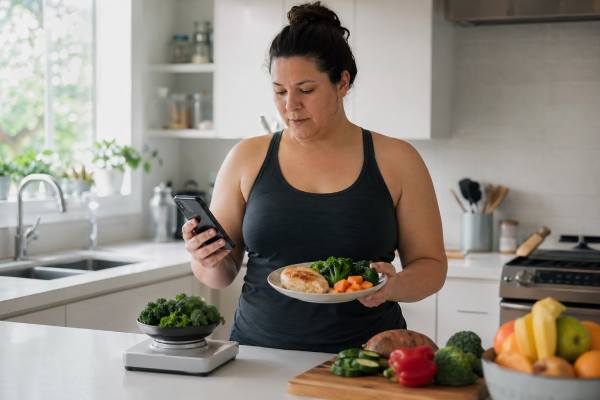
When people start trying to lose weight, one of the first decisions is how to track what they eat. Some people count calories. Others track macros like protein, carbs, and fat. Others avoid numbers and use portion control instead. All three methods can work, but they do not work equally well for every person, every goal, or every stage of the process.
The best method is usually not the most detailed one. It is the one you can follow accurately enough, consistently enough, and long enough to create a calorie deficit without feeling like your whole life has turned into math. This article explains what calories, macros, and portions actually measure, when each method makes sense, what their main drawbacks are, and how to choose the approach that fits your personality, routine, and weight loss goal.
Table of Contents
- What calories, macros and portions actually measure
- Counting calories works well for some people
- Tracking macros adds more precision
- Portion control is simpler but less exact
- Which method is best for weight loss
- How to pick the right method for you
- Common mistakes with all three methods
- When to switch or combine methods
What calories, macros and portions actually measure
Before choosing a method, it helps to understand what each one is really doing.
Calories measure energy. If weight loss is the goal, calories matter because body weight is influenced by energy balance over time. You generally lose weight when you consistently take in fewer calories than your body uses.
Macros are the three main macronutrients that provide calories:
- protein
- carbohydrates
- fat
Protein and carbohydrates each provide about 4 calories per gram, while fat provides about 9 calories per gram. Macro tracking still controls calories, but it adds another layer by guiding where those calories come from.
Portions measure how much food you put on your plate or eat at one time. Portion-based eating usually avoids detailed number tracking and instead uses visual cues, hand portions, plate structure, or pre-decided serving sizes to keep intake under control.
That means these methods are not truly competing systems in the way people sometimes think. They overlap.
- calorie counting focuses directly on total energy intake
- macro tracking focuses on calorie intake plus nutrient distribution
- portion control focuses on food quantity in a simpler, more visual way that usually influences calories indirectly
The key point is that all three methods can create a calorie deficit. The real difference is how much precision, effort, and structure they require.
| Method | Main focus | Best feature | Main drawback |
|---|---|---|---|
| Calories | Total energy intake | Clear and flexible | Can feel tedious and incomplete on food quality |
| Macros | Protein, carbs, and fat within a calorie target | More nutritional precision | More complex and time-consuming |
| Portions | How much food you eat | Simpler and easier to sustain for some people | Less precise and easier to underestimate |
This is why the better question is not “Which one is best?” The better question is “Which one gives me enough control without making the process harder than it needs to be?”
For many people, the answer changes over time. Someone may start with calorie counting to learn the basics, shift to macro tracking for a specific fitness goal, then move to portions for long-term maintenance. Another person may skip calorie tracking entirely and do well with structured portions from the beginning.
Counting calories works well for some people
Calorie counting is often the most straightforward way to understand why weight loss is or is not happening. It gives you one main target and lets you fit different foods into that target. That simplicity is exactly why it helps many beginners.
A good calorie-tracking setup can teach you several useful things quickly:
- how much you are actually eating compared with what you assumed
- which foods are more filling for fewer calories
- how much restaurant meals, snacks, drinks, and extras add up
- how your weekday intake compares with your weekends
- whether you are truly in a deficit or only hoping you are
This makes calorie counting especially useful for people who like clarity, enjoy data, or want a more objective way to troubleshoot slow progress.
It is also flexible. You do not have to label foods “good” or “bad” to use it. You can fit a wide range of eating styles into a calorie target, which is one reason calorie counting often works better than highly restrictive diet rules.
That said, calorie counting has real limits.
First, it can become mentally draining if you try to track with perfect accuracy forever. Measuring everything, checking every label, and estimating restaurant meals can wear people down. Second, calories alone do not guarantee a satisfying diet. A 1,700-calorie day built from mostly sugary drinks, snack foods, and small treats will feel very different from a 1,700-calorie day built from protein, vegetables, fruit, whole grains, and higher-volume meals.
Third, calorie counting can create false confidence. Some people hit the number but ignore protein, fiber, hunger control, or meal structure. Others assume that because they are tracking, they are automatically accurate, even when portions have drifted or weekends are barely being logged.
Who tends to do well with calorie counting
Calorie counting often suits people who:
- want a clear numerical target
- like apps, labels, and measurable progress
- eat a wide variety of foods and want flexibility
- are trying to understand where their extra calories are coming from
- do not mind some routine data entry
It tends to work less well for people who feel anxious around numbers, become overly rigid, or find that logging every bite increases food obsession.
For most people, calorie counting works best as a tool, not a personality. It can teach you a lot at the start, then become looser over time as you learn your intake patterns. If you want to use it well, it helps to understand how to calculate your maintenance calories first, then set a realistic target based on how many calories to eat to lose weight. Without that context, tracking numbers can feel precise while still leading nowhere useful.
Tracking macros adds more precision
Macro tracking is basically calorie counting with more structure. Instead of aiming only for a calorie total, you also aim for protein, carbohydrate, and fat targets. That added precision can be helpful, but it also makes the process more demanding.
The biggest reason people use macro tracking for weight loss is protein. Protein tends to matter more than most other nutrition details when someone is trying to lose fat without feeling constantly hungry or losing excessive muscle. Macro tracking can make it easier to hit a meaningful protein target instead of ending up with a low-protein, low-satiety diet.
It can also help people who want more control over food quality while still staying flexible. Rather than simply fitting any foods into a calorie goal, macro tracking encourages a more balanced intake.
This is especially useful for people who:
- lift weights or care about body composition
- want to preserve lean mass during weight loss
- are already comfortable tracking food
- like numbers and want more detail than calorie counting alone provides
Still, macro tracking is not automatically better. It is just more detailed.
That detail comes with tradeoffs. You now have more targets to hit, more numbers to manage, and more ways to feel like you “missed” the day even when overall intake was still reasonable. Some people do well with that structure. Others find it turns eating into an exhausting puzzle.
It also creates a common beginner mistake: getting distracted by the ratios before the basics are solid. If someone is still drinking several liquid calories per day, grazing through the evening, or eating highly unstructured meals, a perfectly calculated macro split will not solve the real problem.
When macro tracking makes the most sense
Macro tracking usually makes the most sense when:
- you already understand calorie balance
- you want to prioritize protein more deliberately
- you are strength training and care about muscle retention
- you enjoy structured planning
- you do not mind a higher level of food logging
For some people, macro tracking is best used as a short- to medium-term tool rather than a lifelong method. It can help you learn what high-protein, well-balanced meals actually look like, then you can carry those habits forward with less daily calculation.
If you are leaning toward this approach, it helps to understand how macro tracking works in practice and what the best macro setup for fat loss and muscle retention usually looks like. The biggest advantage of macro tracking is not complexity for its own sake. It is that it can make a calorie deficit easier to tolerate when it is built around enough protein and reasonably balanced meals.
Portion control is simpler but less exact
Portion control is often the most approachable method for people who do not want to track numbers. Instead of logging every food, you use structure to guide how much you eat. That structure may come from hand portions, a plate method, standard serving sizes, or simply repeating meals and limiting the size of higher-calorie foods.
This approach appeals to many people because it feels more natural. You still pay attention, but you do not need an app open at every meal. That can reduce mental fatigue and make the process easier to maintain in social settings, travel, or long-term maintenance.
Portion-based eating also teaches a useful skill that some number-based trackers never fully develop: how to recognize a reasonable amount of food without constant measuring. That matters because even people who count calories do not always track forever.
Common portion-based strategies include:
- filling half the plate with vegetables
- anchoring meals around a palm-sized protein serving
- keeping starches or fats to more moderate visual portions
- using smaller bowls or plates for certain foods
- pre-portioning snacks instead of eating from large packages
- repeating a few meals that reliably fit your goals
The downside is obvious: portions are less precise. Two people can say they had “a bowl” or “a handful” and mean very different things. Portions also become harder to estimate when foods are dense, restaurant meals are large, or snacking is frequent and unplanned.
That means portion control works best when it is paired with some honesty and some structure. It is not the same as just “eating healthy.” Plenty of healthy foods are easy to overeat if portions are loose.
Who tends to do best with portions
Portion-based eating often works well for people who:
- dislike detailed tracking
- want a simpler, lower-stress approach
- eat many home-cooked meals
- are willing to repeat some meal patterns
- want a method that can transition more easily into long-term maintenance
It may work less well for people who regularly eat calorie-dense restaurant meals, graze throughout the day, or underestimate portions without realizing it.
This method becomes much more effective when you use a clear structure instead of vague intention. That is why it helps to understand a plate method and visual portion guide or use a structured approach to tracking without counting calories. The strength of portion control is simplicity. The weakness of portion control is that if the structure is too loose, it stops controlling much at all.
Which method is best for weight loss
The honest answer is that no method is universally best. The best method for weight loss is the one that helps you maintain a calorie deficit with enough consistency and accuracy to produce results while still feeling livable.
That said, each method tends to shine in different situations.
| If this sounds like you | The best starting fit is often | Why |
|---|---|---|
| I want clear numbers and quick feedback | Calories | It gives the simplest objective target |
| I lift weights and care about muscle retention | Macros | Protein and nutrient balance matter more to me |
| I hate apps and want something simpler | Portions | It reduces friction and can be easier to sustain |
| I am overwhelmed and need the least complicated option | Portions or simple calories | A lower mental burden helps me stay consistent |
| I eat a wide variety of foods and like flexibility | Calories | It allows more freedom without losing control |
| I am advanced, detail-oriented, and goal-driven | Macros | It offers more control over body composition |
For beginners, calorie counting is often the fastest learning tool because it teaches how much food adds up quickly. But that does not mean it is always the best long-term option. For some people, calorie tracking becomes so tedious that they eventually stop. If a simpler portion-based system would have kept them consistent for six months, that may have been the better choice all along.
Macro tracking is often the most precise, but precision is only useful if it improves adherence rather than hurting it. A person who quits after two weeks because macro tracking feels like homework is not getting more useful precision. They are getting less consistency.
Portions are often the easiest to live with, but only if the person using them is structured enough to avoid “portion creep,” mindless extras, and high-calorie foods that appear moderate but are not.
This is why the best method is often a tradeoff between control and effort. Too little structure and progress is hard to troubleshoot. Too much structure and the plan becomes exhausting. The sweet spot is the one that gives you enough awareness to lose weight without making the process feel impossible to continue.
How to pick the right method for you
The easiest way to choose is to stop thinking about what sounds most impressive and start thinking about what sounds most repeatable.
Ask yourself these questions:
- Do I like numbers, or do they make me shut down?
- Do I want flexibility, or do I prefer a more pre-planned structure?
- Am I trying to lose weight only, or do I care strongly about muscle retention and performance too?
- Will I realistically log food for weeks, or do I already know I will hate it?
- Do I mostly eat at home, or do I rely on restaurants and convenience foods often?
- Have I ever become obsessive with tracking in the past?
Your answers often make the choice clearer than the internet does.
A practical rule is to start with the least complicated method that still gives you enough control.
That might mean:
- calorie counting if you want a simple target and are okay with an app
- macro tracking if you already track and want more precision
- portion control if you need a lower-friction approach and are willing to follow a meal structure
If you are truly unsure, you do not need to commit forever. You can test one method for two to four weeks, evaluate whether it feels workable, and then adjust.
A beginner-friendly way to choose
For many people, the easiest path looks like this:
- Start by understanding your maintenance needs and likely calorie target.
- Choose one main method.
- Give it enough structure to be testable.
- Use weekly trends, hunger levels, and adherence to judge whether it is working.
- Simplify or refine only if needed.
This is why it helps to first build a beginner plan you can stick to and avoid the urge to jump straight into the most restrictive system. Many people also do better when they begin without a crash-diet mindset, because a method that feels harsh at the start usually becomes harsher over time.
Common mistakes with all three methods
No matter which method you choose, several mistakes tend to show up again and again. These mistakes are often why people conclude that calorie counting, macro tracking, or portion control “doesn’t work,” when the real issue is how the method was used.
Common mistakes include:
- expecting perfect accuracy from restaurant meals and packaged estimates
- ignoring drinks, oils, bites, and tasting while cooking
- keeping weekends much looser than weekdays
- choosing a method that is too detailed to sustain
- using the method as a reason to eat low-quality, low-satiety foods
- reacting too quickly to short-term scale fluctuations
- assuming one difficult week means the whole method failed
Another big mistake is trying to separate the method from the lifestyle around it. Tracking does not erase the effects of poor sleep, constant stress, low protein intake, very low activity, or an environment that keeps encouraging overeating. A method is a tool, not a full system.
There is also a psychological mistake that affects all three methods: treating them as a test of discipline. That creates shame when you miss the target, which makes it harder to learn from the data. A much better approach is to treat the method as feedback.
If calorie tracking shows dinner is where calories explode, that is useful information. If macro tracking shows your protein is low until late evening, that is useful information. If portion control keeps breaking down during takeout nights, that is useful information. The point is not to be a perfect tracker. The point is to understand what is actually happening.
If you are seeing some of these patterns, it may help to review common mistakes when starting a weight loss plan and understand what is typical in the first month of weight loss. Often the issue is not choosing the wrong method entirely. It is expecting a method to work without enough consistency, patience, or structure around it.
When to switch or combine methods
You do not have to use one method forever. In fact, many successful people switch methods as their needs change.
You might start with calories if you need to learn the basics of energy intake, then move to portions once you have built better awareness. You might start with portions because numbers feel overwhelming, then use calorie tracking briefly if progress stalls and you need more clarity. You might count calories at first, then shift to macros when you begin strength training seriously and want more protein precision.
You can also combine methods. Some of the most practical setups are hybrids, such as:
- counting calories while loosely keeping protein high
- tracking only protein and total calories instead of all macros
- using portion control for most meals but tracking restaurant meals
- using portions on weekdays and a simplified calorie check-in on weekends
- repeating breakfasts and lunches, then using calorie or macro flexibility at dinner
These hybrid approaches often work well because they preserve the main benefit of a method without forcing maximum complexity.
Signs it may be time to change your approach
Consider switching or simplifying if:
- you are mentally exhausted by the method
- you keep quitting and restarting
- the method makes you more obsessive, anxious, or rigid
- you are technically tracking but no longer honestly
- progress has stalled and you need more clarity than your current system gives
Consider adding more structure if:
- you say you are “watching portions” but have no real portion system
- your weight has not moved and you do not know why
- weekends feel untracked and chaotic
- you underestimate dense foods repeatedly
- you want better control over hunger and protein intake
The best long-term approach is often one that starts a little more structured and becomes a little simpler as your habits improve. That is usually more realistic than expecting either lifelong perfect tracking or effortless intuitive control right away.
The real goal is not to win at tracking. It is to create a way of eating that helps you lose weight with enough control to make progress and enough flexibility to keep going.
References
- Choosing a Safe & Successful Weight-loss Program – NIDDK 2026 (Government Guidance)
- Eating & Physical Activity to Lose or Maintain Weight – NIDDK 2026 (Government Guidance)
- Tips for Cutting Calories | Healthy Weight and Growth | CDC 2025 (Government Guidance)
- Steps for Improving Your Eating Habits | Healthy Weight and Growth | CDC 2024 (Government Guidance)
- Steps for Losing Weight | Healthy Weight and Growth | CDC 2025 (Government Guidance)
Disclaimer
This article is for general educational purposes only and is not a substitute for personal medical advice, diagnosis, or treatment. If you have a medical condition, take medication that affects weight or appetite, are pregnant, postpartum, or breastfeeding, or have a history of disordered eating, get individualized guidance before choosing a weight loss tracking method.
If this article helped you decide between calories, macros, and portions, share it on Facebook, X (formerly Twitter), or any platform where it could help someone choose a more sustainable approach.