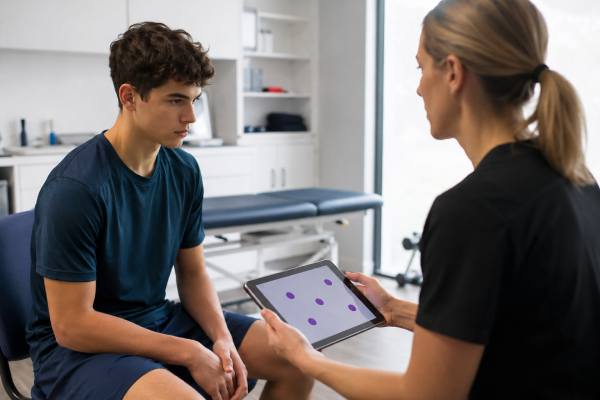
A concussion can affect attention, memory, reaction time, balance, vision, sleep, mood, and school or work performance. In sports, the challenge is that no single test can prove exactly how an athlete’s brain was functioning before the injury unless there is a reliable pre-injury comparison.
That is where baseline concussion testing can help. A baseline test is done before the season, when an athlete is healthy, to record how they usually perform on selected symptom, balance, vision, and cognitive measures. If a concussion is later suspected, clinicians may compare post-injury results with that baseline.
The key word is “may.” Baseline testing is not a magic safety tool, and it should never be used by itself to decide whether an athlete has a concussion or is ready to return to play. It is most useful when it is well administered, interpreted by a trained clinician, and built into a broader concussion management plan.
Table of Contents
- What Baseline Concussion Testing Measures
- When Baseline Testing Helps
- When Baseline Testing Doesn’t Help
- Who Should Consider Baseline Testing
- What Happens After a Suspected Concussion
- How to Get a Useful Baseline Test
- Questions Before Paying for Testing
What Baseline Concussion Testing Measures
Baseline concussion testing records how an athlete performs before injury on measures that can be affected by concussion. It is not a brain scan, a prediction tool, or a guarantee that a concussion will be easier to diagnose later.
A good baseline assessment is usually multimodal, meaning it looks at more than one part of brain and body function. Depending on the program, it may include:
- A symptom checklist, including headache, dizziness, nausea, light sensitivity, fogginess, fatigue, sleep changes, irritability, and trouble concentrating
- Concussion history, including past injuries, recovery time, migraine history, ADHD, learning differences, mood symptoms, and medications
- Cognitive measures, such as attention, working memory, processing speed, visual memory, and reaction time
- Balance and coordination testing
- Vestibular and ocular-motor screening, which looks at dizziness, eye tracking, visual motion sensitivity, and related symptoms
- Sometimes, brief sideline-style measures such as orientation, immediate memory, delayed recall, or concentration tasks
Computer-based tools are common in school, college, and club sports. One well-known example is the ImPACT test, although it is only one type of computerized concussion assessment. Other programs may use different platforms or combine computer testing with an in-person clinical exam.
Baseline testing should be understood as one piece of a broader evaluation. A normal score after a hit does not rule out concussion. An abnormal score does not automatically prove concussion either, because poor sleep, anxiety, pain, dehydration, medication effects, effort, testing distractions, or illness can affect performance.
The best use of baseline data is comparison. If an athlete usually has slower reaction time, higher symptom reporting, or lower working memory scores for reasons unrelated to concussion, their own baseline can help avoid unfair comparison with a general population average. Conversely, if an athlete normally performs very well, a score that still looks “average” after injury may represent a meaningful drop for that individual.
This is why baseline testing is different from general concussion testing after an injury. Post-injury testing asks, “What is happening now?” Baseline testing adds, “How does this compare with this athlete’s usual pattern?”
Still, the comparison only matters if the baseline is valid. A rushed group test in a noisy room, a test taken after hard practice, or a test completed while tired, sick, or distracted may not be a reliable picture of normal function.
When Baseline Testing Helps
Baseline testing helps most when it gives clinicians a trustworthy comparison point that changes management in a practical way. It is especially valuable when an athlete’s usual performance may differ from standard age-based norms.
One common situation is an athlete with ADHD, a learning disability, dyslexia, migraine, vestibular problems, anxiety, depression, sleep problems, or a history of prior concussion. These factors can influence symptoms, attention, processing speed, balance, or visual tracking even before a new injury. A personal baseline may help a clinician separate “normal for this athlete” from a new post-injury change.
Baseline data can also help with subtle or complex recoveries. Some athletes feel better before all cognitive, balance, or visual-vestibular findings have normalized. Others continue to report symptoms after objective measures have improved. Neither situation should be handled by test scores alone, but baseline information may help the clinician decide whether more recovery time, targeted rehabilitation, school accommodations, or specialist evaluation is appropriate.
It can also improve continuity of care. In many sports settings, an athlete may be seen by an athletic trainer, primary care clinician, sports medicine physician, neuropsychologist, physical therapist, school nurse, or emergency clinician at different points. A documented baseline gives the care team a shared reference point, especially when the athlete is moving through return-to-learn and return-to-play decisions.
Computerized testing may be useful, but it is not enough on its own. A broader approach is usually stronger because concussion can affect several systems at once. Reaction time, memory, balance, eye movement, sleep, emotional regulation, and exertional tolerance may recover at different speeds. A single test score can miss that complexity.
Baseline results may also support academic planning. If a student-athlete has a concussion and struggles with reading, screens, bright classrooms, testing, or sustained attention, prior information can help the school understand whether the difficulty is new, worsened, or part of an existing learning profile. For prolonged or complicated cases, more formal neuropsychological testing after concussion may be considered, especially when school, work, or return-to-sport decisions remain unclear.
The most helpful baseline programs share several features: trained supervision, valid testing conditions, secure records, clear interpretation, and a defined plan for what happens if the athlete is injured. Testing without clinical follow-through is far less useful.
When Baseline Testing Doesn’t Help
Baseline testing does not help much when it is treated as a stand-alone safety requirement rather than part of medical decision-making. A baseline score cannot prevent concussion, diagnose concussion by itself, or clear an athlete to return to play.
One problem is false reassurance. Coaches, parents, or athletes may assume that “passing” a computerized test means the athlete is fine. That is unsafe. Concussion is diagnosed through clinical evaluation, including the injury event, symptoms, physical findings, cognitive status, balance, neurologic signs, and recovery pattern. Test results may inform that judgment, but they do not replace it.
Another problem is poor-quality baseline data. A baseline may be less useful when:
- The athlete was tired, sick, distracted, anxious, or in pain during testing
- The test was done in a loud room with many athletes at once
- Instructions were rushed or poorly understood
- The athlete did not give full effort
- The athlete intentionally underperformed to make post-injury testing easier to “pass”
- The baseline is several years old
- The athlete has changed significantly in age, development, medication, language fluency, vision correction, or medical status
- No qualified clinician is available to interpret the results
Age matters too. Baseline testing can be harder to interpret in younger children because attention, reading ability, impulse control, and cognitive development change quickly. Very young athletes may also have trouble understanding instructions or giving consistent effort. For many children, careful symptom monitoring, parent and teacher input, and age-appropriate clinical assessment may be more useful than a computerized baseline score.
Baseline testing may also be unnecessary for some low-risk settings. A recreational athlete in a non-contact sport with no prior concussion history and no access to a clinician who will use the data may gain little from paying for a test. In that situation, money and time may be better spent on education, proper technique, rule enforcement, equipment fit, and knowing when to remove an athlete from play.
Finally, baseline results can be misused if they become the main return-to-play gate. An athlete should not return simply because their score has returned to baseline. They also need symptom improvement, a normal or appropriately improving clinical exam, successful return to school or regular daily activities, and a gradual exertional progression without symptom recurrence.
Who Should Consider Baseline Testing
Baseline testing is most worth considering for athletes with higher concussion exposure or individual factors that make standard comparison less reliable. It is not required for every athlete, but it can be useful when the results will be interpreted and used responsibly.
| Group or situation | Potential value | Practical note |
|---|---|---|
| Collision and contact sport athletes | Higher chance of needing post-injury comparison | Most useful when the team has an athletic trainer or sports medicine clinician |
| Athletes with prior concussions | May help track recovery against personal history | Past recovery time and symptoms should be documented carefully |
| Athletes with ADHD, learning differences, migraine, or mood symptoms | Personal baseline may be more informative than general norms | Testing should note relevant diagnoses, medications, and accommodations |
| College, elite, or professional athletes | Often part of a larger medical program | Best used with multimodal assessment and specialist access |
| Very young athletes | Often limited by development and test consistency | Age-appropriate clinical evaluation may matter more than computer scores |
| Low-risk recreational athletes | May add little if no one will use the data clinically | Education and removal-from-play rules may be higher priority |
Sports with more frequent head impacts or collision risk include football, ice hockey, rugby, lacrosse, wrestling, soccer, basketball, cheerleading, martial arts, boxing, and some high-speed or aerial sports. That does not mean every athlete in those sports needs the same testing schedule, but it does mean concussion planning should be taken seriously.
For middle school and high school athletes, the decision often depends on local resources. If the school has a certified athletic trainer, established concussion protocol, and access to medical review, baseline testing may fit well. If testing is offered as a one-time commercial service without clear follow-up, its value is more limited.
For athletes with disabilities, language differences, visual impairment, hearing impairment, neurodevelopmental conditions, or motor limitations, baseline testing requires extra care. Standard tools may not fit every athlete equally. The clinician should consider accessibility, interpretation limits, and whether the test has appropriate norms or adaptations.
Parents should also know that baseline testing is not the same as permission to take more risk. The goal is not to make contact sports “safe enough” by testing. The goal is to improve recognition and management if injury occurs.
What Happens After a Suspected Concussion
After a suspected concussion, the first step is removal from play, not testing. Any athlete with possible concussion should be taken out of practice or competition and should not return the same day.
A concussion may follow a direct hit to the head, face, neck, or body that transmits force to the head. Loss of consciousness can happen, but most concussions do not require being knocked out. Symptoms may appear right away or develop over minutes to hours.
Urgent medical evaluation is needed if there are danger signs such as worsening severe headache, repeated vomiting, seizure, increasing confusion, unusual behavior, weakness or numbness, slurred speech, neck pain, unequal pupils, inability to wake up, worsening drowsiness, or loss of consciousness. An athlete who is taking blood thinners, has a bleeding disorder, or has had a high-force injury should be assessed promptly. A broader review of concussion symptoms and when to seek care can help families recognize when symptoms need immediate attention.
Most concussions do not require CT or MRI to diagnose. Imaging is used when clinicians are concerned about bleeding, skull fracture, or another serious injury, not because a routine scan can “show” a typical concussion. If emergency symptoms are present, a clinician may order a brain CT scan because it is fast and useful for detecting urgent bleeding or fractures.
Once the athlete is medically stable, the clinician may use symptom scales, neurologic exam findings, balance testing, vestibular and ocular-motor assessment, cognitive screening, and sometimes baseline comparison. If baseline data exist, they can help clarify whether current scores represent a meaningful change. But the clinician should still treat the athlete, not the spreadsheet.
Recovery usually includes a short period of relative rest, followed by gradual return to regular activities as tolerated. Complete rest in a dark room for many days is generally no longer recommended for most athletes. School or work often resumes before sports, with adjustments if symptoms flare. Examples include reduced screen exposure, rest breaks, lighter homework, postponed tests, reduced noise exposure, or shortened school days.
Return to sport should be stepwise. The athlete typically progresses from light aerobic activity to more sport-specific exercise, then harder non-contact activity, controlled practice, full-contact practice when appropriate, and finally competition. Symptoms returning during the progression mean the athlete is not ready for that level yet.
When symptoms persist for weeks, or when dizziness, headaches, visual symptoms, mood changes, or brain fog interfere with daily life, targeted care may be needed. Persistent post-concussion symptoms can involve several treatable contributors, including vestibular dysfunction, migraine, neck injury, sleep disruption, mood symptoms, visual strain, and deconditioning.
How to Get a Useful Baseline Test
A useful baseline test is supervised, valid, current, and connected to a plan for post-injury care. The test itself matters, but the testing process matters just as much.
For athletes, the best testing conditions are simple but important. The athlete should be well rested, not acutely ill, wearing needed glasses or contacts, and not immediately coming from intense practice. They should understand that the goal is honest best effort, not beating teammates or gaming the system. A baseline is only helpful if it reflects real functioning.
For schools, clubs, and teams, quality control should be built in. Testing should be quiet, standardized, and supervised by someone trained to recognize invalid results. Group testing can be efficient, but it can also introduce distractions. If a test flags poor effort, unusual patterns, or inconsistent responding, the athlete may need to repeat it under better conditions.
A baseline should also be updated. There is no single perfect interval for every athlete, but many programs repeat testing every one to two years, with more frequent updates for younger athletes or when there are meaningful changes. A new baseline may be needed after a significant concussion recovery, a new neurologic diagnosis, medication changes that affect attention or alertness, major vision changes, or a developmental shift.
The record should include more than raw scores. It should note the date, athlete age, sport, testing conditions, sleep, relevant diagnoses, medications, language factors, glasses or contacts, and any accommodations. Without this context, later interpretation becomes less reliable.
Privacy matters as well. Baseline concussion tests contain health-related information. Parents and athletes should know who can access results, how long records are stored, whether data are shared with outside companies, and how results are transferred if the athlete changes schools or teams.
A strong baseline program should answer these practical questions:
- Who administers the test?
- Who reviews and interprets the results?
- What happens if a baseline is invalid?
- What post-injury assessment will be used for comparison?
- Who has authority to remove and clear athletes?
- How are return-to-learn and return-to-play decisions coordinated?
- How are privacy, consent, and data storage handled?
If those questions cannot be answered clearly, baseline testing may be more of a checkbox than a useful medical tool.
Questions Before Paying for Testing
Before paying for baseline concussion testing, ask whether the result will meaningfully improve care if an injury occurs. The answer depends less on the brand of test and more on the clinical system around it.
A parent considering private baseline testing should ask who will use the result after a concussion. A printed score report is not very helpful if the athlete’s doctor, school, or athletic trainer cannot access it or does not know how to interpret it. Ideally, the testing provider should explain how results are shared, what the scores mean, and what the limits are.
Ask whether the test is age-appropriate. A tool designed for older adolescents or adults may not be ideal for a younger child. For children, parent observation, teacher input, symptom tracking, and a clinician familiar with pediatric concussion may be more useful than a computer score alone.
Ask whether the test is multimodal. A program that includes symptoms, balance, cognitive function, and vestibular or ocular-motor screening is generally more informative than a single reaction-time or memory score. No test needs to include everything, but concussion assessment should not be reduced to one number.
Ask what happens if the athlete gets hurt away from the testing provider. If the athlete is injured during a tournament, school game, or travel event, families should know how to access baseline results quickly. Delayed access can make the baseline less useful during the period when decisions are most time-sensitive.
It is also reasonable to ask whether baseline testing is the best use of limited resources. For some teams, the priority may be hiring or improving access to certified athletic trainers, training coaches to recognize concussion, enforcing removal-from-play rules, improving emergency action plans, or ensuring athletes can get timely medical follow-up.
The practical bottom line is balanced: baseline testing can be helpful for many athletes, especially in higher-risk sports and in athletes whose personal medical or learning profile makes comparison with norms less clear. It is much less helpful when outdated, poorly administered, interpreted without clinical context, or used as a return-to-play shortcut.
The safest concussion programs do not rely on baseline testing alone. They combine prevention, recognition, immediate removal from play, medical evaluation, gradual return to school and sport, and careful attention to symptoms that persist or worsen.
References
- Consensus statement on concussion in sport: the 6th International Conference on Concussion in Sport-Amsterdam, October 2022 2023 (Consensus Statement)
- Sport concussion assessment tool™ – 6 (SCAT6) 2023 (Assessment Tool)
- Sport Concussion Office Assessment Tool – 6 2023 (Assessment Tool)
- National Athletic Trainers’ Association Bridge Statement: Management of Sport-Related Concussion 2024 (Position Statement)
- Sensitivity and Specificity of Computer-Based Neurocognitive Tests in Sport-Related Concussion: Findings from the NCAA-DoD CARE Consortium 2021 (Original Research)
- Clinical Guidance for Pediatric Mild TBI 2025 (Clinical Guidance)
Disclaimer
This article is for general educational purposes only and is not a substitute for medical evaluation, diagnosis, or treatment. Any athlete with a suspected concussion should be removed from play and assessed by a qualified healthcare professional before returning to sports.
Please share this article on Facebook, X, or your preferred platform to help coaches, parents, and athletes make safer concussion-testing decisions.