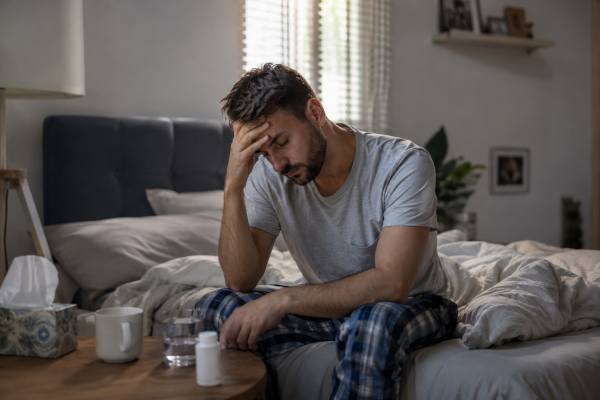
Sleep is often treated like a recovery tool for mood, energy, and focus, but its role in immune health is just as important. Many people notice the pattern before they understand it: a few nights of short or broken sleep, then a sore throat, a lingering cold, or the sense that the body is not bouncing back the way it should. That pattern is not just bad luck. Sleep and immunity are deeply linked, and the relationship goes in both directions. Poor sleep can weaken parts of the immune response, increase inflammatory strain, and make the body less efficient at responding to viral exposure, while illness itself can disrupt sleep even more.
What matters is not only how long you sleep, but also how regular, deep, and restorative that sleep is. This article explains why poor sleep makes you get sick more often, how sleep loss changes immune function, what amount of sleep is most supportive, and what to do when your schedule keeps working against you.
Key Facts
- Short, fragmented, or irregular sleep can make you more vulnerable to infections and may slow recovery once you are sick.
- Poor sleep can raise inflammatory stress and reduce how efficiently the immune system coordinates defense and repair.
- Sleep around the time of vaccination may influence how well the body builds immune memory, though it is only one factor among many.
- Snoring, gasping, severe insomnia, or extreme daytime sleepiness may point to a sleep disorder that needs more than basic sleep hygiene.
- A practical goal for most adults is a steady sleep window that allows at least 7 hours of actual sleep on most nights.
Table of Contents
- What sleep does for immunity
- How poor sleep raises infection risk
- Why recovery and inflammation get worse
- Sleep quantity, quality, and timing
- Real-life reasons sleep breaks down
- How to improve sleep for immune health
What sleep does for immunity
Sleep is not simply a period when the immune system shuts down and waits for morning. It is an active biological state that helps organize immune defense, tissue repair, and inflammatory balance. During sleep, the body shifts into a pattern that supports communication between immune cells, hormones, and the nervous system. This is one reason sleep loss can affect so many parts of health at once.
A useful way to think about sleep is that it helps create the conditions under which the immune system works efficiently. Certain immune signals and hormonal rhythms are better coordinated at night, especially during deeper stages of non-rapid eye movement sleep. These stages appear to support the kind of immune activity involved in identifying threats, coordinating responses, and building longer-term memory after exposure to a pathogen or a vaccine. Sleep also influences how immune cells move through the blood and lymphatic tissues, which matters because immune defense depends on cells getting to the right place at the right time.
This does not mean every extra hour of sleep produces a stronger and stronger immune system. It means healthy sleep provides structure. It helps keep the response proportionate, timely, and less wasteful. That distinction matters because the best immune system is not the one that is always turned up the highest. It is the one that can respond when needed, then settle down when the job is done. This is closely related to the broader idea of immune resilience, which is a better goal than chasing the language of “boosting.”
Sleep also shapes the body’s inflammatory set point. A normal night helps keep stress hormones, inflammatory signals, and autonomic balance moving in a healthier rhythm. When sleep is reduced or repeatedly interrupted, those rhythms become less stable. That may not cause obvious symptoms right away, but it can make the body less adaptable when a virus, intense stress, or a heavy training block appears.
The effect is not only about infections. Good sleep supports barrier tissues too, including the airways, gut, and other surfaces that make first contact with germs. That fits the larger picture of how the immune system works and why good defenses depend on more than white blood cells alone. Hormones, nervous system tone, mucosal surfaces, and inflammatory control all matter.
This is one reason sleep deprivation can feel so deceptively ordinary. A person may think they are “just tired,” while the body is quietly becoming less efficient at the background work that supports host defense. Sleep is not the only factor in whether you get sick, but it is one of the few that touches immune coordination, inflammation, stress regulation, and recovery all at once.
How poor sleep raises infection risk
The link between poor sleep and getting sick more often is not just theoretical. One of the most compelling pieces of human evidence comes from viral challenge studies, where researchers monitored people’s sleep and then exposed them to a cold virus under controlled conditions. In that setting, shorter sleep was linked to a much higher chance of developing a clinical cold. That matters because it moves the conversation beyond “people who sleep poorly feel worse” and toward “people who sleep poorly may actually be more susceptible when exposed.”
The mechanisms are likely layered. Sleep loss can alter innate immune activity, affect the balance of inflammatory signaling, change how immune cells circulate, and reduce the efficiency of adaptive responses. Some of these changes happen after just a short period of deprivation, while others are more related to chronic restriction. In real life, that means both an all-nighter and a pattern of routinely sleeping too little can matter, though the long-term pattern is usually more important.
It is also not only about total hours. Fragmented sleep, repeated awakenings, and poor sleep continuity appear to matter too. Someone who spends eight hours in bed but wakes repeatedly, snores heavily, or sleeps on an unstable schedule may still have impaired recovery. This is why “time in bed” and “restorative sleep” are not interchangeable.
The effect of poor sleep on infection risk also becomes easier to understand when you remember that exposure is common. Many people are around respiratory viruses regularly at work, in schools, on public transit, and in family life. Sleep does not change whether you encounter those exposures. It changes, at least in part, how prepared the body is to handle them once they arrive. That is why poor sleep belongs on the same list as other factors that quietly weaken immune defenses even when they do not cause immediate symptoms.
Poor sleep may also influence how strongly the body responds to vaccination. The evidence is not perfectly uniform, but there is enough to suggest that sleep around the time of vaccination can affect antibody production and immune memory in at least some settings. This does not mean one bad night will erase the benefit of a vaccine. It means sleep is one of the background factors that may help the immune system learn more effectively.
Another important point is that illness and poor sleep often reinforce each other. When you are already sleep deprived, exposure may be more likely to turn into symptoms. Then once symptoms start, congestion, coughing, fever, or body aches disrupt sleep even more, which can prolong the sense of being run down. The result is a loop that feels unfairly familiar: poor sleep before illness, poor sleep during illness, and slower recovery after illness.
So when people say they “always get sick after a stressful week,” sleep is often a major part of the explanation. The body may have been handling viral exposure all along, but once sleep shrinks and stress rises together, resistance drops and symptoms become more likely.
Why recovery and inflammation get worse
Poor sleep does not only raise the odds of getting sick. It can also make the experience of illness heavier and the return to baseline slower. A big reason is inflammation. Sleep loss is associated with a shift toward a more inflammatory state, and when that state becomes chronic, the body has less flexibility to respond cleanly to new challenges.
Inflammation is not inherently bad. It is part of a normal immune response. The problem comes when inflammatory signals stay elevated too often, rise at the wrong times, or are not balanced by enough recovery. Chronic short sleep can push the body in that direction. Studies have linked insufficient sleep with higher levels of inflammatory markers and altered immune-cell behavior. Over time, that can contribute to the sense of feeling worn down, slower to recover, and less tolerant of everyday stressors.
This is one reason poor sleep and infection often feel worse than expected when they happen together. The body is not entering illness from a calm baseline. It is entering from a more inflamed, more stressed position. That can mean stronger symptoms, more fatigue, and a longer tail after the acute infection ends.
The interaction with stress hormones matters too. Sleep loss changes cortisol rhythms and autonomic tone. In practical terms, that can leave a person more “amped” at the wrong times and less physiologically settled during the hours when repair should be happening. It is one reason sleep deprivation and chronic stress are so often a matched pair. They reinforce each other, and the immune consequences stack. That overlap is a major part of the story of stress and immunity.
Recovery also suffers because sleep is when the body devotes more resources to maintenance. Tissue repair, memory processing, hormonal coordination, and immunological recalibration all depend on sleep architecture. If that architecture is repeatedly interrupted, you may technically be sleeping, but the body is getting a lower-quality version of restoration. That matters after infections, hard training, surgery, or other periods of immune strain.
Another reason symptoms can drag is that poor sleep tends to worsen behavior in ways that slow recovery. People who are sleep deprived may hydrate less, eat more irregularly, rely on more caffeine late in the day, move less, and delay rest because they are running on urgency instead of rhythm. None of those habits alone explains everything, but together they create an environment where inflammation remains higher and recovery is less efficient.
This is also why sleep problems can sometimes be mistaken for weak immunity itself. A person may say, “I keep getting sick and I recover slowly,” when one of the biggest drivers is chronic sleep disruption rather than a primary immune defect. That does not make the symptoms less real. It just means the leverage point may be sleep more often than expected.
If the immune system is the body’s defense network, sleep is one of the main ways that network gets serviced, reset, and coordinated. Without it, the response becomes noisier, more inflammatory, and less efficient.
Sleep quantity, quality, and timing
When people ask how much sleep supports immunity, the temptation is to give one neat number and move on. But sleep and immune health depend on three related things: quantity, quality, and timing.
For most adults, at least 7 hours of sleep per night is a practical baseline for health. Some people need more, especially during illness, recovery, or intense physical and mental strain. Sleeping well below that range on a regular basis is where immune problems become more likely to show up. That does not mean every night under 7 hours is damaging. It means the pattern matters. A week of short nights is different from one unusually late evening.
Quality is just as important. Sleep that is repeatedly interrupted by stress, noise, reflux, pain, alcohol, snoring, or frequent awakenings can be less restorative even if the clock says you slept enough. This is why people with insomnia or sleep apnea may feel worn down despite spending a reasonable amount of time in bed. It is also why symptoms such as loud snoring, witnessed pauses in breathing, waking with a dry mouth, or heavy daytime sleepiness should not be ignored. In some cases, the issue is not poor habits alone but a sleep disorder that interferes with recovery every night.
Timing adds a third layer. The immune system runs on circadian rhythms, and sleep that is chronically misaligned with those rhythms can be a problem even when total hours look acceptable on paper. Shift work, rotating schedules, and large weekend sleep swings can create circadian strain that affects immune function, inflammatory balance, and vaccine responses. That is part of why topics like circadian rhythm and immunity and social jet lag matter so much in the real world.
A person who sleeps 7.5 hours from 3 a.m. to 10:30 a.m. after staring at bright screens until bed may not get the same physiological benefit as someone with a steadier rhythm. Likewise, shift workers can do many things right and still face immune strain because the schedule itself works against normal biological timing. In those cases, the goal is not perfection. It is damage control and consistency where possible.
This is also where “catch-up sleep” needs a realistic view. Sleeping longer on weekends can help partially relieve sleep debt, and it is better than never recovering at all. But it does not fully erase the effects of repeated weekday restriction, especially if the weekend pattern becomes so different that Monday feels like jet lag.
A useful rule is to think beyond hours alone. Ask three questions: Are you getting enough sleep most nights? Is that sleep reasonably continuous and restorative? And does it happen on a schedule your body can predict? When the answer is yes to all three, immune support is more likely to follow.
Real-life reasons sleep breaks down
Most people do not lose sleep because they do not care about health. They lose sleep because real life pushes against it in several directions at once. Understanding those patterns matters, because improving sleep for immune health is rarely about one “perfect routine.” It is about identifying the bottleneck that keeps sleep from becoming stable.
One common reason is chronic overstimulation. Late screens, unfinished work, constant messaging, and evening stress keep the brain in a wake-promoting mode too close to bedtime. Even when a person lies down on time, sleep onset can be delayed and overnight sleep can become lighter. Over time, this creates the feeling of being tired but not truly able to power down.
Another major reason is schedule conflict. Early commutes, caregiving, night shifts, rotating shifts, and social obligations often squeeze sleep from both sides. This is especially true for healthcare workers, parents of young children, students, and anyone living on an inconsistent work calendar. Shift workers deserve special mention here, because the problem is not laziness or poor discipline. It is that the body is being asked to sleep and digest at biologically awkward times, which is why night schedules can raise infection risk even when total effort is high.
Alcohol is another underappreciated disruptor. It may help a person fall asleep faster, but it often fragments sleep later in the night and worsens snoring, breathing stability, and early awakening. This is one reason the link between alcohol and immune vulnerability is not only about the immune system directly. It is also about what alcohol does to the quality of sleep that should be supporting recovery.
Then there are the conditions people miss. Restless legs, reflux, chronic pain, anxiety, nasal obstruction, and mouth breathing can all reduce sleep quality without making the cause obvious. Someone may say, “I sleep eight hours and still feel exhausted,” when the real issue is repeated arousals, poor airflow, or low-quality sleep architecture. Problems like mouth breathing during sleep can also worsen dryness and airway irritation, making the person feel more run down and more vulnerable to infections.
Stress deserves its own place. Stress does not just steal time. It changes physiology. It can delay sleep onset, increase nighttime awakenings, worsen cravings and alcohol use, and magnify inflammatory load at the same time. That makes it one of the most common hidden links between bad weeks and getting sick soon after.
Finally, some people have sleep loss because they are trying to do too much well. Hard training, intense work, family pressure, and late-night “catch-up” time leave very little protected space for sleep. In those cases, the answer is often not a supplement. It is a more honest schedule.
Poor sleep becomes dangerous for immune health when it is normalized. Once exhaustion feels ordinary, people stop recognizing it as a real biological stressor. That is why the first step is often not learning a trick. It is admitting that the current pattern is costing more than it seems.
How to improve sleep for immune health
The best sleep advice for immune health is rarely flashy. It is usually about creating a repeatable pattern that lowers strain, protects sleep opportunity, and makes sleep more likely to happen on time. The goal is not a perfect night. It is a better average week.
Start with consistency. A regular wake time is often more powerful than obsessing over a perfect bedtime. Waking at roughly the same time most days helps stabilize circadian signals, which in turn makes sleepiness arrive more predictably at night. If your schedule allows, protect a window that gives you at least 7 hours in bed, and more if you are recovering from illness or clearly under-slept.
Light matters too. Morning daylight helps anchor the body clock, while bright light late at night can delay sleep timing. Getting outside soon after waking or using bright morning light consistently can support better sleep onset later. At night, dimmer light and less stimulating screen use can make it easier for the brain to shift toward rest.
Next, reduce the things that quietly fragment sleep. Keep alcohol modest or avoid it close to bedtime. Avoid heavy meals too late if reflux is an issue. Limit caffeine late in the day if it affects sleep depth, not just sleep onset. If the bedroom is dry, hot, noisy, or overly bright, adjust the environment. These details are not glamorous, but they remove common barriers to restorative sleep.
A practical approach looks like this:
- Set a stable wake time.
- Build enough time in bed to allow 7 or more hours of actual sleep.
- Get morning light and keep nighttime light lower.
- Cut back on late caffeine and bedtime alcohol.
- Keep the bedroom dark, cool, and quiet.
- Treat sleep as part of prevention, not just recovery after you are already sick.
For people whose schedules are less controllable, such as shift workers, progress may look different. The focus may be on minimizing chaos, protecting a sleep block, using light strategically, and avoiding large swings on off days. Those workers may also benefit from more tailored guidance in areas like immune support for shift workers because the problem is not only bedtime behavior.
If you continue to get sick often despite improving sleep, the answer may not be sleep alone. Persistent insomnia, loud snoring, repeated night wakings, or unrefreshing sleep may need formal evaluation. And if frequent illness comes with unusual infections, weight loss, or other red flags, it is worth looking beyond sleep and asking whether other causes of frequent sickness need attention.
The key takeaway is simple. Sleep is not a luxury add-on to immune health. It is part of the operating system. When it improves, the body usually becomes more stable, less inflamed, and better able to handle the exposures of everyday life.
References
- Sleep and Immune System Crosstalk: Implications for Inflammatory Homeostasis and Disease Pathogenesis 2024 (Review)
- The relationship between sleep and innate immunity 2024 (Review)
- Sufficient Sleep, Time of Vaccination, and Vaccine Efficacy: A Systematic Review of the Current Evidence and a Proposal for COVID-19 Vaccination 2022 (Systematic Review)
- Role of sleep deprivation in immune-related disease risk and outcomes 2021 (Review)
- Behaviorally Assessed Sleep and Susceptibility to the Common Cold 2015 (Prospective Viral Challenge Study)
Disclaimer
This article is for educational purposes only and is not medical advice. Poor sleep can contribute to getting sick more often, but it is not the only explanation for repeated infections or prolonged recovery. Loud snoring, gasping during sleep, severe insomnia, extreme daytime sleepiness, chest symptoms, fever that persists, unexplained weight loss, or unusually frequent infections deserve medical evaluation. If you have a chronic illness, take prescription medication, or suspect a sleep disorder such as sleep apnea, speak with a qualified clinician for individualized care.
If you found this article helpful, please consider sharing it on Facebook, X, or another platform you use so others can find clear, evidence-based guidance.