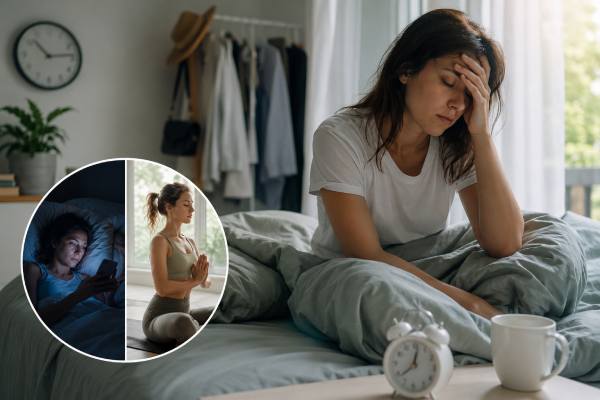
Many people feel a strange version of jet lag without ever boarding a plane. They wake early for work or school all week, then stay up late and sleep in on weekends to recover. It feels normal, even deserved. But when that pattern repeats week after week, the body has to keep switching between two schedules: one driven by obligations and one that feels more natural. That mismatch is called social jet lag, and it may matter more than people realize.
The problem is not only lost sleep. It is also irregular timing. Immune signaling, hormones, body temperature, appetite, and alertness all follow daily rhythms that work best when sleep and wake times are reasonably stable. Large weekend sleep swings can partly repay sleep debt, but they can also leave Monday feeling like a small time-zone jump. This article explains what social jet lag is, how it may affect immunity and inflammation, who is most vulnerable, and how to reduce it without giving up your weekends.
Top Highlights
- Social jet lag is the gap between your workday sleep schedule and your free-day sleep schedule, not just a bad night of sleep.
- Large weekend sleep-ins may help some sleep debt while still worsening circadian misalignment by Monday.
- Irregular sleep timing is linked with higher inflammatory burden and weaker overall sleep health, even when total sleep time looks acceptable.
- Feeling tired on Monday does not automatically mean immune damage, but repeated large schedule swings are a useful warning sign.
- A practical target is to keep weekend wake time within about 60 to 90 minutes of your weekday wake time and shift bedtime more gradually.
Table of Contents
- What social jet lag really means
- Why immunity cares about timing
- When weekend catch-up helps and hurts
- Signs your weekend pattern is backfiring
- Who is most vulnerable
- How to shrink social jet lag
What social jet lag really means
Social jet lag is the mismatch between the sleep schedule your body drifts toward naturally and the schedule your work, school, commute, or family obligations require. In research, it is often estimated by comparing the midpoint of sleep on workdays with the midpoint of sleep on free days. In real life, the pattern is easy to recognize: you drag yourself up early from Monday to Friday, then go to bed later and sleep in on Saturday and Sunday because your body is trying to catch up or return to a later rhythm.
That is why social jet lag is not exactly the same as short sleep. A person can sleep too little during the week without shifting much on weekends, and another person can get a fair total number of hours but still swing their timing dramatically between weekdays and weekends. It is also not identical to travel jet lag. You are not crossing time zones, but your biology still has to manage repeated timing shifts that can feel like a mini version of east-west travel. If you want the travel comparison, jet lag and immune strain shows how strongly timing can affect the body even when total sleep is not the only issue.
Late chronotypes are especially vulnerable. People whose natural rhythm runs later often live in conflict with early alarms, early classes, or fixed morning start times. They may spend the week under-sleeping and the weekend trying to restore both sleep quantity and sleep timing. That is one reason social jet lag is especially common in teenagers, college students, younger adults, and people with late-evening habits. But it is not limited to “night owls.” Parents, commuters, healthcare workers, and anyone with a work-rest split between weekdays and weekends can fall into the same pattern.
The most important thing to understand is that social jet lag is really about circadian mismatch. Sleep is not just a block of time. It is part of a daily timing system that coordinates light exposure, melatonin release, cortisol rhythms, body temperature, digestion, and immune activity. When weekday life keeps pulling sleep earlier than the body prefers and weekends push it back later again, the system loses some of its regularity. That is why a person can say, “I make up for it on weekends,” and still feel awful on Monday morning.
This topic fits into a larger picture of circadian timing and immune health. Social jet lag matters because the body does not simply care whether you slept. It also cares when you slept, when you woke, and how much those times keep changing. A steady pattern does not have to be perfect to be helpful. But once the swings get large and frequent, the week starts to feel like repeated circadian whiplash, and that is where the immune conversation becomes more interesting.
Why immunity cares about timing
The immune system follows a schedule. Immune cells do not behave the same way at every hour of the day, and neither do hormones that influence inflammation, stress, and sleep. Melatonin, cortisol, body temperature, and the timing of food intake all interact with the body clock. That means a repeatedly shifting sleep schedule can affect more than alertness. It can change the environment in which immune responses are organized.
This does not mean one late weekend bedtime suddenly weakens immunity in a dramatic way. The issue is cumulative strain. When sleep timing is inconsistent, the body may spend less time in a predictable circadian pattern. That matters because sleep and immunity are closely linked. Good sleep supports normal immune signaling, vaccine responses, and recovery from infections, while disturbed or irregular sleep is associated with higher inflammatory tone and greater vulnerability to illness. The wider relationship is covered in sleep and immune function, but social jet lag adds another layer: it can disrupt timing even when a person tries to make up lost sleep later.
One reason this matters is that circadian misalignment and sleep debt can overlap but are not identical. Sleep debt mainly concerns not getting enough sleep. Circadian misalignment concerns being awake, eating, working, or trying to sleep at the wrong biological time. Social jet lag often combines both. A person may accumulate too little sleep during the week and then also shift their sleep timing later on free days. That combination can leave Monday morning feeling harder than it “should” because the body is recovering from both lost sleep and timing disruption.
Inflammation is part of the story too. Immune health is not only about fighting germs. It is also about how well the body regulates inflammatory activity. Irregular sleep schedules are associated with markers that suggest higher inflammatory burden in some populations, and sleep irregularity more broadly has been linked with changes in circulating white blood cells. This is one reason social jet lag is often discussed alongside metabolic and cardiovascular risk rather than only colds and flu. The body reads repeated rhythm disruption as a form of physiological stress.
Cortisol helps explain some of that burden. When sleep timing keeps shifting, the normal morning rise and daily pattern of cortisol may become less coordinated. That does not just affect mood and focus. It can also change how the body handles inflammation and recovery, which is why cortisol and immune balance belongs in the same conversation.
A careful way to say this is that social jet lag probably does not “wreck” immunity by itself, but it may erode one of the conditions that immune health depends on: a stable daily rhythm. The body can handle occasional late nights. What seems to matter more is the repeated weekly swing, especially when it becomes the default pattern for months or years. At that point, the issue is no longer just feeling groggy. It is that the internal timing system is never getting a fully stable week in which to settle.
When weekend catch-up helps and hurts
Weekend catch-up sleep is not all bad. That is one reason this topic gets confusing. If you have been genuinely short on sleep all week, sleeping longer on a free day can help repay some of that debt. Many people feel more restored after sleeping in because they probably do need more sleep than they got on workdays. The mistake is assuming that because weekend catch-up feels good in the short term, the overall pattern must be harmless.
The body is dealing with two different problems at once. The first is not enough sleep. The second is a shift in timing. Catch-up sleep may help the first while worsening the second. That is why a weekend lie-in can feel restorative on Sunday but still leave you underperforming on Monday. The extra sleep was helpful, but the later bedtime and later wake time nudged your body clock in the wrong direction for an early Monday alarm.
This is especially true when the weekend shift is large. A modest extension in sleep with only a small delay in wake time is different from staying up several hours later and sleeping deep into the morning. The more your free-day schedule drifts away from your workday schedule, the more Monday starts to resemble a reset. People often describe that feeling as being tired “for no reason,” even though the reason is built into the weekly rhythm.
There is also a behavioral layer that makes the swing worse. Later weekend nights often come with brighter evening light, later meals, more alcohol, more screen time, and less morning light the next day. Those cues reinforce a later rhythm. By Sunday night, many people are not sleepy at the time they need to be asleep. Then Monday begins with too little sleep and a body clock that has already moved later. That is why the pattern can backfire even if the intention was simply to recover.
A useful way to think about weekend catch-up is this:
- It can partly help sleep debt.
- It does not fully erase the effects of an inconsistent sleep schedule.
- It becomes more likely to backfire when the timing swing is large.
- It works best when it is modest, not extreme.
This nuance is important because the goal is not to make people anxious about sleeping in once in a while. It is to avoid a weekly cycle where recovery itself creates another problem. If you are regularly needing huge weekend catch-up sleep, that usually means the weekday schedule is not sustainable. In that sense, social jet lag is often a sign that your routine needs attention, not just that you need more discipline. The bigger question may be whether you are actually getting the amount of sleep your body needs in the first place, which is why sleep needs by age belongs in this conversation.
The most practical takeaway is that catch-up sleep is not useless, but it is not a perfect fix. The body benefits most when recovery does not demand a dramatic change in timing. A little more sleep on weekends can help. Turning every weekend into a separate time zone is where the trouble tends to begin.
Signs your weekend pattern is backfiring
Most people do not calculate their mid-sleep point or think in circadian terms. They notice patterns. That is why the easiest way to spot social jet lag is to look at how your week feels rather than obsessing over sleep theory. A weekend pattern may be backfiring if Monday always feels far worse than it should, even when you “slept in to recover.” The issue is not just tiredness. It is the feeling that your system is out of sync.
Common clues include:
- being unable to fall asleep at your usual Sunday bedtime,
- feeling unusually groggy or heavy on Monday morning,
- needing much more caffeine at the start of the week,
- getting strong late-evening alertness on weekends,
- sleeping much later on free days than on workdays,
- and feeling like your energy, hunger, and mood are all timed differently on Monday and Tuesday.
Some people also notice immune-adjacent clues rather than obvious sleep ones. They feel run down more often, recover poorly from stressful weeks, or seem to catch every minor bug after periods of erratic sleep. That does not prove social jet lag is the sole cause. Life stress, under-sleeping, travel, alcohol, diet, and exposure all matter too. But it does fit the broader pattern in which sleep irregularity is one more burden layered onto systems that regulate inflammation and host defense. The goal is not to blame every cold on your bedtime. It is to recognize that irregular sleep can quietly weaken the background conditions that support recovery.
Another important clue is when weekend sleep-ins are getting bigger, not smaller. If you need two or three extra hours every weekend just to feel remotely normal, the problem is probably no longer “I like staying up late on Saturday.” It is more likely that you are carrying weekday sleep debt and then trying to repair it in a way that also shifts your clock. That is one reason social jet lag often sits alongside other signs of poor sleep health such as insufficient duration, irregular mealtimes, and stress-related hyperarousal.
This is also where people can get drawn into “immune boosting” thinking. They feel tired and more illness-prone, then start looking for supplements or quick fixes. But the more useful question is whether a chronically misaligned routine is part of the problem. In many cases, regularity is a stronger lever than another bottle of pills. That perspective lines up better with what actually weakens immune resilience than with the idea that a product can cancel an unstable schedule.
A final sign is social jet lag that keeps expanding because weekday life is too compressed. Long commutes, early starts, late workouts, evening scrolling, or side work after dinner can all force sleep later while the alarm remains fixed. When that happens, the weekend becomes the only place recovery seems possible. That is not a moral failure. It is a schedule design problem. Once you see it that way, the solution becomes less about trying harder and more about reducing the gap between the life you have Monday to Friday and the sleep timing your body can actually sustain.
Who is most vulnerable
Social jet lag does not affect everyone equally. Some people have naturally earlier body clocks and can tolerate weekday schedules with less effort. Others live in near-constant conflict with the clock society expects them to follow. The people most vulnerable are usually those with later chronotypes and less control over when they have to start their day.
Teenagers and young adults are near the top of that list. Biology shifts later during adolescence, but school, university, training schedules, and early work start times often do not. That creates a classic setup for social jet lag: too little weekday sleep followed by major weekend recovery. College students and young professionals often add a second layer by using weekends for social time, study, late-night entertainment, or side jobs. The result is not only sleep debt but a much later free-day schedule.
Shift workers face an even more intense version. Their schedules may already conflict with circadian biology, and their days off can become another transition zone between work timing and natural timing. This is why social jet lag often overlaps with the broader problems described in night shift schedules and infection risk. Even workers who do not rotate through nights can experience a milder form if their off-day sleep pattern looks nothing like their workday routine.
Parents of young children are another group to watch. They may not think of themselves as having social jet lag because they are not sleeping in dramatically. But when sleep is fragmented during the week and then compressed, delayed, or extended whenever childcare allows, the rhythm still becomes unstable. Long commuters, people working multiple jobs, and those with late training or rehearsal schedules can fall into the same pattern.
Evening exercisers can be affected too, especially if hard workouts, late meals, and bright light exposure push bedtime later on some days but not others. This is not a reason to stop evening activity. It is simply a reminder that the body responds to the total timing pattern, not only to the exercise itself. In some cases, irregular training and sleep timing can create the same general wear-and-tear discussed in exercise and immune balance.
People under heavy stress are also more vulnerable because stress makes schedule regularity harder to maintain. High stress can delay sleep onset, increase late-night screen use, change appetite timing, and make weekend oversleeping more tempting. That does not mean stress causes social jet lag by itself, but it can make the gap between weekday and weekend rhythms larger.
The common thread is limited timing flexibility during the week and too much rebound on free days. Anyone can develop social jet lag, but it tends to be strongest where biology, obligations, and recovery opportunities do not match. That is why the solution is not always “just go to bed earlier.” For many people, the real challenge is that their natural timing and their social schedule have been pulling in opposite directions for years.
How to shrink social jet lag
You do not have to live like a machine to reduce social jet lag. The goal is not perfect sameness every day. It is to make the difference between workdays and free days smaller, so your body does not keep switching gears. For most people, the single most useful move is to protect wake time more than bedtime. In practice, that means keeping your weekend wake time within about 60 to 90 minutes of your weekday wake time, even if bedtime shifts a little later.
That strategy works because wake time anchors light exposure, meals, activity, and the next sleep window. If you let wake time drift too far, the whole rhythm drifts with it. A few practical steps help:
- Keep your morning wake time relatively stable.
- Get outdoor light soon after waking, especially on weekends.
- Avoid turning Friday and Saturday into very bright, very late nights if Monday starts early.
- Shift bedtime earlier in smaller steps on Sunday instead of expecting an instant reset.
- Use a short daytime nap, not a very long late nap, if weekday sleep debt is severe.
Morning light is especially valuable because it tells the circadian system when the day begins. That is one reason schedule repair is not only about willpower. The body clock responds to cues. Light, movement, meal timing, caffeine timing, and evening screen habits all either stabilize or destabilize sleep timing. The same logic underlies broader evidence-based immune habits: regular rhythms support recovery better than dramatic “reset” attempts.
It also helps to solve the weekday problem, not only the weekend problem. If you are sleeping five and a half hours a night during the week, keeping a strict weekend wake time may simply leave you exhausted. In that case, the better fix is to reclaim sleep earlier Monday to Thursday, reduce late-night work spillover, or create a more sustainable evening routine. Social jet lag often improves when weekday sleep stops being so restricted.
A few people benefit from a “middle path” weekend. They keep wake time fairly close to schedule but allow a modest extra 30 to 60 minutes of sleep and a calmer morning. That may reduce sleep debt without producing a major phase shift. Others do best by moving social plans earlier rather than trying to force earlier sleep after a very late Saturday. The right solution depends on whether the main problem is late chronotype, lifestyle choices, workload, or family demands.
The final mindset shift is important: reducing social jet lag is not about being rigid for the sake of it. It is about giving your immune system, mood, metabolism, and energy a more predictable rhythm to work with. Weekend sleep should feel restorative, not like a bargain that steals from Monday. Once the weekly swing gets smaller, many people notice something subtle but important: they do not only wake up earlier. They feel less like they are starting each week from behind.
References
- How can social jetlag affect health? 2023 (Review)
- Interactions between sleep, inflammation, immunity and infections: A narrative review 2024 (Narrative Review)
- Individual associations of self-reported sleep duration, sleep quality, chronotype and social jet lag with infectious disease risk 2025 (Observational Study)
- Immune disruptions and night shift work in hospital healthcare professionals: The intricate effects of social jet-lag and sleep debt 2022 (Clinical Study)
- Consistency where it counts: Sleep regularity is associated with circulating white blood cell count in young adults 2021 (Observational Study)
Disclaimer
This article is for educational purposes only and is not a substitute for medical advice, diagnosis, or treatment. Social jet lag can affect sleep quality, mood, and possibly immune-related health, but persistent fatigue, insomnia, frequent infections, or severe daytime sleepiness should not be self-diagnosed as a schedule problem alone. Speak with a healthcare professional if symptoms are ongoing, if you snore heavily or suspect sleep apnea, or if work schedules and health conditions make sleep timing difficult to manage safely.
If this article helped you, please consider sharing it on Facebook, X, or another platform so more people can understand how weekend sleep swings may affect recovery and immune health.