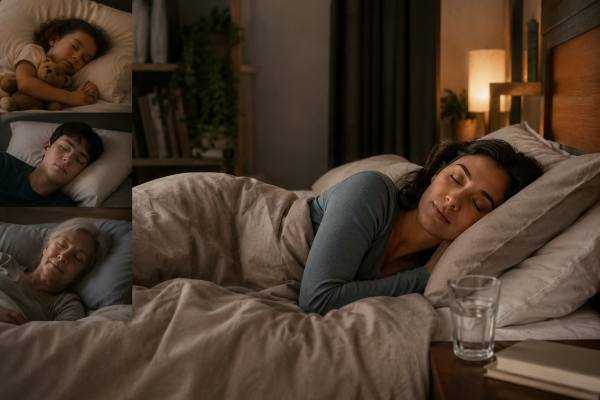
Sleep is one of the few immune-supportive habits that touches almost everything at once. It shapes inflammation, hormone timing, barrier repair, vaccine response, and the way the body handles everyday exposure to viruses and bacteria. Yet the question most people ask is still surprisingly simple: how many hours do I actually need?
The best answer depends on age, but it also depends on rhythm and quality. A teenager who sleeps eight and a half hours on a stable schedule is in a different place from an adult who gets the same total only after midnight scrolling and several awakenings. And a younger child who sleeps too little may show it as irritability or more frequent illnesses long before anyone calls it a sleep problem.
This guide breaks down the best sleep ranges by age, explains why sleep matters for immunity, and shows how to tell whether your current routine is supporting recovery, resilience, and everyday health.
Fast Facts
- Getting enough sleep helps support immune signaling, inflammation control, and recovery after infection and vaccination.
- Sleep needs change with age, with children and teens needing more total sleep than adults and older adults.
- Regularly sleeping too little is more clearly harmful for immune health than chasing a perfectly exact number every night.
- Sleep hours alone do not tell the whole story if sleep is fragmented, highly irregular, or disrupted by a sleep disorder.
- A practical target is to aim for your age-based range on most nights while keeping wake time and bedtime as consistent as possible.
Table of Contents
- Why Sleep Matters for Immunity
- Best Hours by Age
- What Enough Really Looks Like
- When Sleep Falls Short
- Why Needs Change With Age
- Building Immune-Supportive Sleep
Why Sleep Matters for Immunity
Sleep is not just passive downtime. It is an active biological state in which the body reorganizes energy, regulates stress signals, repairs tissues, and coordinates immune activity. That matters because immune health is not only about fighting germs after exposure. It is also about being ready before exposure happens, mounting the right response when needed, and calming inflammation once the job is done.
During healthy sleep, especially during deeper stages earlier in the night, the body shifts into a state that supports immune communication. Some immune cells move differently, inflammatory signals are regulated differently, and the hormonal environment changes in ways that can support immune memory and recovery. That is one reason poor sleep can show up as more than simple fatigue. It can alter how the body handles infection, recovery, and even vaccination.
The effects appear to move in several directions at once:
- Too little sleep can raise inflammatory tone.
- Broken sleep can reduce how restorative the night actually is.
- Irregular sleep timing can disrupt circadian control of immune processes.
- Better sleep around vaccination may support a stronger antibody response.
- Good sleep habits over time may reduce infection risk.
This is why the topic overlaps so closely with circadian rhythm and immunity. It is not only the total hours that matter. Timing matters too. A person who gets enough sleep on paper but keeps shifting between weekday deprivation and weekend catch-up may still place stress on the immune system.
Sleep also belongs on any serious list of what weakens immune function. Chronic short sleep is not as dramatic as a severe nutrient deficiency or a major illness, but it is common, persistent, and biologically meaningful. People often underestimate the immune cost because the first effects seem mental rather than physical: brain fog, irritability, poor focus, and low mood. Underneath that, the immune system may also be working in a less coordinated way.
This is one reason sleep advice can sound repetitive: get enough, keep it regular, reduce late-night light, and treat obvious sleep problems. The reason it keeps showing up is that it works at the level of systems. A better sleep routine does not act like a supplement with one narrow mechanism. It strengthens the background conditions that help the immune system operate well.
For children, sleep supports growth, learning, and developing immune regulation. For adults, it supports resilience and recovery. For older adults, it remains important even when sleep becomes lighter or more fragmented. The exact number changes by age, but the need for sleep never becomes optional.
Best Hours by Age
If you want the simplest answer to how much sleep supports immunity, start with age-based ranges. These ranges are not guarantees, and they are not strict quotas that must be hit exactly every night. They are best understood as target zones associated with healthier function. The younger the body, the greater the sleep need tends to be. That reflects fast brain development, growth, learning, and the high biological demands of early life.
A practical breakdown looks like this:
- Newborns 0 to 3 months: 14 to 17 hours
- Infants 4 to 12 months: 12 to 16 hours, including naps
- Toddlers 1 to 2 years: 11 to 14 hours, including naps
- Preschoolers 3 to 5 years: 10 to 13 hours, including naps
- School-age children 6 to 12 years: 9 to 12 hours
- Teens 13 to 17 years: 8 to 10 hours
- Adults 18 to 60 years: at least 7 hours
- Adults 61 to 64 years: 7 to 9 hours
- Adults 65 years and older: 7 to 8 hours
Those are the broad recommendations. In everyday life, the “best” amount inside the range depends on the person. One healthy adult may feel and function best at seven and a quarter hours, while another clearly does better closer to eight and a half. The same is true for teens. Some teenagers can scrape by on eight hours for short stretches, but many do better closer to nine.
The immune angle changes how to think about these ranges. For immunity, the best number is not the bare minimum you can survive on without falling apart. It is the amount that leaves you reasonably alert, stable in mood, and able to recover from ordinary life without needing constant catch-up sleep. If someone is technically within range but waking exhausted, needing long weekend sleep-ins, and getting sick often, the answer may not be more hours alone, but it is a signal that the current pattern is not working well.
The age-specific context matters too. Children and teens often look “fine” until sleep debt accumulates. Then it shows up as crankiness, attention problems, slower recovery, or increased vulnerability during busy school periods. Families thinking about age-specific routines may find it helpful to pair sleep goals with broader guidance on immune support for kids rather than treating bedtime as a separate issue.
At the other end of life, older adults often assume they should need much less sleep. Usually that is not the best way to frame it. Older adults often experience lighter sleep, earlier sleep timing, and more awakenings, but they still need meaningful sleep for repair, immune balance, and daily function. That is one reason sleep belongs alongside other priorities in immune support for older adults.
The goal is not perfection. It is to land near your age-appropriate range often enough that your body is not always trying to catch up.
What Enough Really Looks Like
The right number of hours matters, but sleep that supports immunity is more than a total on a tracker. Two people can both report eight hours and still have very different sleep quality. One sleeps straight through, wakes at a stable time, and feels ready for the day. The other dozes with late-night screens, wakes several times, snores heavily, and drags through the morning. On paper they look similar. Biologically they do not.
A more useful way to judge whether sleep is “enough” is to combine hours with function. Good sleep for immune health usually has several features:
- It happens at roughly similar times most nights.
- It is long enough for your age.
- It is reasonably continuous, not constantly interrupted.
- You wake feeling at least somewhat restored.
- You do not depend on extreme weekend catch-up to feel normal.
That last point is important. Sleeping in on weekends is not automatically bad, but large swings can be a sign that your weekday schedule is undercutting recovery. This pattern is sometimes described in discussions of social jet lag, where weekday and weekend timing drift so far apart that the body is repeatedly pushed out of rhythm. From an immune perspective, regularity matters because the immune system is partly timed by the same circadian signals that govern sleep.
Quality also includes how well the sleep is protected. A person can be in bed long enough and still lose restorative value because of alcohol, untreated sleep apnea, restless legs, late caffeine, or constant overnight waking. That is especially relevant for adults who proudly report seven hours but feel terrible most days. In that case, the question is not only “How many hours?” but “What kind of sleep are those hours giving you?”
Another overlooked factor is sleep around unusual physical stress. During illness, after vaccination, after hard training, or during periods of heavy mental load, you may need more opportunity for sleep rather than less. That does not mean your baseline target permanently changes. It means the body sometimes asks for a little more recovery when demand is high.
This is even more relevant for people whose schedules fight biology. Night workers and rotating-shift workers may spend enough hours in bed yet still struggle because sleep occurs at the wrong circadian phase or changes too often. The immune implications of that pattern are part of the reason shift work and immunity is such a persistent health topic.
So what counts as enough? Enough means age-appropriate hours delivered in a way the body can actually use. If you routinely wake unrefreshed, fall asleep unintentionally, rely on long catch-up sleep, or feel worse despite technically hitting the number, the hours may not be translating into the kind of sleep your immune system needs.
When Sleep Falls Short
Short sleep does not need to be extreme to matter. Most immune problems linked to sleep happen not because someone stayed awake for two straight nights, but because they live in a mild deficit for months or years. Going from eight hours to six and a half may not feel dramatic in the moment, yet repeated partial loss can gradually affect inflammation, recovery, attention, mood, and infection resilience.
From an immune point of view, there are a few patterns that are especially unhelpful:
- Regularly sleeping below your age-based range
- Highly broken sleep with frequent awakenings
- Major differences between weekday and weekend timing
- Long-term restriction followed by repeated catch-up attempts
- Poor sleep driven by stress, pain, alcohol, or untreated disorders
The body can recover from the occasional short night. It is less good at thriving under chronic sleep debt. Many adults try to solve this with one or two long weekend mornings. That can help some, but it is not a complete reset. The immune system responds better to steadiness than to repeated deprivation and repair.
Short sleep also tends to travel with other immune stressors. High stress raises the odds of sleeping badly, and poor sleep makes stress feel more biologically expensive. That loop is one reason stress and immunity and sleep are so tightly linked. When cortisol patterns, arousal, and late-night rumination rise, sleep becomes lighter and shorter, which then makes the next day more reactive.
There is also the question of “too much” sleep. Oversleeping is often handled badly in health content. More sleep is not automatically harmful, and a sick person sleeping longer for a few days is not doing something wrong. At the same time, regularly needing far more sleep than expected, especially with persistent fatigue, morning headaches, depression, or snoring, can be a clue that something else is going on. The problem in that case may be poor sleep quality, medication effects, illness, or a sleep disorder rather than simply an excess of healthy sleep.
This section is also where people sometimes reach for quick immune fixes. But if your sleep is consistently poor, the better move is usually to work on the sleep problem itself rather than trying to compensate with supplements. Good prevention basics such as hand hygiene and exposure awareness still matter, of course, and they fit naturally into broader habits on avoiding illness. But without enough sleep, the rest of the plan loses support.
A simple question can help: do you feel like you are borrowing from tomorrow to get through today? If the answer is yes, your immune system may be paying part of that bill too.
Why Needs Change With Age
Sleep needs do not change randomly across life. They shift because the brain, hormones, daily structure, and immune system all change with age. In infancy and early childhood, sleep demand is high because development is rapid. The body is building, learning, regulating, and adapting at an extraordinary pace. That is why babies and young children need so much more total sleep than adults, and why naps still count as meaningful recovery in early years.
As children grow, total sleep needs gradually decrease, but the need remains substantial. School-age children still require far more sleep than many families realize, and teenagers are often the group most mismatched with the schedules imposed on them. Adolescence brings a natural shift toward later sleep timing, yet school often starts early. The result is that many teens function in a steady state of sleep restriction during the week. That becomes especially important in demanding settings such as exam periods, sports seasons, and dorm life, which is part of why sleep is central to immune support for college students.
Adults usually settle into more stable sleep needs, but “adult” is still not one fixed category. Some variation is normal. A physically active adult under stress may need more recovery time than they admit. A parent of a newborn may get enough total hours only in fragments. A night-shift worker may have the quantity without the timing. All of those realities affect how sleep supports immunity in practice.
In older adulthood, the common myth is that people need much less sleep. A better description is that older adults often sleep differently. They may get sleepy earlier, wake earlier, spend less time in deeper sleep, and wake more often overnight. That change in sleep architecture can make it feel as if the need has fallen when the need for restoration remains real. This overlaps with the broader changes described in immunity and aging, where the immune system itself becomes less flexible and more prone to chronic low-grade inflammation.
Age also changes what poor sleep looks like. In a toddler it may appear as hyperactivity or meltdowns. In a teenager it may look like irritability, low motivation, or repeated colds. In a middle-aged adult it may show up as burnout, snacking, and constant caffeine use. In an older adult it may be dismissed as “just aging” when treatable factors such as sleep apnea, pain, medication timing, or anxiety are actually involved.
So the best hours by age are not arbitrary. They reflect changing biological demands across the lifespan. The numbers matter, but the deeper message is that sleep should be adjusted to life stage, not forced into a one-size-fits-all rule.
Building Immune-Supportive Sleep
The most effective sleep advice for immunity is rarely exotic. It is usually a matter of protecting timing, reducing disruption, and making the sleep opportunity large enough for your age and life stage. People often look for a perfect bedtime routine when the bigger win is simply giving sleep enough consistent room to happen.
A strong foundation looks like this:
- Set a realistic wake time first.
Wake time anchors the body clock more reliably than an ideal bedtime you rarely hit. - Build backward from your age-based target.
If you need roughly eight hours and must wake at 6:30, bedtime cannot regularly start at midnight. - Keep timing steadier across the week.
Small differences are manageable. Huge weekend shifts are harder on rhythm. - Protect the hour before bed.
Reduce bright light, stimulating work, intense arguments, and late heavy meals when possible. - Watch the common sleep disruptors.
Alcohol, late caffeine, nicotine, heavy late exercise for some people, and long evening scrolling all make sleep less restorative. - Look for patterns that need treatment.
Loud snoring, pauses in breathing, severe insomnia, persistent daytime sleepiness, or restless legs deserve attention.
For children, the basics are predictability, calming transitions, and enough total sleep opportunity. For teens, the challenge is often not knowledge but schedule pressure and late-night light exposure. For adults, the biggest obstacles are usually time pressure, stress, and the illusion that productivity can outrun biology. For older adults, the work may involve better light exposure in the morning, careful medication review, and not normalizing chronic poor sleep.
Immune support from sleep also works best when it is not isolated from the rest of life. Good sleep pairs naturally with exercise, balanced meals, morning light, and stress control. That broader pattern is part of why sleep belongs inside a bigger guide to how to strengthen immune health rather than being treated like a separate wellness hobby.
A final practical point: aim for consistency, not perfection. One bad night will not undo you. But a routine that is chronically too short, too late, or too broken can quietly chip away at resilience. The sleep amount that supports immunity is the amount your body can count on often enough to repair, regulate, and respond well. Once you start thinking that way, the goal stops being a number on a tracker and becomes a rhythm your immune system can actually trust.
References
- About Sleep | Sleep | CDC 2024 (Official Guidance)
- Sleep and Immune System Crosstalk: Implications for Inflammatory Homeostasis and Disease Pathogenesis 2024 (Review)
- Impact of sleep duration on the response to vaccination: A meta-analysis 2022 (Meta-analysis)
- Association between sleep duration and antibody acquisition after mRNA vaccination against SARS-CoV-2 2023 (Observational Study)
- Healthy sleep patterns and risk of hospitalization for infection: a large community-based cohort study 2025 (Cohort Study)
Disclaimer
This article is for educational purposes only and is not medical advice. Sleep needs vary within recommended ranges, and sleep problems can have many causes beyond simple bedtime habits. If you or your child have severe insomnia, loud snoring, pauses in breathing during sleep, persistent daytime sleepiness, or repeated infections alongside poor sleep, seek advice from a qualified clinician. Sleep can strongly support immune health, but it does not replace appropriate medical care, vaccination, or treatment for underlying conditions.
If this article was useful, consider sharing it on Facebook, X, or your preferred platform so others can better understand how sleep supports immune health at different ages.